|
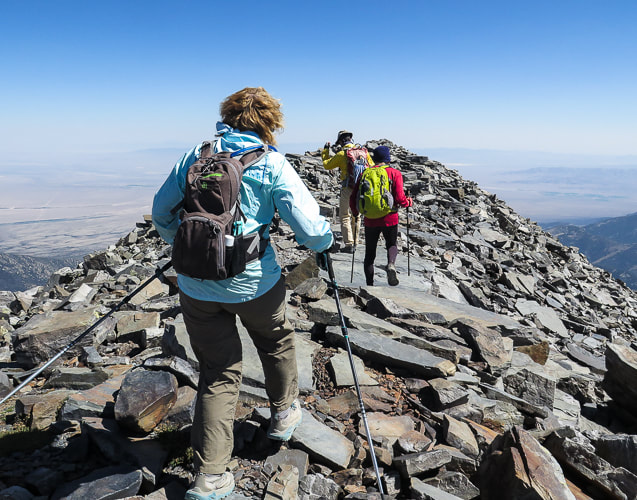
We celebrated another Christmas with a sublime, scree-filled desert summit challenge and a Tecopa Hot Springs soak afterward.
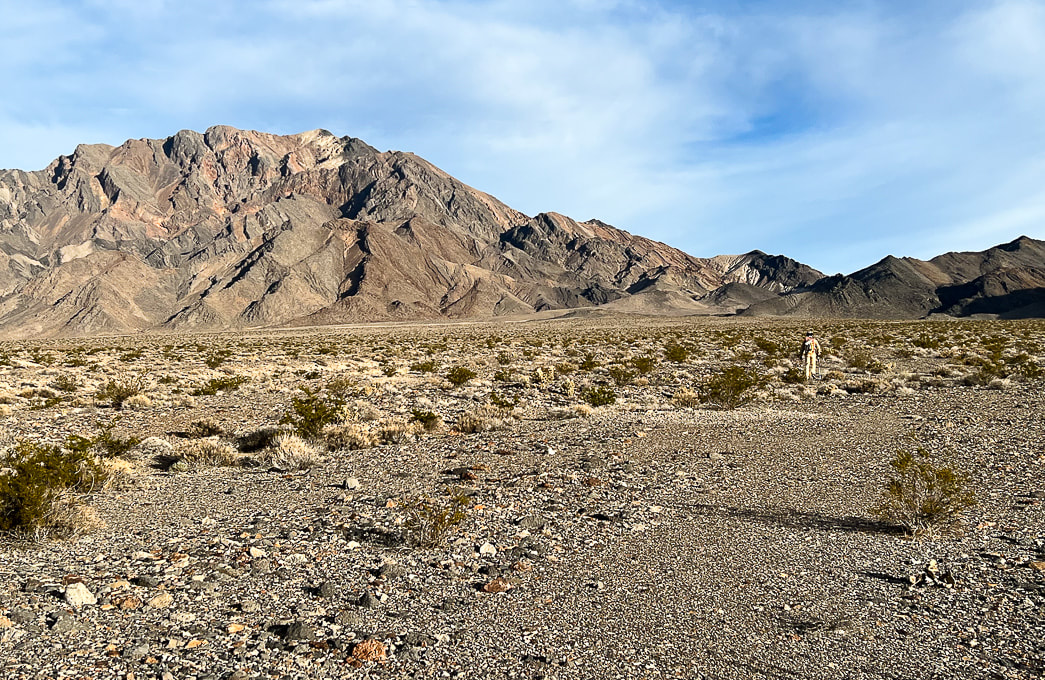
Ascending wash to walk between the black hills to the right and the two small hills just to the left of Fred.
Pyramid Peak is black and white - on horizon. Death Valley got its name from a wagon party trapped in the valley in the 1849 California gold rush. One man perished in this hottest place on Earth. One of the travelers was said to have proclaimed, "Goodbye, Death Valley" as they traveled west over the mountains.
Trip Stats for Standard Route (Southeast Ridge)
Location: Amargosa Range, Funeral Mountains high point, Eastern Death Valley National Park. Distance/Elevation Gain: 10.4 miles out and back/3,700'. Trailhead = 3,041'. Summit = 6,703'. Difficulty: moderate - strenuous effort Class 1-2: most time is spent on three major rock/scree slopes. Mostly discernible trail with rock cairns; occasionally requires focus as it becomes faint. Prominence: 3,703'. Coordinates: Trailhead at Hwy 190 = 36.34048, -116.59866. Summit = 36.39196, -116.61228. Maps and Apps: Topo Maps US app, StavIsLost route map, Garmin GPS. Date Hiked: 12/26/22 Directions to trailhead: Park on Highway 190 at an old RV/campground with Pyramid Peak in view. If coming from Death Valley Junction (east), drive ~ 11 miles. If coming from Furnace Creek in the park, drive 17-18 miles. Geology: The ridge hike is a journey through Ordovician-age (450 m.y.a.), heavily faulted limestone and dolomite (Ely Springs dolomite and Pogonip group carbonates). Pyramid Peak summit is Eureka quartzite and Ely Springs dolomite.
Overview
The words "Death Valley" may conjure up images of doom and foreboding, but it's really a land of mystique and fascination, and of extremes. In winter, it's one of the warmest places in the country, making it one of my favorite places to explore. You wouldn't want to be there in the summer, unless you want to experience an average July temperature of 116 degrees. It has the record for the hottest temperature ever recorded on Earth — 134 degrees. Last December, we hiked remote Pahrump Point with spectacular views of Death Valley's Telescope Peak on a cold and windy day, and warmed up in Tecopa Hot Springs Resort's hot springs. This year we "elevated" our summit challenge to hike the lonesome and talus-riddled slopes of Pyramid Peak in the Funeral Mountains, eastern Death Valley National Park. It's listed on the Sierra Club's Desert Peaks section, hence the discernible trail. I break this hike into four parts: a long alluvial fan/wash approach, followed by three steep, loose-rock slopes. Forbidding, massive dark grey limestone greets you at the top of the second loose-rock slope. Pyramid's summit is not in sight until you get up this face and walk around it to the left, where you see more talus slopes under big black spires. From its small quartzite perch, the summit affords a huge view of Death Valley's Panamint range capped by Telescope Peak, and into Nevada. Stunning views surround you the entire ridge climb. Sublime, raw, layered, folded, vast and lonely - the quintessential Mojave Desert.
Our Hike
What more could we ask for? The opportunity, legs and strength to summit a Death Valley peak, the views to remember forever, a natural hot springs soak, and one of the best steak dinners ever - all in the middle of the quiet Mojave.
We're living the dream! Keep on Exploring - it's good for the body, mind and soul!
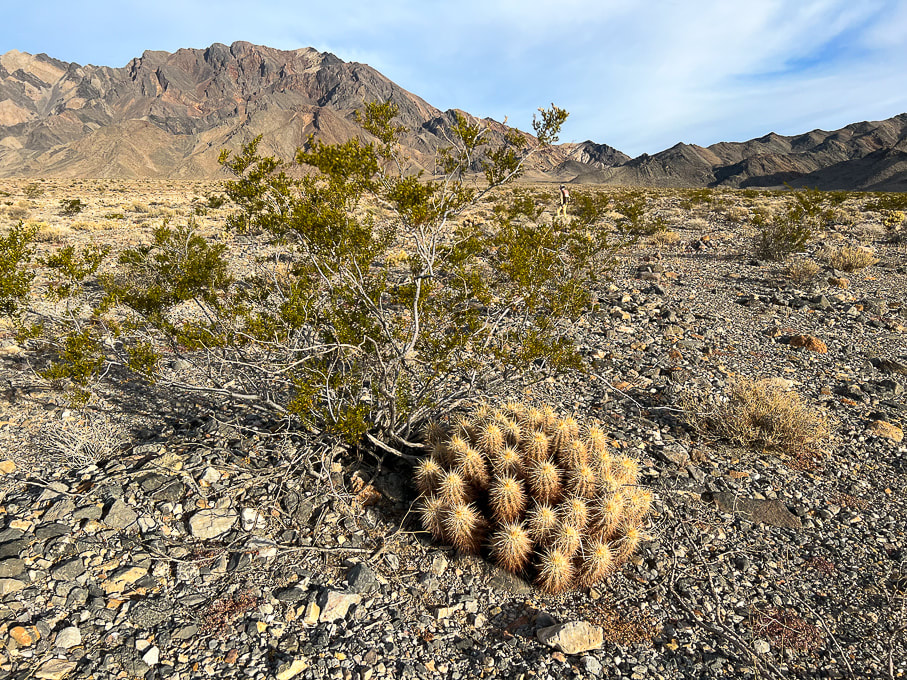
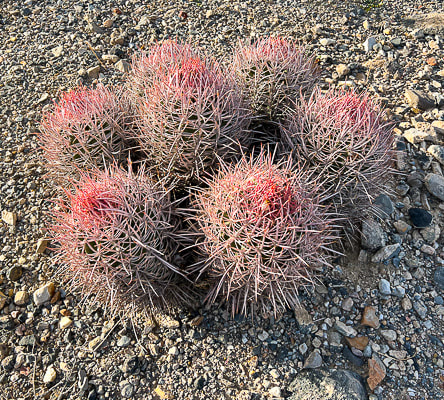
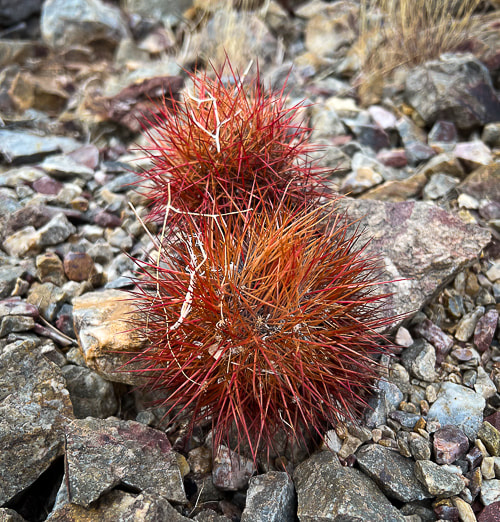
Healthy creosote bush and lots of hedgehog cactus clumps on the way up this alluvial fan.
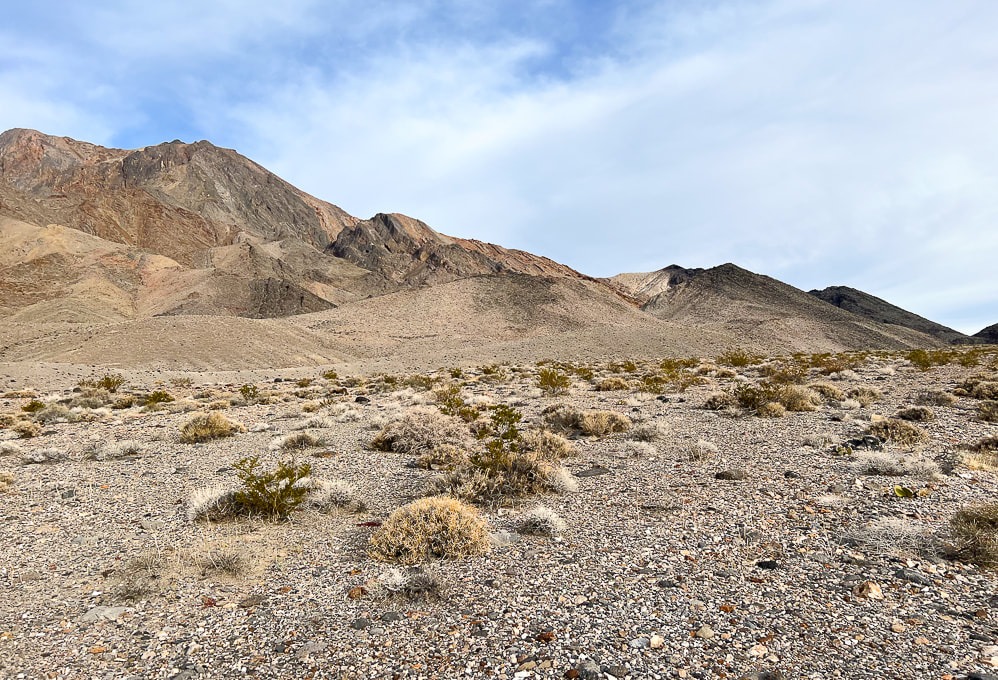
Almost at the small hills on the left - the approach continues along the base of these for 2.8 miles from trailhead where it turns NNW into a wide drainage/fan.
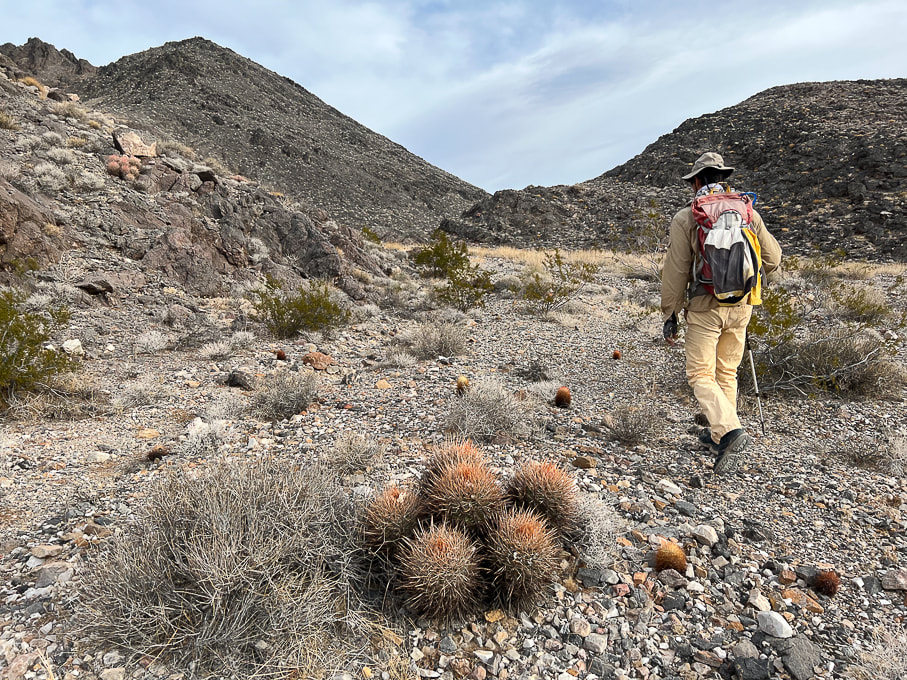
At the end of initial alluvial fan climb - taking a left around base of this hill to see large drainage.
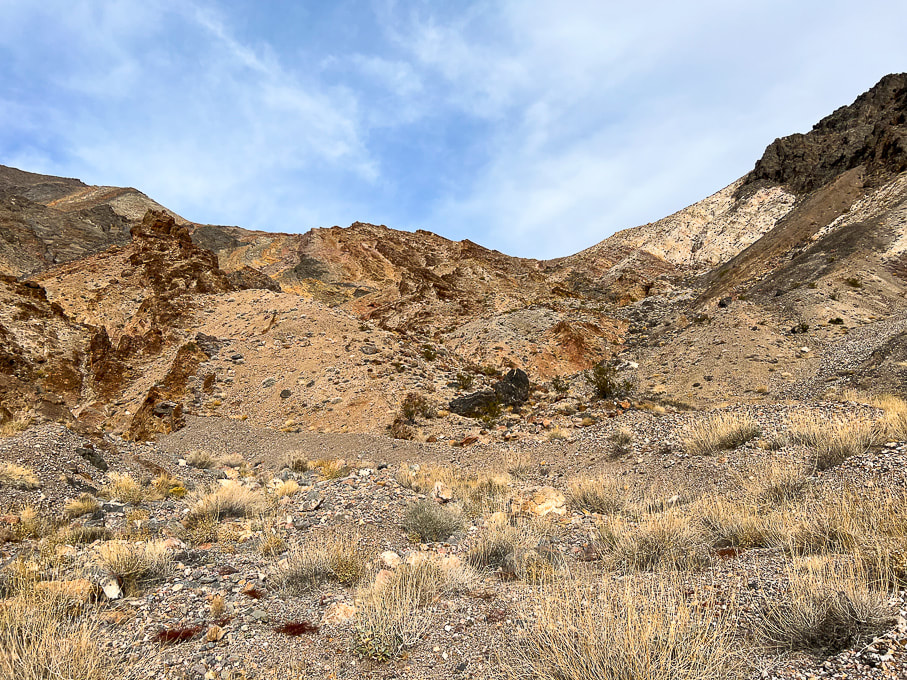
Turning left into a major drainage with black rocks at the end of it - then the climb begins!
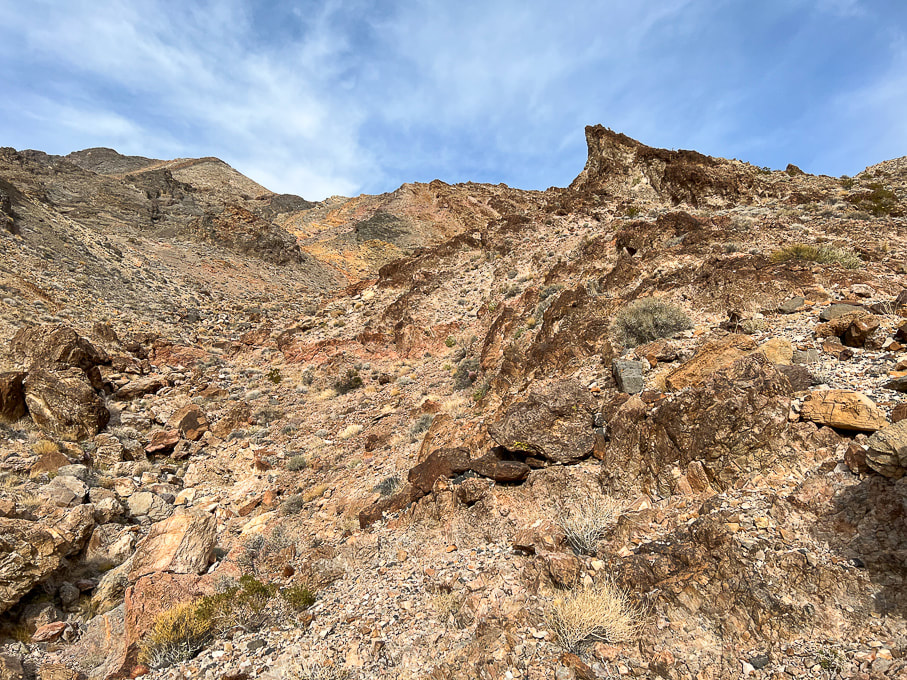
Finding a trail at the end of the wash that stays on the right side of the drainage to the left.
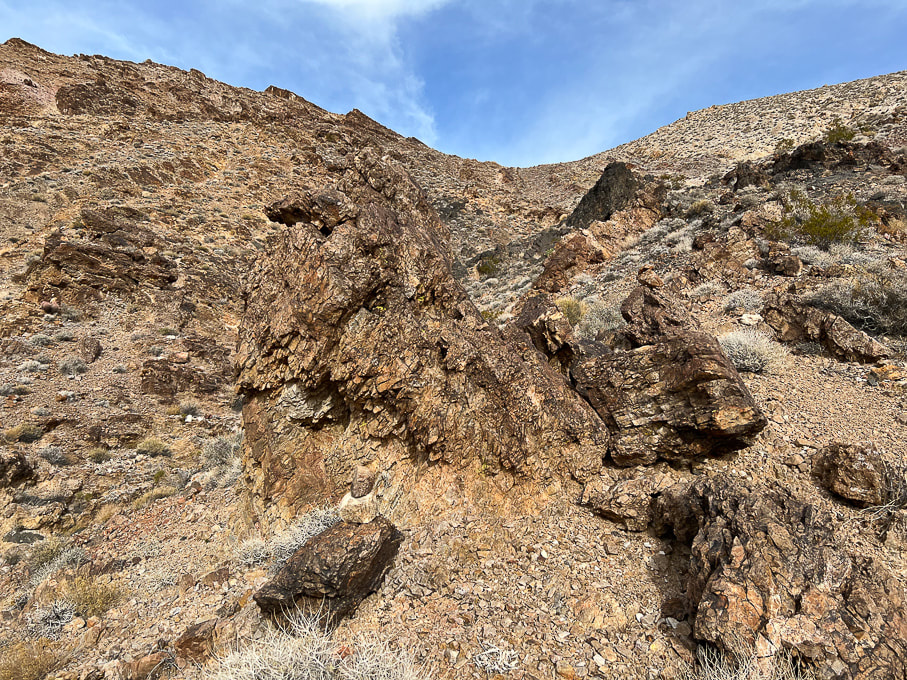
Trail heads up to the saddle above, with a good amount of loose rock.
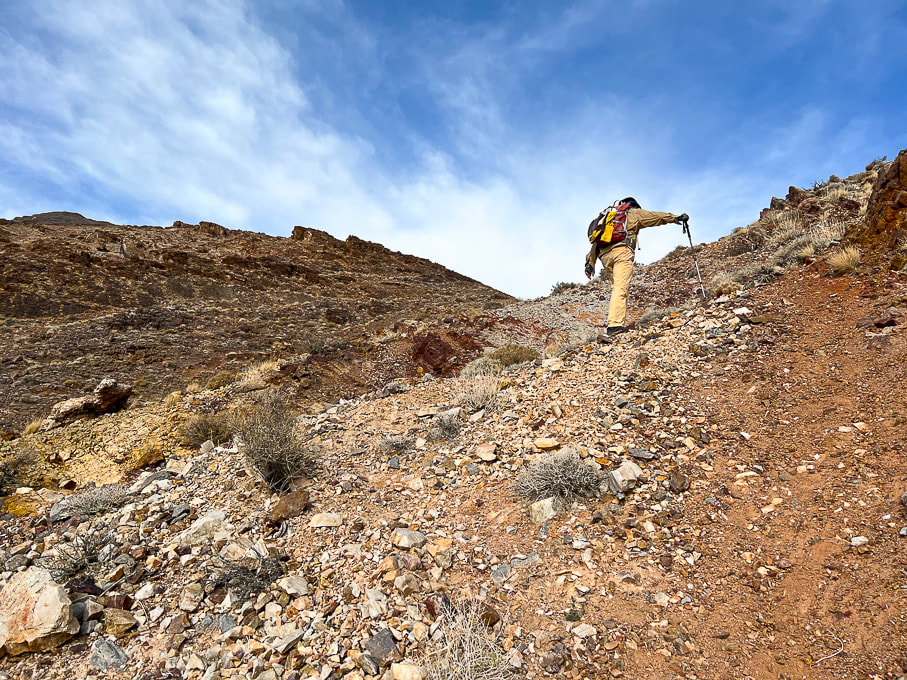
Fred making his way up steep and loose rock to saddle (Talus slope #1).
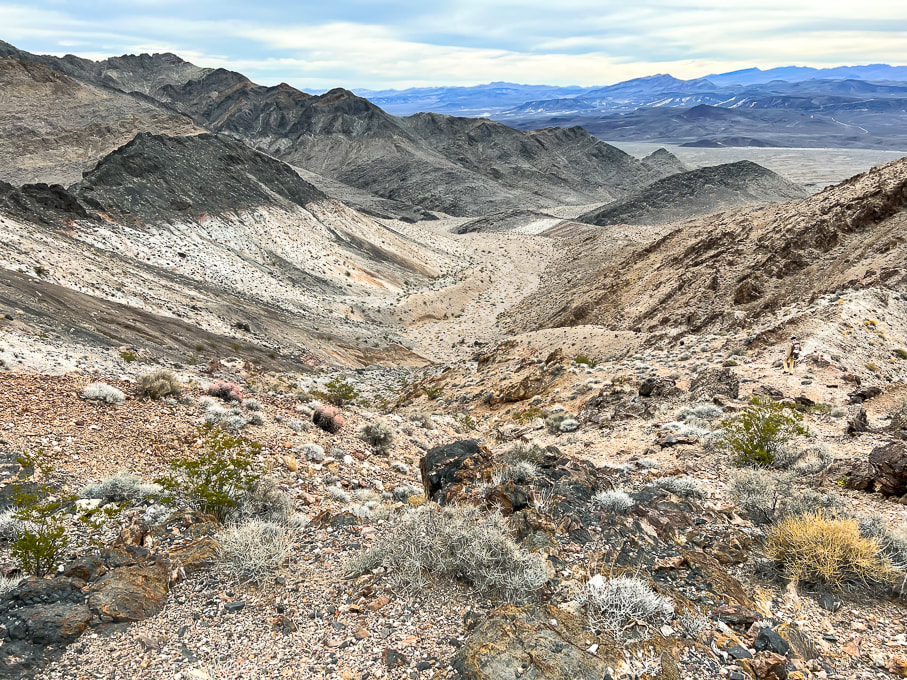
Looking down the first talus slope to the wide wash we had turned into from approach alluvial fan.
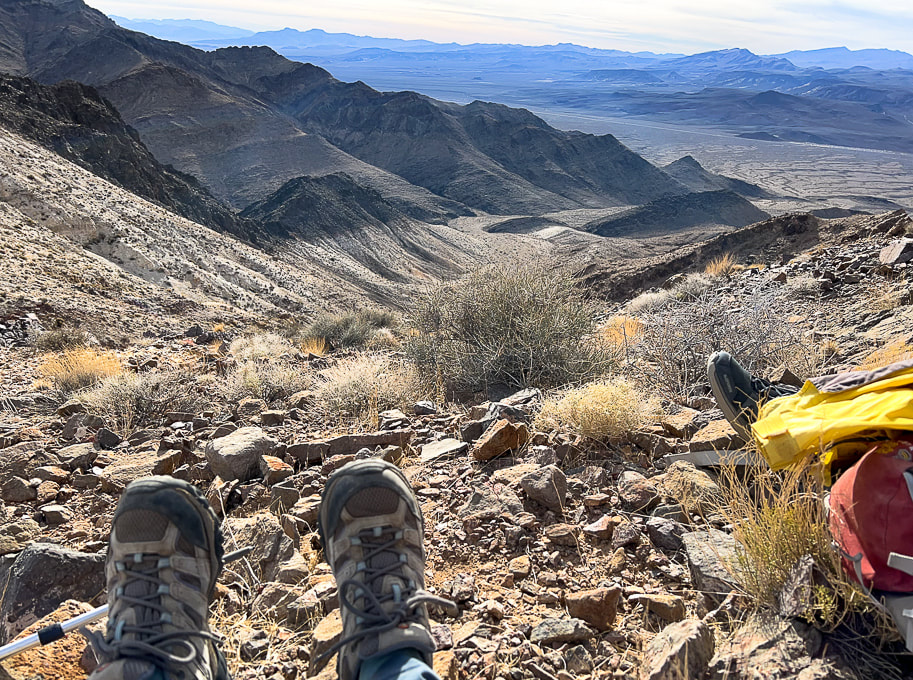
Done with the first talus slope! Time for a break - looking back at the highway and valley we have just come up.
There's a few cairns to mark this first slope; afterwards, the trail is mostly discernible. 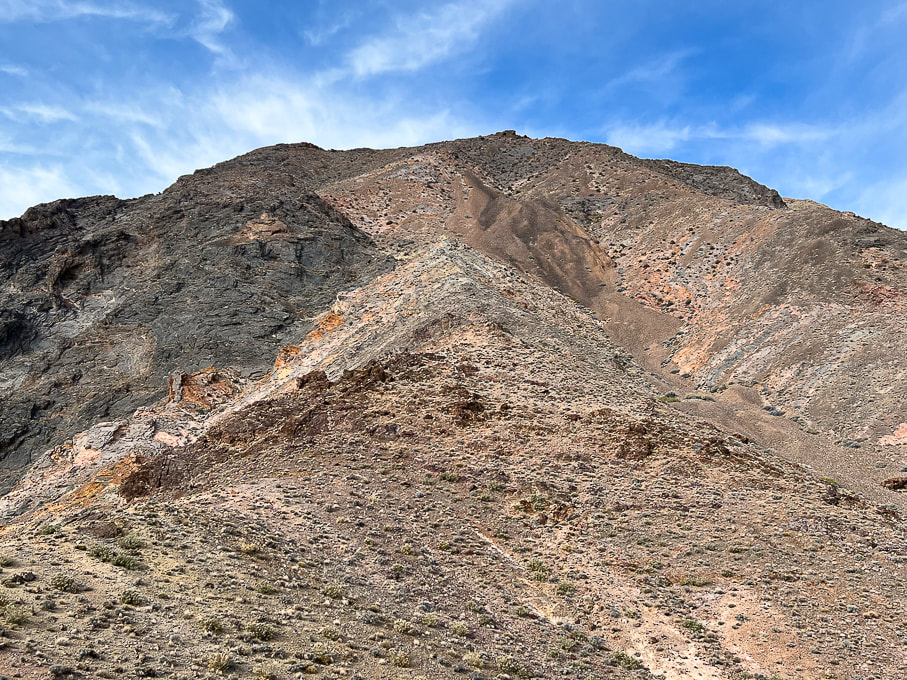
Looking ahead to the crazy, rugged mess of rocks we will ascend - glad there is a cairned trail! Pyramid summit behind the ridge. Go straight up the ridge in middle of photo, then bypass the brown-colored scree slope by hiking to its left, up through minor gully (center of photo). Reach the top of this brown rock to ascend the dark grey rock.
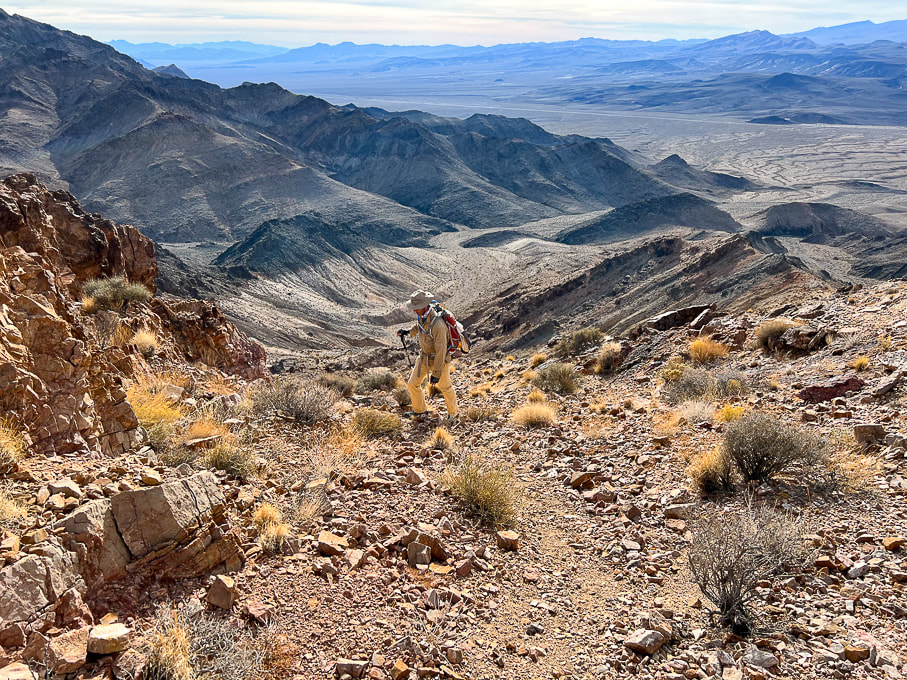
Continuing on less-steep portion of southeast ridge in between the steep talus slopes.
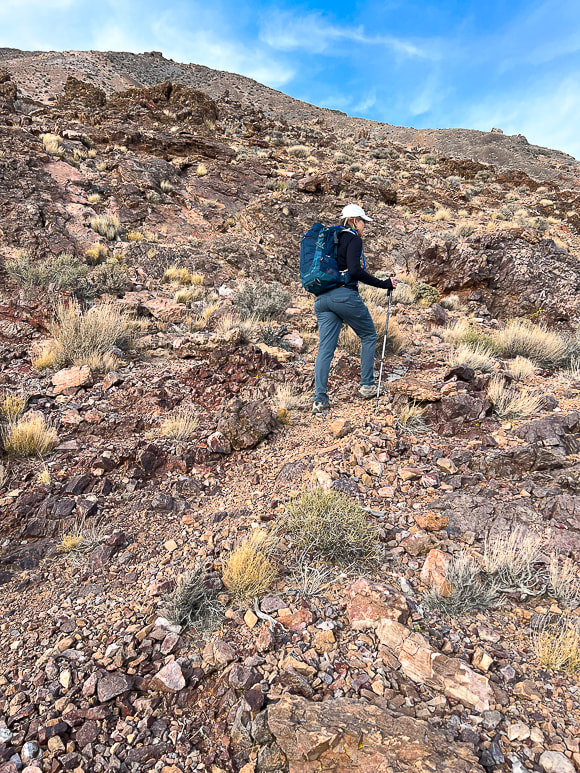
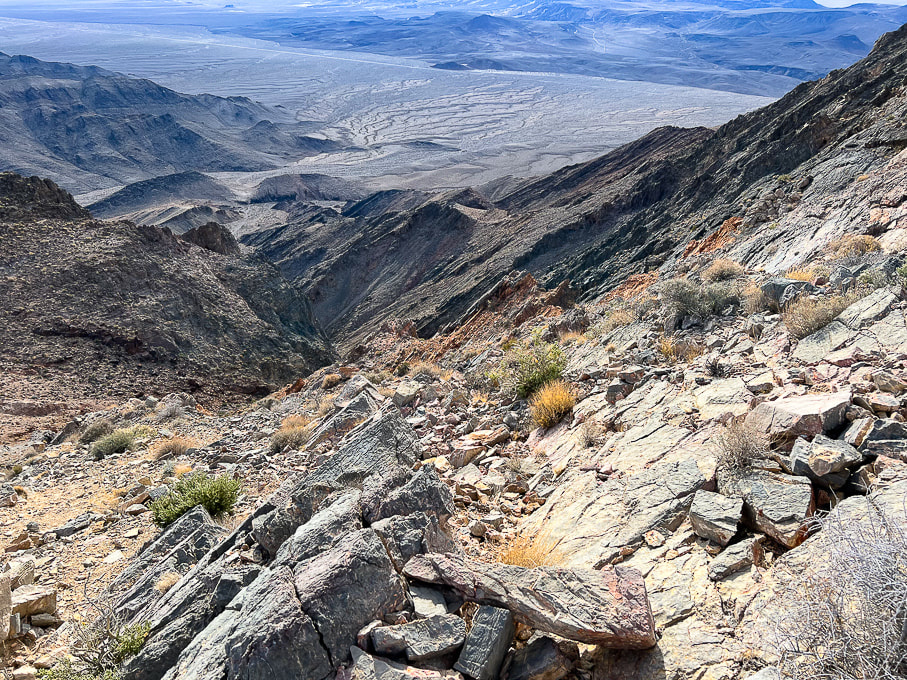
Getting through a minor limestone outcrop and looking at the fan we hiked up; walking under the two small hills at the upper left.
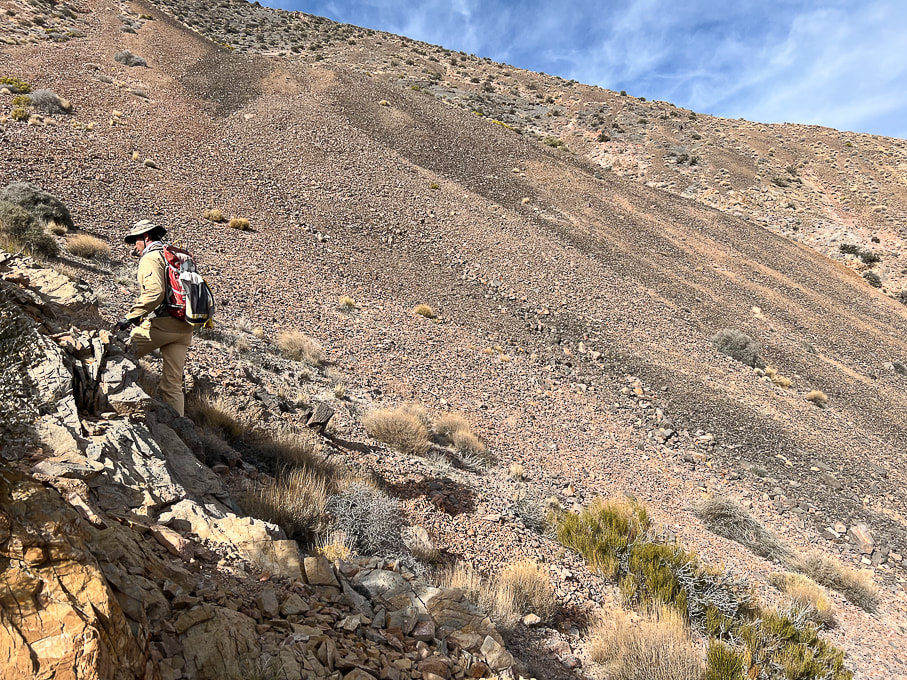
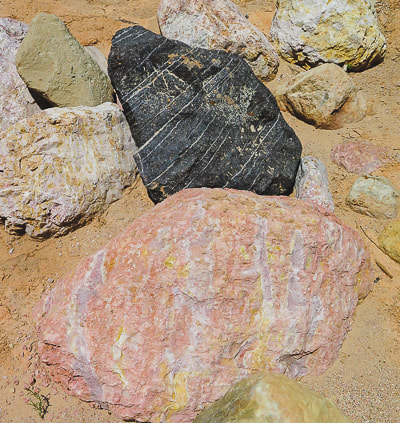
Look at that lovely scree field! Trail goes to the left of this, through a small gulley and manageable talus slope, through pink, deep red and yellow rocks.
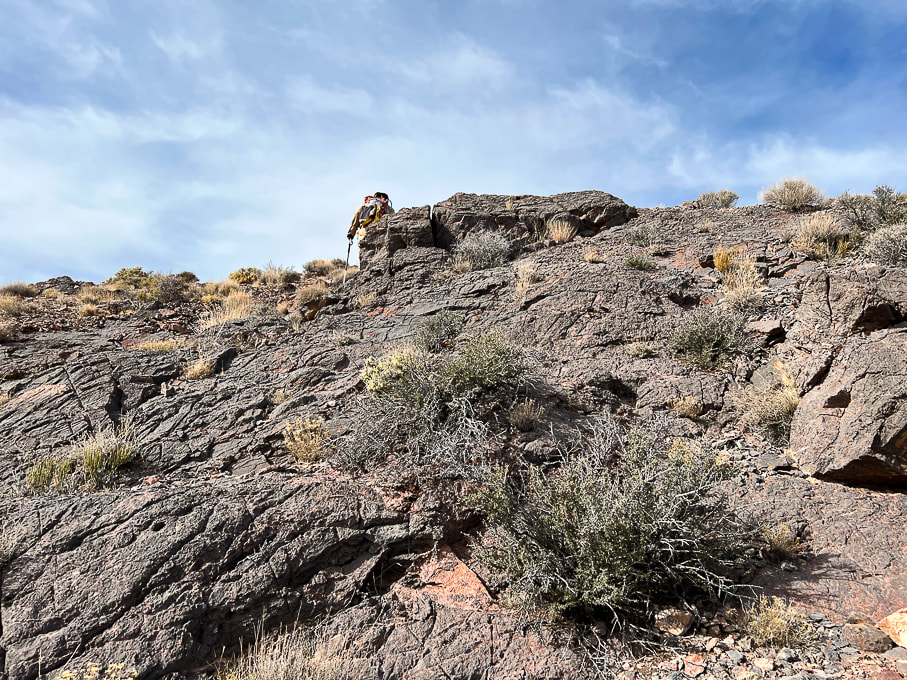
Getting up and over this sharp limestone, where it flattens out somewhat.
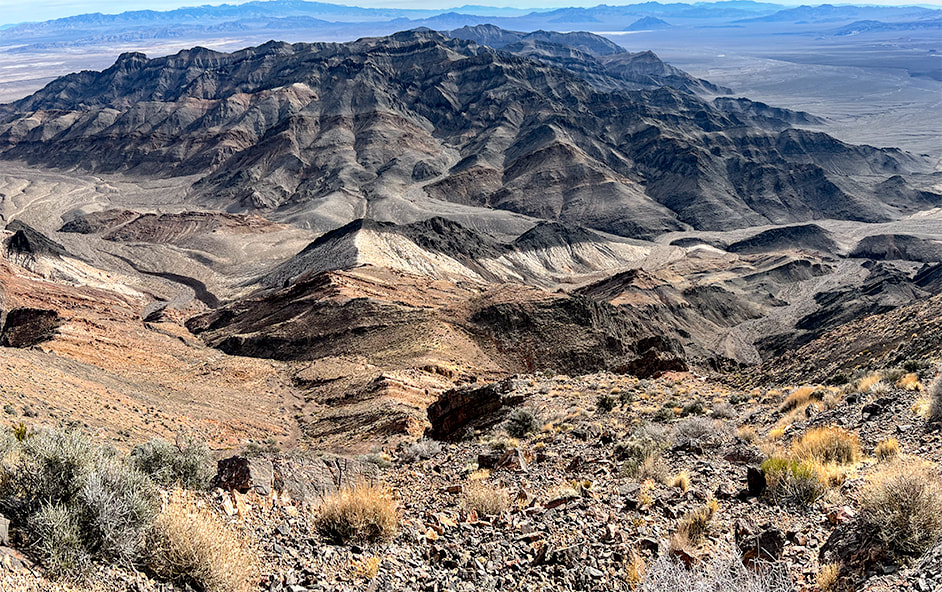
View south from ridge.
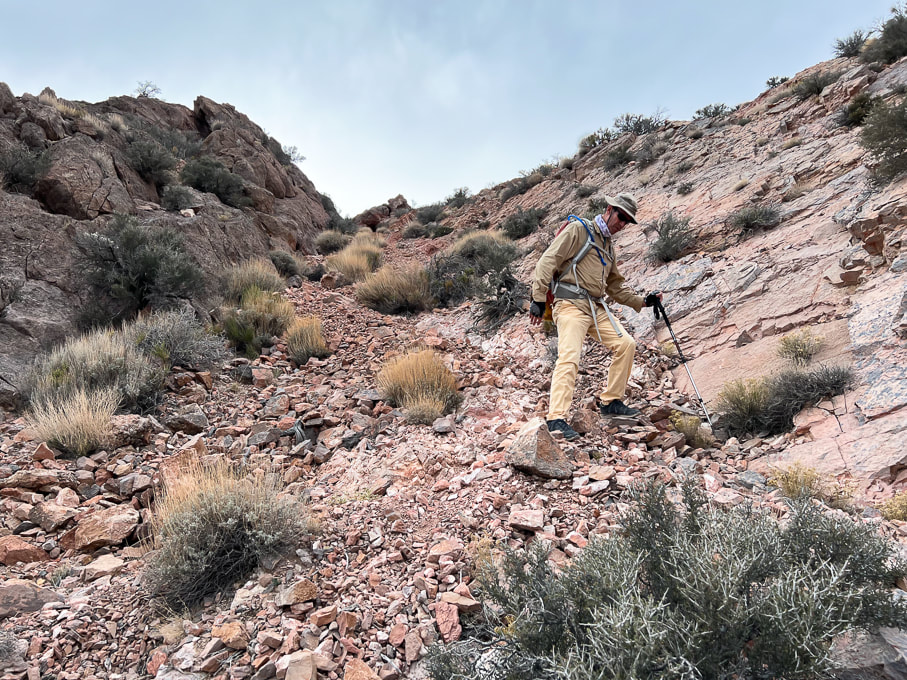
This is "Talus slope 2" - photo is taken on the way down. This is on the left of the very steep scree slope.
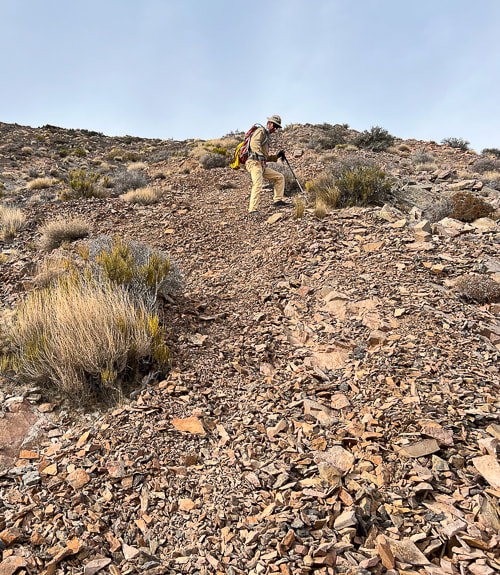
Upper part of "Talus slope 2". This photo is taken on our way down.
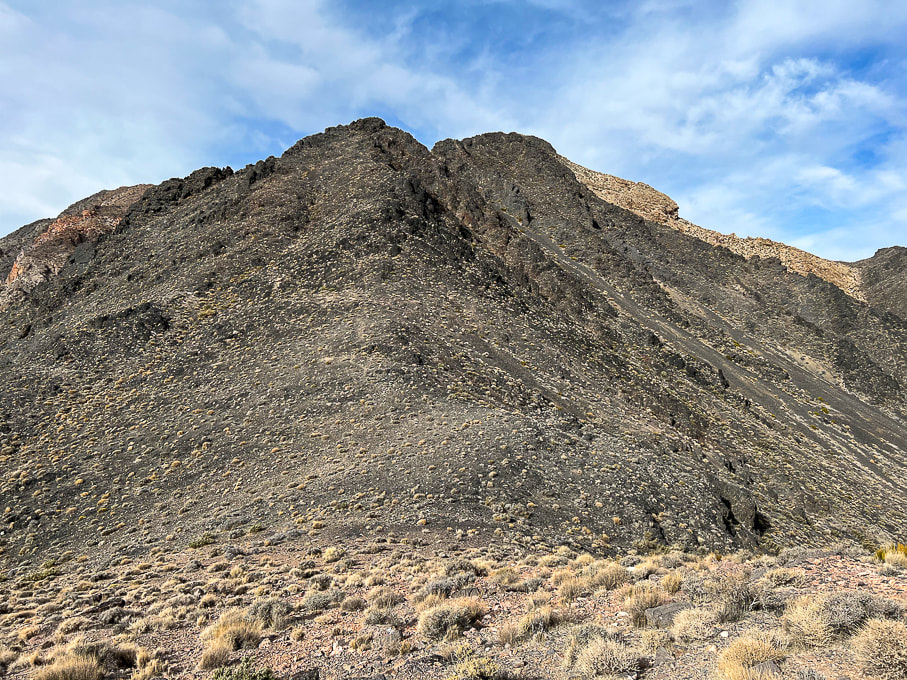
Forbidding sight after topping off on ridge after the second steep talus slope. You can see the trail running in the middle of this, leading to the top of the left prominence, then skirts around it to the left, where you will see Pyramid Peak summit.
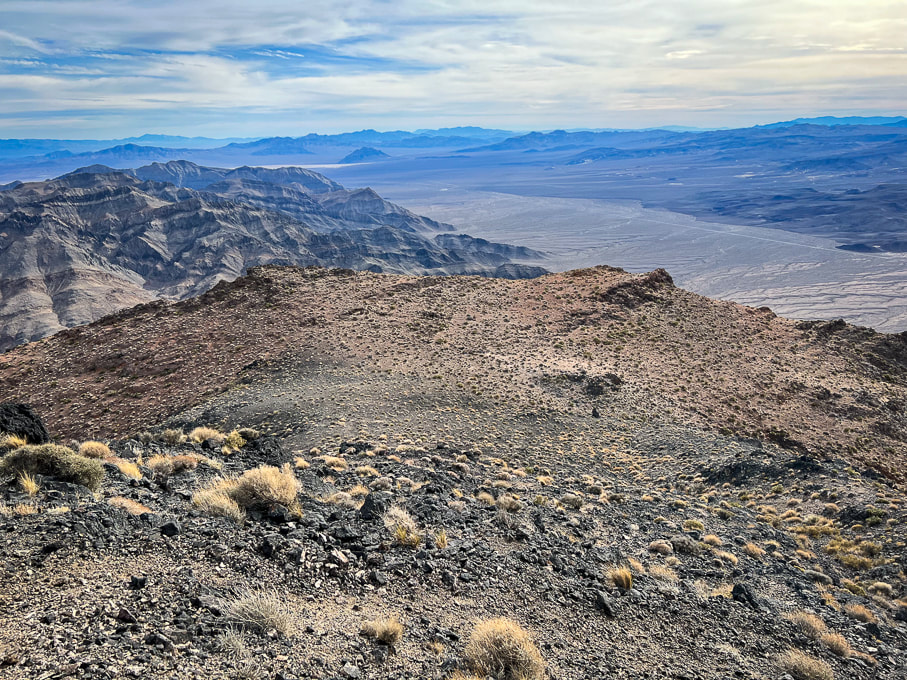
Looking back from the black rock ascent to the saddle we just came over and brief flat area.
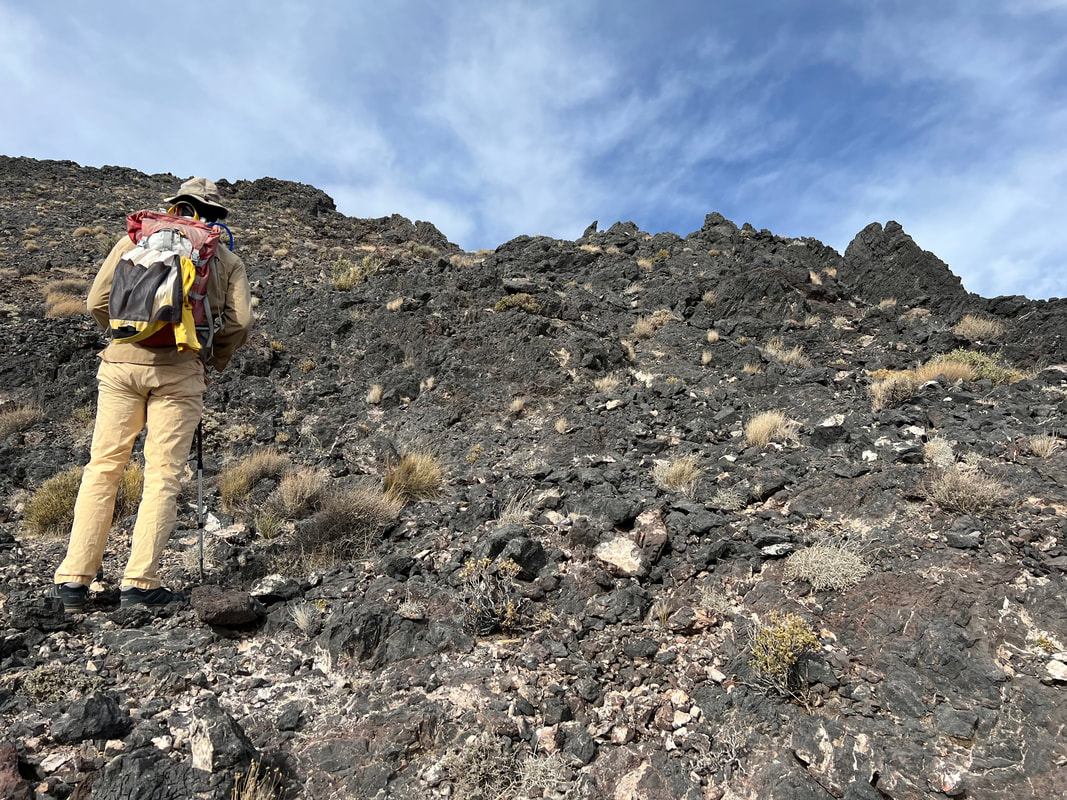
Working our way up the black rock.
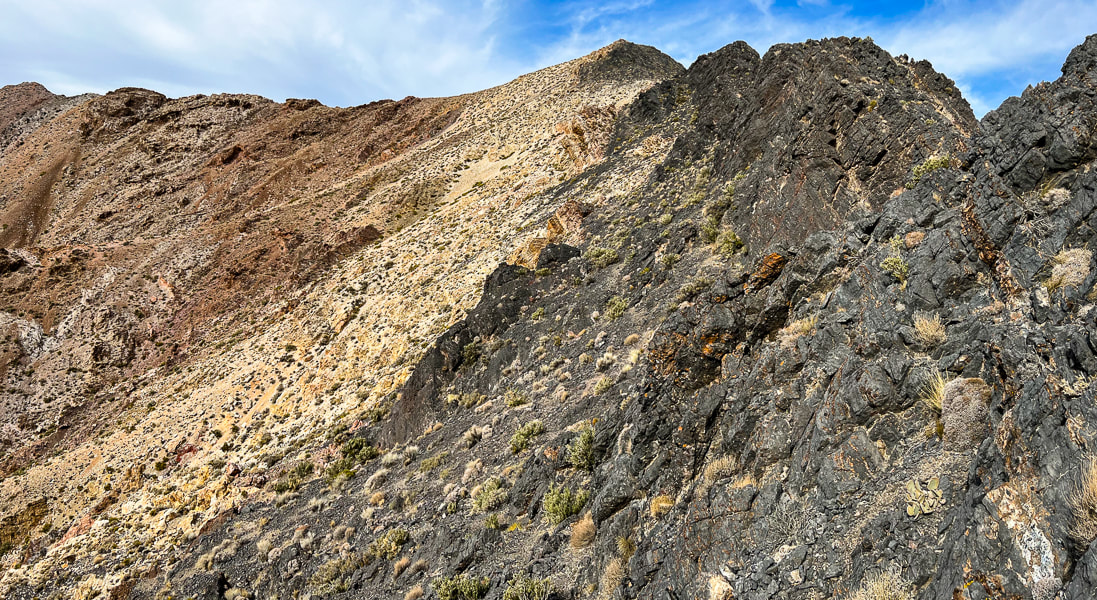
View of Pyramid Peak as trail traverses under left side of ridge walls.
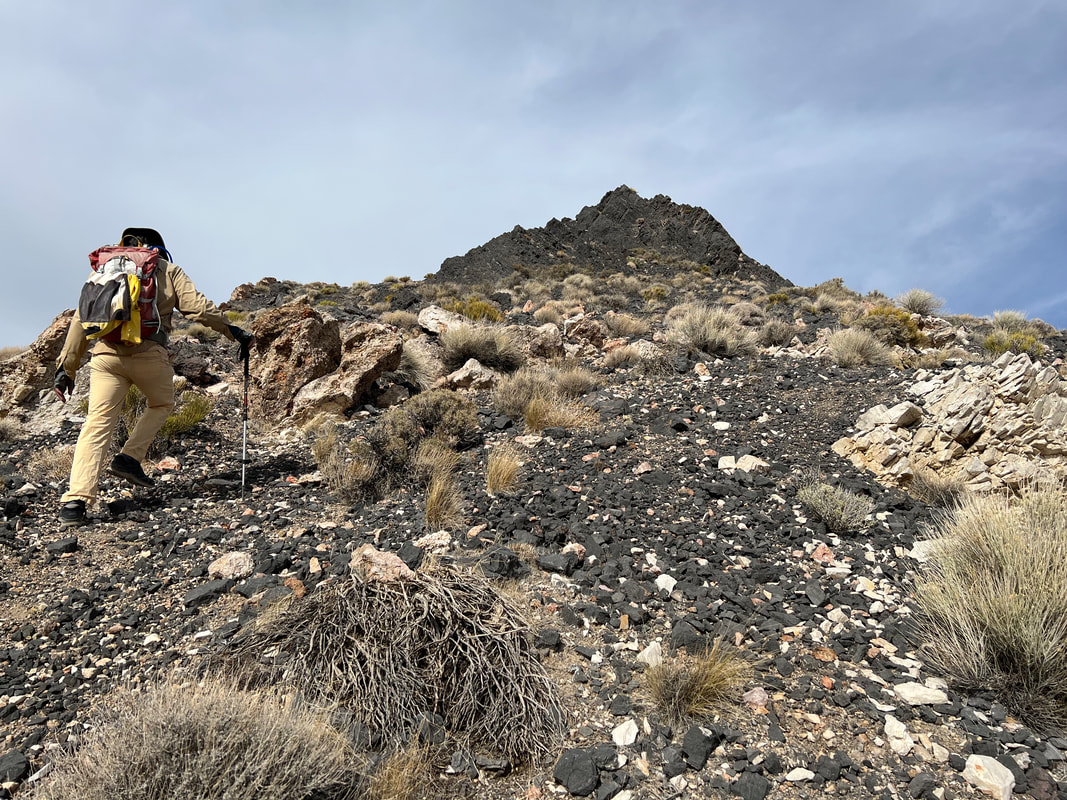
Climbing "Talus slope 3" near the base of the summit.
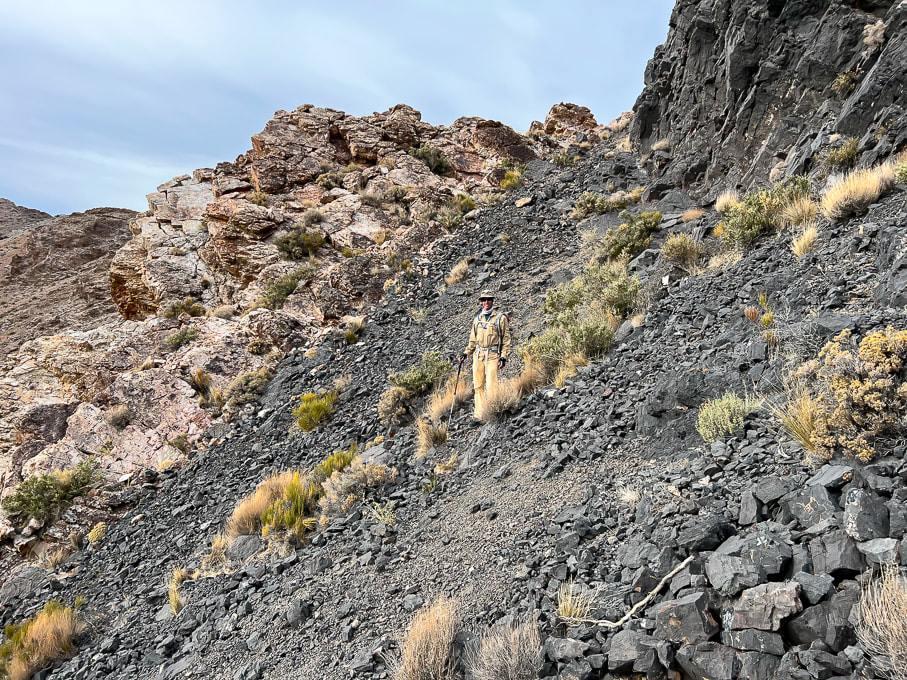
Trail along left side of ridge near the summit.
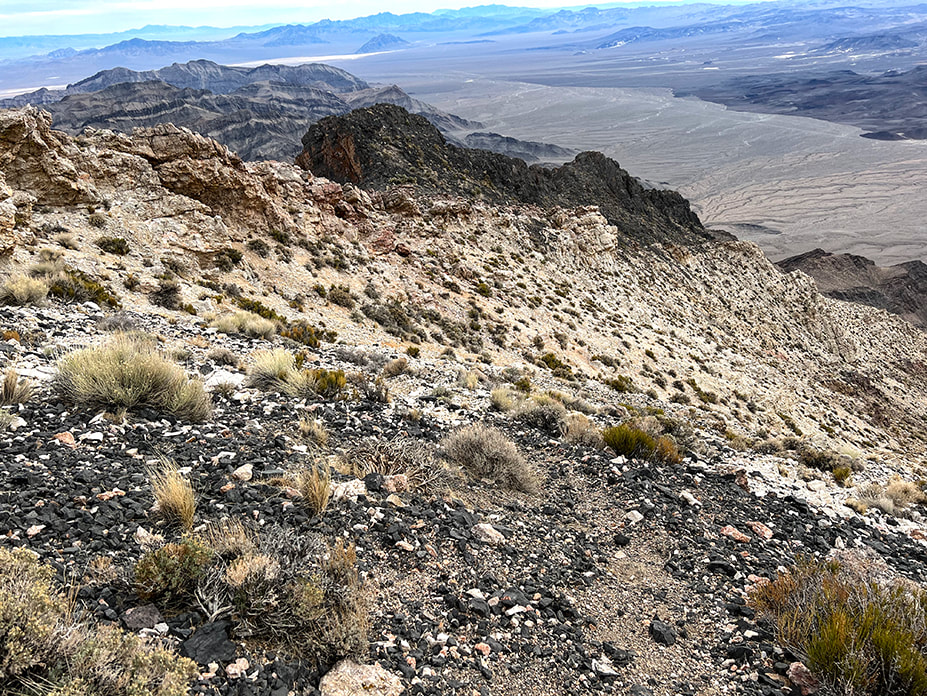
Looking back to approach valley and the black "knife" ridge we had passed under.
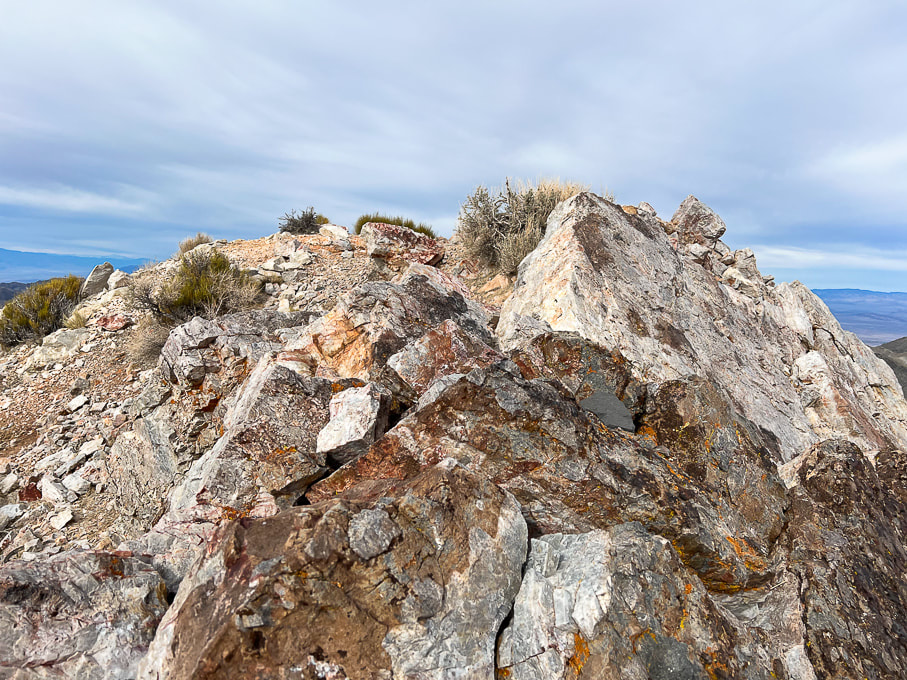
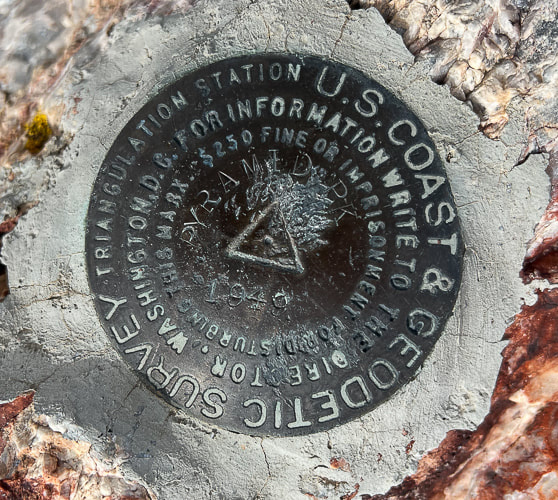
The beautiful Eureka Quartzite on the summit of Pyramid Peak.
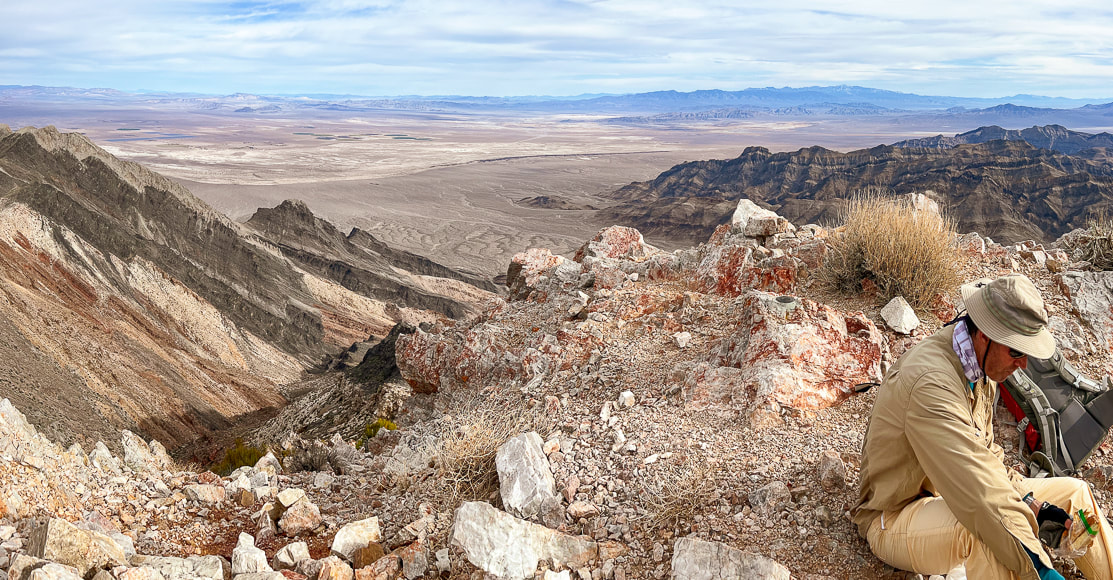
At Pyramid Peak's summit looking toward the east - Amargosa Desert.
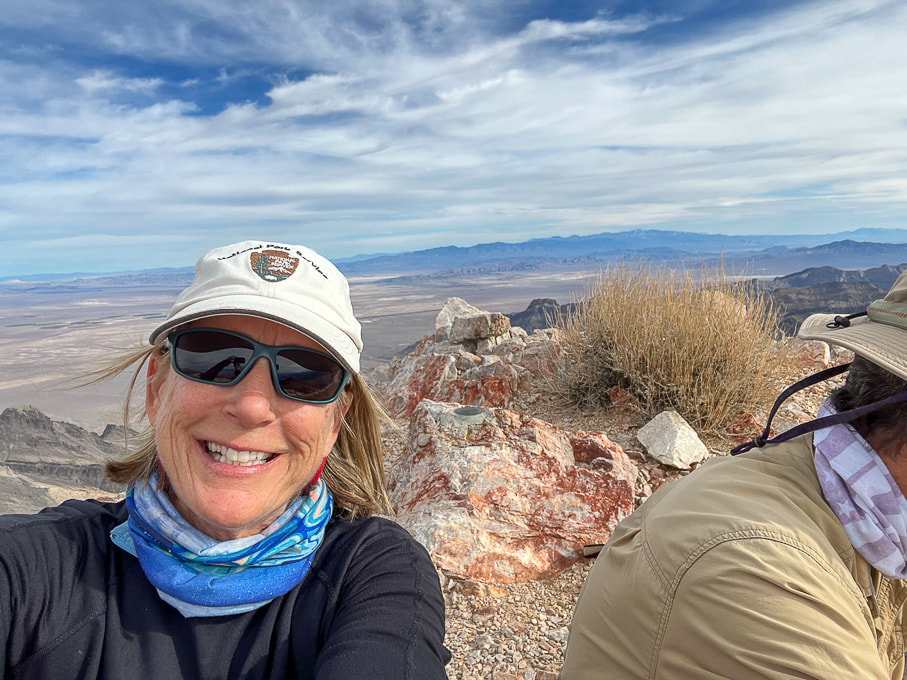
Pyramid's summit!
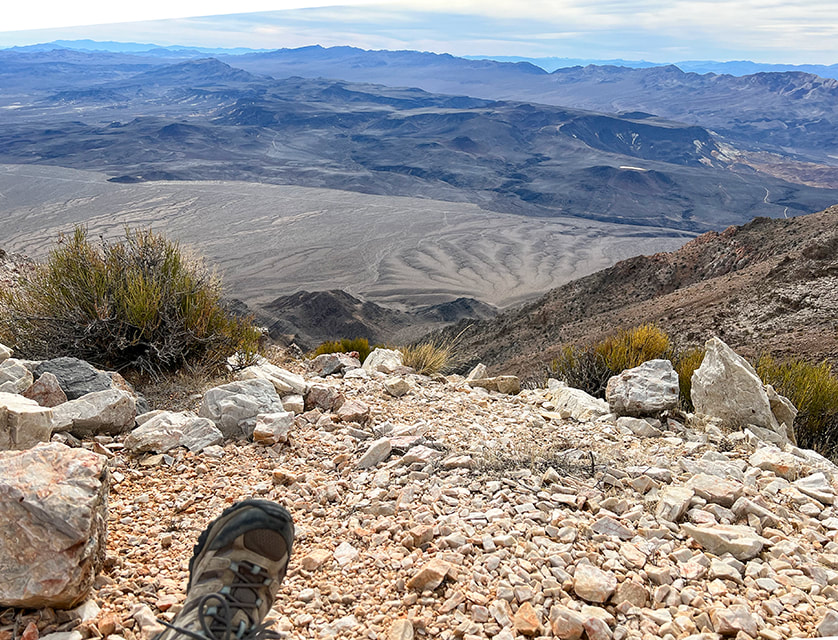
Pyramid's summit looking down on our alluvial fan approach and Highway 190.
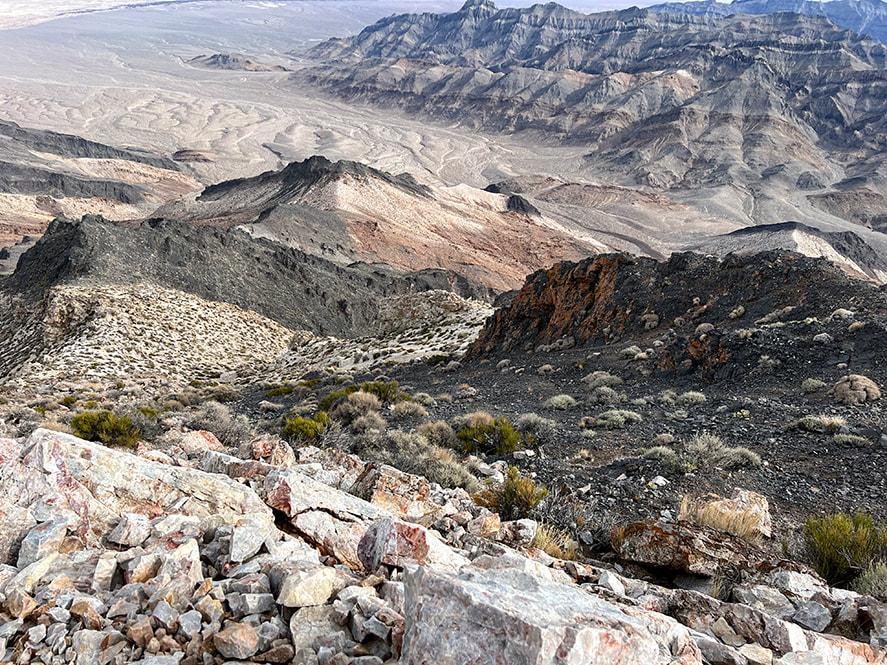
From the summit looking east toward the Amargosa Desert and Nevada.
"Amargosa" is the Spanish word for "bitter", describing water in the Amargosa River, which courses through Amargosa Desert. 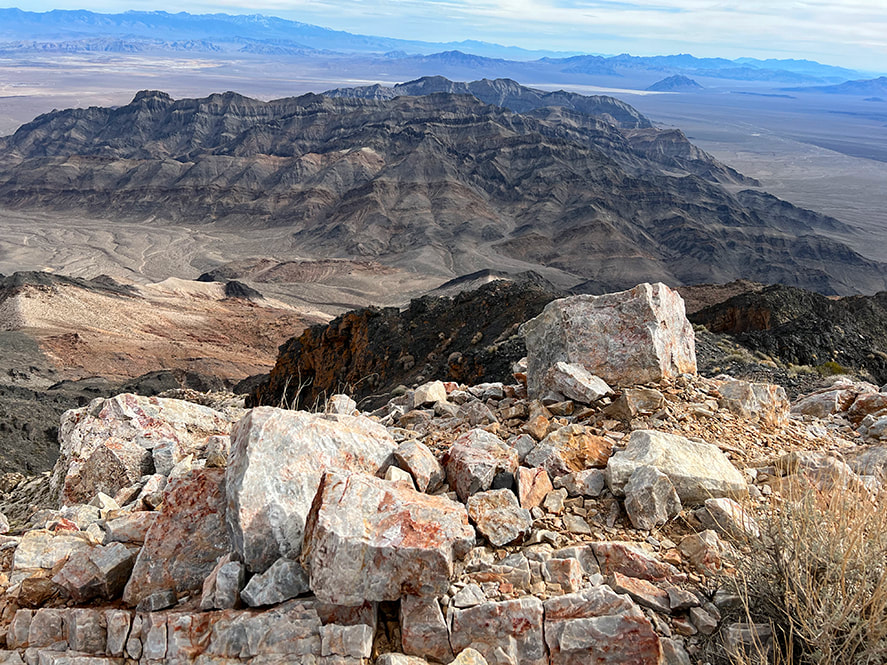
On the summit looking toward Furnace Creek wash and Artist's Pallette in Death Valley.
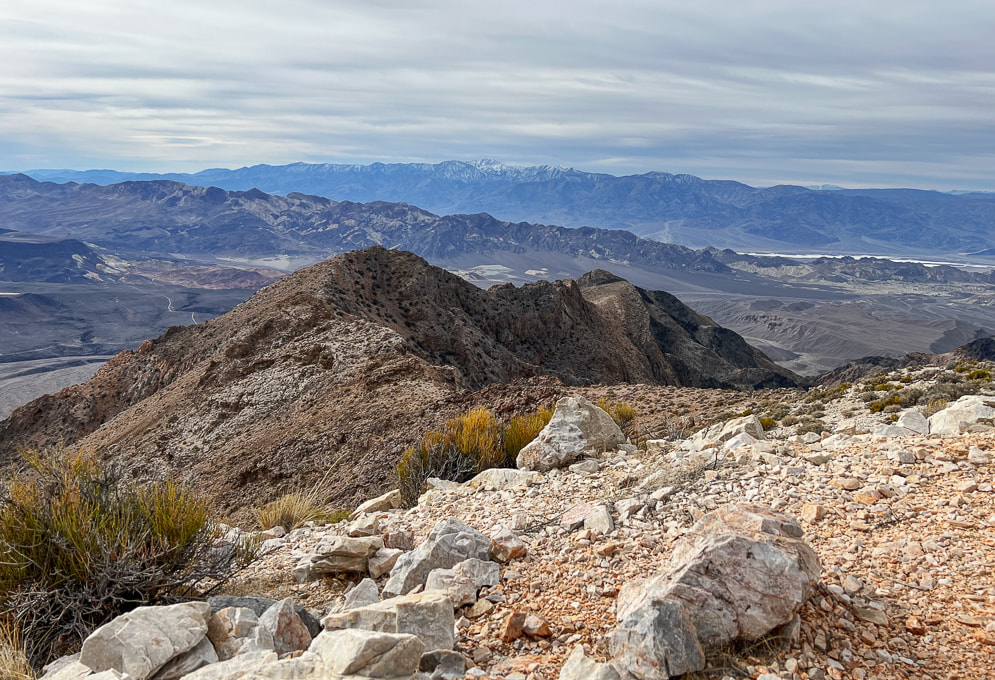
View west of the Panamint Range and Telescope Peak, the highest summit in Death Valley at 11,043'.
The summit of Pahrump Point provides a closer view of Telescope.
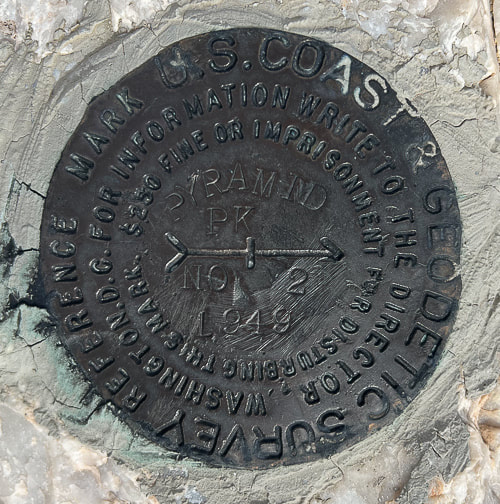
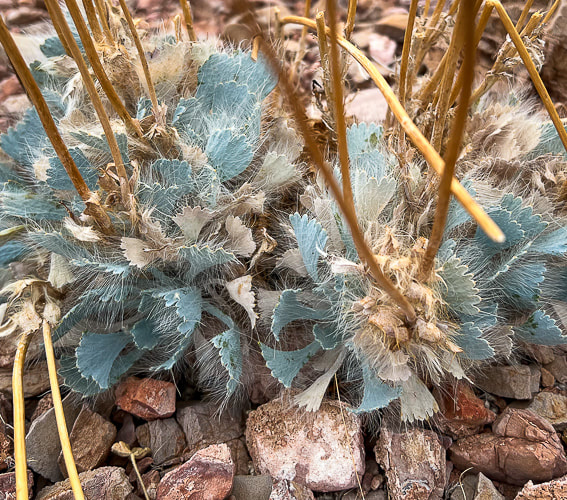
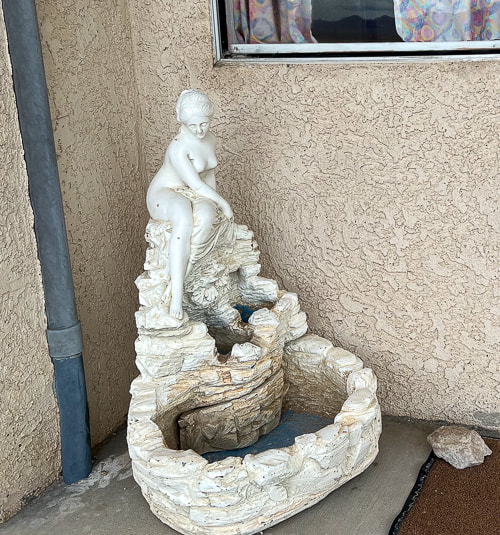
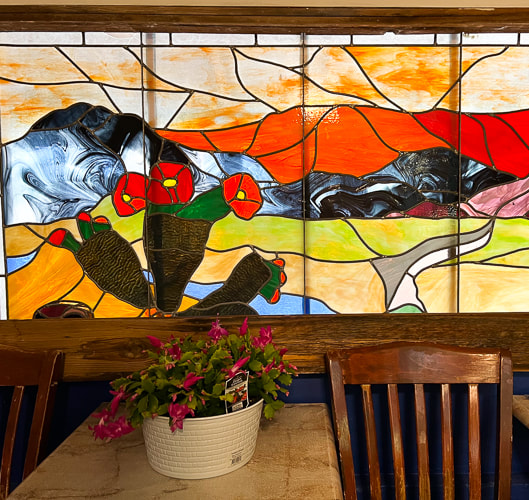
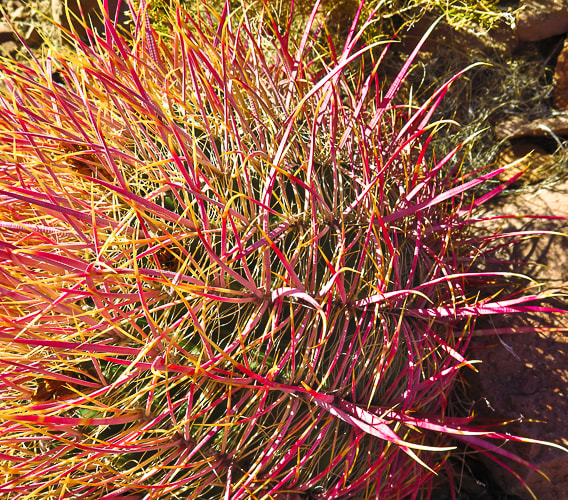
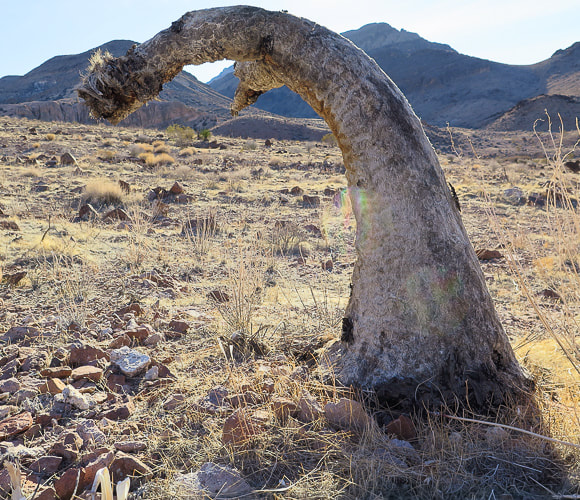
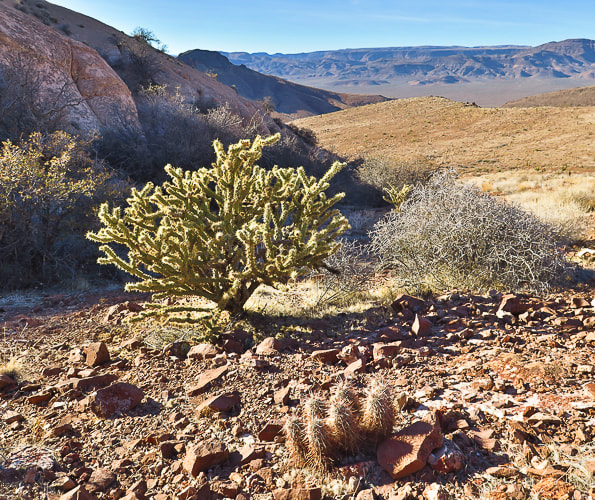
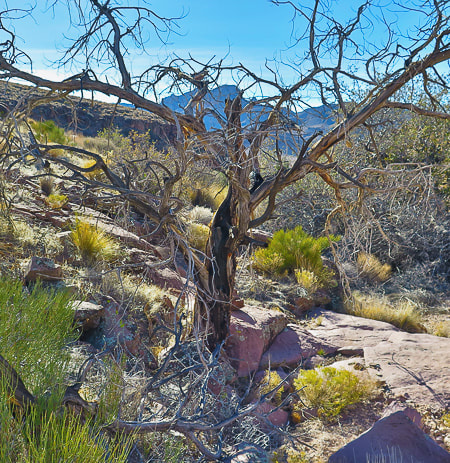
Some cool stuff on the trail.
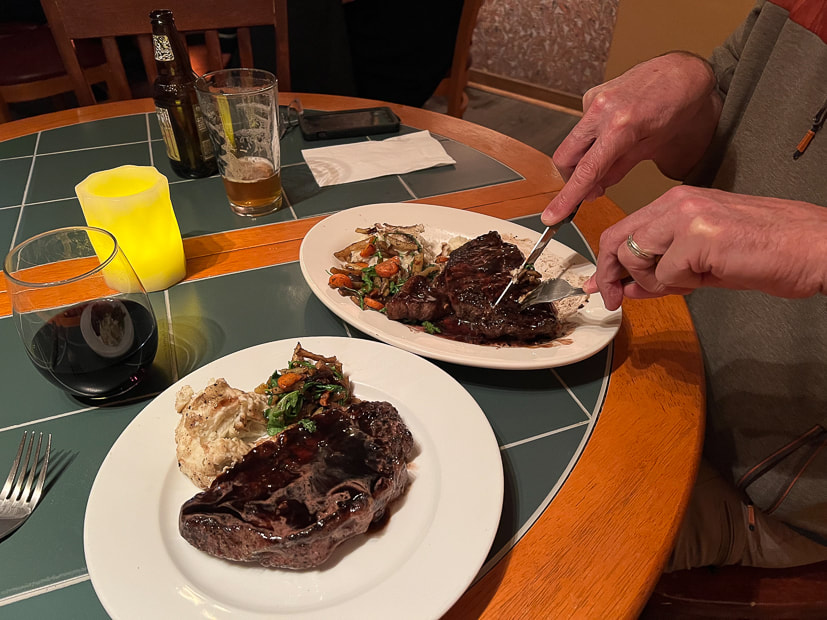
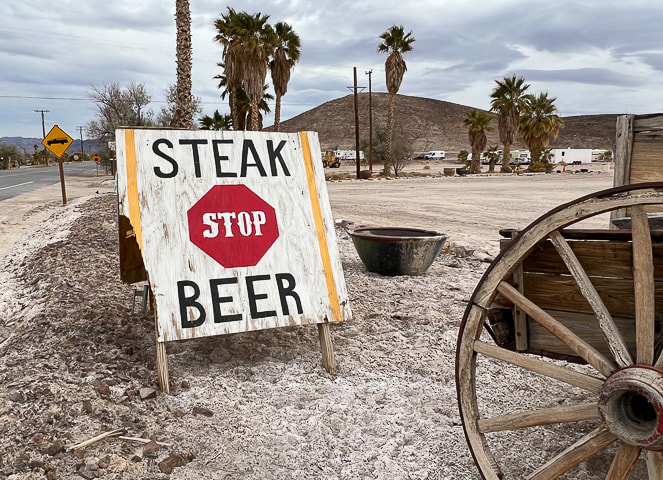
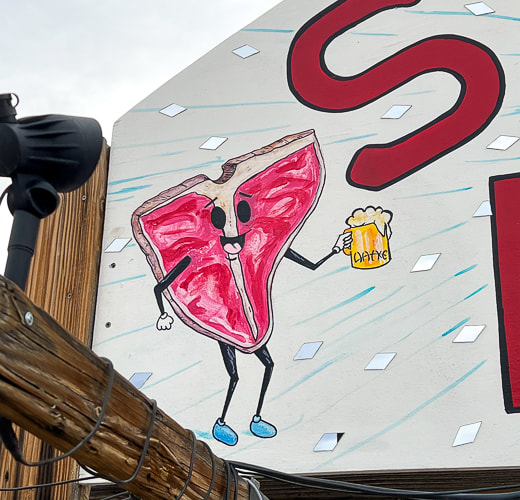
Celebratory rib-eye, beer and wine at Steaks and Beer in Tecopa, California - highly recommended for carnivores!!
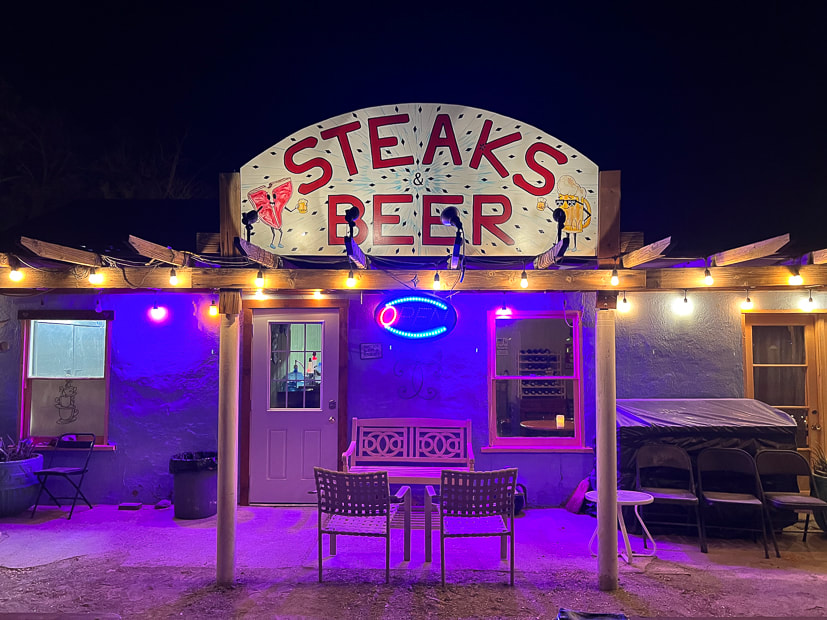
That night after the hike, we walked into Steaks and Beer for our delicious ribeye and cherries jubilee.
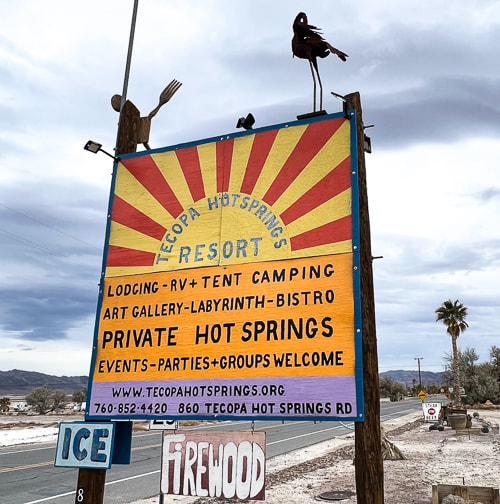
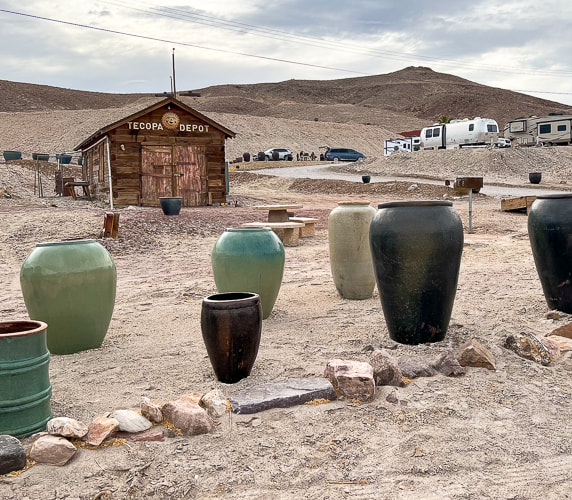
Tecopa Hot Springs Resort - Tecopa, CA.
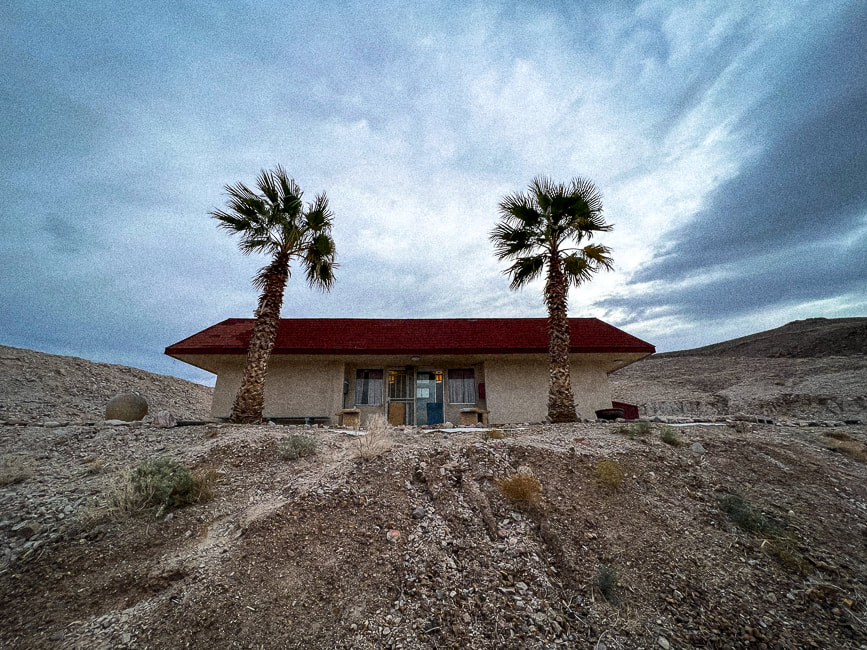
Early morning at Tecopa Hot Springs Resort's bath house.
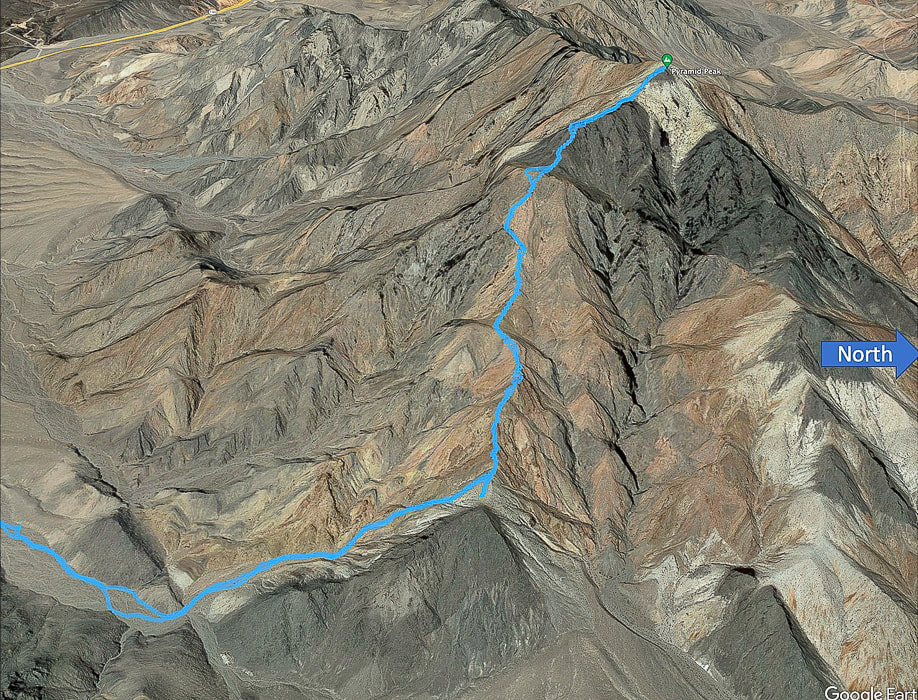
Our tracks on the ridge portion of the hike to Pyramid Peak. Leaving major wash (lower left) to walk to the end of side wash to begin ridge climb.
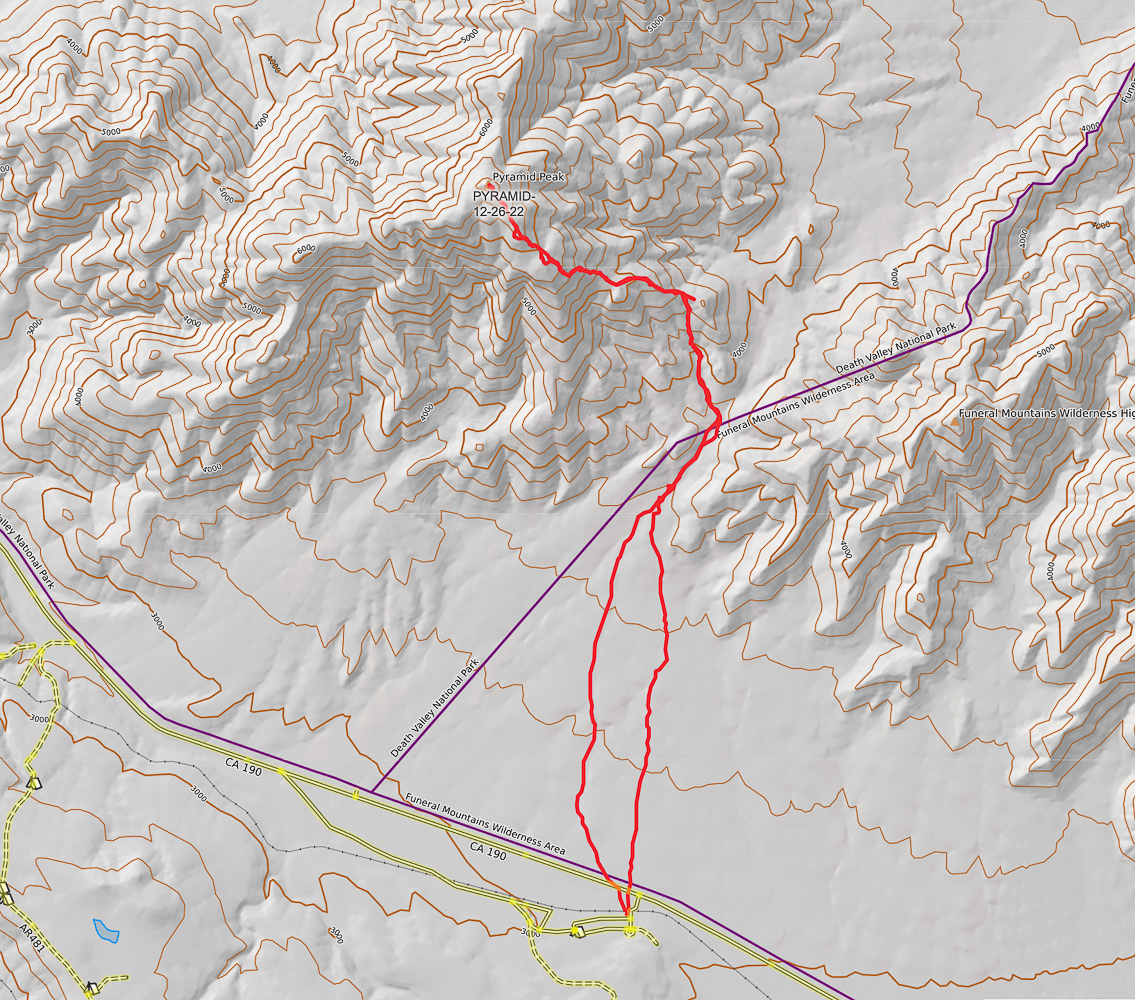
Our GPS tracks from parking at old campground on California Highway 190 to summit of Pyramid Peak (CalTopo maps).
Click on map for larger image 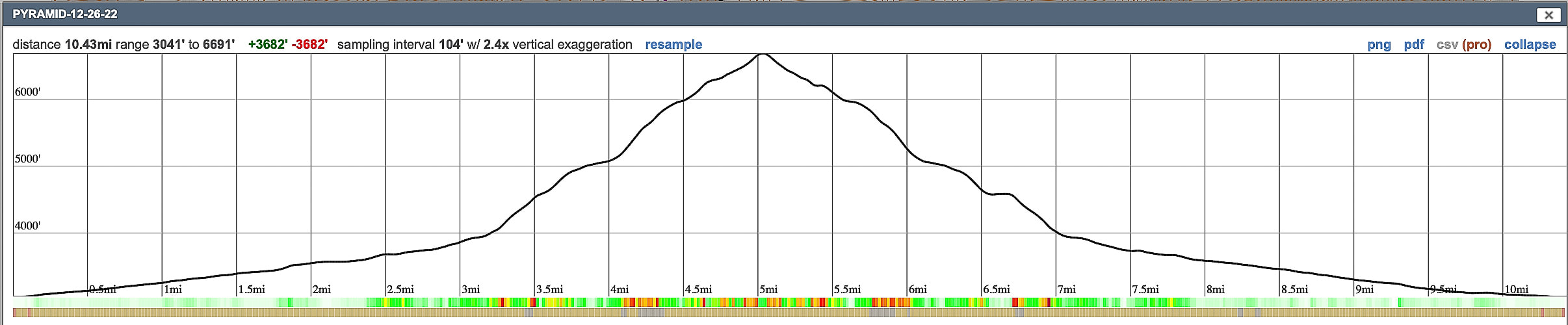
Elevation profile for out-and-back hike gaining 3,700' in 5.2 miles. Hike up alluvial fan/wash for the first three miles.
References
Fridrich, C.J., et al. Preliminary Geologic Map of the Southern Funeral Mountains and Adjacent Ground-Water Discharge Sites, Inyo County, California, and Nye County, Nevada. Geologic Formations. NPS - Death Valley website. McAllister, J. 2009. Geologic Maps and Sections of a Strip from Pyramid Peak to the Southeast End of the Funeral Mountains, Ryan Quadrangle, California
0 Comments
Images of sensational slickrock journeys in southwestern Utah. 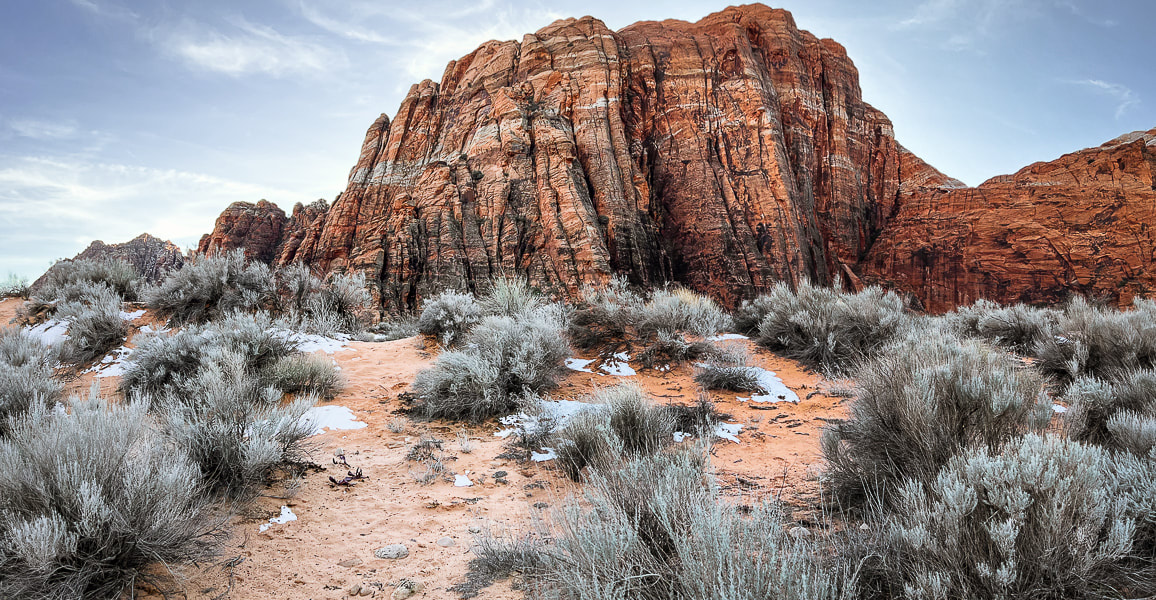 We've made a refreshing change in our mode of hiking and exploring. After years of using established trails, we are doing more hikes "cross-country" over slickrock or remote desert, where markers are few or none. We've been fortunate to hike with a fellow southern Utah explorer who has discovered the routes illustrated in the slickrock slideshows below. I still appreciate rock cairn markers over miles-long treks in slickrock seas, like Boulder Mail Trail to Death Hollow in Grand Staircase-Escalante. And, as the southwestern deserts heat up, we will find ourselves in higher elevations on signed forest trails. Navigation through slickrock country is a fun way to explore, but extra precautions are needed. You can use dead-reckoning and a compass to travel, but using a topo map helps you discover the canyons and plateaus between you and your destination. I've started using Topo Maps US, an iphone and ipad compatible navigation application (version 12.0 or later). With this app, you can download maps for areas in which you will be hiking, record and save your tracks. I also always use my Garmin GPS to record our tracks, and occasionally Avenza Maps. Don't Walk on the Crypto! (more info at end of this post).
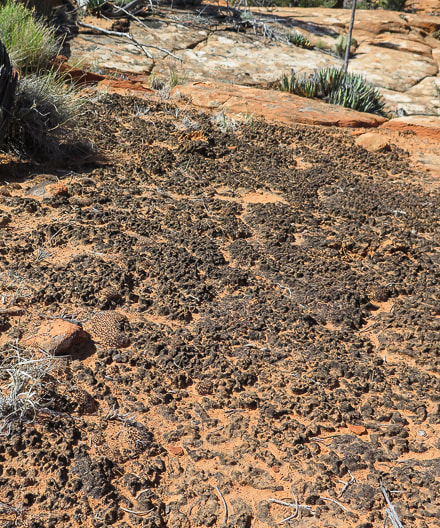
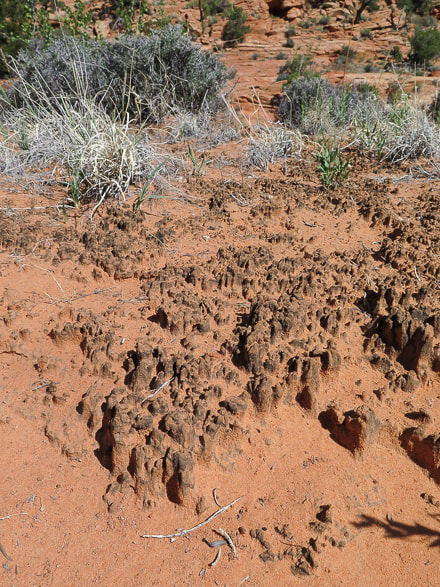
As in Slickrock Nirvana - Part One, the following slideshows contain images from our unique excursions. More images follow the slideshows. “Instructions for living a life. Pay attention. Be astonished. Tell about it.” ― Mary Oliver Yant Flat and areas around St. George, Utah Red Mountain Wilderness 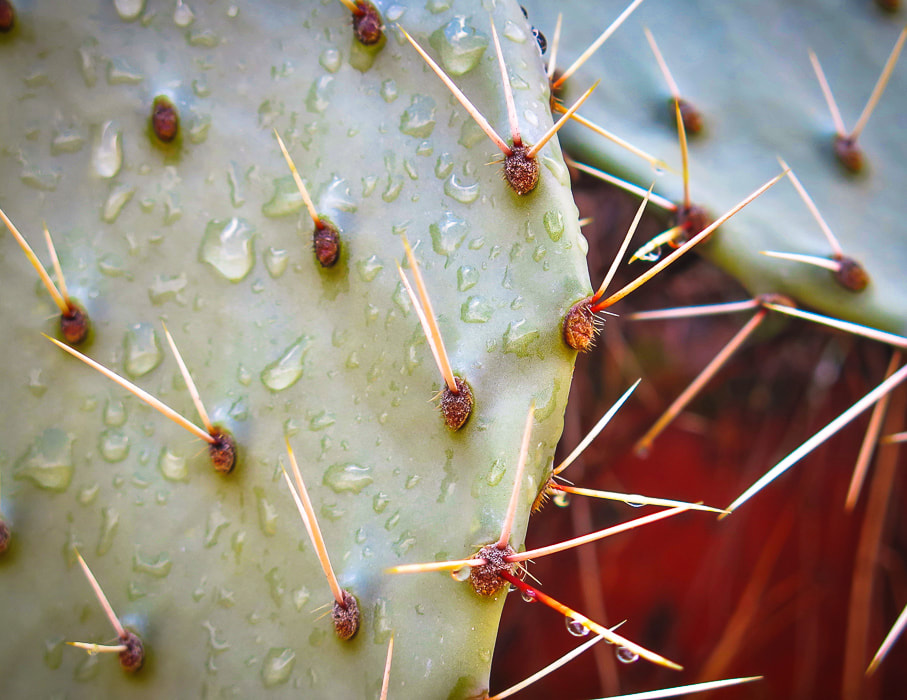 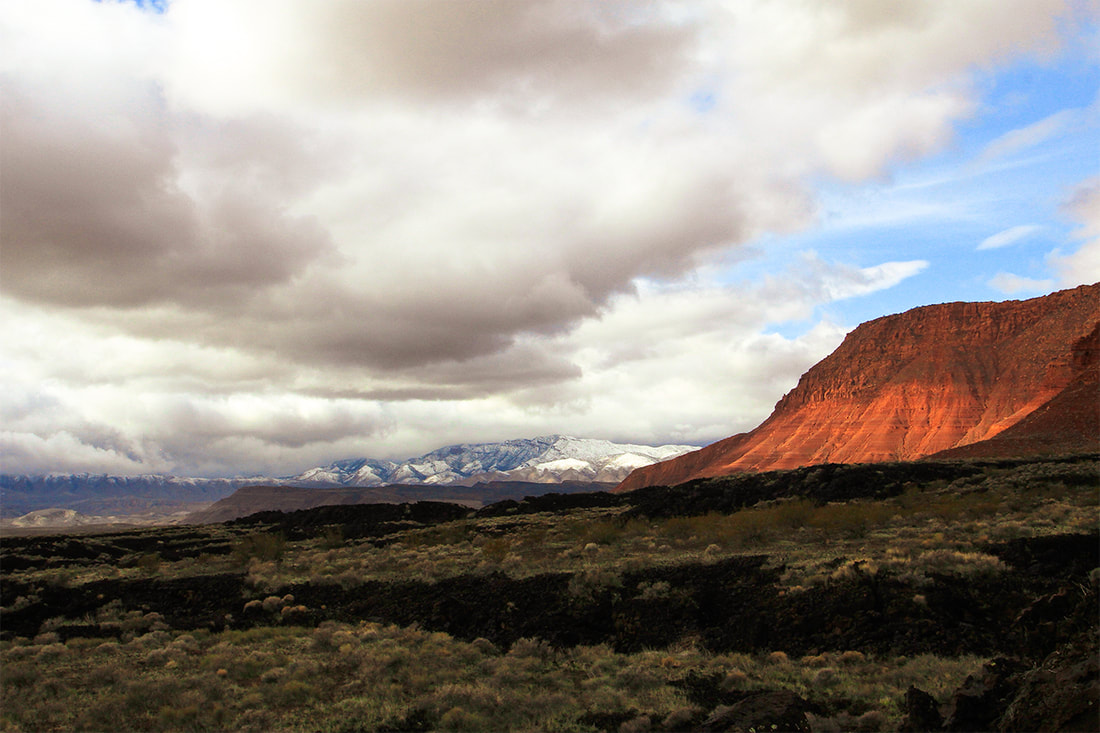 Snow Canyon State Park - basalt flows, Navajo Sandstone, and snow-covered Beaver Dam Mountains (limestone). 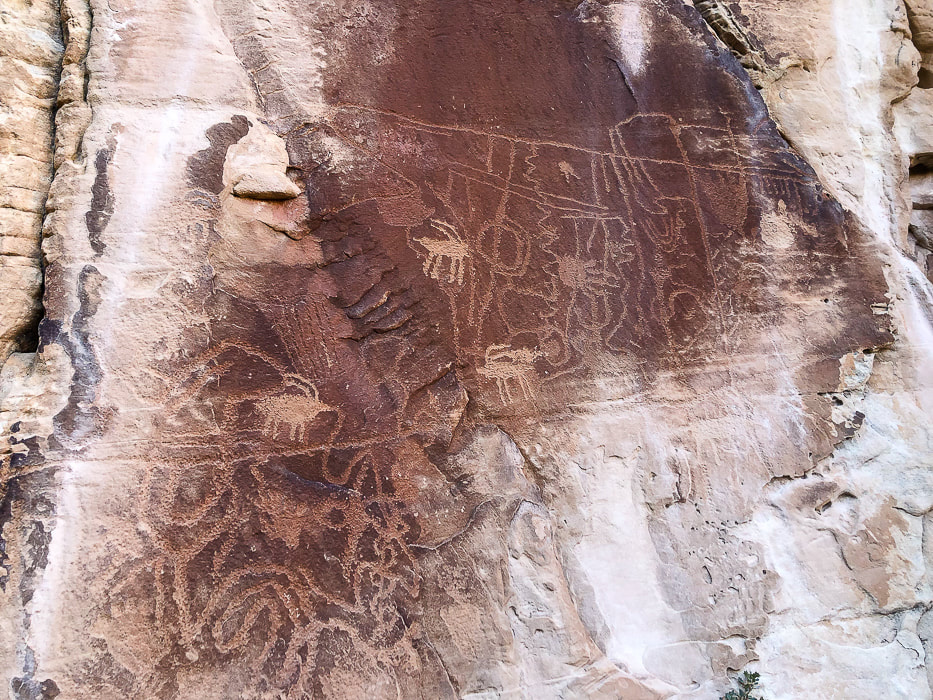 For more on petroglyphs: In Search of the Rattlesnake Petroglyph 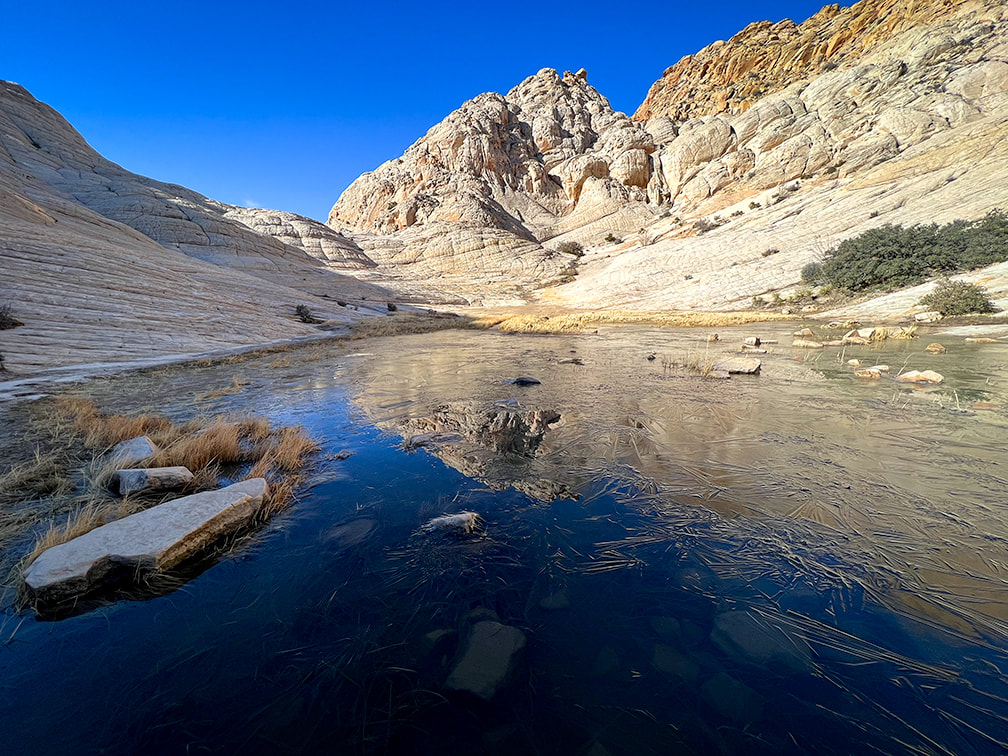 Don't Walk on the Crypto! A subscriber to my posts asked a great question: "I wonder if you worry about the cryptobiotic crusts?" We had to dodge and maneuver around these amazing stabilizing soil crusts to avoid stepping on them. They're an important part of the ecology in desert ecosystems, and take many years to rebuild if destroyed. Cryptobiotic (biological) Soil Crusts
Cryptobiotic (biological) soil crusts, made of cyanobacteria, lichens and mosses. These form on easily eroded soils and increase stability and help provide more water infiltration and are the dominant source of nitrogen in pinyon-juniper ecosystems. These crusts hold the soil in place. Recovery of crusts that have been destroyed takes at least 45 years. 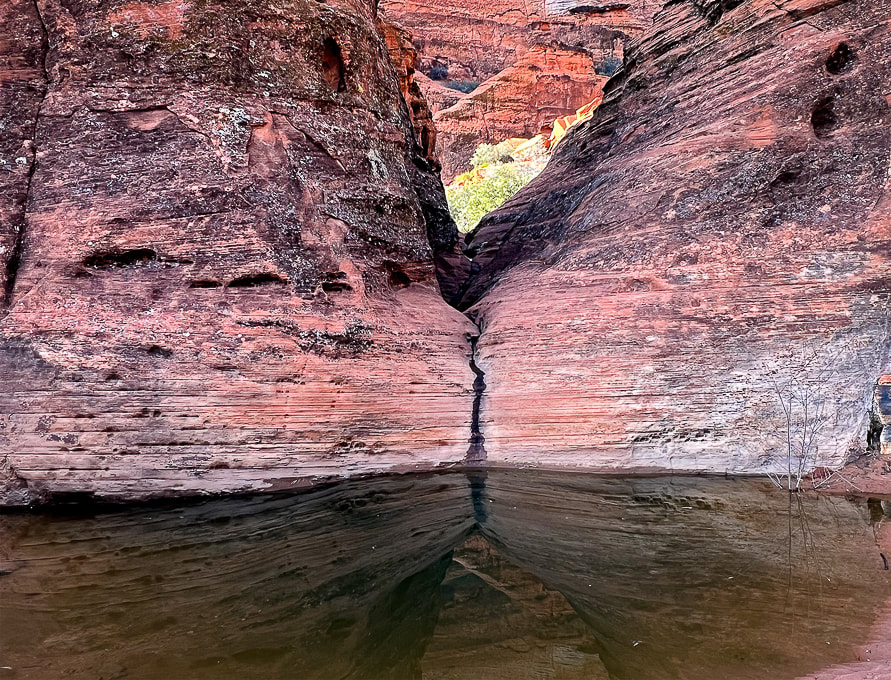 References
Loope, D. et al. 2016. Sandstones and Utah’s canyon country: Deposition, diagenesis, exhumation, and landscape evolution. University of Nebraska - Lincoln. Hike the only named mountain in this obscure, remote and rugged Nevada mountain range. 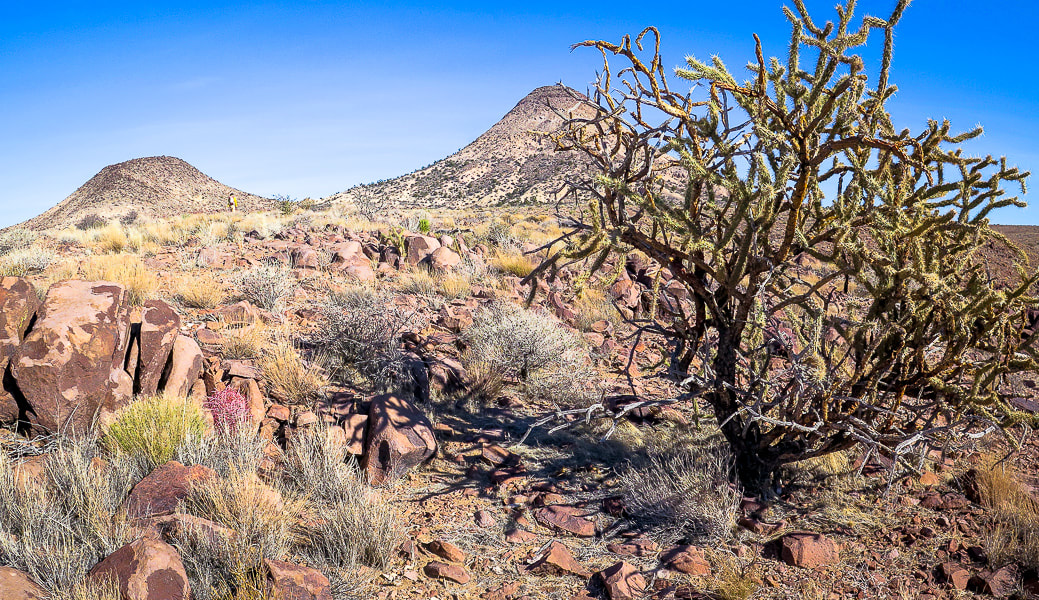 Approaching the base of Sunflower Mountain (right), a volcano that erupted 14 million years ago (m.y.a.). Trip Stats
Location: Meadow Valley Range Wilderness (BLM) - southeastern Nevada. Overview: Make your own loop-hike in solitude to the summit of Sunflower Mountain in a mountain range infrequently traveled, with the option to continue northeast along tilted cliffs to Kane Benchmark. Distance/Elevation Gain: 5.3 miles/1,670'. Prominence: 842'. Difficulty: Moderate effort Class 2, no cairns, not marked, no discernible trail - must be experienced with navigation. Coordinates: Trailhead: 37.06787,-114.76415. Sunflower Mountain: 37.07292,-114.73997. Maps and Apps: Printed map from CalTopo.com, Stavislost.com., Topo Maps U.S. Date Hiked: 11/25/22. Geology: Sunflower Mountain's volcanic eruptions (14.7 million years ago) produced rhyolite, a silica-rich rock formed from granitic magma, which is more viscous than iron- and magnesium-rich basaltic magma. Rocks associated with rhyolite are tuff and pumice, present on Sunflower's flanks. The Meadow Valley Range is underlain by folded and faulted Cambrian (500 mya) through Triassic (250 mya) age rocks. On the drive from Moapa, Nevada, this rock is especially exposed in the southern part of the range as limestone cliffs. Related Posts:
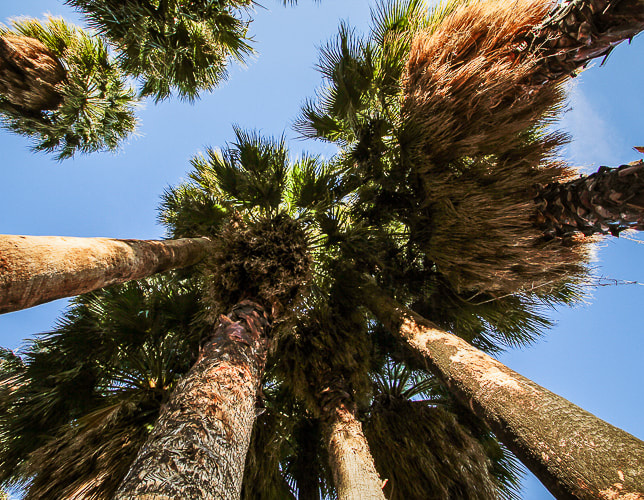
Open Spaces If you relish wide open spaces with minimal human influence, like the freedom to chart your own path to discover features that others haven't, and don't mind the occasional cactus spine jabs and rough rock-hopping, this rugged land is for you. It's a place for open space "aficionados". Sunflower Mountain's summit allows you to see what's going on in the Great Basin desert of Nevada: raw, contorted, ripped and tilted geography as a result of earth's spreading and faulting. Some say this desert land is too spare, but each plant must fight for survival, changing to adapt. This clever determination earns respect and admiration. Many times you find unexpected things like fossils, springs and weird rocks. I've found what looked like a miner's crucible and pottery sherds in remote deserts. Surprise and unpredictability separate this biome from others. A scene from the t.v. series Yellowstone prompted me to pull The Solace of Open Spaces by Gretel Ehrlich out of my bookcase. In this scene, Beth, the daughter of John Dutton, the Montana ranch owner, is reading this book, wondering how to find solace. "Solace must be discovered," her dad tells her. Early in the book, Ehrlich states "Space has a spiritual equivalent and can heal what is divided and burdensome in us. Space represents sanity, not a life purified dull, or "spaced out" but one that might accommodate intelligently any idea or situation." She writes about the extreme weather and landscapes of Wyoming, and its people. Ehrlich found solace in Wyoming after a tragic event in her life . Some people find solace and revitalization in remote, open spaces. Others find the same in the hubbub of big cities. Is it an acquired preference that grows out of an appreciation for open spaces after you spend some time in them? Or are some people more naturally attracted to them? At any rate, the American West is rich with opportunities for solitude, solace, freedom, discovery. The list goes on.... "The extreme clarity of the desert light is equaled by the extreme individuation of desert life forms. Love flowers best in openness and freedom." - Edward Abbey "The farther one gets into the wilderness, the greater is the attraction of its lonely freedom." - Theodore Roosevelt "Give me silence, water, hope. Give me struggle, iron, volcanoes."- Pablo Neruda We also stopped by the Moapa Valley National Wildlife Refuge. It is a tranquil place with many old California palm trees (see end of this post). It was created to protect the endangered Moapa dace - a small fish endemic only to this area. A sign here indicated Las Vegas showgirls used to frolic in these hot springs - there was an old cabana from years past - before it became a wilderness reserve. Our Hike (see topo map at end of post) - 5.3 miles round-trip
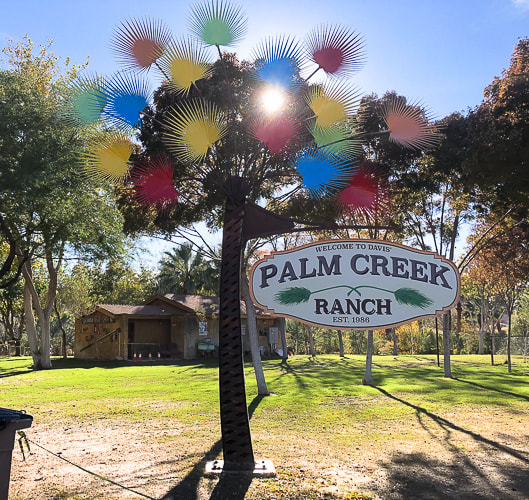
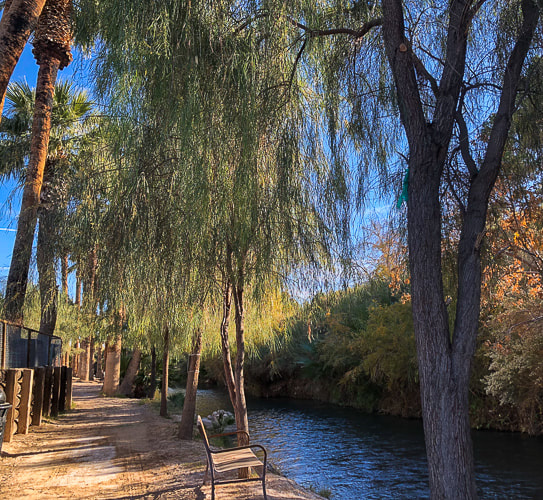
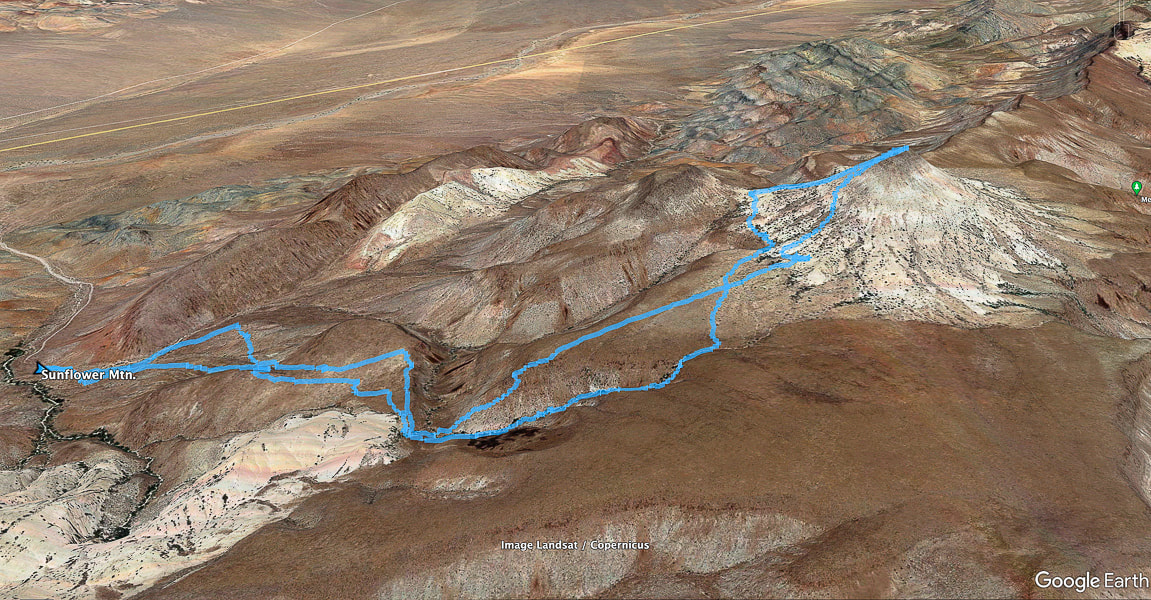 Our tracks from trailhead (left) to Sunflower's summit. We drove up road accessible by high-clearance from Kane Springs Road, seen as straight line in valley below (upper left). We approached via climbing the plateau that lead to the base and returned via a fun scrambling canyon. Meadow Valley Range is one of the most obscure of Nevada's over 300 mountain ranges. North is at top of map 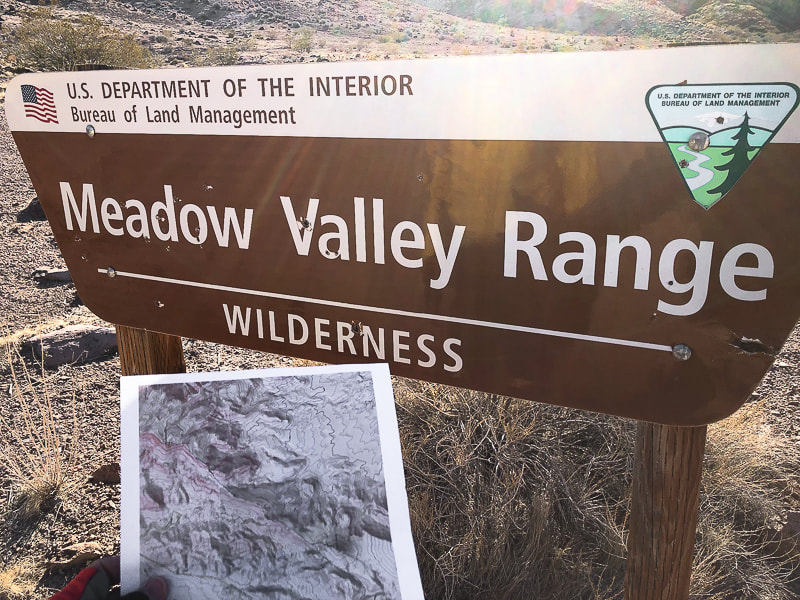 Got my printed topo map ready! You can park near this sign if you have high clearance vehicle. 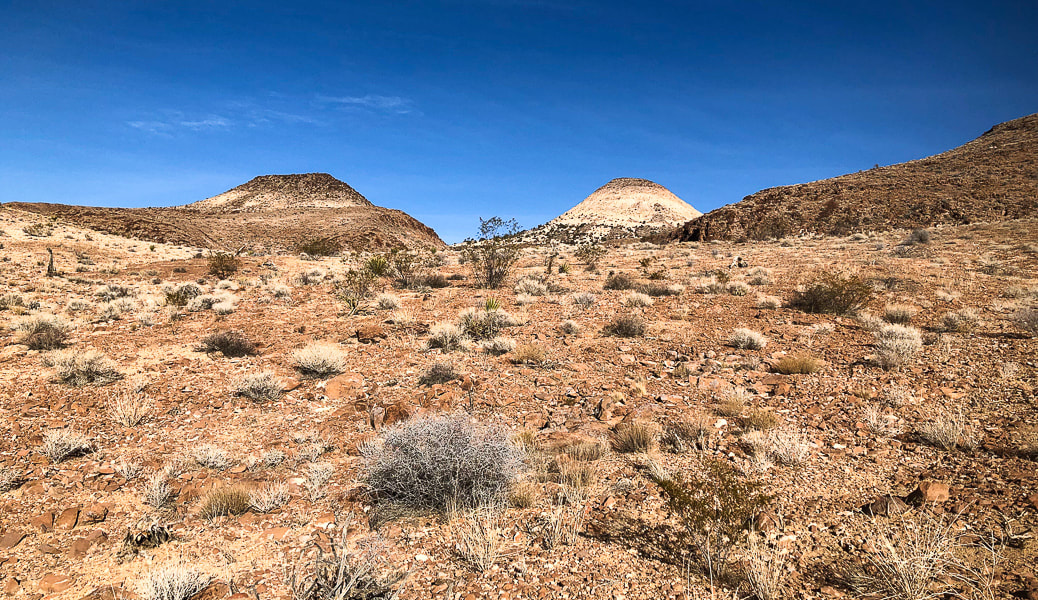 Can't get enough of photographing this cool-looking extinct volcano, the only named peak in this range- Sunflower Mountain. 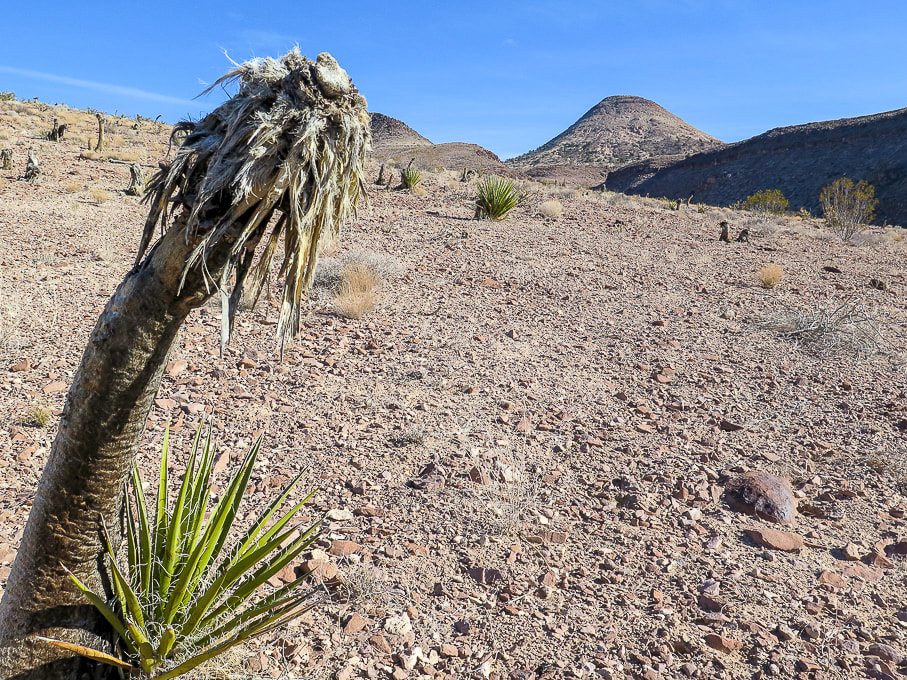 Heading east from trailhead - a lot of dead yuccas, apparently from a fire, dotted this landscape. The new growth is a good sign. 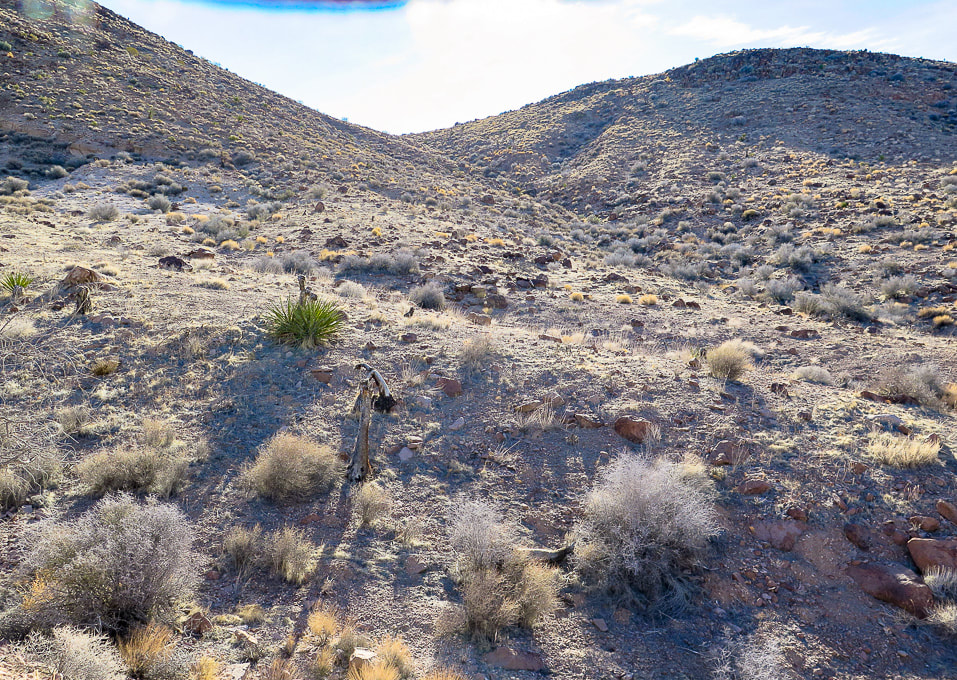 From the BLM sign, we headed east to a shallow drainage that led to a saddle. We headed south into a shallow drainage and the opening of the small canyon that we would hike down on our return. 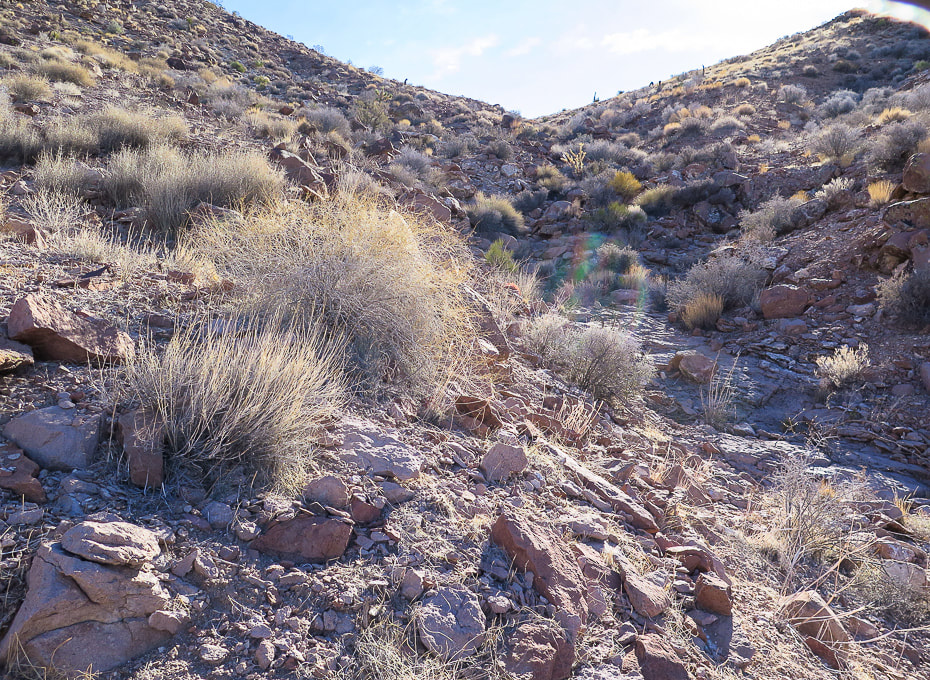 Getting closer to the saddle. 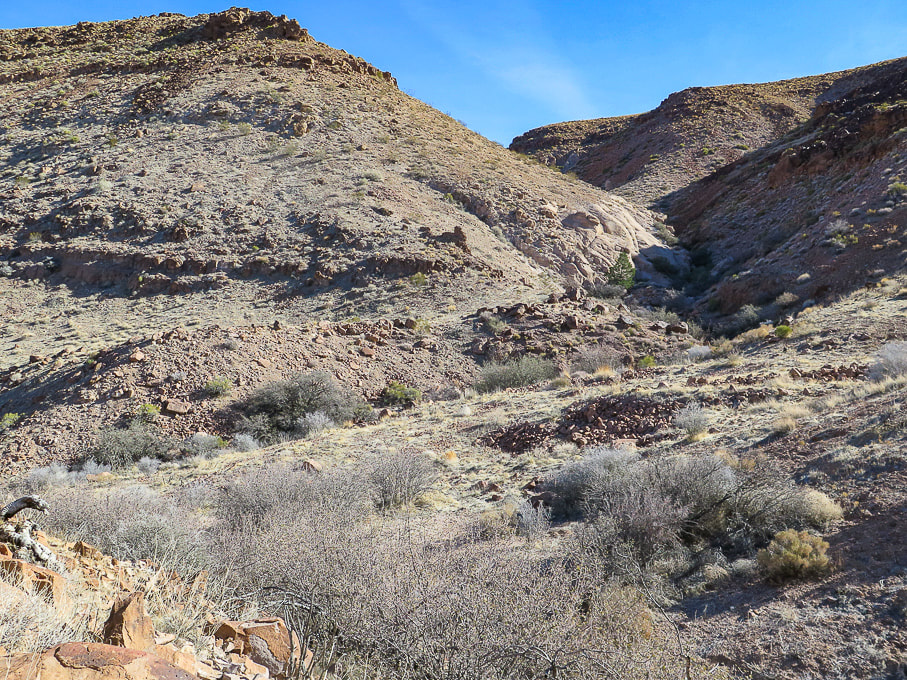 From the saddle, dropping into the drainage. On our ascent, we climbed the hill on the left; on our descent we hiked down the drainage on the right. 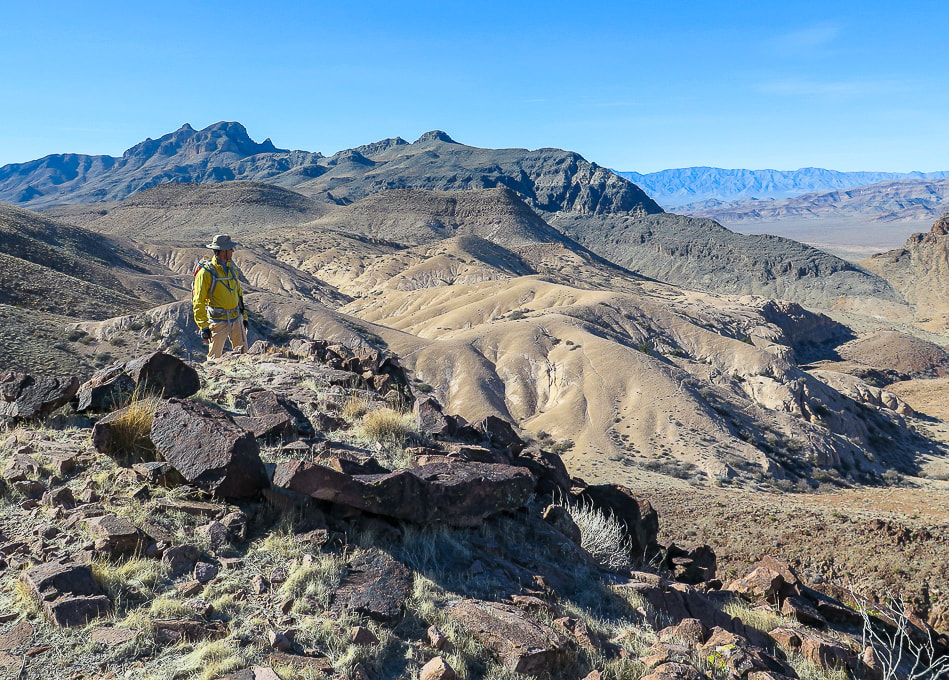 Reaching the top of the hill out of the drainage; from here, a long flat plateau leads to the base of Sunflower. Looking back at flat area we just ascended. 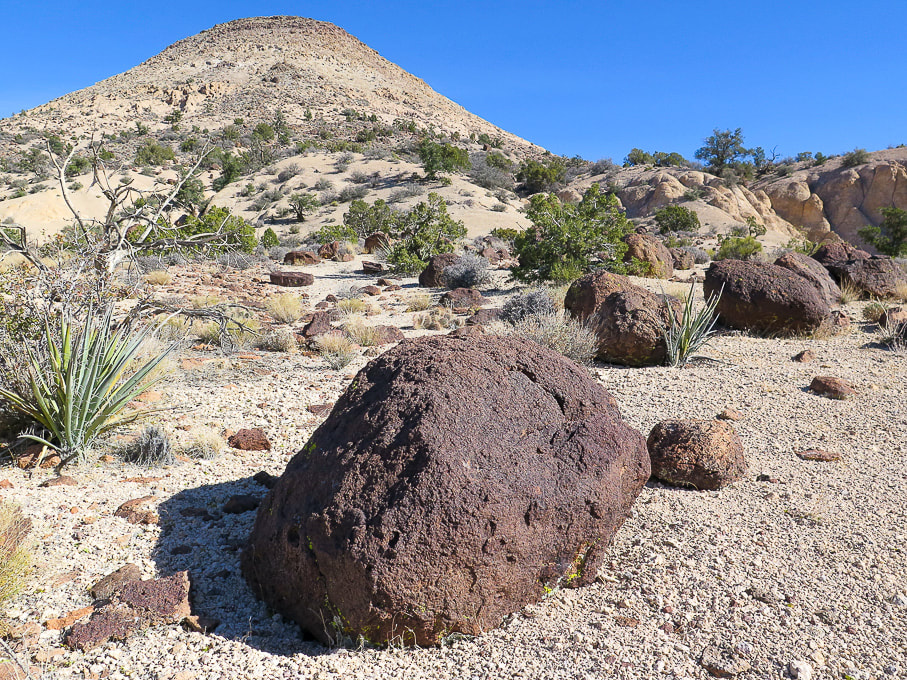 The flanks of Sunflower mountain contain lots of light-colored tuff (consolidated ash). 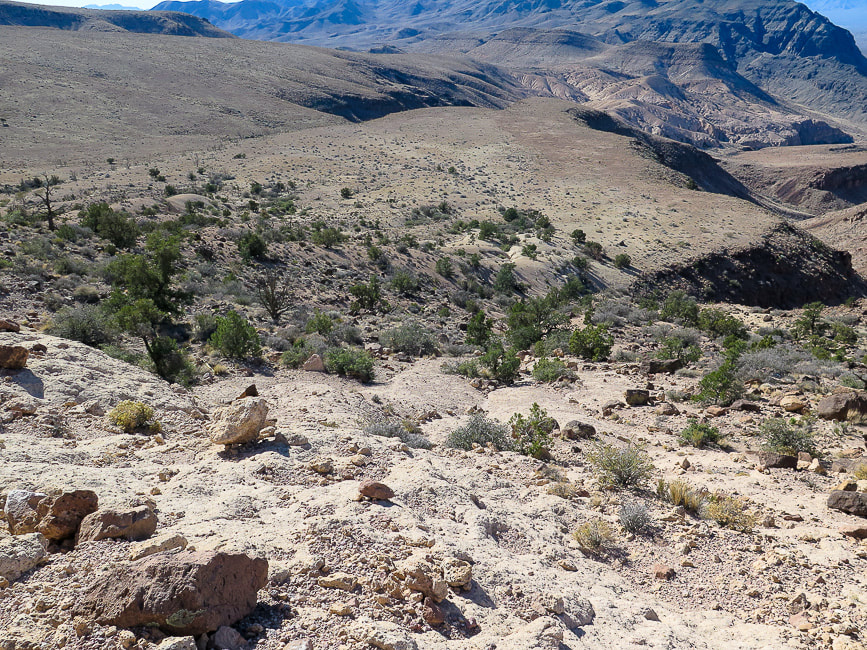 Climbing Sunflower and looking back at the plateau we just crossed. 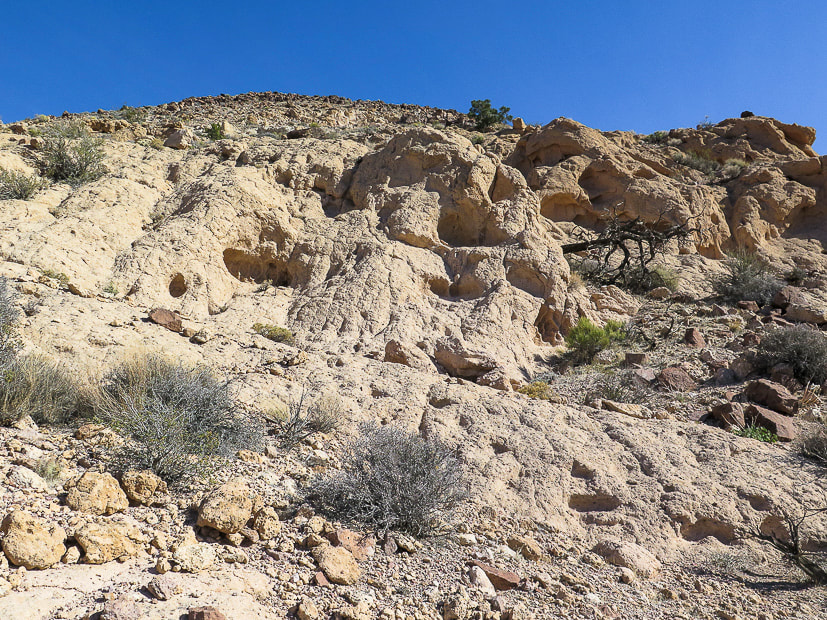 Tuff - consolidated ash. Rock is loose in some spots, but not too bad. 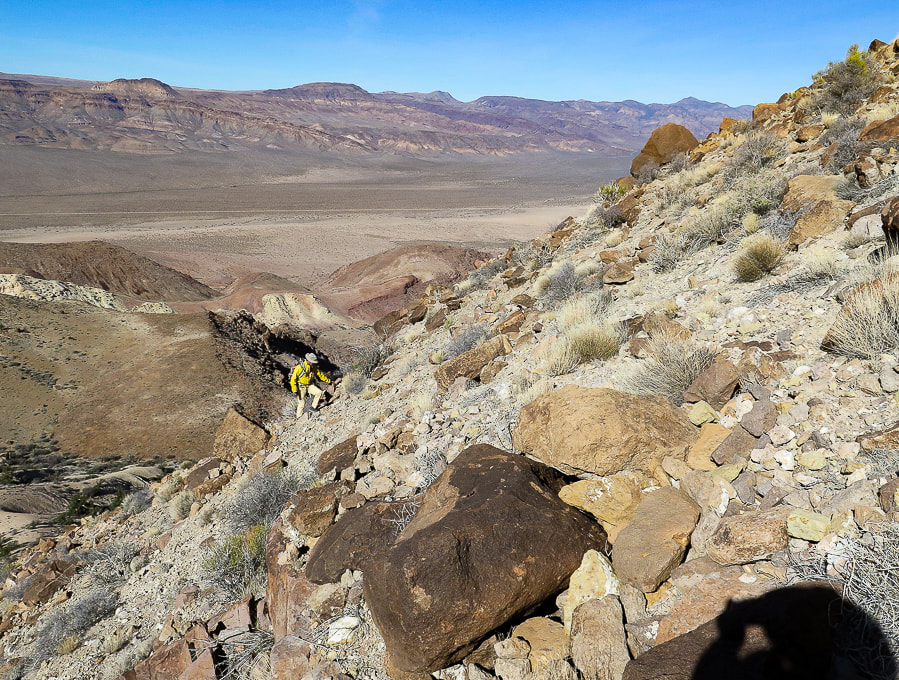 Climbing an old volcano! Great view of Kane Springs Valley and the Delamar Mountain range across the valley. 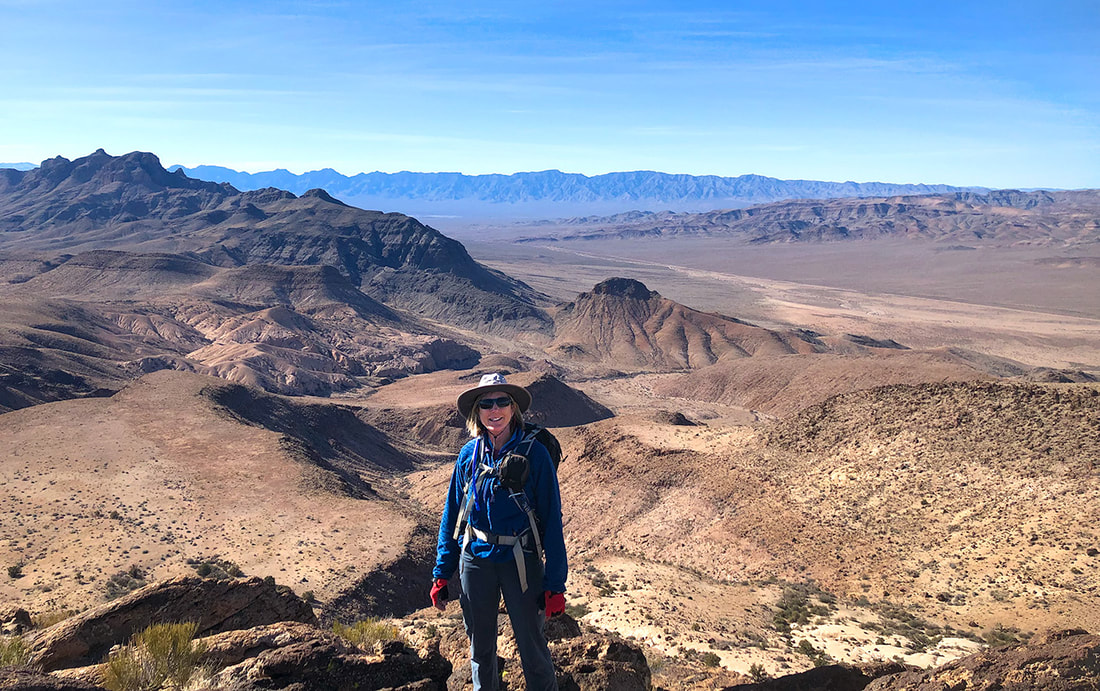 Top of Sunflower Mountain looking back to Kane Springs Valley and road we drove up on (Kane Springs road). 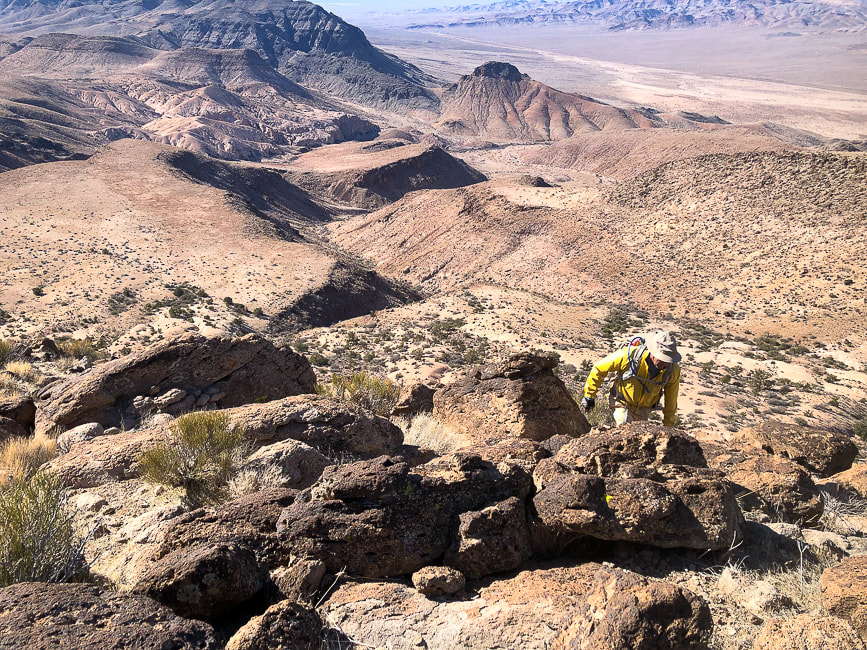 View southwest from summit of Meadow Valley Mountain range. 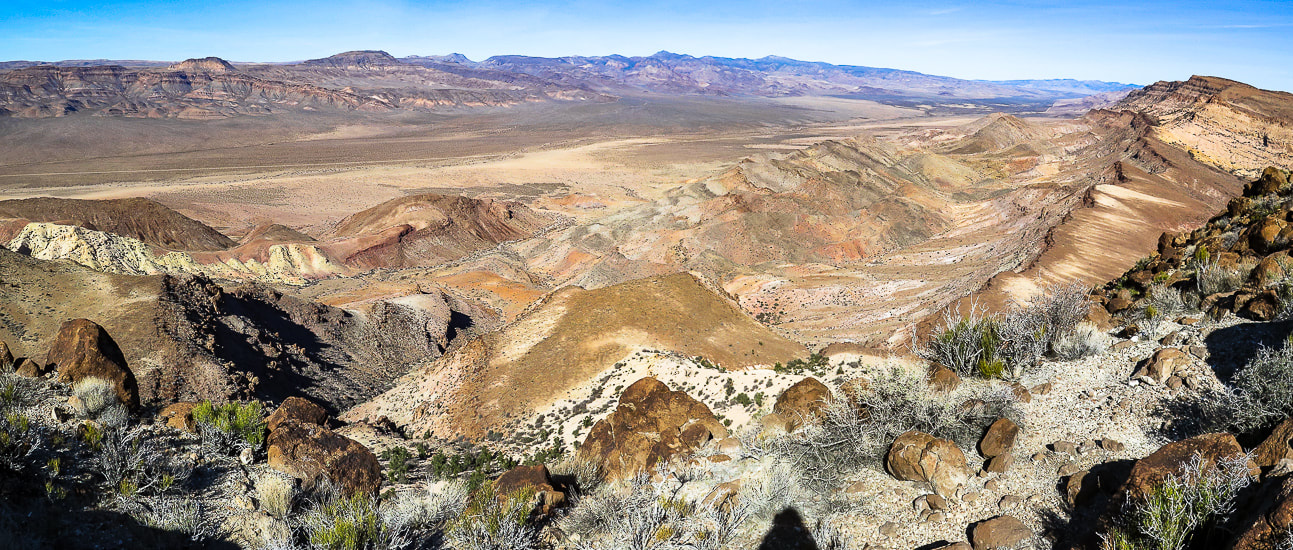 View northeast to Kane Benchmark (upper right high point). We didn't see any traffic on Kane Springs Road in valley. 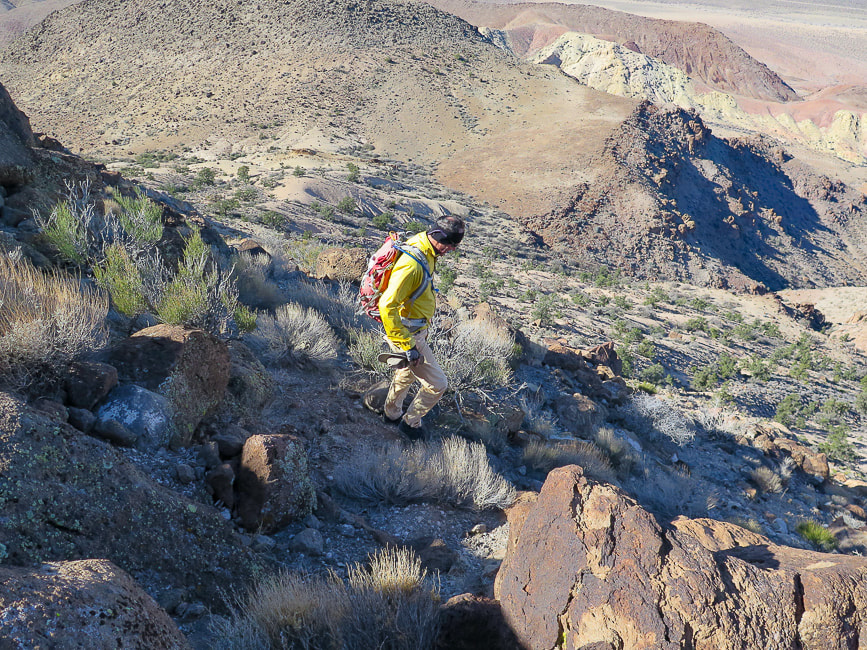 Heading off summit on the west flank to the flat spot just behind Fred in the saddle. 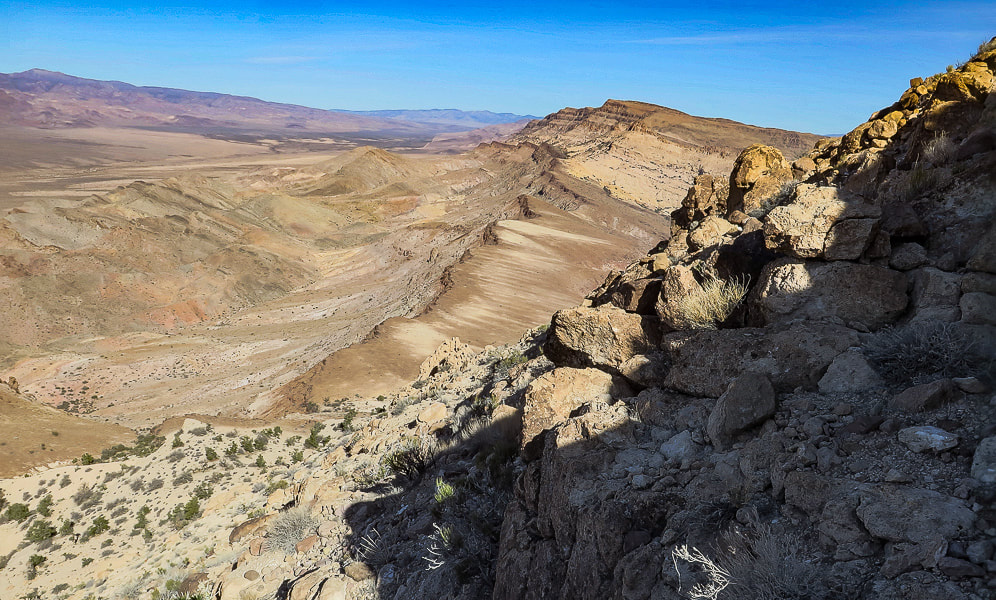 View of Kane Benchmark (high point on horizon) from west slope of Sunflower. 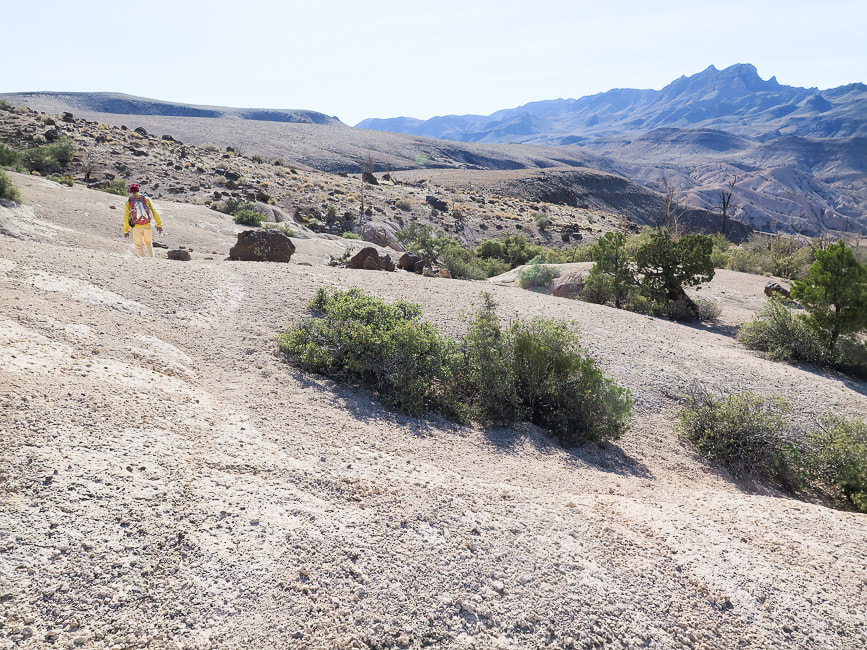 Walking along base of Sunflower back to approach plateau. 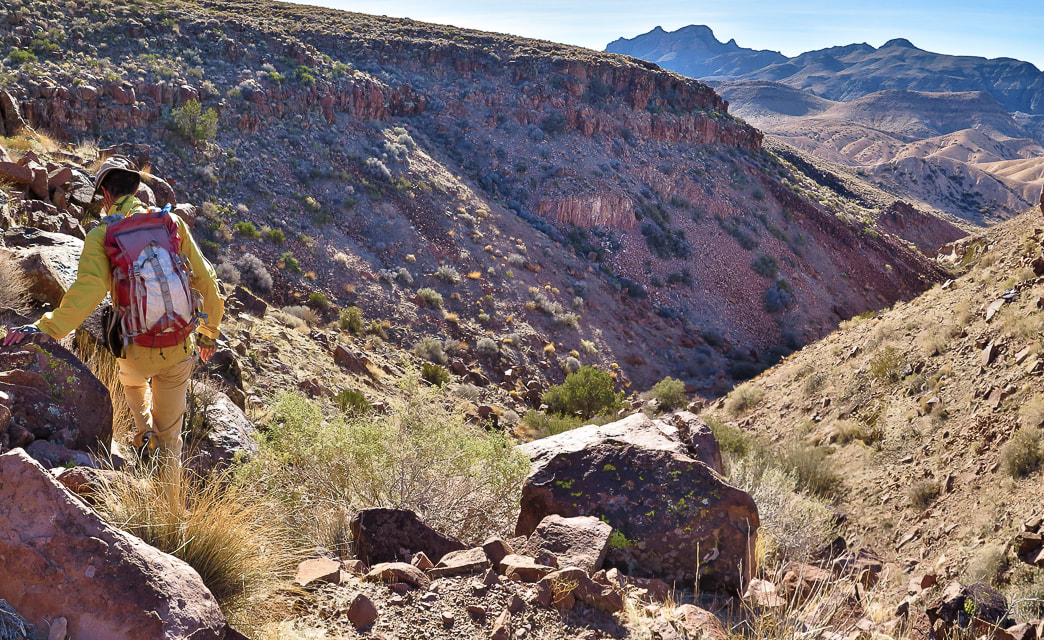 Hiking down drainage under (to the south) of plateau we climbed for approach to Sunflower's base. 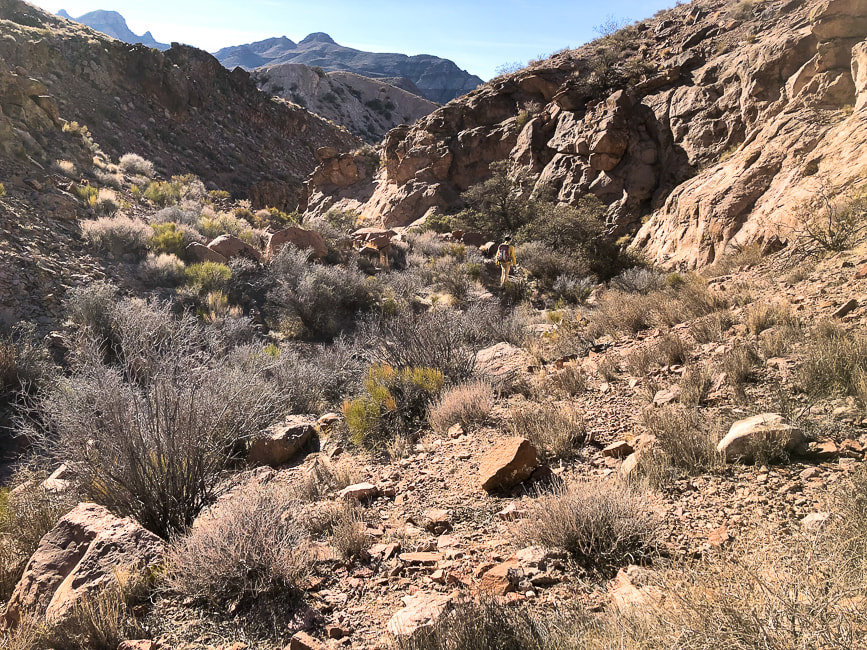 Progressing down the drainage. 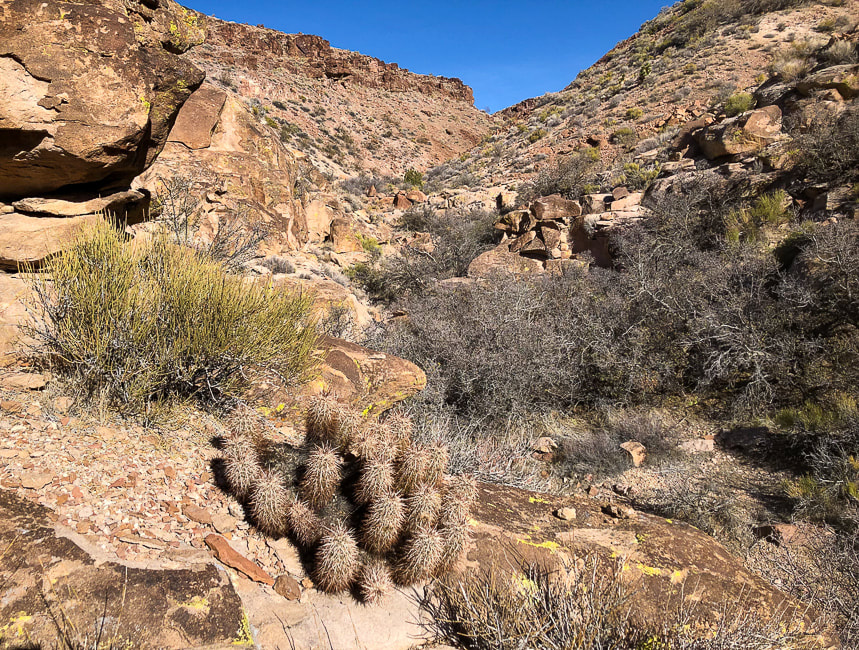 Looking back at entry point into drainage and the plateau we climbed earlier on our approach to Sunflower. 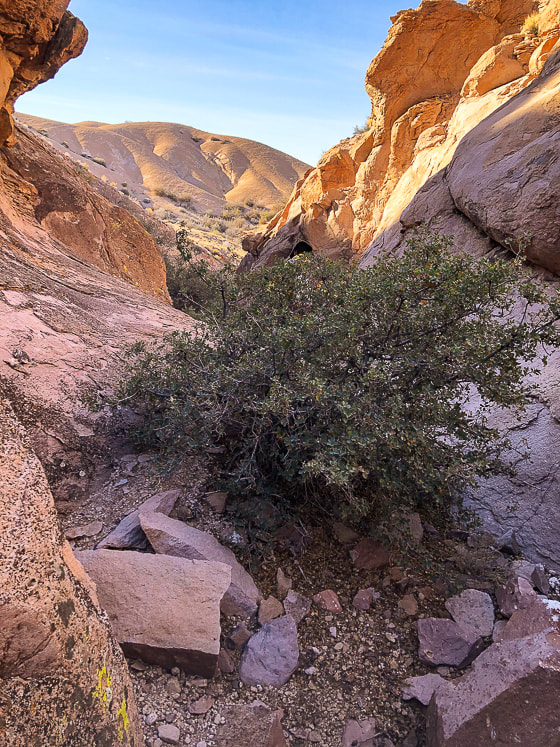 Some cool stuff on the trail. Moapa Valley National Wildlife Refuge and Palm Creek Ranch in Moapa, Nevada 60 miles north of Las Vegas 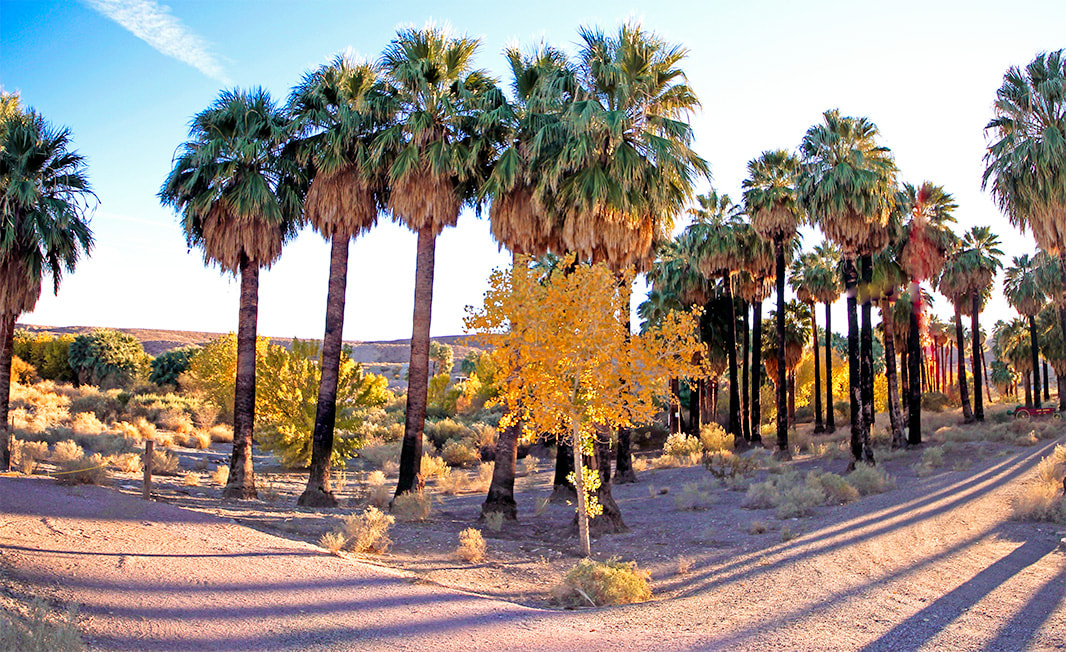 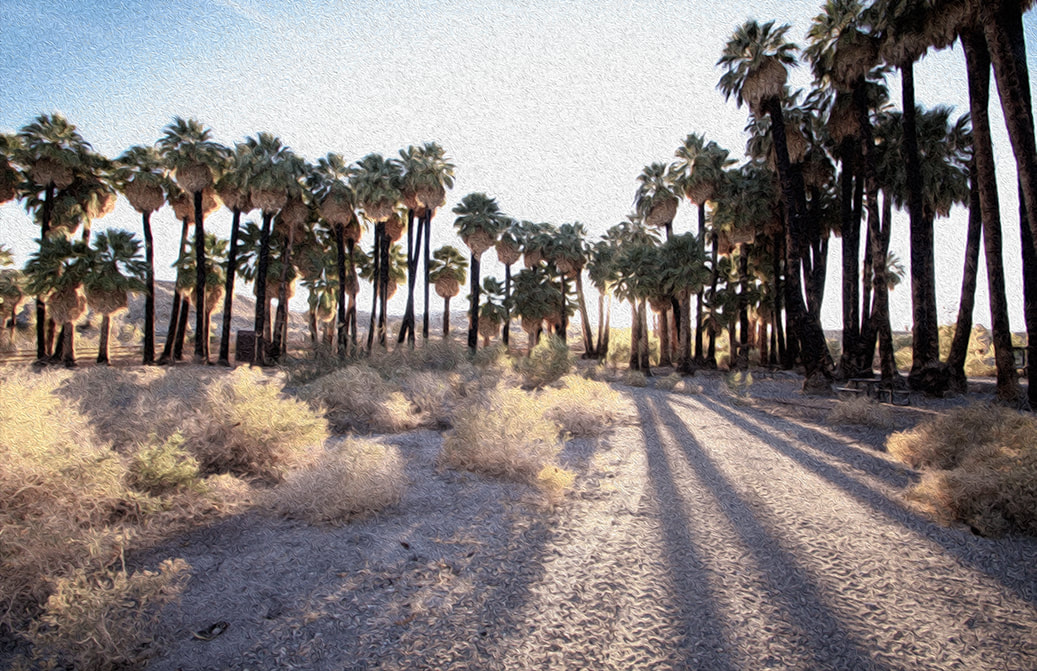 We stayed in our trailer two nights at Palm Creek Ranch in Moapa, Nevada. It is a natural desert oasis. The water is warm! 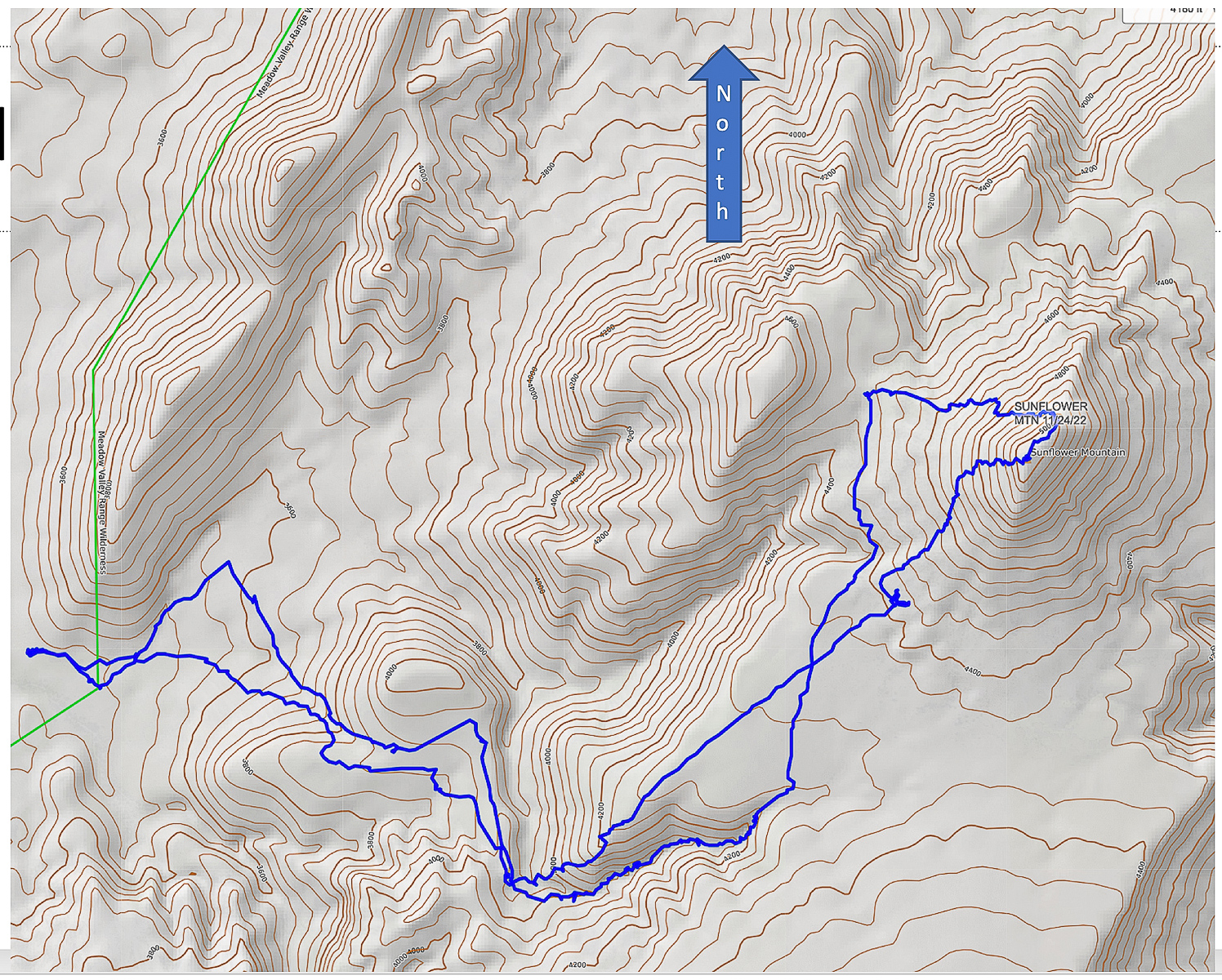 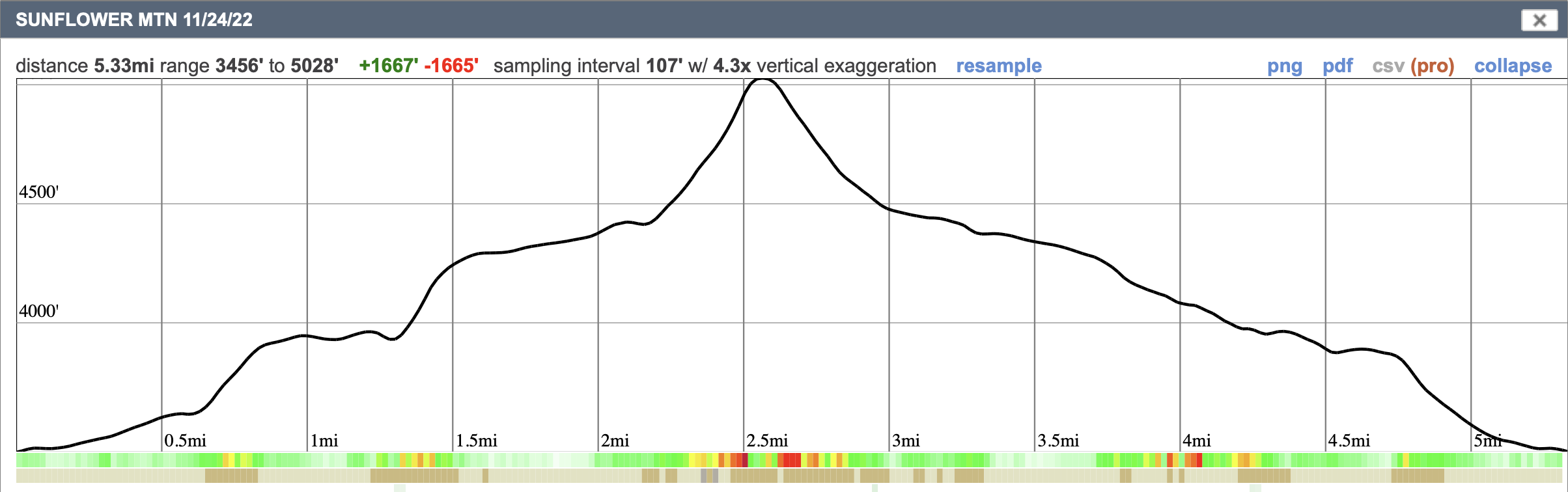 Our GPS tracks on CalTopo map, and elevation profile. Click on map for larger file References
Lahren, M., Trexler, J. Crustal Evolution of the Great Basin and the Sierra Nevada. 1993. Dept. of Geological Sciences, Mackay School of Mines, University of Nevada, Reno. Pampeyan, E. H. Geologic Map of the Meadow Valley Mountains, Lincoln and Clark Counties, Nevada. 1993. USGS. One day's journey into southern Utah's wild slickrock paradise.
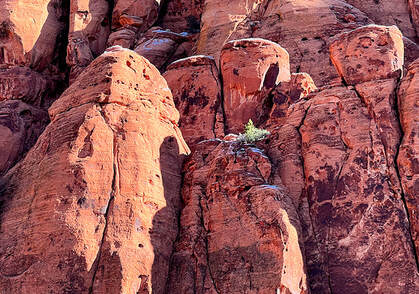
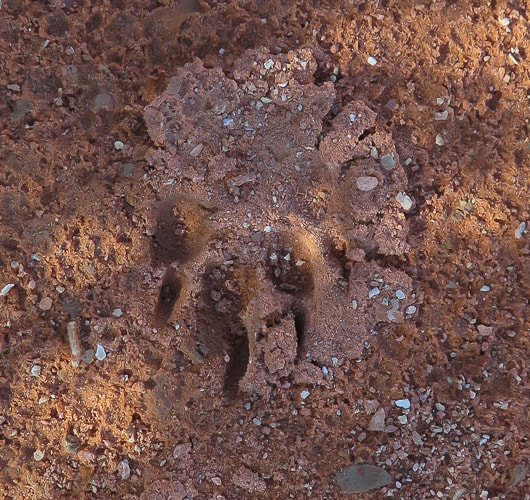
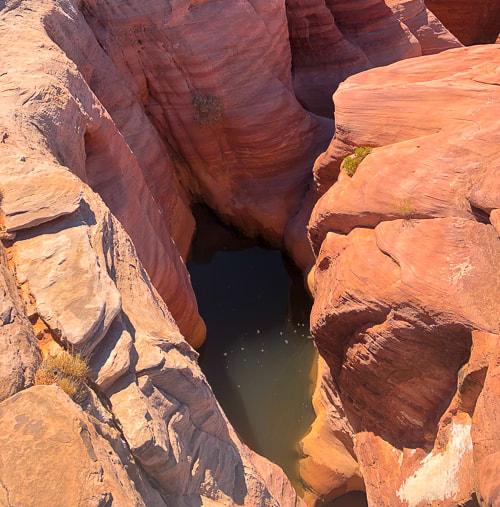
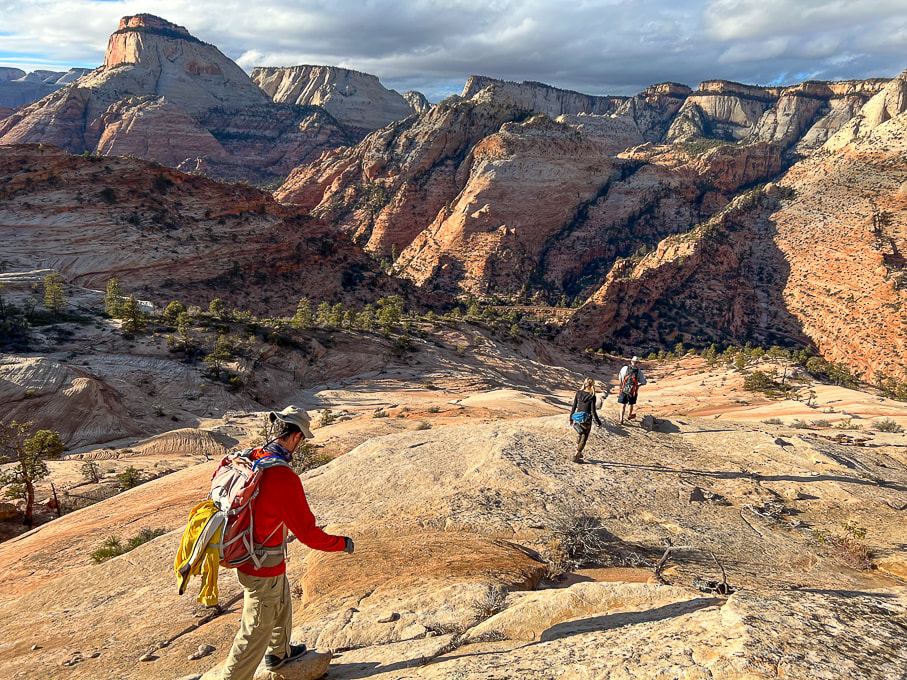 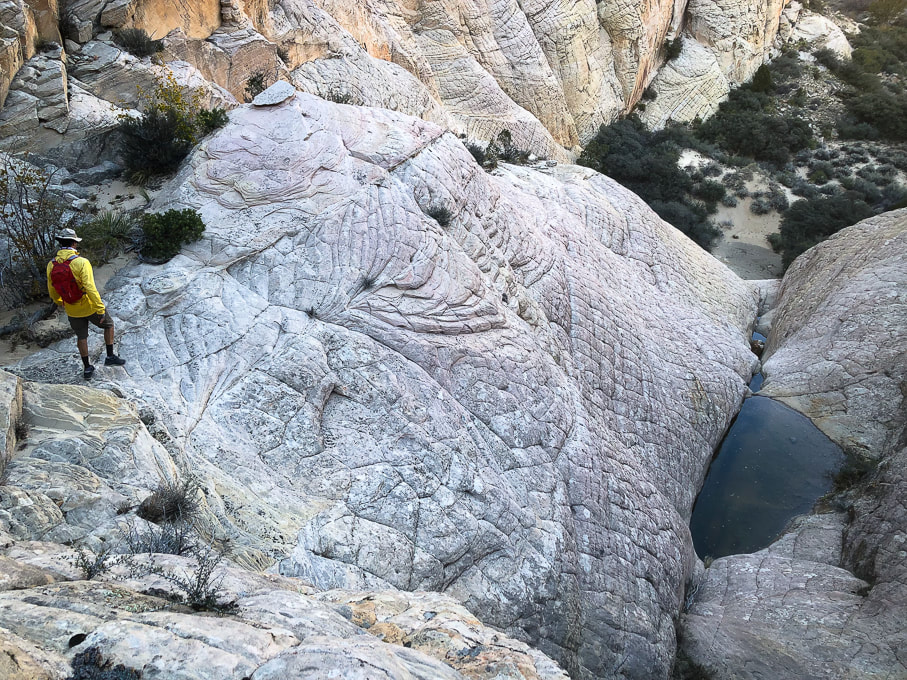 I have often wondered why the term "slickrock" is used to describe smooth-surfaced sandstone. My boots didn't slip on it; in fact I found it rather grippy while hiking across it, up it, or down it. Unless it is covered by a thin coat of ice or damp moss, it wasn't slippery. My mountain bike tires held firmly on Moab's Slickrock Trail. "Slick" was the term that early pioneers of the southwest region gave this multi-colored, cross-bedded rock because metal horseshoes and wheel rims had poor traction on this terrain. We have been fortunate to meet two friends who are showing us some routes in the magical and ever-changing southern Utah slickrock country. These routes are not marked; no cairns, no signs. They are wild and untrammeled and untrampled, a welcome change from southern Utah's over-traveled national parks. The landscape is remarkable because there are so many things to see - from small-scale ferns, moqui marbles, and mountain lion tracks, to large-scale towers, blazing orange temples, hoo-doos and spires. Colors vary from black desert-varnished and stained sandstone to blue pool refections in white slickrock. This land is unpredictable. When you reach the top of a smooth sandstone bowl or cross-bedded steps, you may find a cliffed-out canyon, or more slickrock flats, or a rocky pass with gnarled ponderosa pines and junipers to negotiate to reach the sand washes below. "Nirvana" is the final goal of enlightenment in Buddhism, a state of transcendence where there is no suffering, desire or sense of self. It's also a term used to describe paradise, a place of perfect peace and happiness - an "idyllic" place. After a few nights backpacking in the Sawtooth Mountains, I would call that range in central Idaho "paradise". Low, green valleys and sawtooth peaks all formed by glaciers, and plentiful lakes, so many that you could walk to a few of them in a day or spend each night at a different one. Southern Utah's Red Rock Country might be described as paradise, or nirvana, at least by me. It's a place where you can immerse yourself in the extraordinary beauty that's the artwork of millions of years of shaping and carving an ancient sand sea. I'm grateful to be able to experience these places - to have the companionship of my husband and friends, to have strong legs to get there and be able to share our adventures with others. We have available limitless adventures, but limited time. The slickrock slideshow and other images that follow highlight scenes from one day's journey into slickrock paradise. Slickrock Slideshow 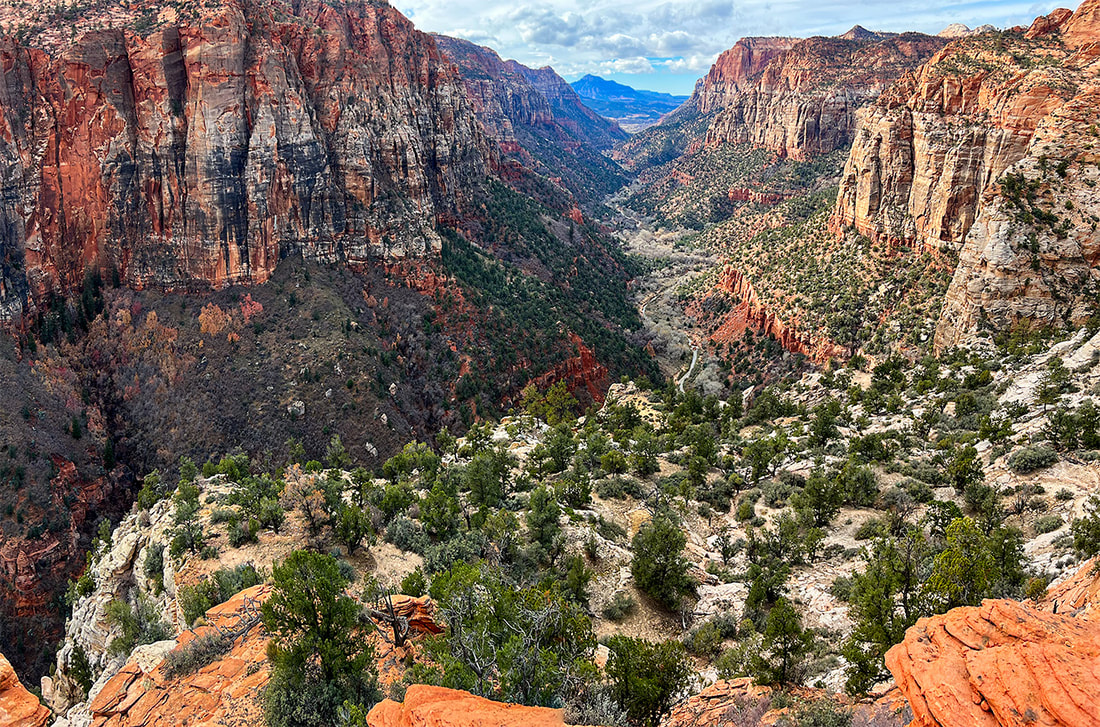 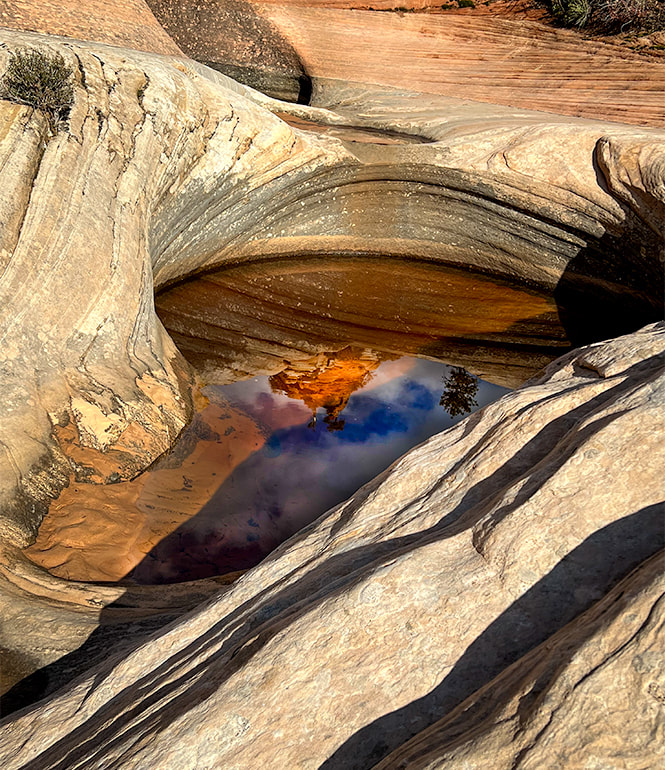 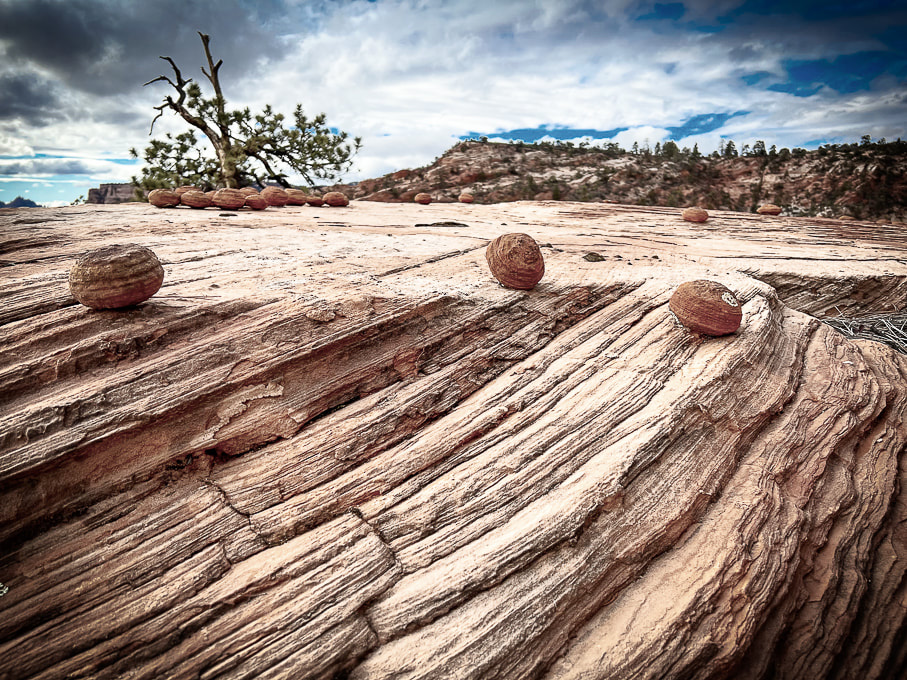 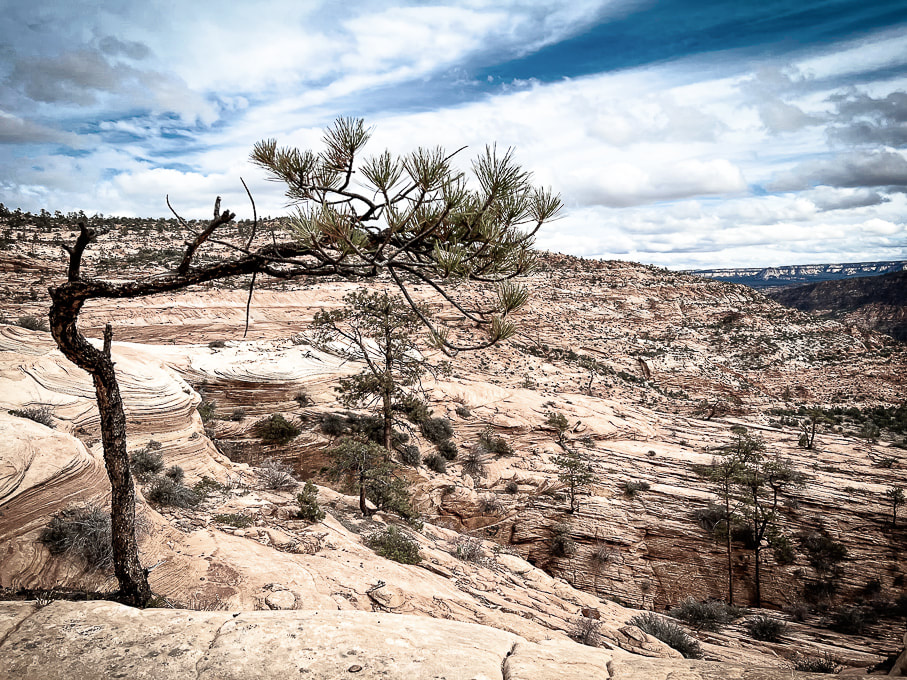 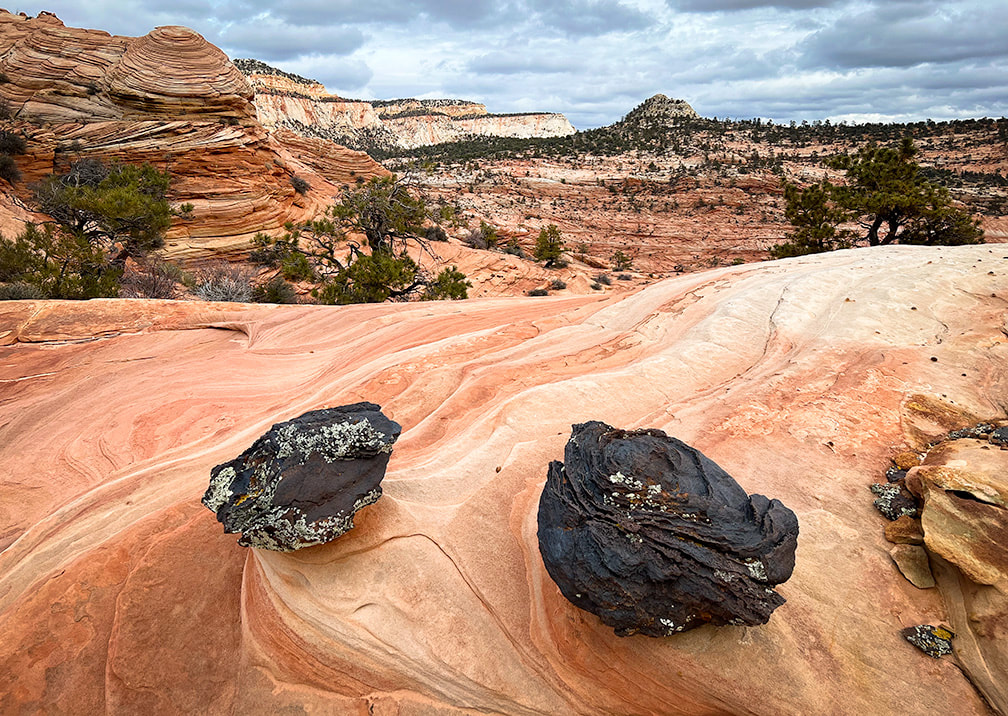 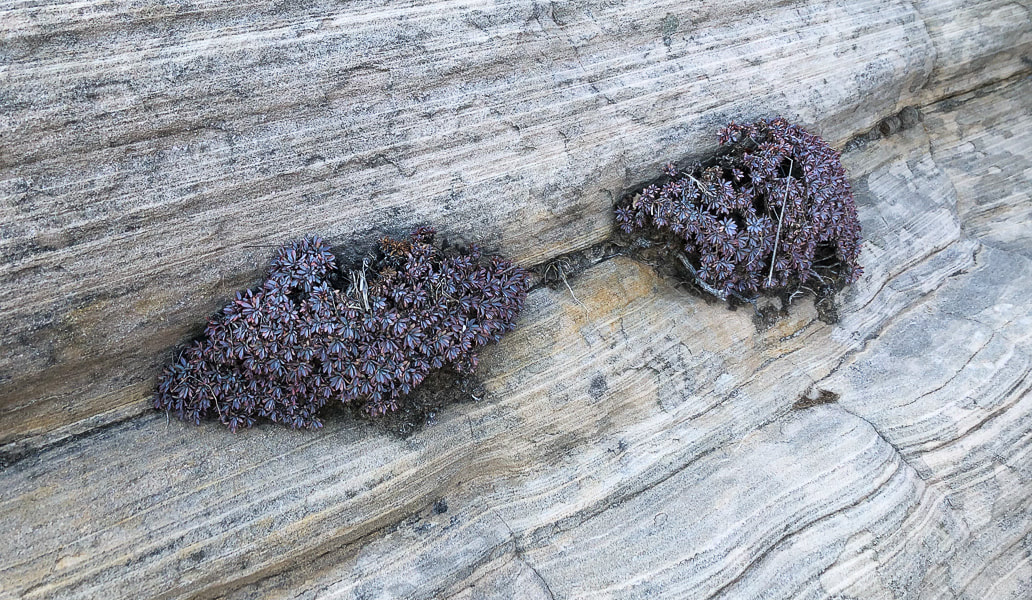 Create your own exploration of this quiet, transcendent wonderland surrounded by ancient limestone mountains. Walk for an hour or all day and you will understand why it is called "bowl of fire". 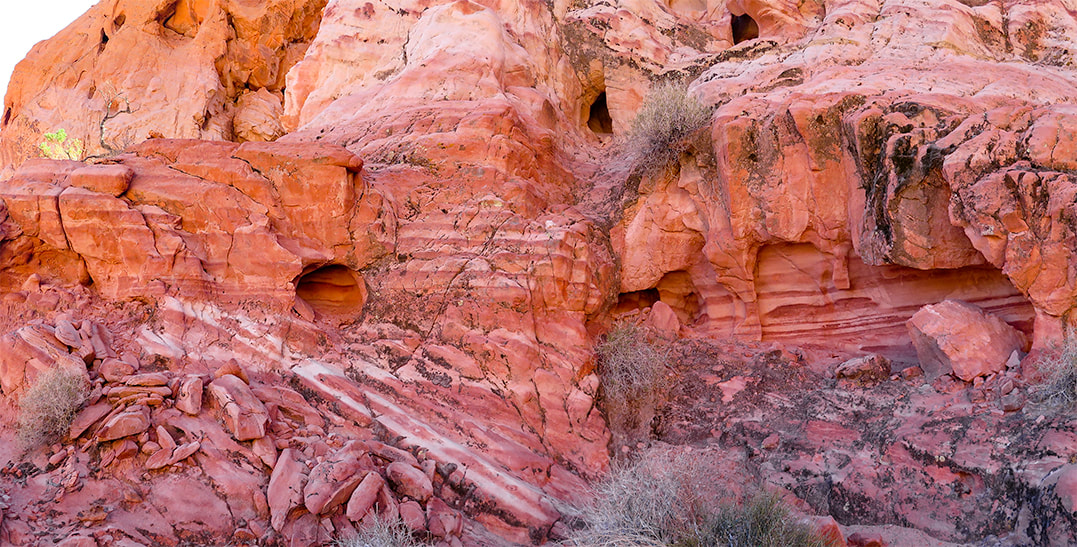 Trip Stats - Bowl of Fire Overview: Hike a long loop through rugged north and south sections of Bowl of Fire, or a shorter out-and-back journey to sample this unique Jurassic-age sandstone terrain. Either way, you will find yourself in a wonderland of washes and small canyons, exploring a land of grey, orange and red scattered boulders, water-filled potholes and honeycombed-eroded slickrock. Muddy Mountain's looming limestone backdrop adds to the drama. Location: Muddy Mountain Wilderness (NRA), Northern portion of Lake Mead NRA, southern Nevada. Access from two trailheads on Northshore Road: Northshore Summit Traihead and pull-out 2.4 miles west of this trailhead. Nearby Peaks on our wishlist: Muddy Mountain, Bearing Peak, South Gate and North Gate Peaks. Maps and Apps: AllTrails tracks, Lake Mead map from National Geographic Trails Illustrated no. 204. Date hiked: 11/12/22. We have discovered, in exploring southern Utah, Nevada, and northern Arizona that our list of "to-do's" grows exponentially. The Bowl of Fire is just one small place in the geologically complex Lake Mead National Recreation Area, where rock ages span 1.8 billion years. Recognizable from trailheads on Northshore Road, the Bowl of Fire is a bright orange pocket of sandstone beneath the formidable-looking Muddy Mountains, made of 500-300 million year old gray limestone. The summit of Muddy Peak, a ~ 3,000-foot gain is one of the "classic" desert peaks to hike. It's on our list. From its summit, we will be able to see our recent ascents up Virgin Peak and Signal Peak. We stayed in Echo Bay campground in the northern portion of Lake Mead National Recreation Area. We walked to the shores of Lake Mead and found the area pretty much abandoned. Lake Mead is at its lowest level since 1937, filled only to 27% capacity. An old boarded-up restaurant still stood. I bet in its heyday it was a thriving place, but now signs say "Launch Ramp Closed." It's eerie to see the "bathtub ring" of light-colored rock at the base of mountains, where there once was water. Besides the Bowl of Fire, we ventured up a high point in the rugged volcanic Jimbilnan Wilderness to get a view of Lake Mead. Stark and dry, this is the Mojave Desert, dominated by creosote bush, mojave yucca and beavertail cactus. "Jimbilnan" is a combination of names of three National Park Service employees who surveyed this area - Jim, Bill and Nancy. This wilderness is made up largely of the rocks from the Cleopatra stratovolcano that erupted 13 million years ago. This is an area of many small brown to grey "bumps", gnarly ridges and peaks, and we found ourselves climbing on unforgiving, crumbly, sharp rocks. Two Parts to the Bowl of Fire Upon entering "the bowl", you are free to create your own path and wander wherever your impulse takes you - maybe explore a rocky canyon, walk to a high point through sandstone blocks, climb into a "cave" of eroded sandstone, or pass by slickrock tinajas (pools). We hiked just the southern part of Bowl of Fire (see Google Earth image below), our trailhead 2.4 miles west of Northshore Summit trailhead on Northshore Road. We parked in a small pull-out and soon found a trail heading north, crossing Callville Wash. Birdandhike.com describes an 8-mile hike that includes both north and south sections. Just when I thought I had seen every kind of sandstone feature, we ran into some highly eroded blocks on the ridge of a high point that looked like Rice Krispies treats! (see below). Here, the rocks have character and the land in this Lake Mead area just north of Las Vegas is sublime and transcendent. Muddy Peak's summit is in the works - we will see some killer views of Nevada, Arizona and Utah. Our to-do list grows.... Never Stop Exploring ! For the Geo-curious: The Bowl of Fire "window" after older rocks are pushed onto younger rocks
Bowl of Fire is early Jurassic-age Aztec Sandstone (~180 mya), the equivalent to Utah's Navajo Sandstone. Muddy Mountains are made of sedimentary rocks (limestone) of Cambrian, Mississippian and Devonian age (500-400 million years ago). The Muddy Mountain Thrust layered older limestone over younger aeolian-deposited (wind) Aztec sandstone. Erosion of this overlying layer has revealed "windows" of the bright orange Aztec sandstone.
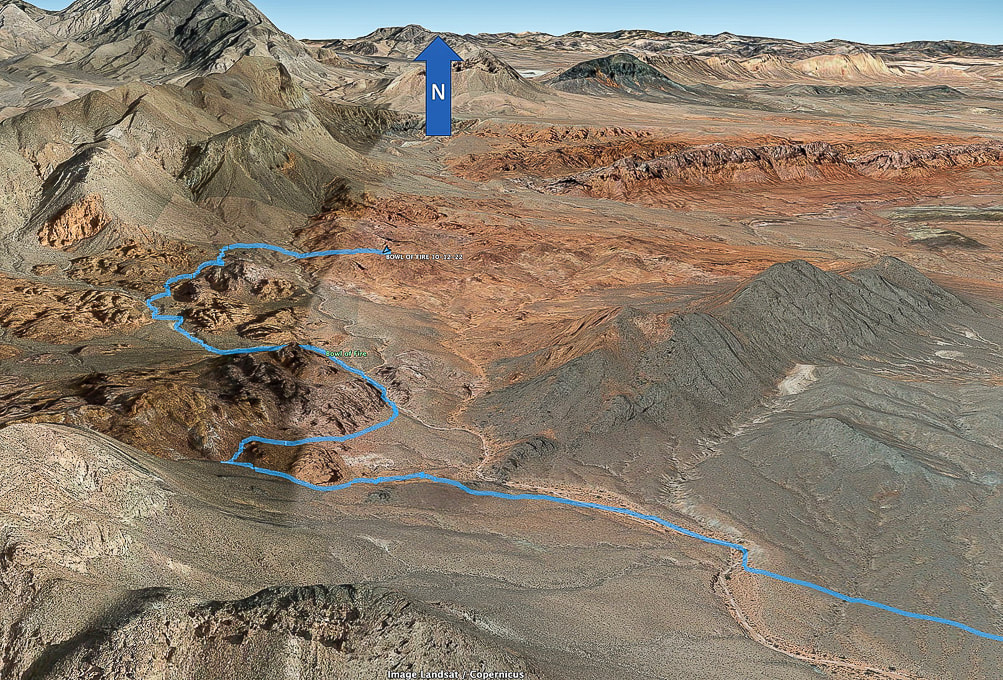 Our GPS tracks to southern Bowl of Fire. Complete tracks not recorded: we made a loop passing tinajas (pools under dry waterfalls) and ultimately walked down the wash seen above. Northern section of Bowl of Fire seen upper right, Muddy Mountains upper left.  But first: A stop at the Virgin River Casino in Mesquite, Nevada for a free lunch on our way to Lake Mead (Fred is an Army vet). 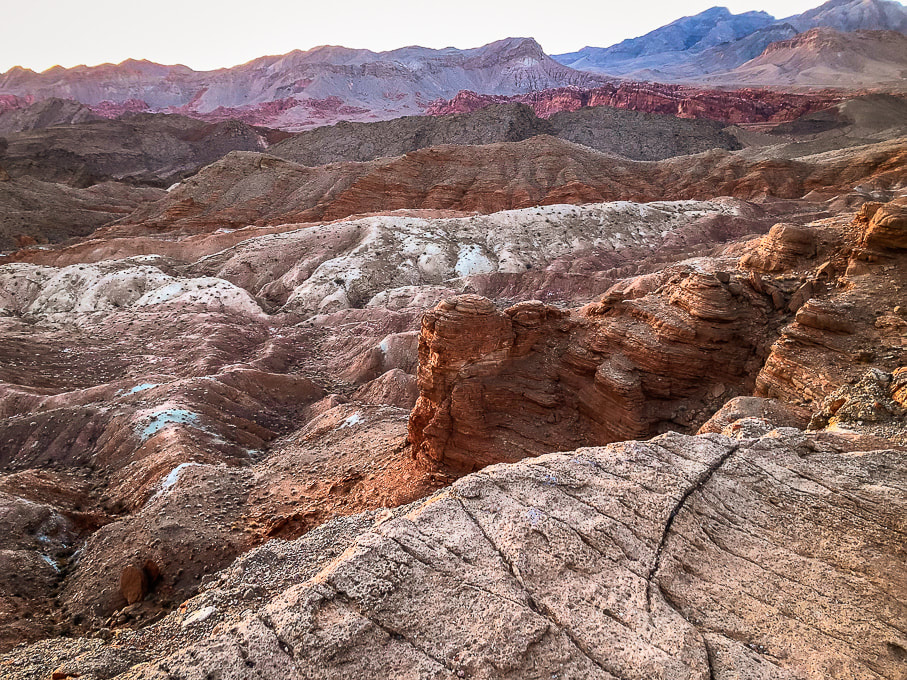 Sunsets create magical landscapes at Lake Mead National Recreation Area. 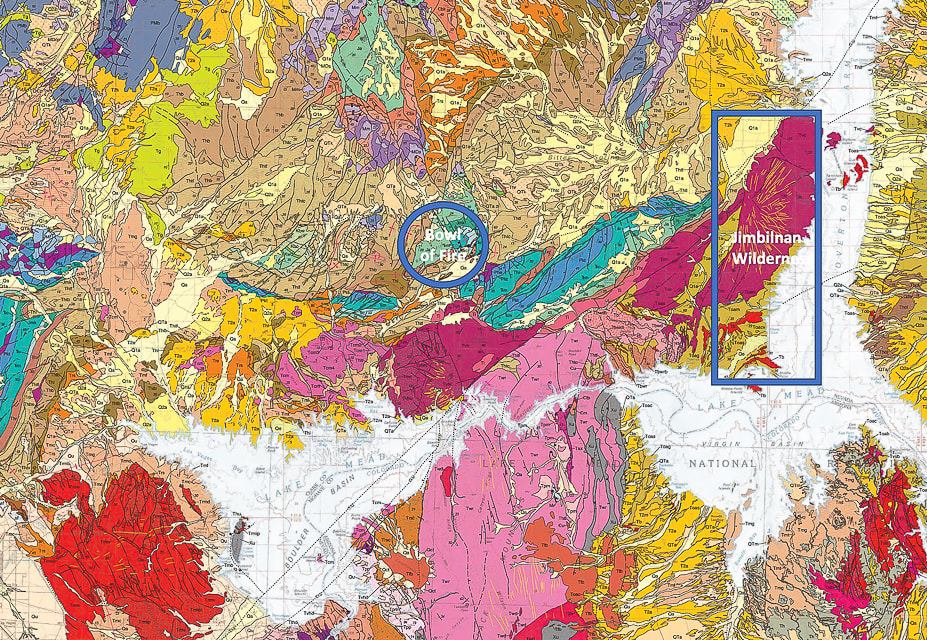 USGS geological map of Lake Mead quadrangle. Each color represents a different rock unit. Oldest rocks are 1.8 billion year-old early Proterozoic gneiss. The magenta-colored units in the Jimbilnan Wilderness are from the Cleopatra Volcano and are much younger than the green-colored Jurassic units in of Bowl of Fire. The thin yellow lines in the Cleopatra rocks represent dikes where magma rose to fill fractures in existing rocks to produce an eruption of igneous rocks. Notice three distinct magenta sections including Jimbilnan: they used to be one huge stratovolcano more than 3,000 feet high now named Hamblin-Cleopatra. Two faults have since split the volcano into three parts and fault blocks have moved. 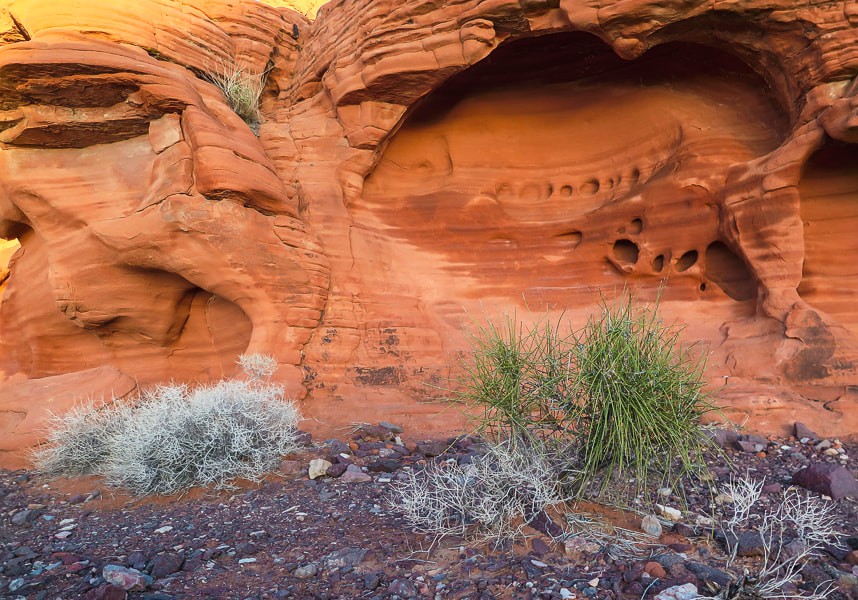 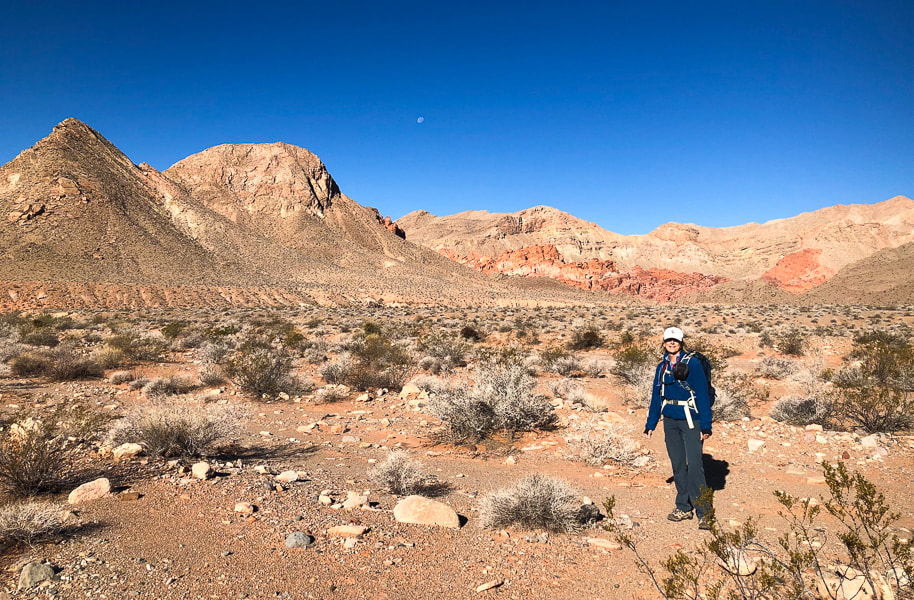 Following a trail toward Bowl of Fire. 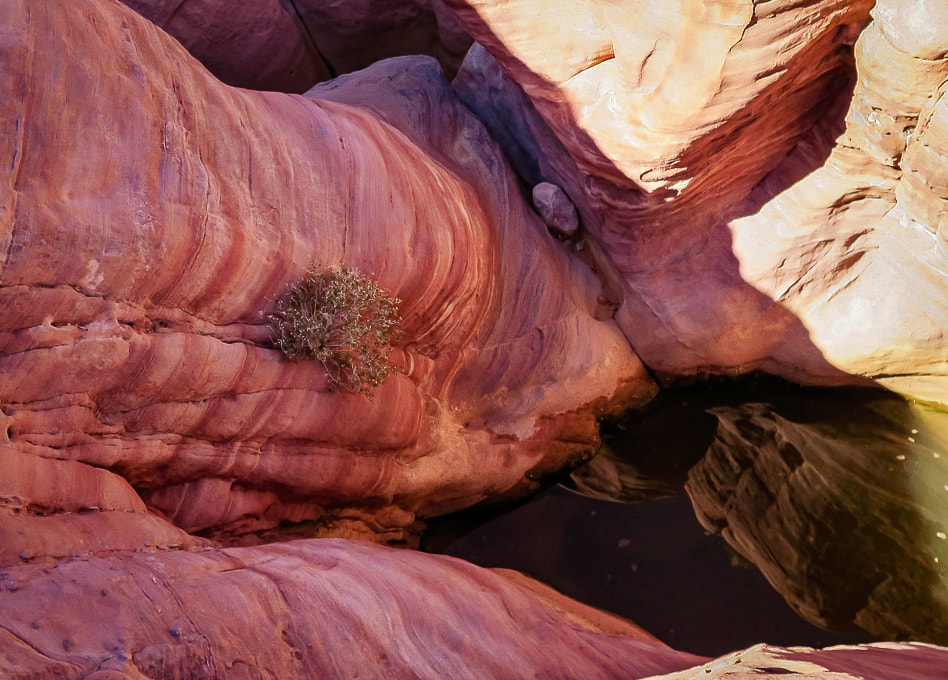 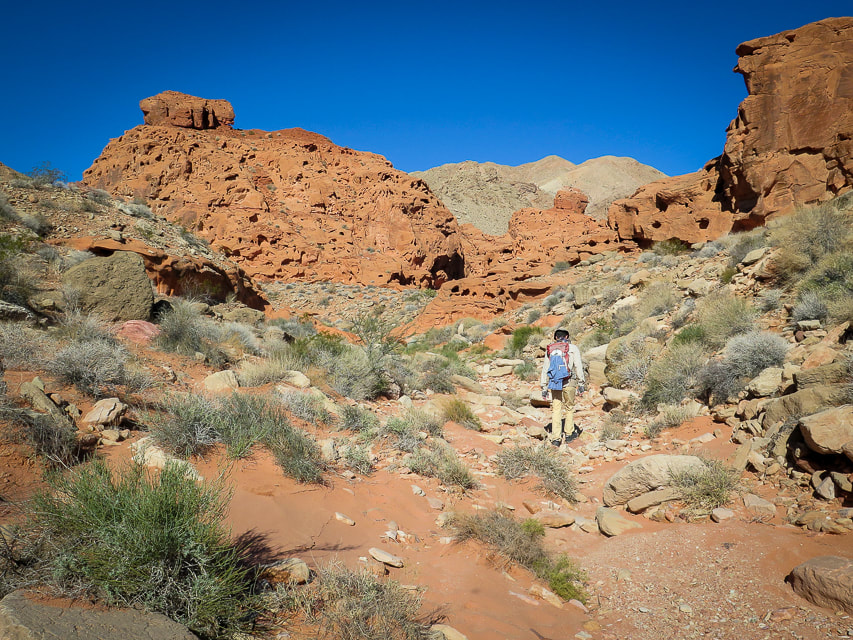 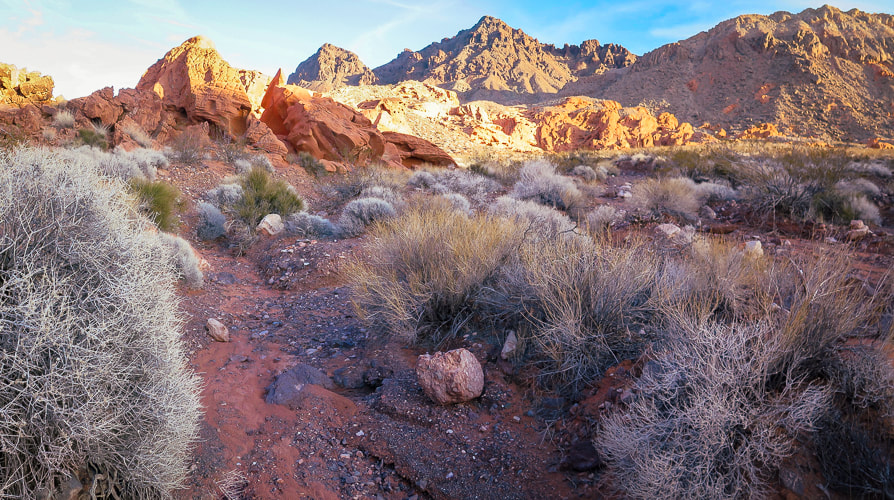 Muddy Mountains on horizon. 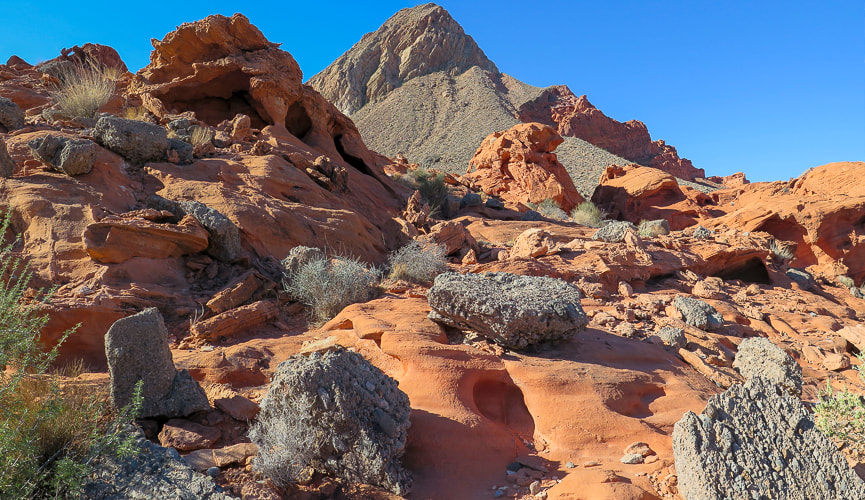 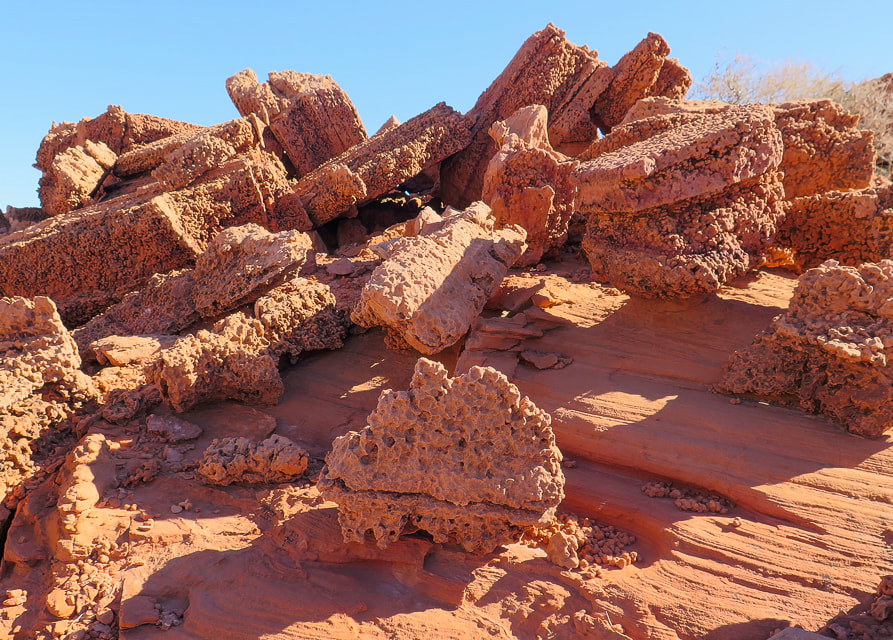 Porous, weathered sandstone reminding me of giant Rice Krispies treats! 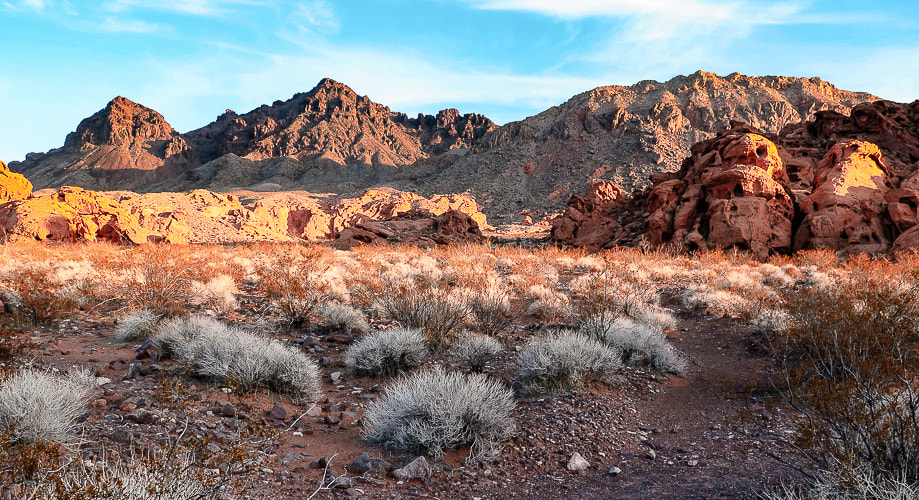 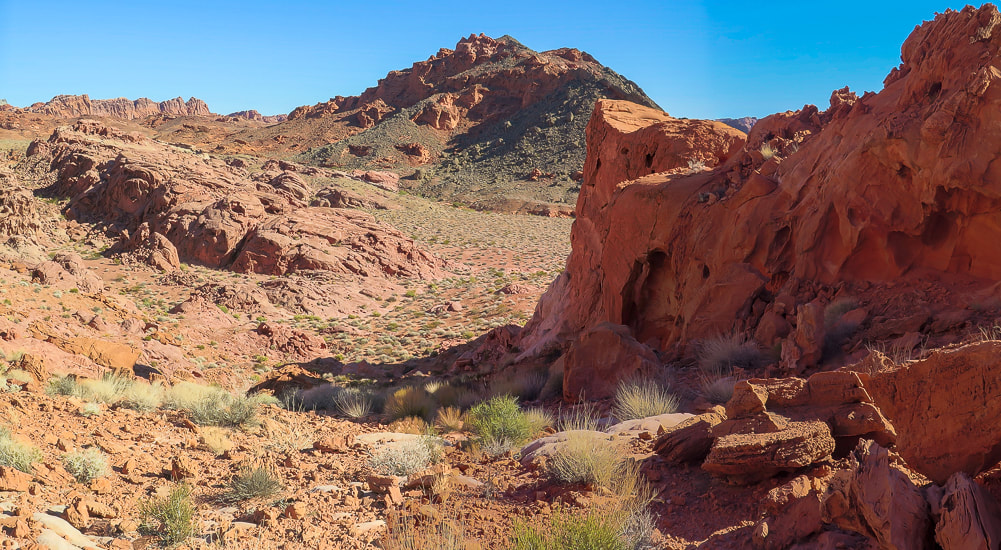 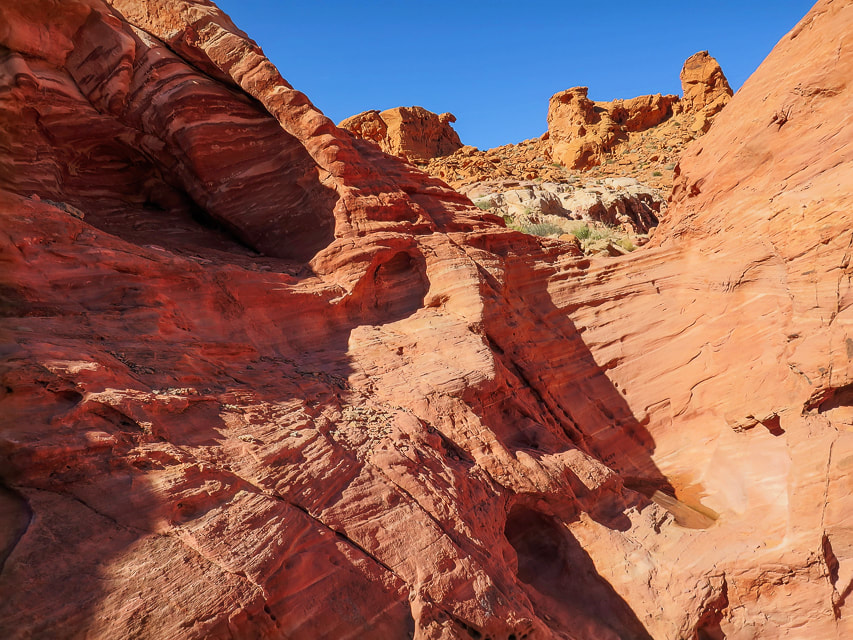 This section had a few dry waterfalls and pools of water. 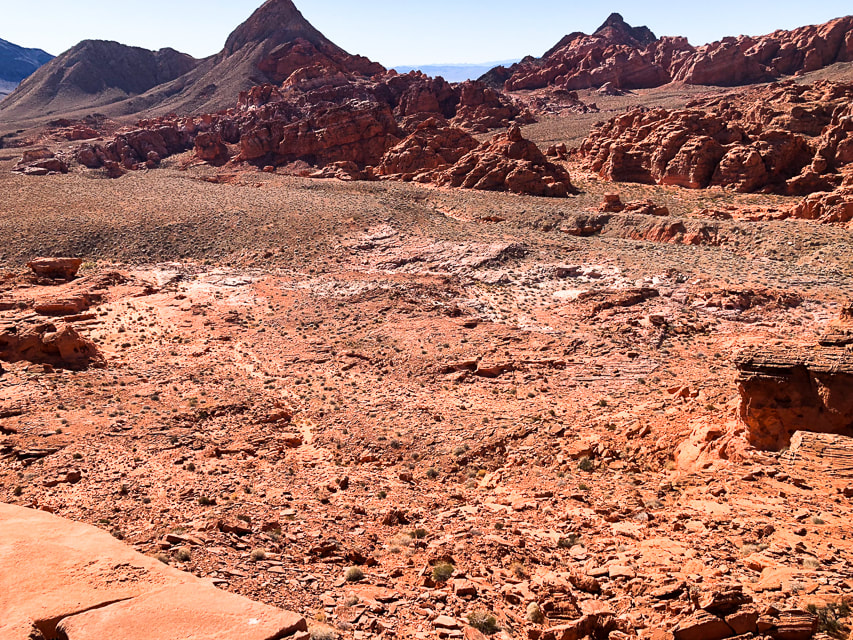 The view from a high point in the Bowl of Fire. 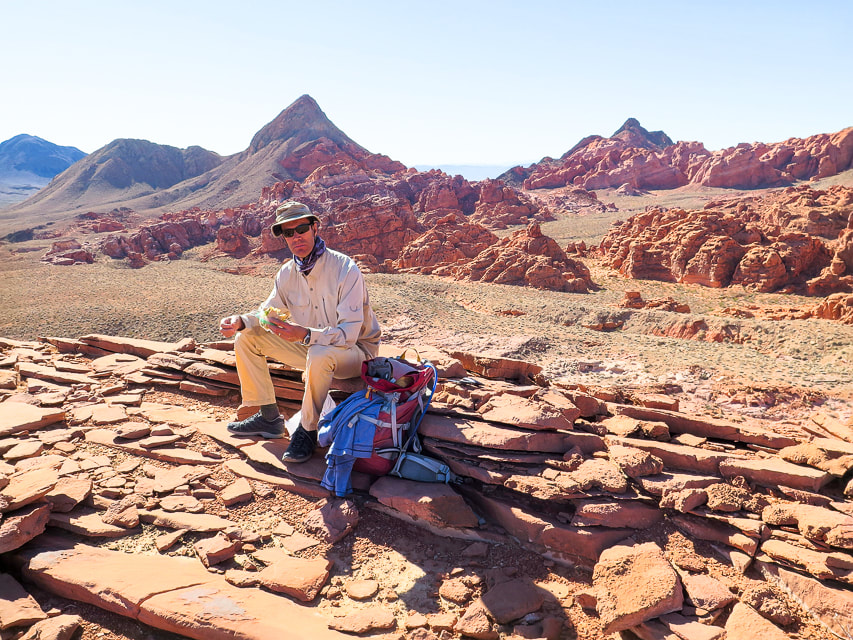 Lunch on high point. Some cool stuff on the trail. 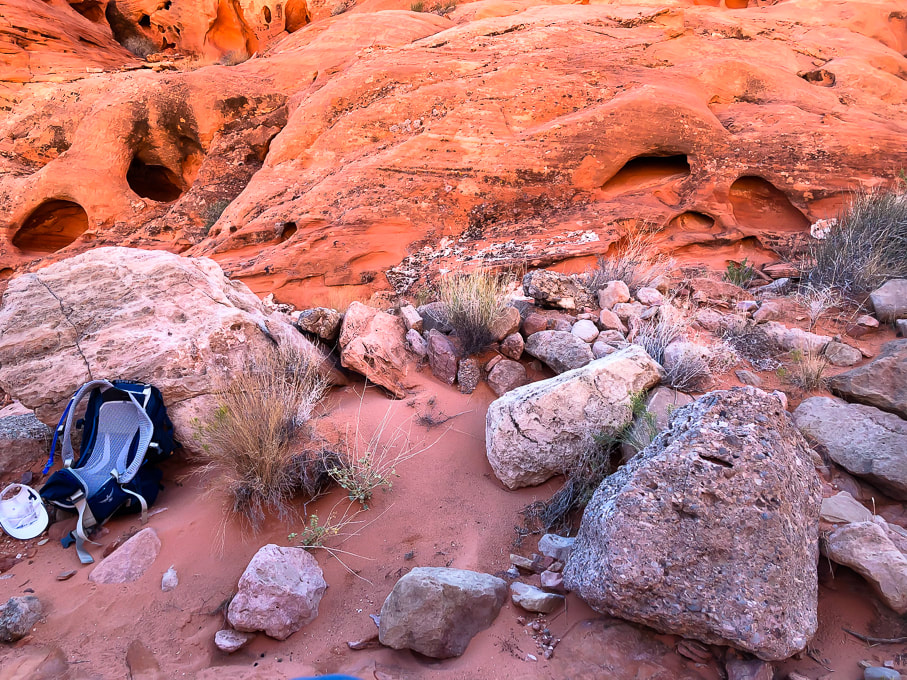 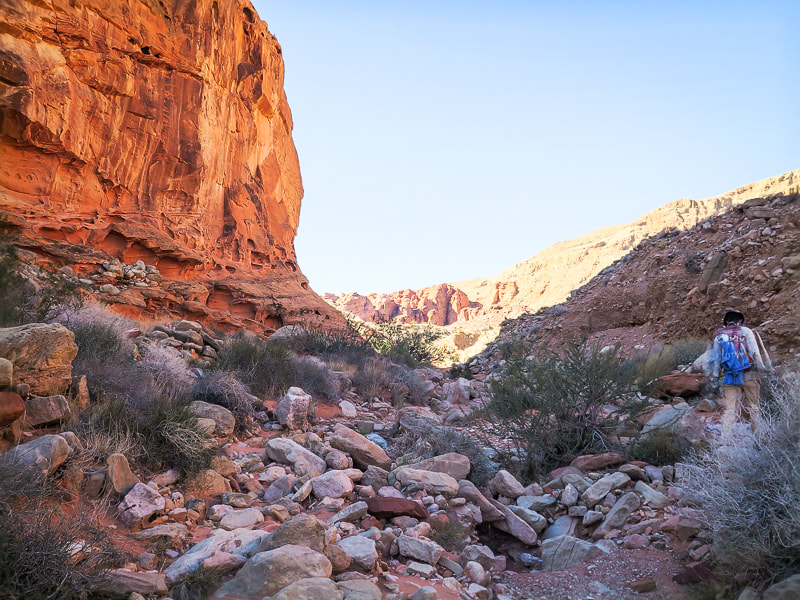 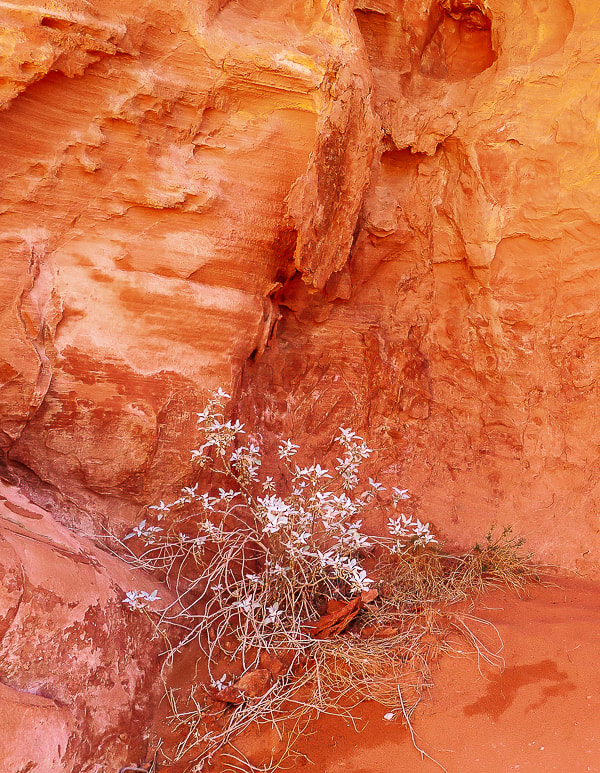 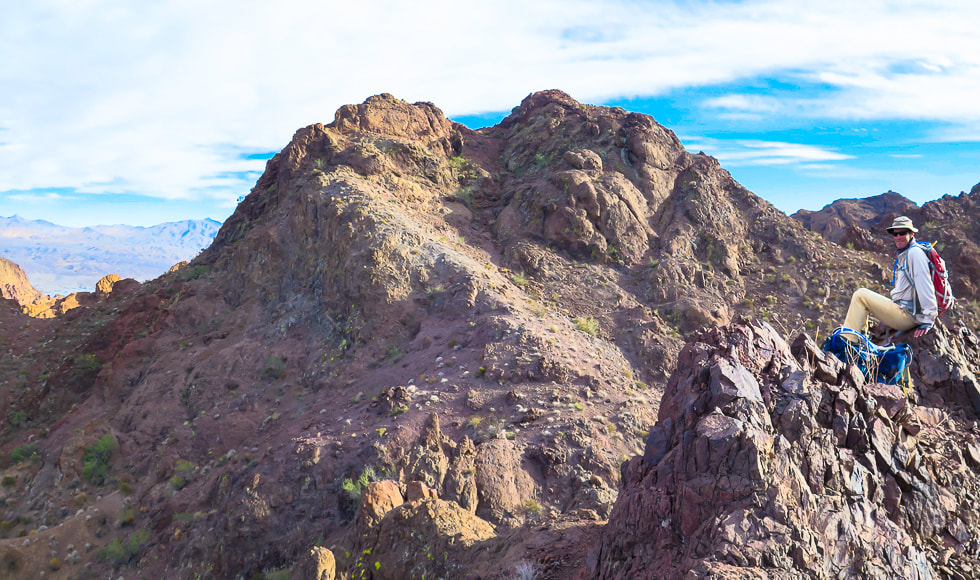 A small glimpse of Lake Mead on left side of photo in the Jimbilnan Wilderness. 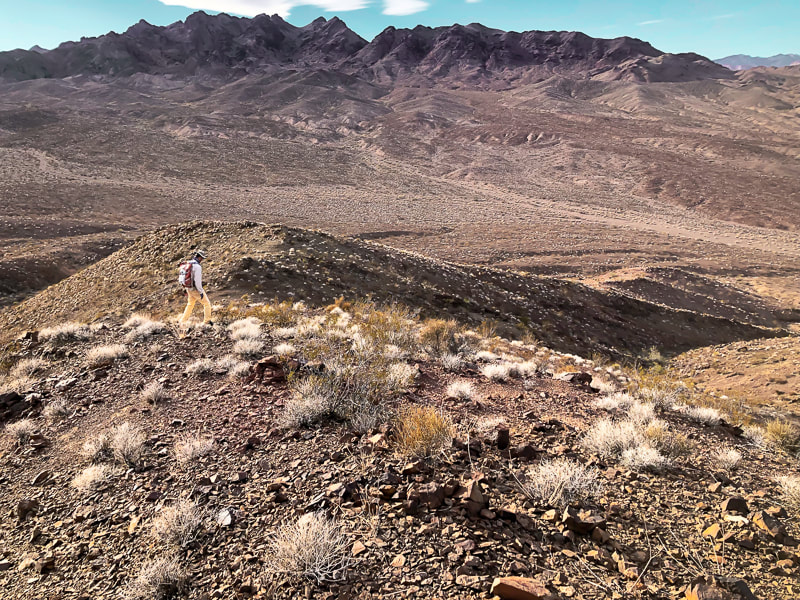 Hiking down from high point in Jimbilnan Wilderness along the shores of the Overton arm of Lake Mead. Rocks are from 15-million year-old Hamblin-Cleopatra stratovolcano. The Black Mountains across the valley. 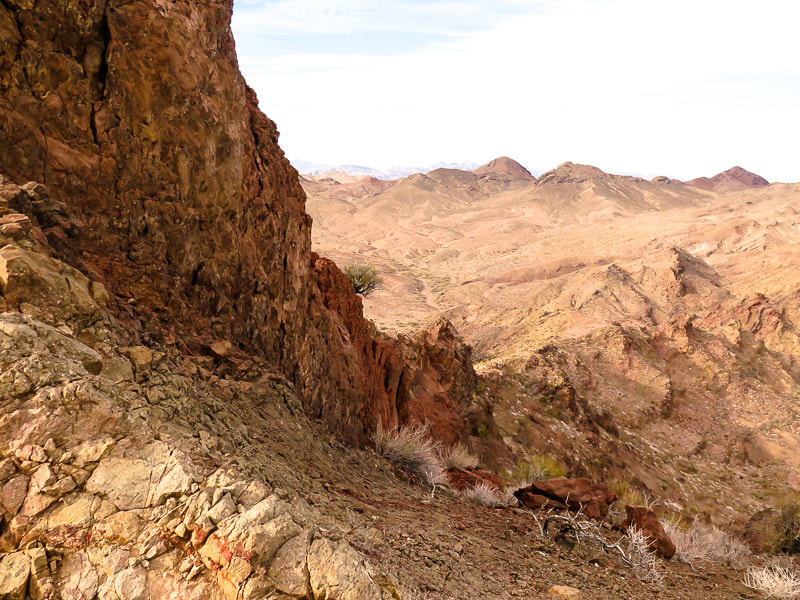 We got to this pretty sketchy ridge in the volcanic Jimbilnan Wilderness, enjoyed the far-reaching views and then descended. 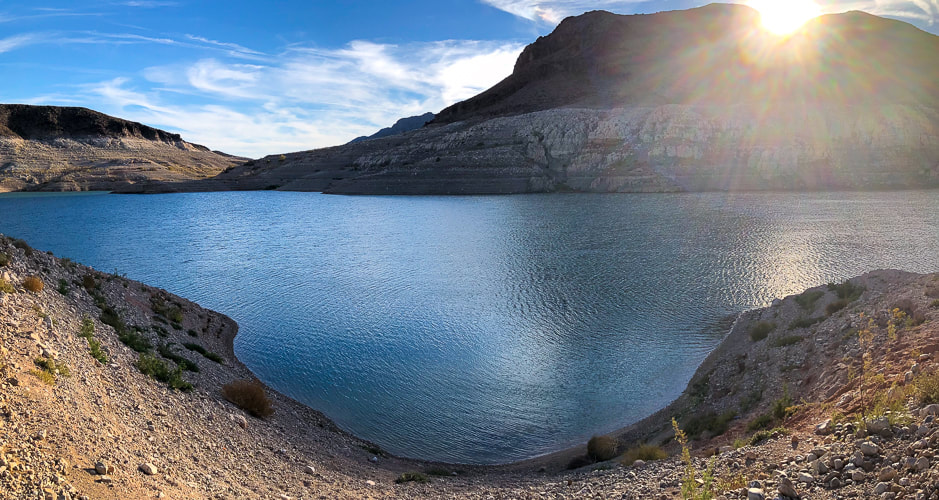 Echo Bay, Overton arm of Lake Mead. 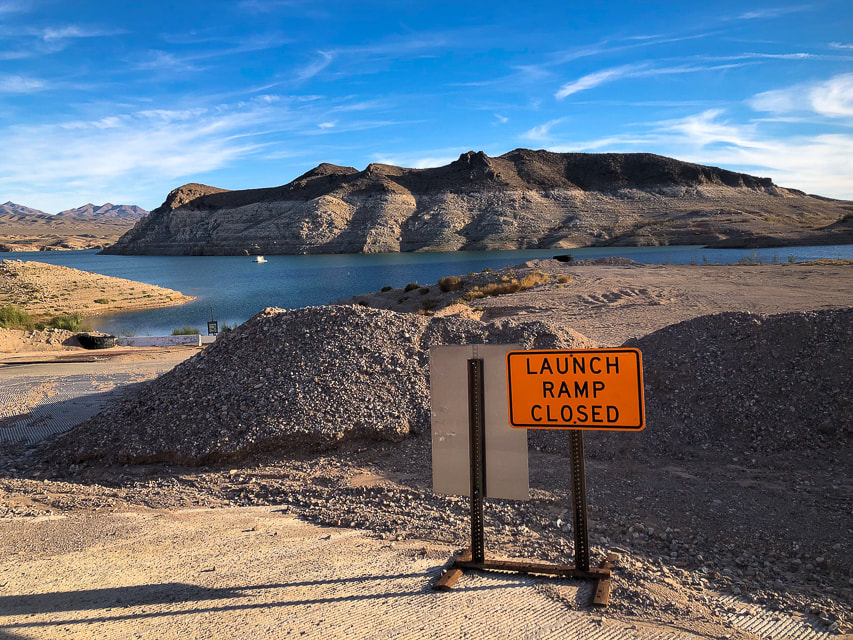 Echo Bay - Overton arm of Lake Mead. 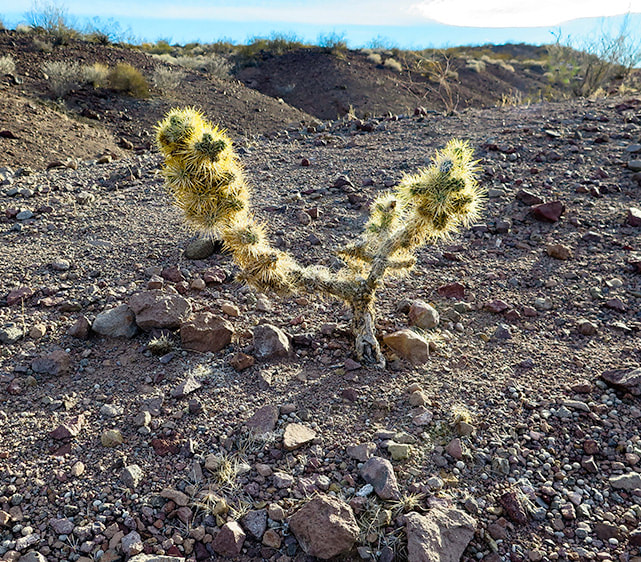 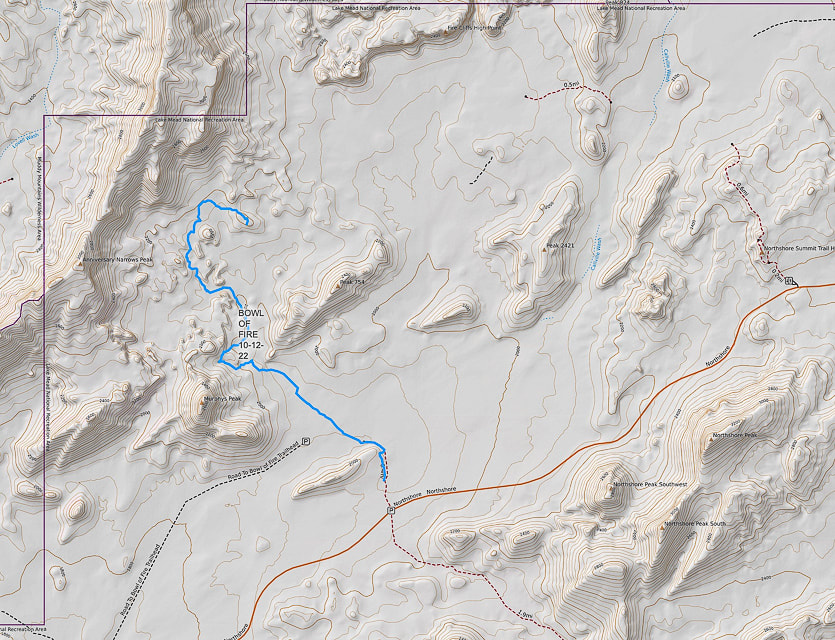 Our GPS tracks into the southern Bowl of Fire. References
Beard, L.S, et al. 2007 Preliminary Geologic Map of the Lake Mead 30' X 60' Quadrangle, Clark County, Nevada, and Mohave County, Arizona. USGS website. Hamblin-Cleopatra Volcano. NPS - Lake Mead. Lake Mead National Recreation Area - Geology, USGS slideshow. Lake Mead Keeps Dropping. NASA Earth Observatory Zuluaga, L.F., et al. 2017. Structural and petrophysical effects of overthrusting on highly porous sandstones: the Aztec Sandstone in the Buffington window, SE Nevada, USA
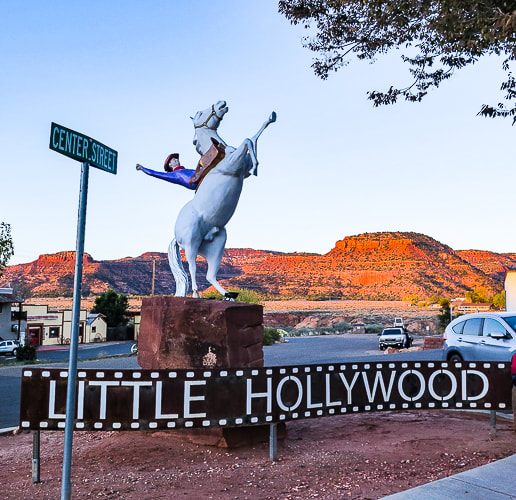
Expansive views of southern Utah and northern Arizona, cool canyon narrows, Pueblo II petroglyphs, a deep sand slog and delicious quiche in Kanab, "Utah's Little Hollywood."
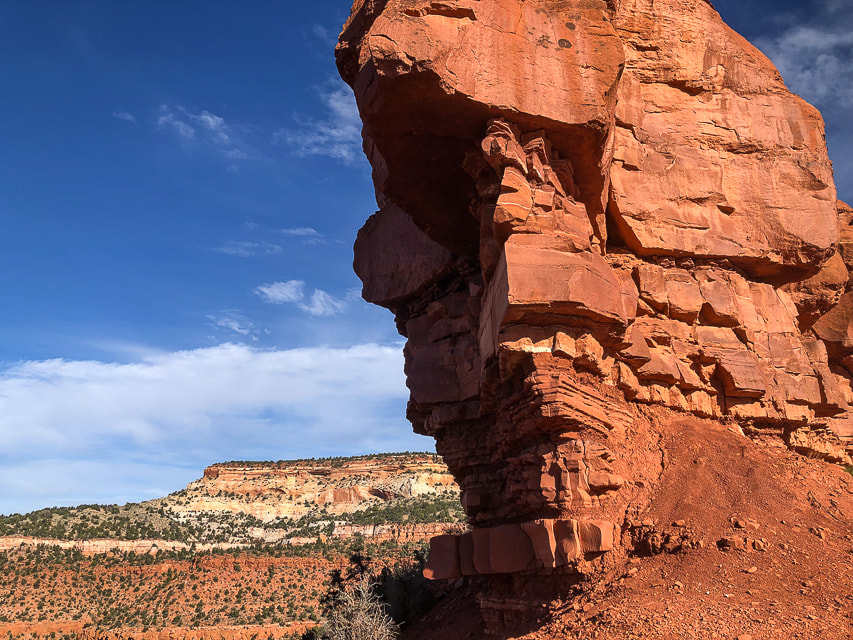
On the trail to Mansard Benchmark (mesa on the left).
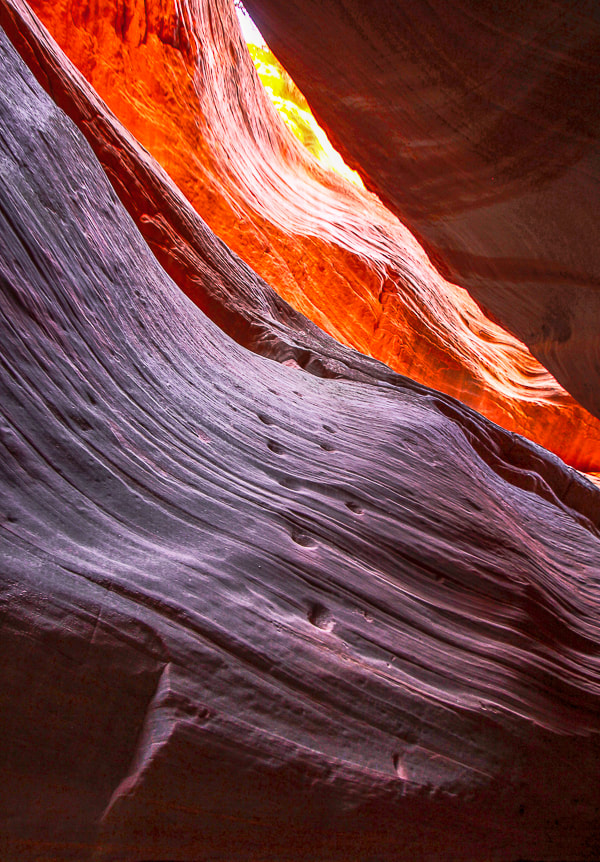
Ancient Moqui steps carved into Red Canyon (AKA Peekaboo)
Also called "moki" steps, these were carved into sandstone to access alcove above. The lowest step is about 5 feet from the canyon floor. Handmade ropes and ladders were possibly used to access the steps, or sediment has washed away, making the access higher. There may have been a granary in the alcove. more Peekaboo photos below Trip Stats - Mansard Benchmark and East Mansard Peak
Overview: Hike to petroglyphs tucked in a alcove overlooking northern Arizona, scramble up a weakness in Mansard Benchmark's cliffs to top out for a huge view. Summit #2 is a fun slickrock climb up East Mansard to look over multi-hued mesas to snow-covered mountains to the northwest.
Location: Vermilion Cliffs, Bureau of Land Management Distance/Elevation gain: 6.2 miles/1,450' cumulative gain. Coordinates: Trailhead = 37.03414 -112.42366. Mansard Benchmark = 37.04925 -112.43087 Difficulty: Moderate Class 1 to bases of the two summits, Class 2, 2+, and one Class 3 move onto Mansard Benchmark. Maps and Apps: Stav is Lost's trip report, AllTrails GPX tracks, Kanab map from BLM. Directions to trailhead: BLM website. Date Hiked: 10/29/22 Trip Stats - Peekaboo Slot Canyon
Overview: Experience gorgeous shapes, textures and ever-changing colors as you wind through sandstone narrows. It's also fun to walk along the canyon rim for views of the White Tower to the north and the "White Wave".
Location: Trailhead is 9 miles north of Kanab on Highway 89 - Bureau of Land Management. Entrance to canyon: 37.17928616, -112.5597135. Distance: 6.3 miles out and back if starting from trailhead on Highway 89, north of Kanab; 0.7 miles if you drive to canyon entrance. Maps and Apps: AllTrails tracks. Considerations: Sandy road (2.8 miles) to Peekaboo Canyon entrance requires 4WD and tires with good traction in sand. Directions to trailhead: BLM website. Date Hiked: 10/30/22
Kanab, "The Greatest Earth on Show" is adventure-central for southern Utah and a nice little city with good restaurants, a museum, and a great bakery. We stayed in an RV park with our small trailer for two nights, walked into town for dinner one night, and did two hikes. Mansard Benchmark and East Mansard Peak were just out of city limits, and a great way to get the lay of the land for miles around. The Peekaboo Canyon hike was a slog through deep sand to get to the slot canyon (we didn't have the right tires on our pick-up). Kanab has adventure companies galore that will take you to Antelope Canyon, Horseshoe Bend, Peakaboo Canyon and the Grand Canyon. It's not far from the now world-famous "The Wave" in Vermillion Cliffs, as well as Buckskin Gulch and Wire Pass. It used to be easier to get into "The Wave"; Fred and I have gone twice about 20 years ago, when all we had to do was to be the first in line at the Kanab Ranger Station by 8:00 a.m. to get two of the limited number of permits. Now you have to go through a lottery system.
There's a reason you may feel invigorated after visiting Kanab. There's a lot of orange. Orange is the color of warmth, vitality, and creativity. According to Color Theory, orange increases our activity levels and gives us a sharper awareness of our surroundings.
Mansard Benchmark and East Mansard Peak
This short hike combines most of the great attributes of southern Utah: slickrock scrambling, spectacular views, petroglyphs, striking landforms and geology, junipers and pinyon pines, and some route-finding. A couple of weaknesses in the north cliffs proved a bit daunting for me to climb, but then we found a rope that assisted me up and down the cliff band. Hike Summary
Peekaboo Slot Canyon (Red Canyon)
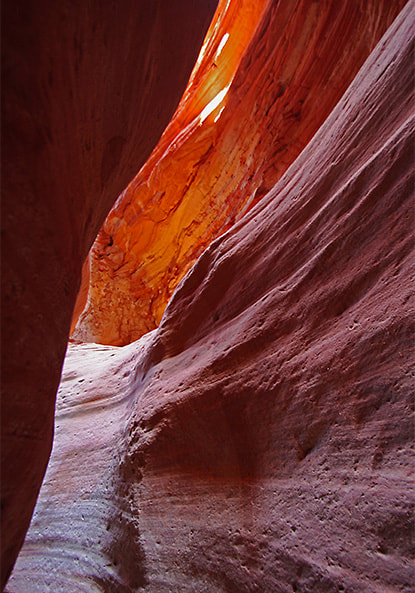
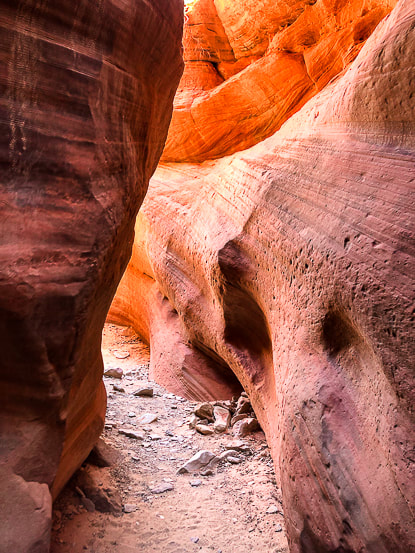
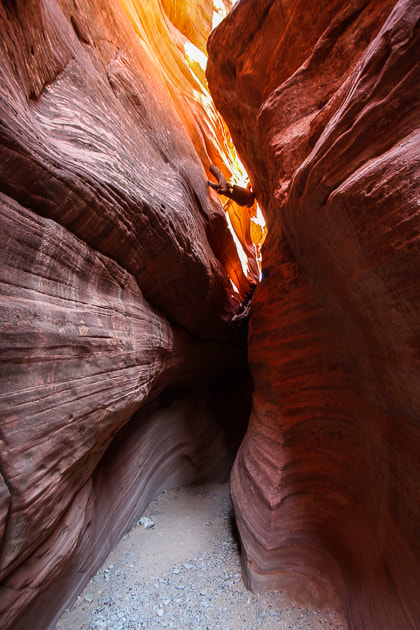
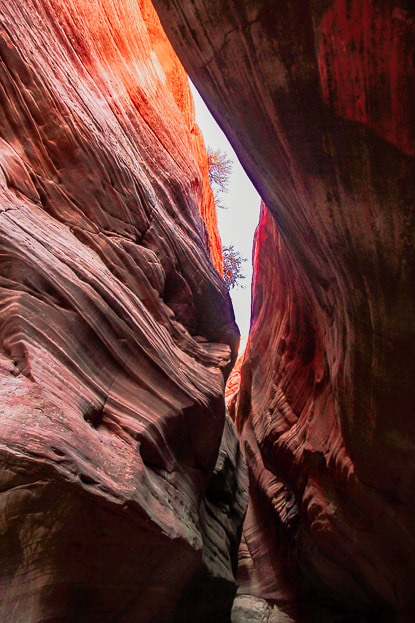
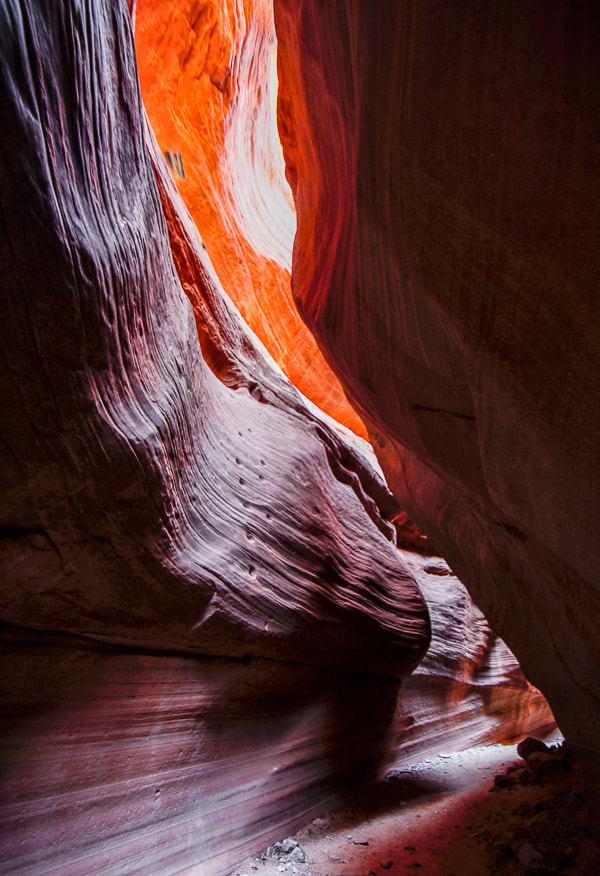
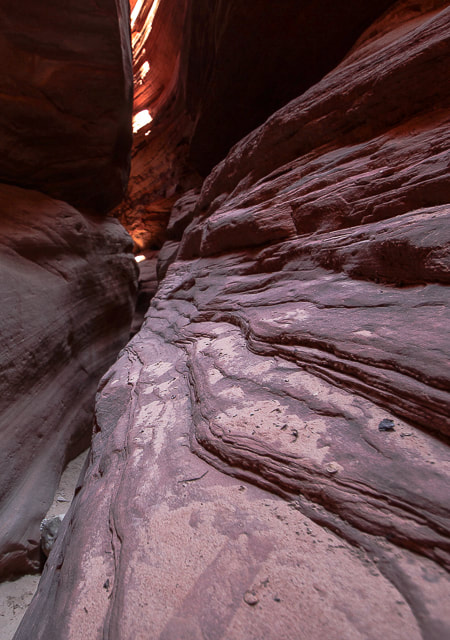
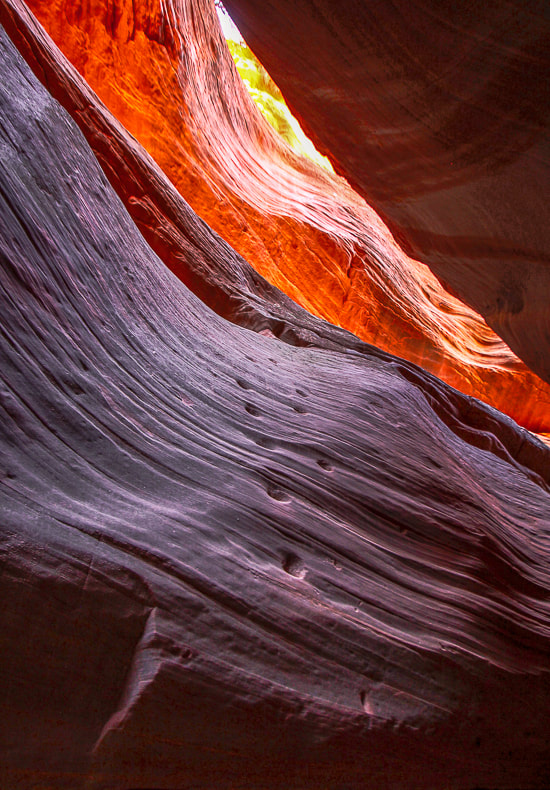
We didn't trust our truck's tires on the jeep/ATV road's deep sand (Road 102 from the highway trailhead), so we walked that 2.8-mile distance to the entrance of Peekaboo, which admittedly got a bit frustrating on the last mile back. But it was worth it. Within the confines of towering 80-foot high walls, you enter a silent, almost mysterious world. It's mind-boggling to consider how many millions of years it took for water to carve this Navajo Sandstone. We walked through at optimal light that shifted orange, red and purple hues during our time in the slot. So many compositions of curves, textures, lines can be captured with a camera. It becomes darker as you progress to the end, requiring a tripod if using a digital camera to capture sharp images. The moqui steps carved into a vertical wall by Native Americans were the most amazing feature. They clearly lead to a ledge, at this time illuminated with a fiery orange. Stripped and bleached tree trunks wedged between narrow sandstone spaces above attest to past waters moving fast enough to deposit them there. Oh, yes. I mentioned we had the best quiche at Kanab Creek Bakery, which prepares food using "traditional European" methods. Their croissants looked so good. We got there when it opened at 8:00 a.m., and soon after there was already a line for breakfast. The best modes of transportation to explore the desert around Kanab and Grand Staircase are jeeps and UTV side-by-sides. White Pocket in northern Arizona's Vermilion Cliffs is our next goal - just outside of Kanab near the famous "Wave" in Coyote Buttes. We just need to talk our neighbor, who has a jeep, into going with us.
Keep On Exploring!!
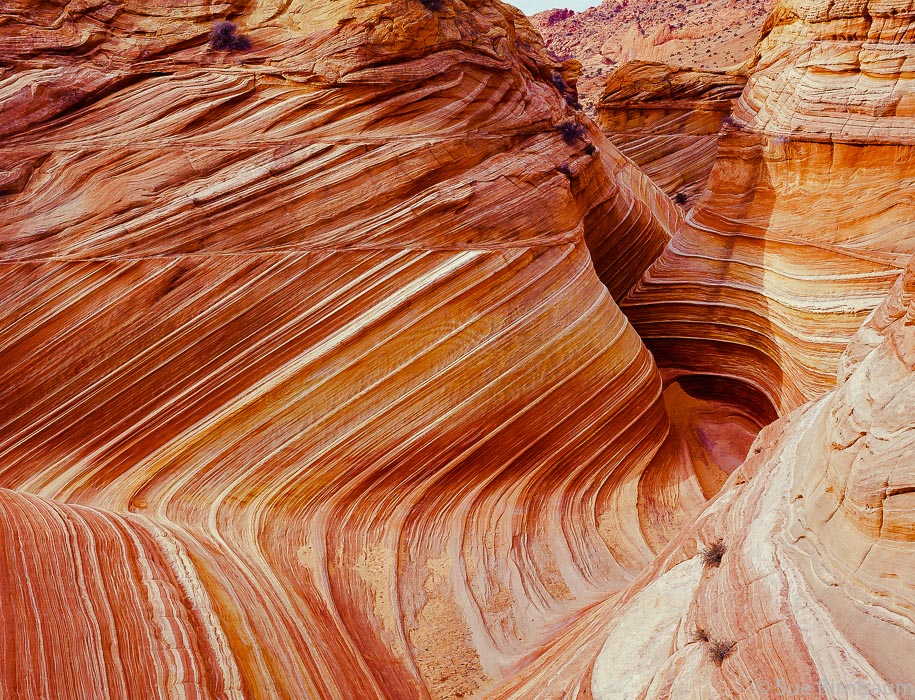
"The Wave" in Coyote Buttes North - Paria Canyon-Vermilion Cliffs Wilderness, Bureau of Land Management.
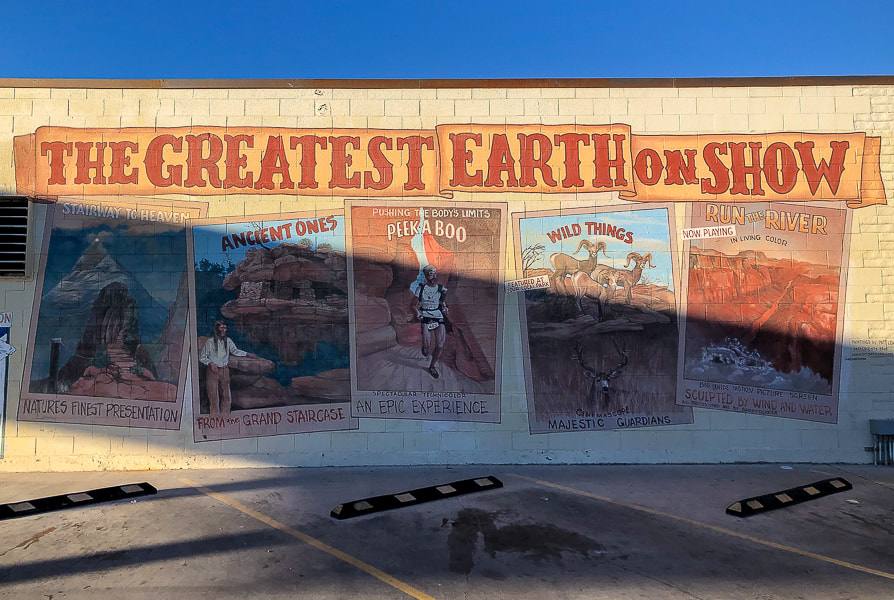
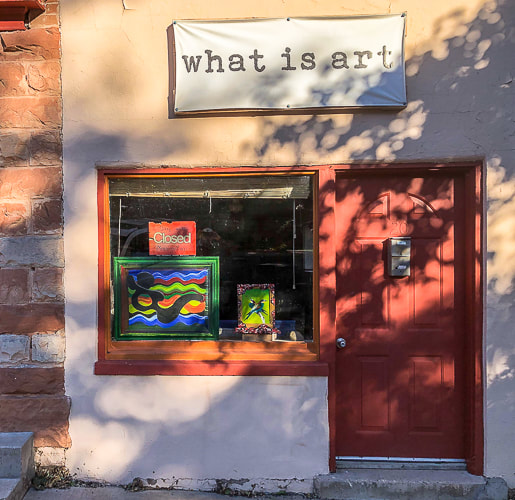
Mural in Kanab.
(more city of Kanab images at end of post) Mansard Benchmark and East Mansard Peak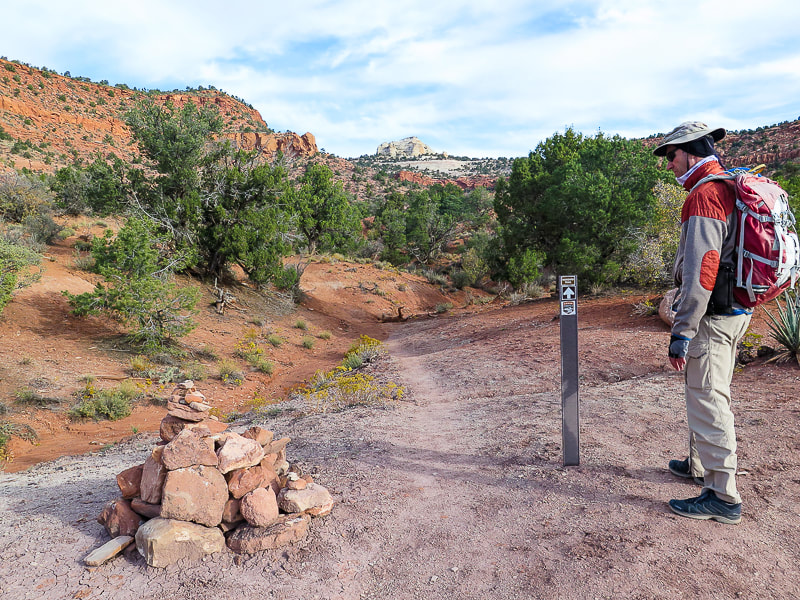
Cairn a short distance from parking lot. East Mansard Peak is center horizon.
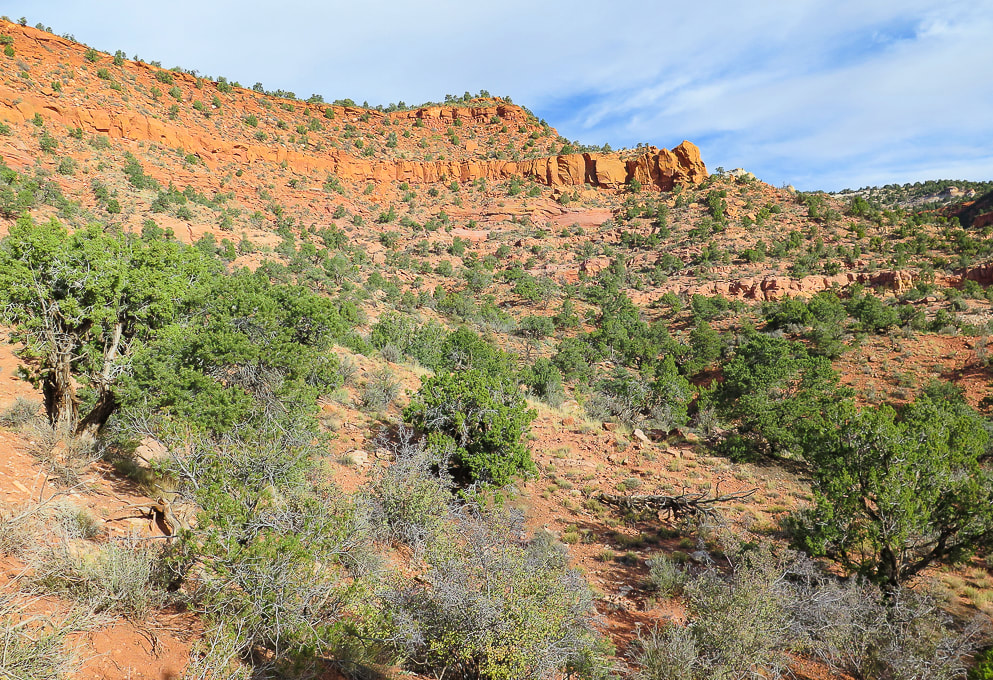
Vermilion Cliffs: first mile of trail switch-backs up to the top where it heads north toward saddle between Mansard Benchmark and East Mansard Peak.
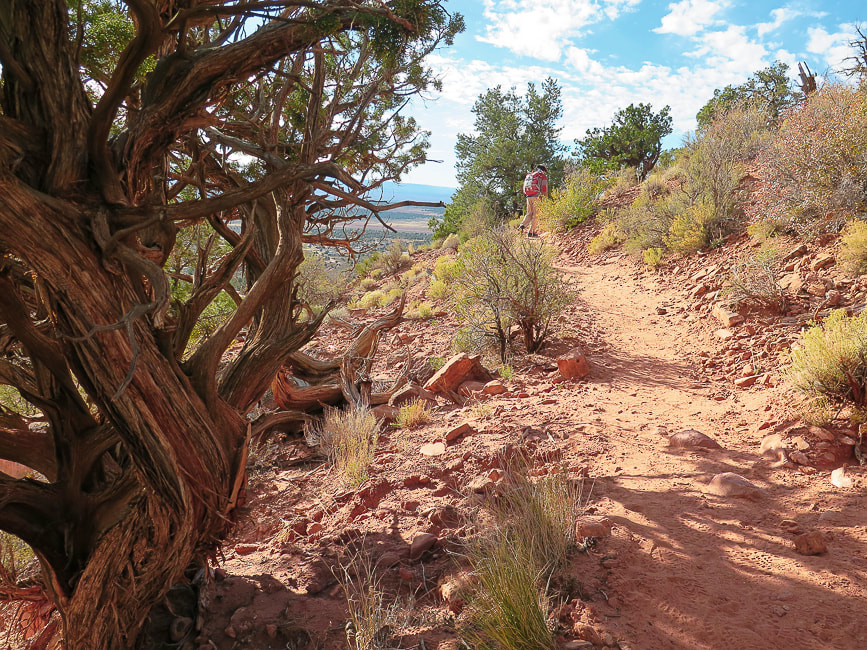
Mansard Trail switchbacks.
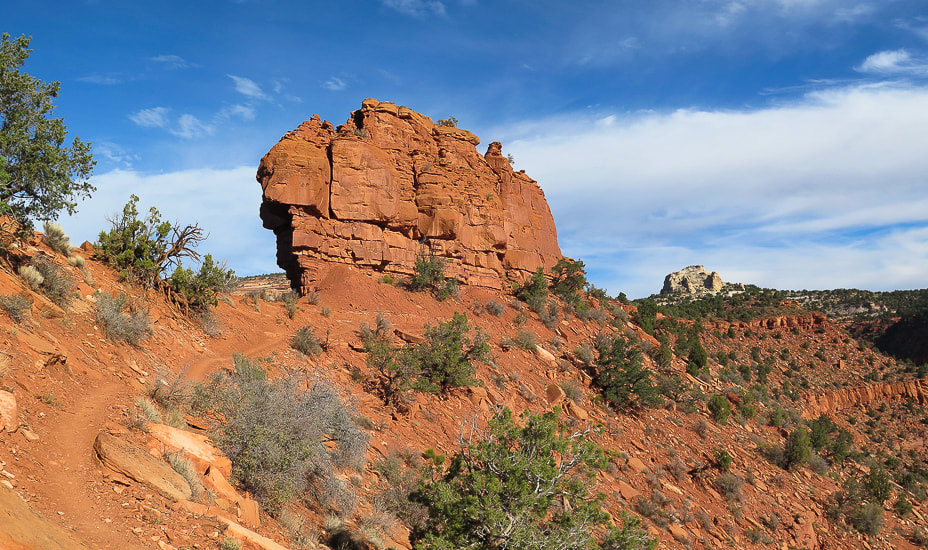
Off the switchbacks, onto the plateau. East Mansard Peak on the right.
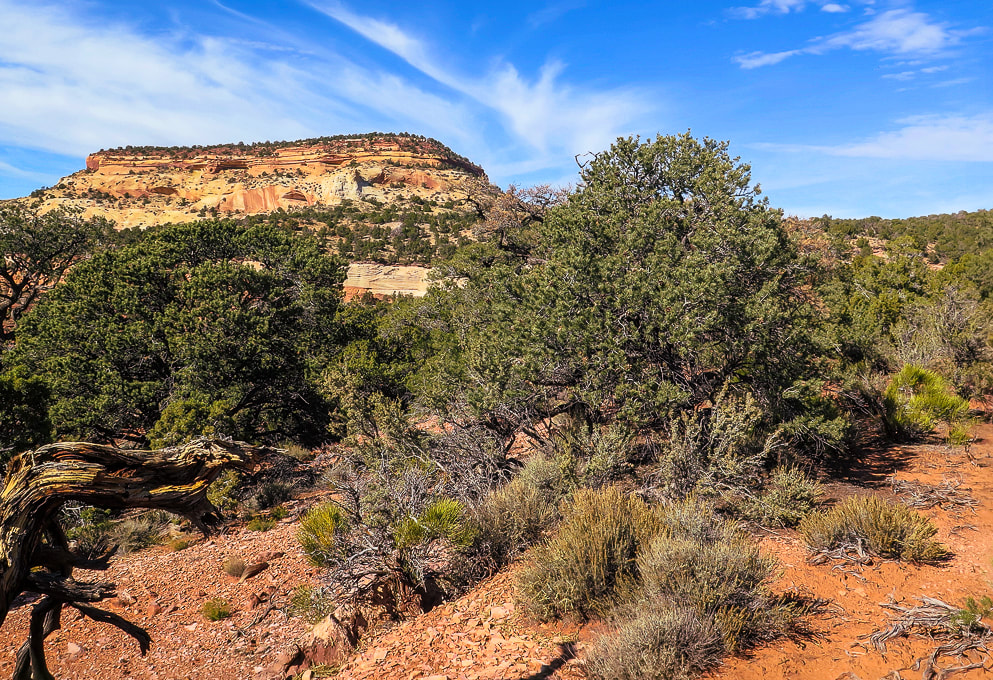
Mansard Benchmark seen once on top of the plateau. The route to summit this is from the other (north) side of this mesa.
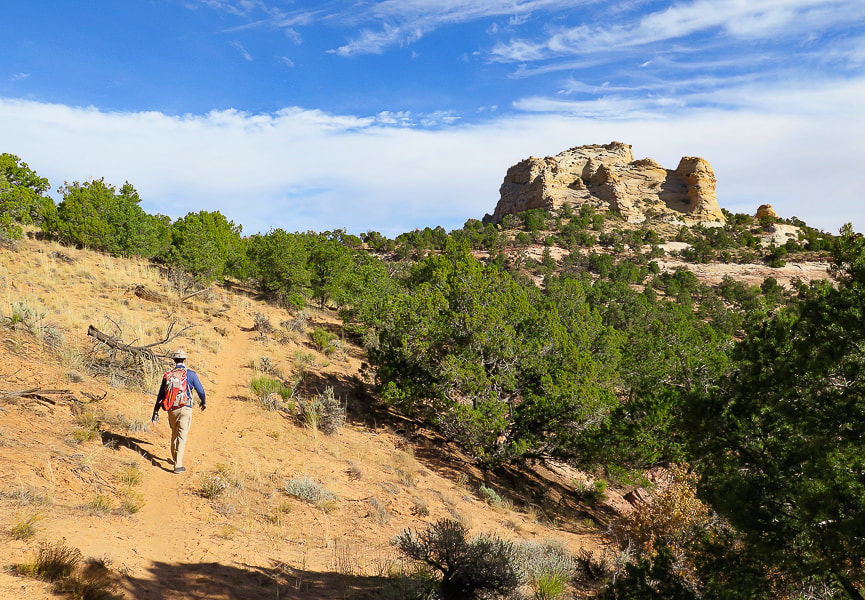
Pleasant stroll - East Mansard Peak seen here.
On the way to petroglyph site on south side of Mansard Benchmark.
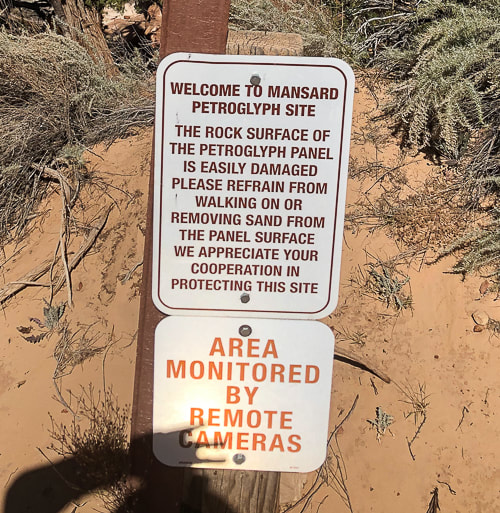
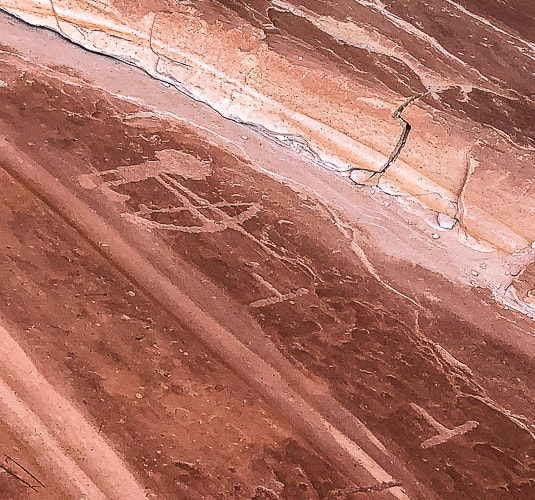
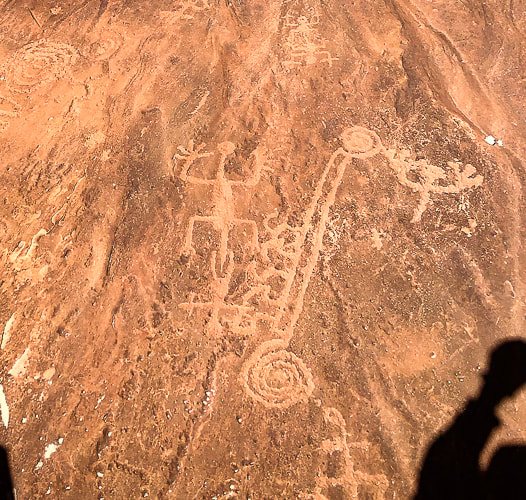
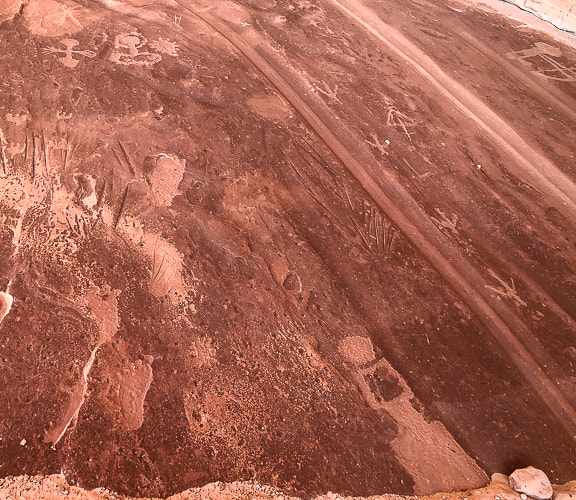
Mansard Trail petroglyphs are ~ 870 - 1,070 years old according to Bureau of Land Management Mansard Trail page.
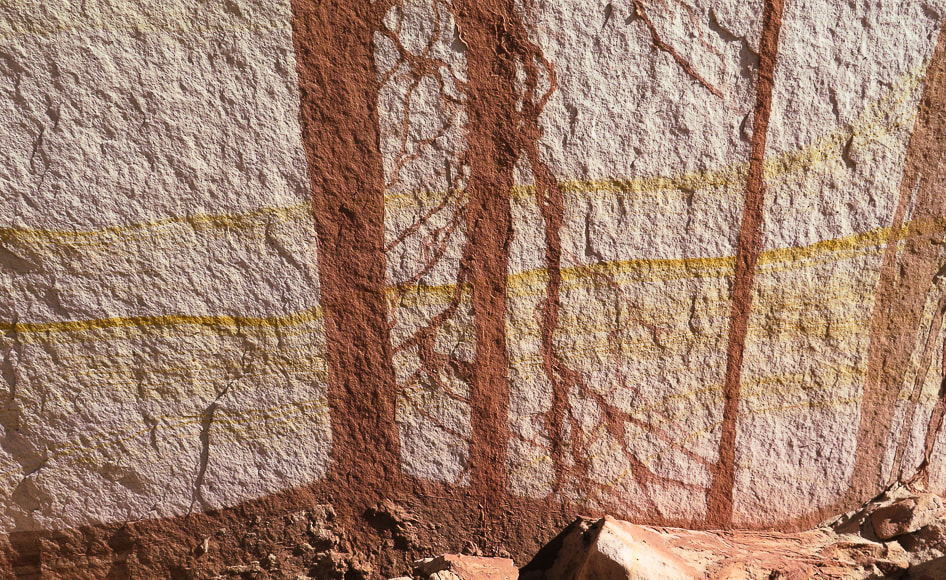
Detail in sandstone wall near petroglyph site.
Some cool stuff on the trail.
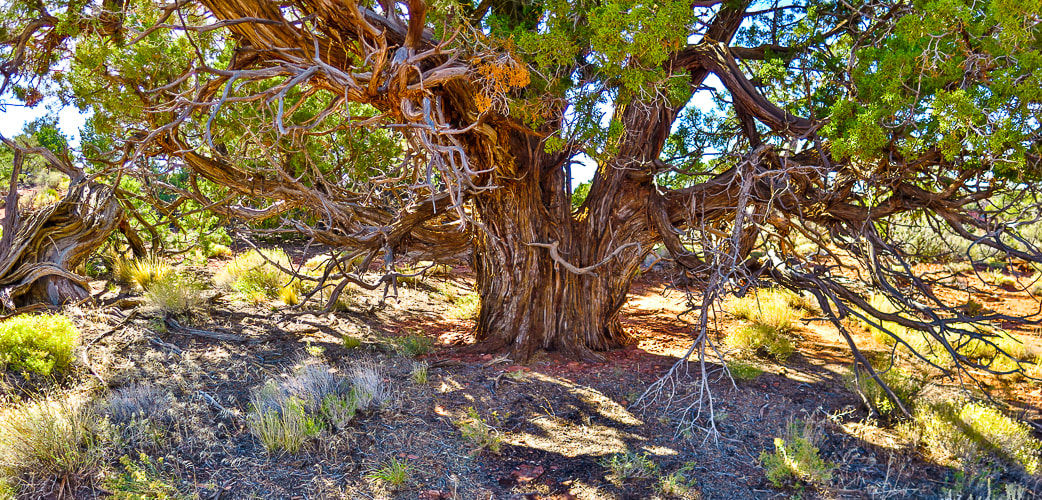
Just had to photograph (in high dynamic range) this beautiful, huge juniper!
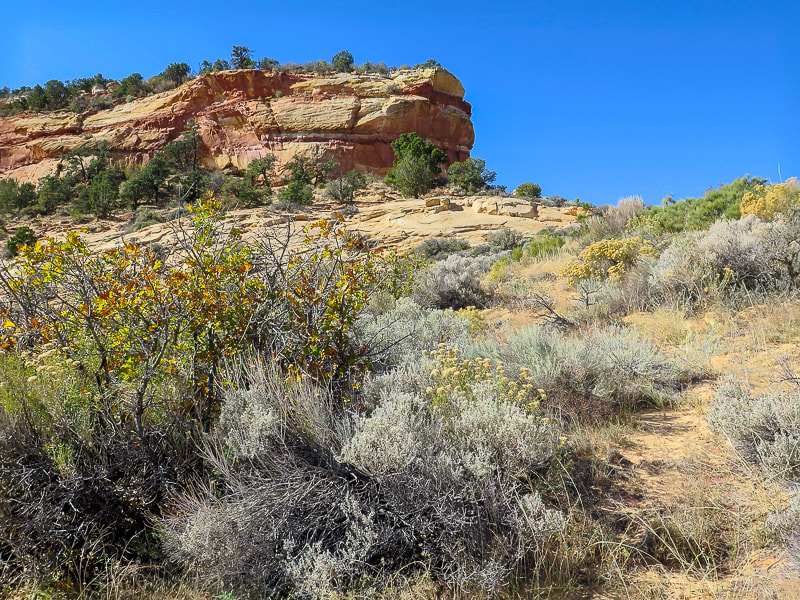
Point at which we left the sandy road and headed toward Mansard Benchmark's north cliffs.
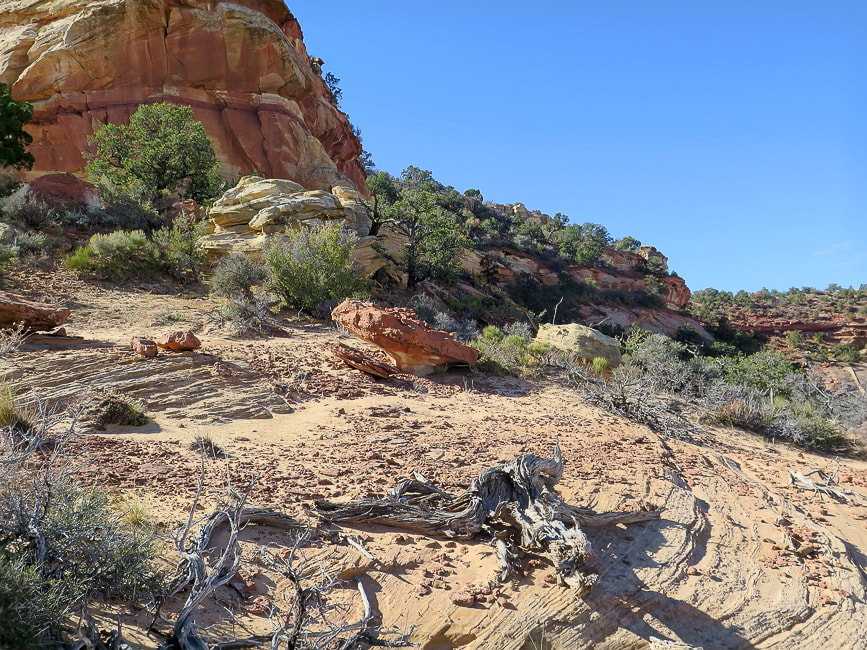
Approaching north cliffs.
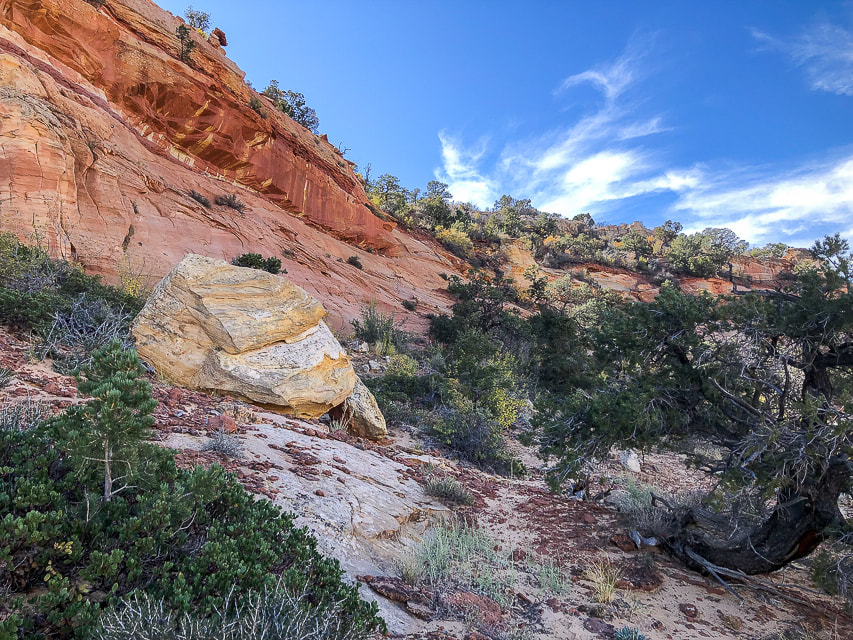
Looking for a route to the top.
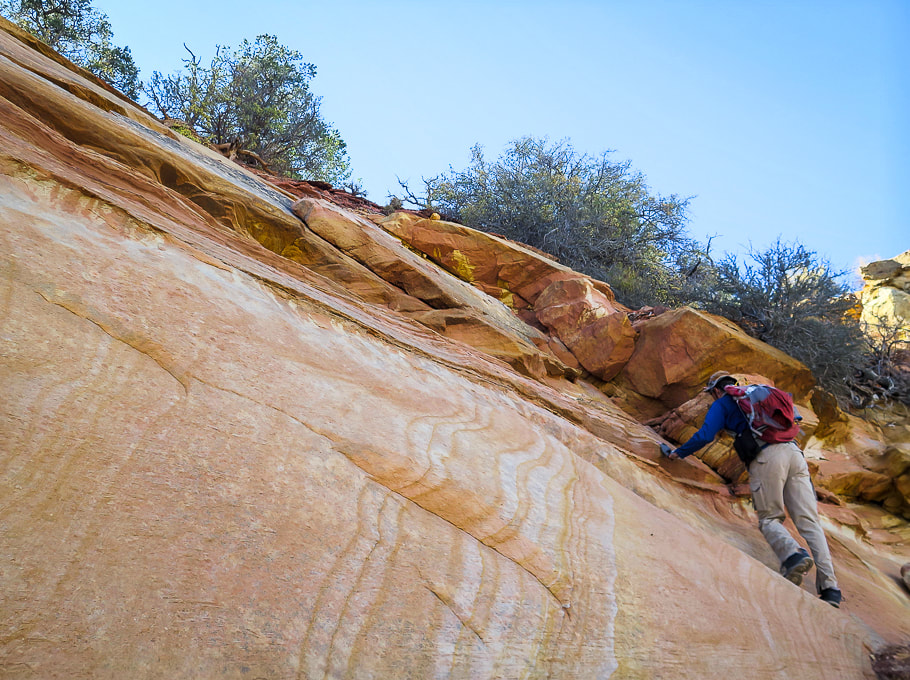
Get to climb beautiful slick rock!
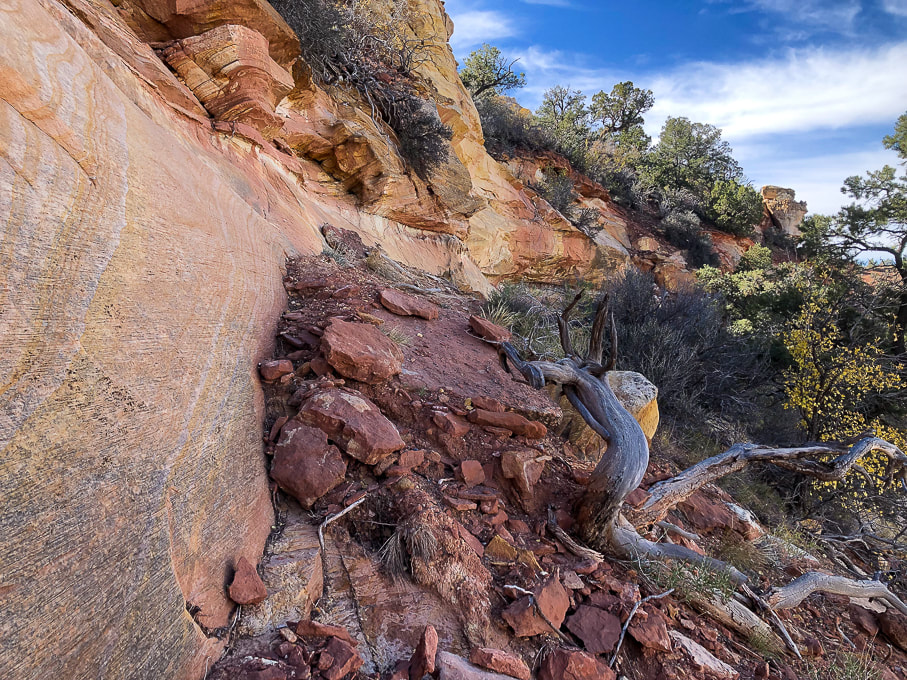
Walking along cliff base to find a Class 3 weakness.
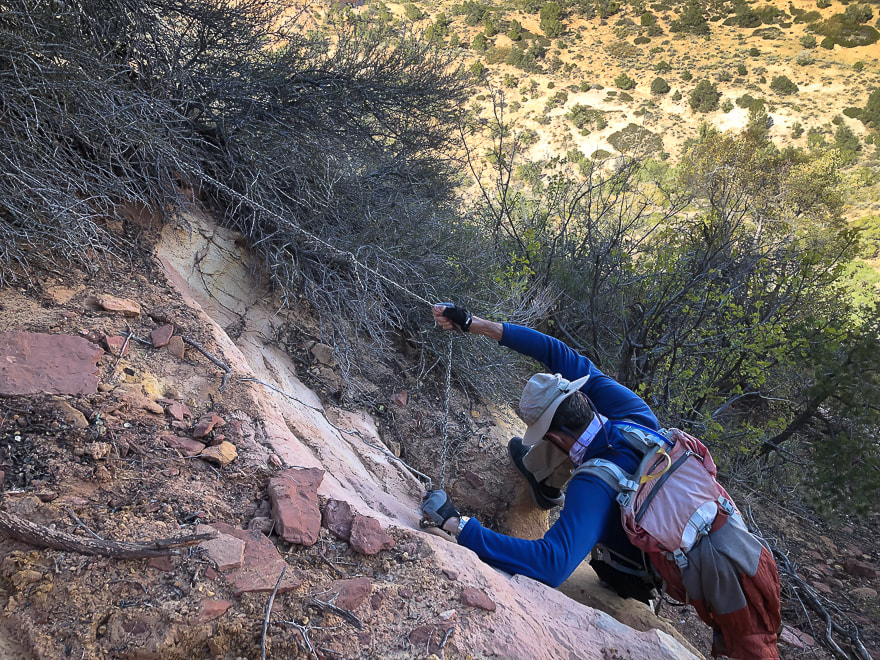
Found this rope: Fred used it only to climb down. He climbed up a weakness in the cliff just before this.
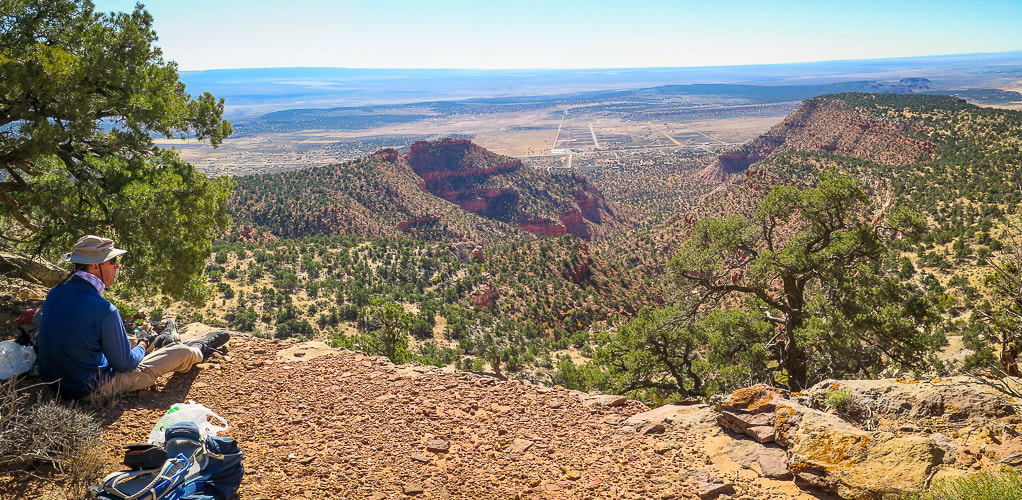
At the top of Mansard Benchmark looking over Kanab and Kanab Plateau into northern Arizona.
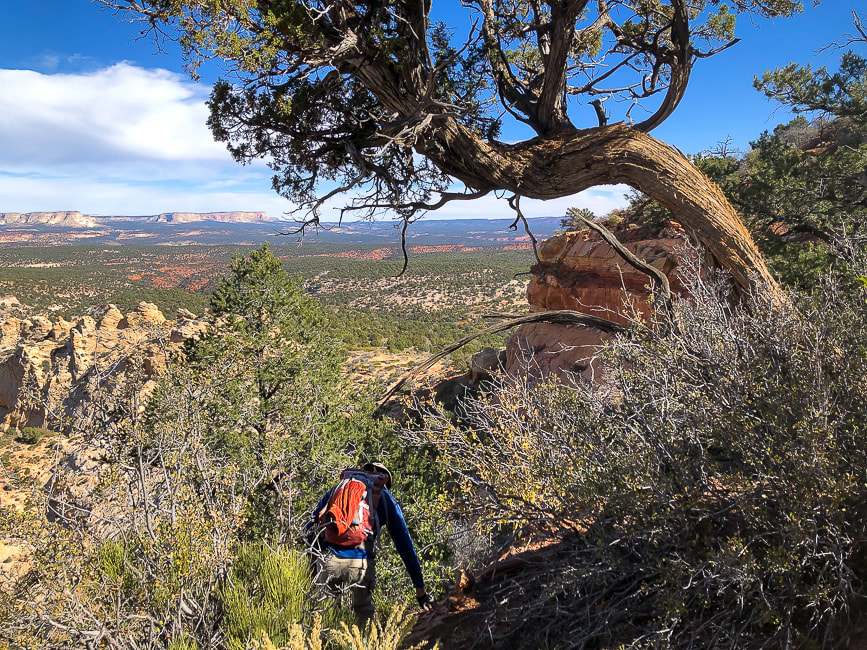
Heading down: large juniper marks where we ascended the cliff band.
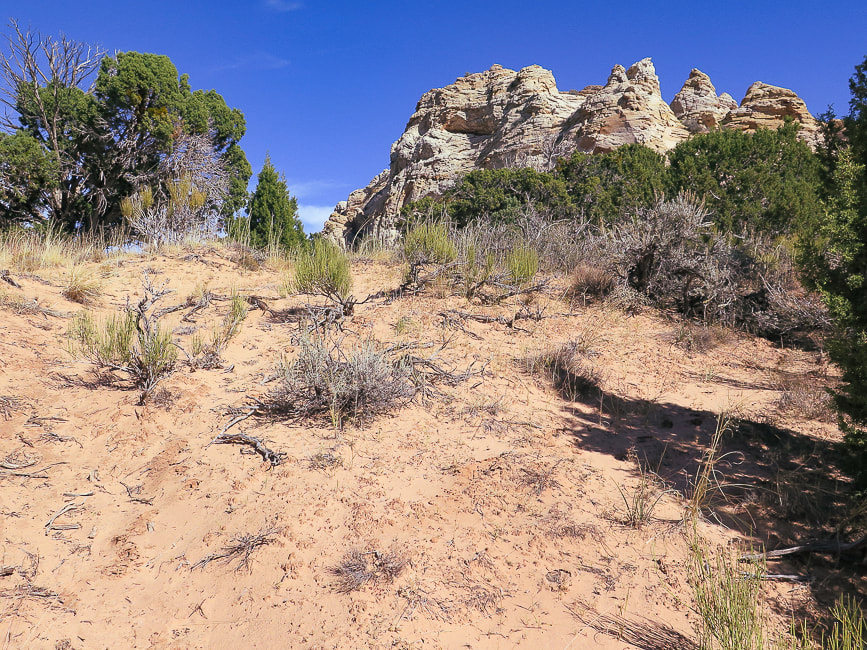
Looking up at East Mansard Peak.
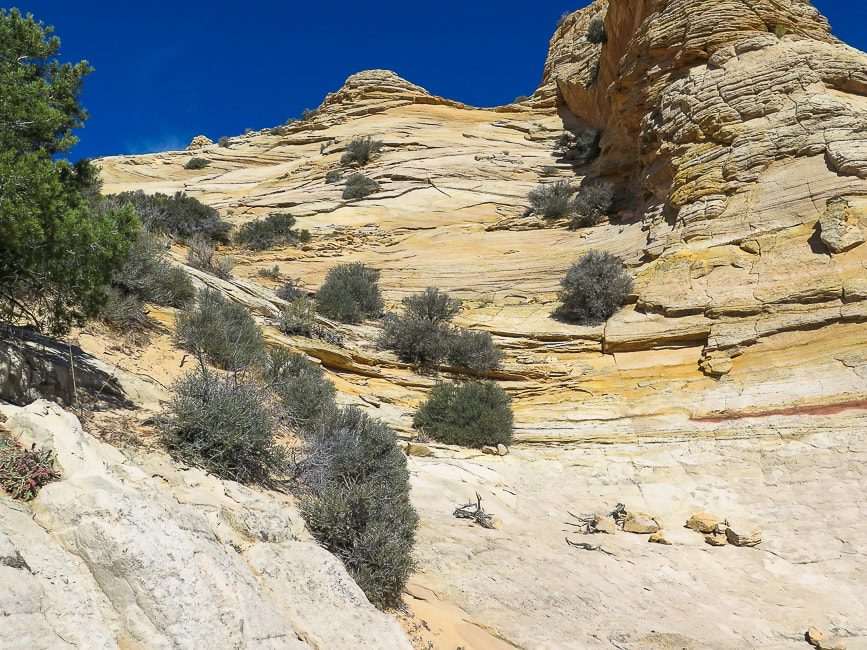
Social trail takes you from main Mansard Trail to base of East Mansard; begin climbing through sand/on sandstone to the left.
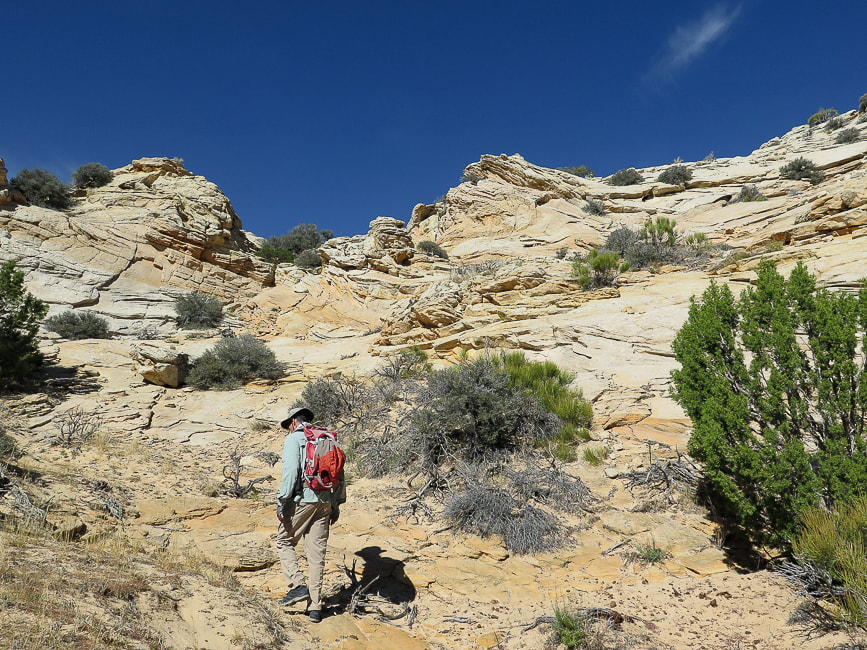
Maneuvering over sandstone to ridge and then following it to the right.
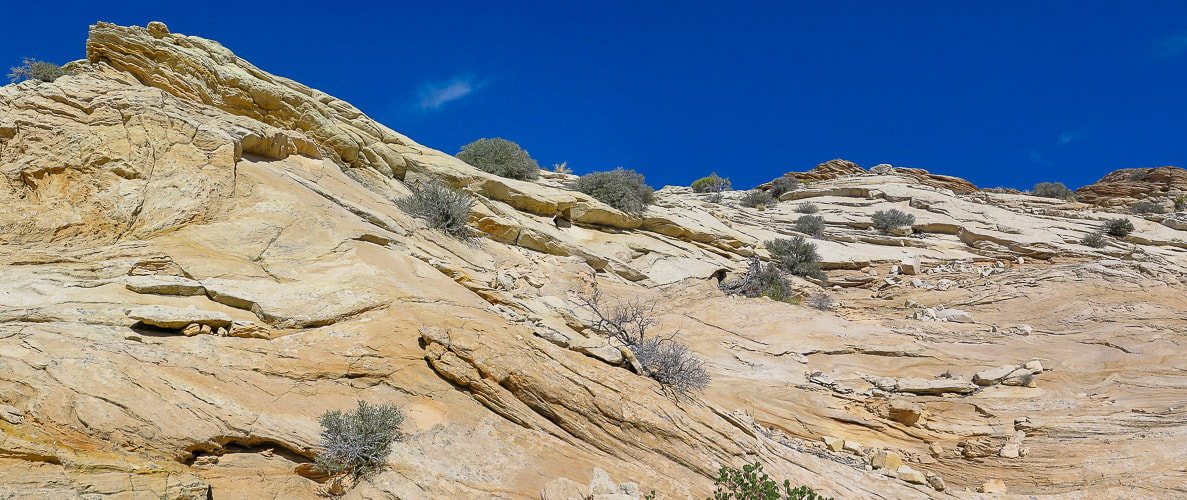
Summit at the right.
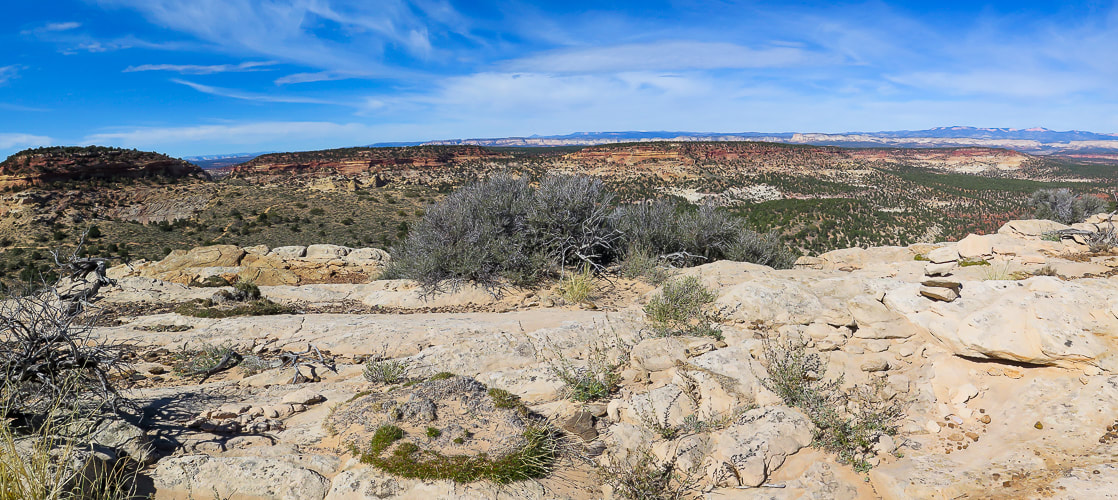
Cairn on summit. View includes Mansard Benchmark (left). Grand Staircase/Escalante National Monument on right in photo.
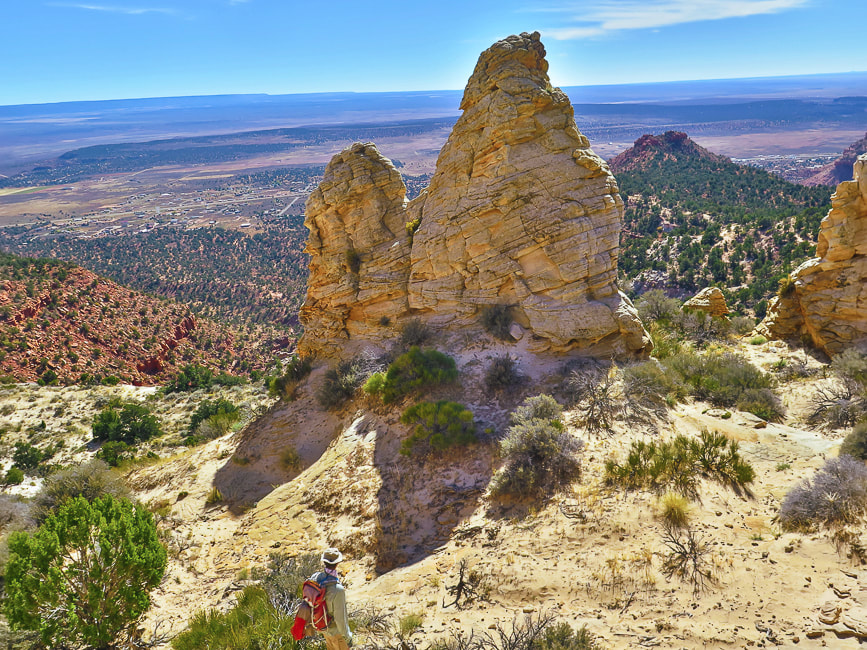
Base of East Mansard Peak.
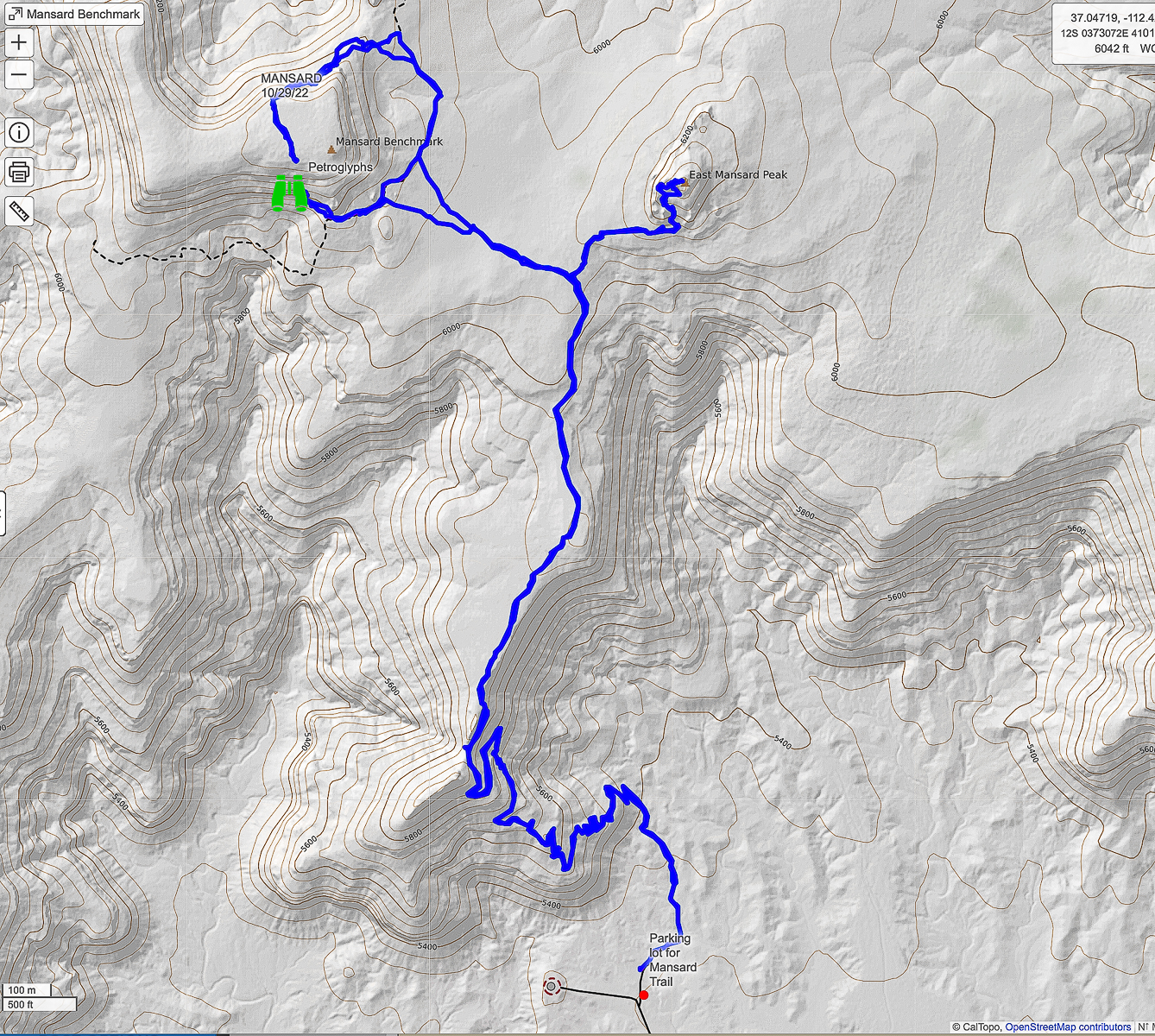
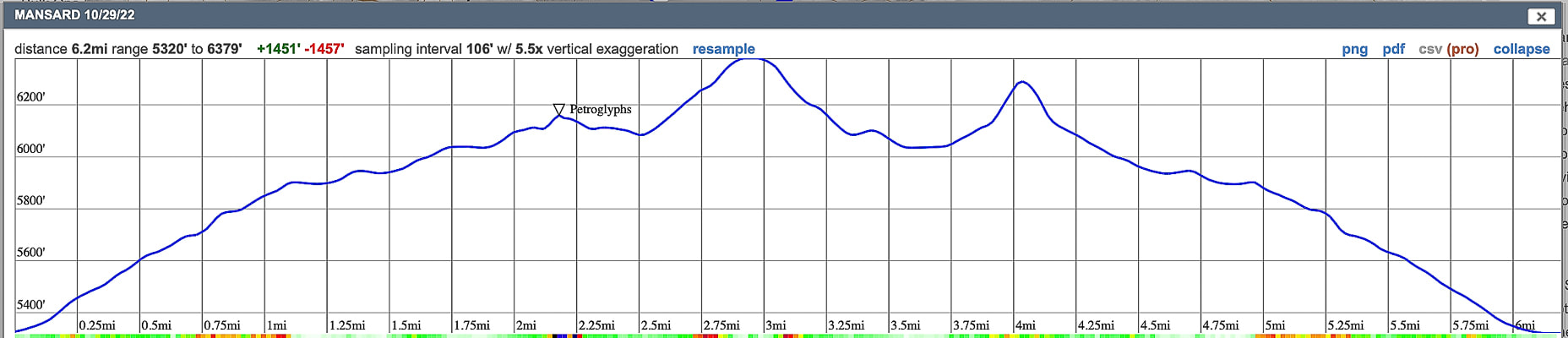
Our GPS tracks and elevation profile
click on map for larger view Peekaboo Slot Canyon, Kanab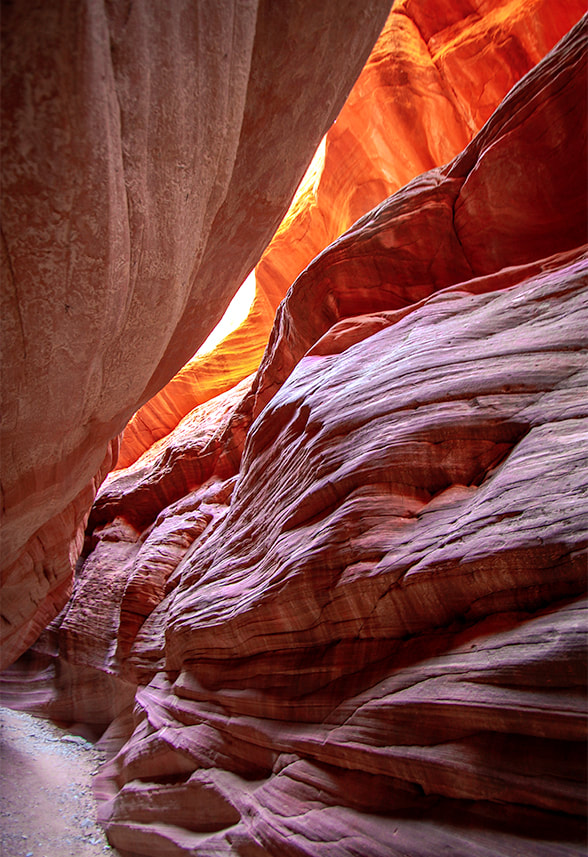
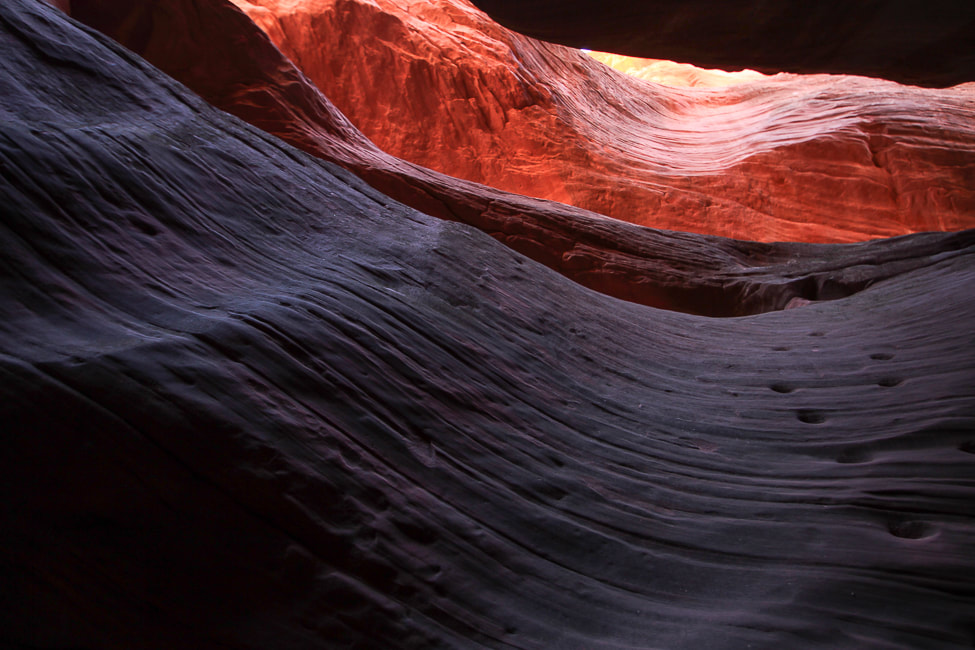
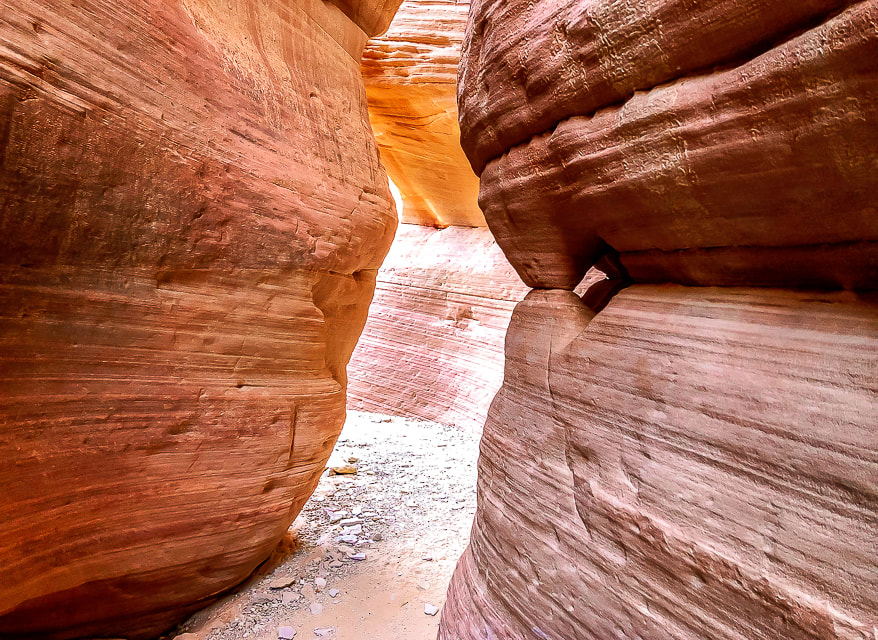
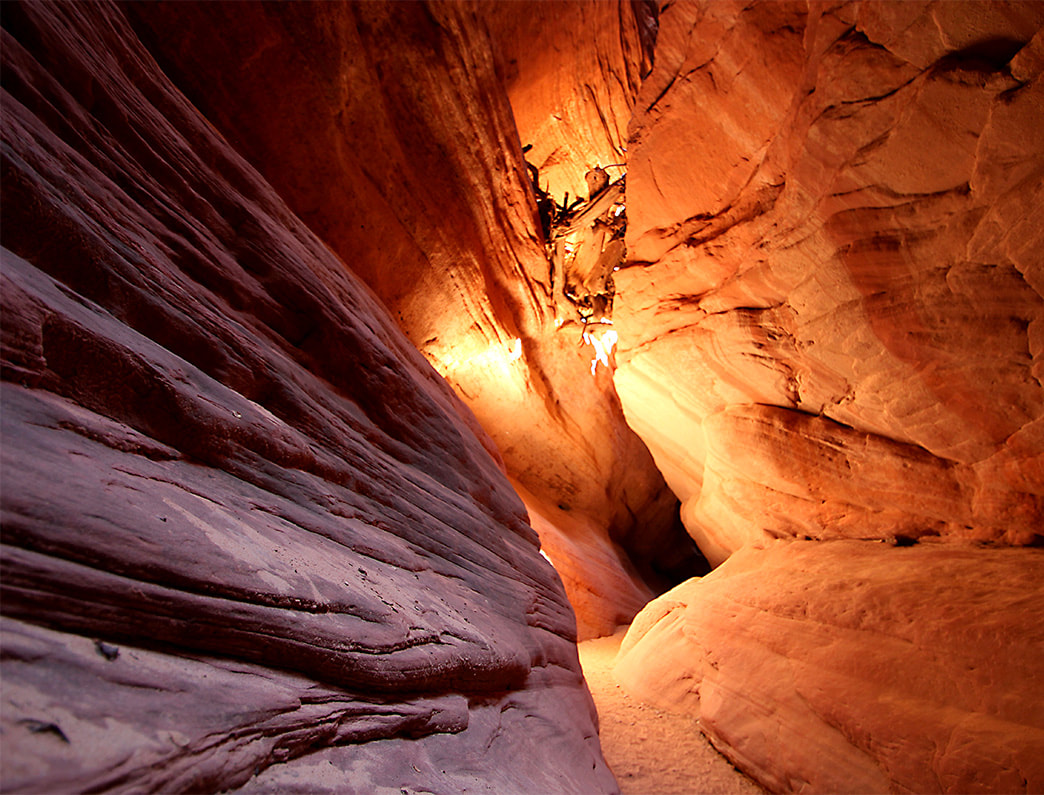
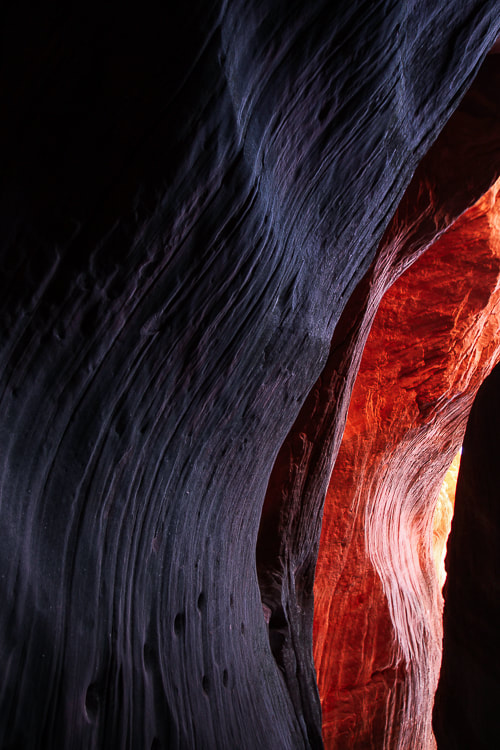
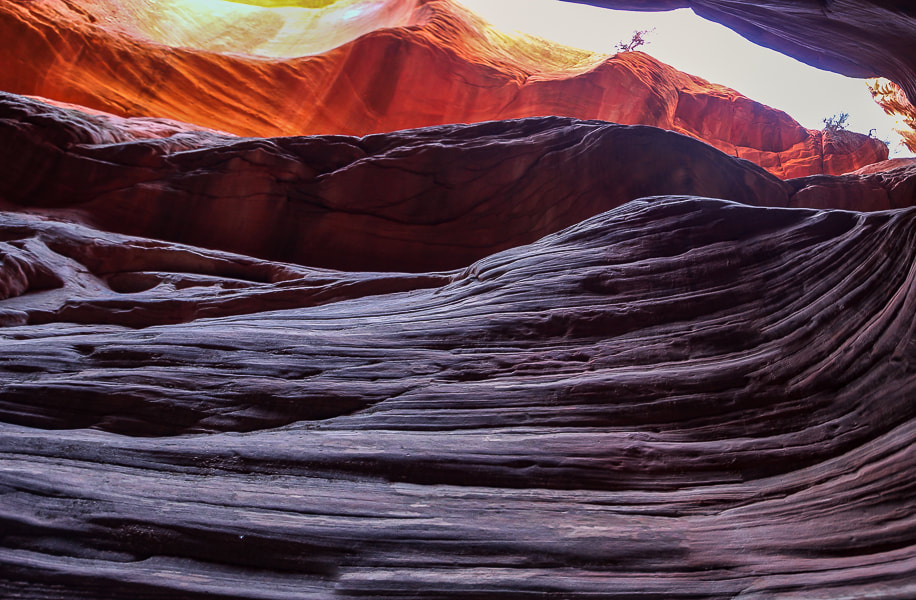
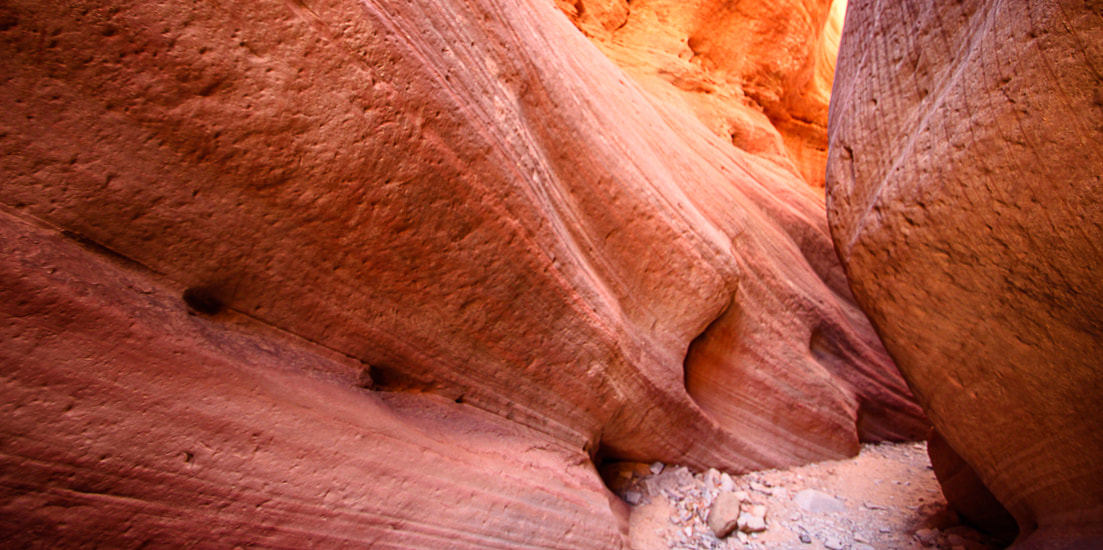
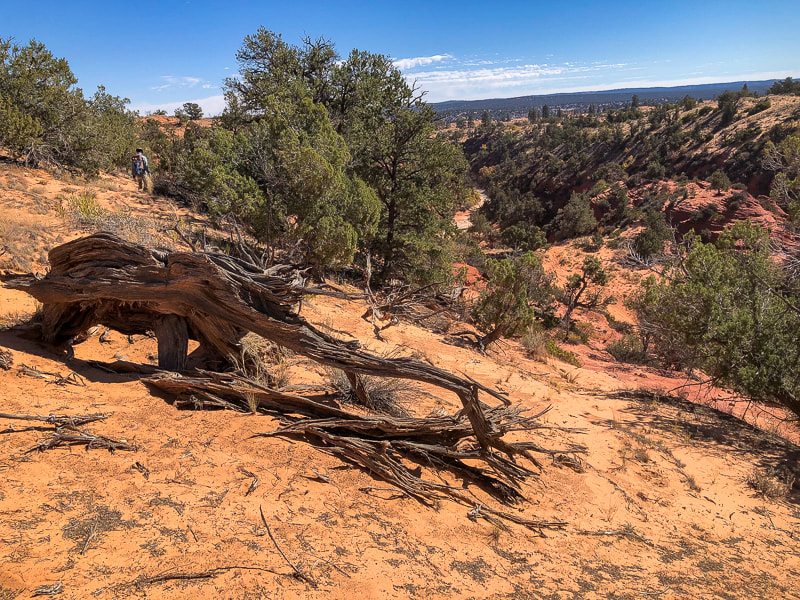
Walking on Peekaboo's rim.
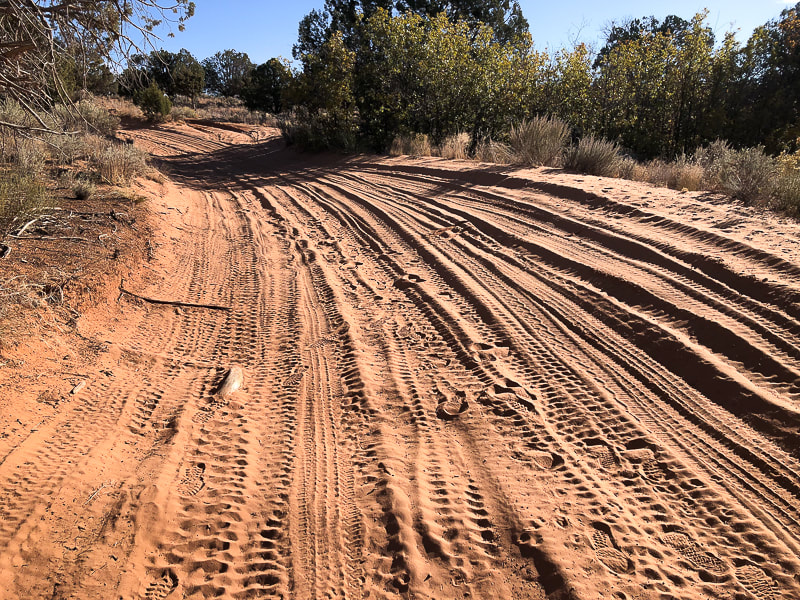
The road leading to Peekaboo from the trailhead off Highway 89. Sand gets deeper than this in some parts of this road.
Some cool stuff in Kanab.
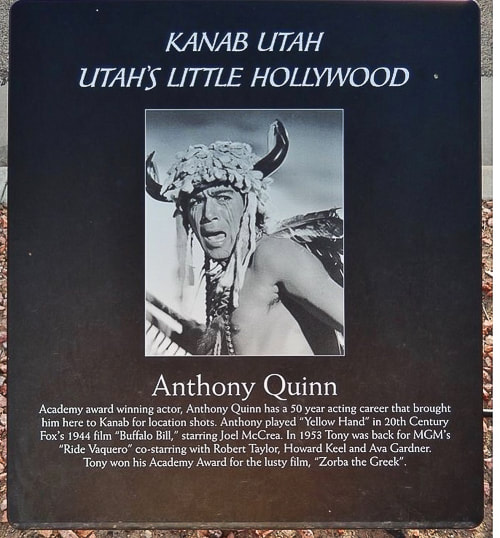
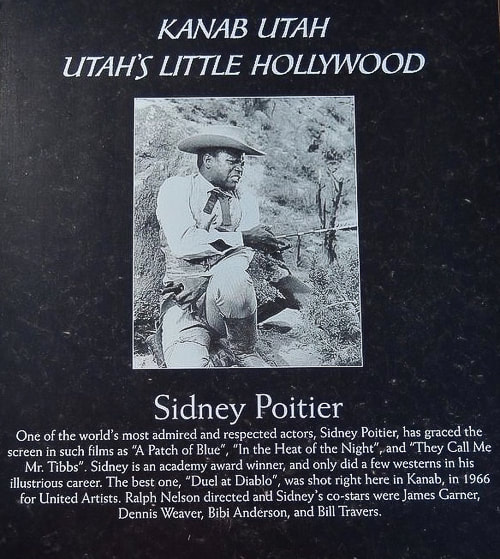
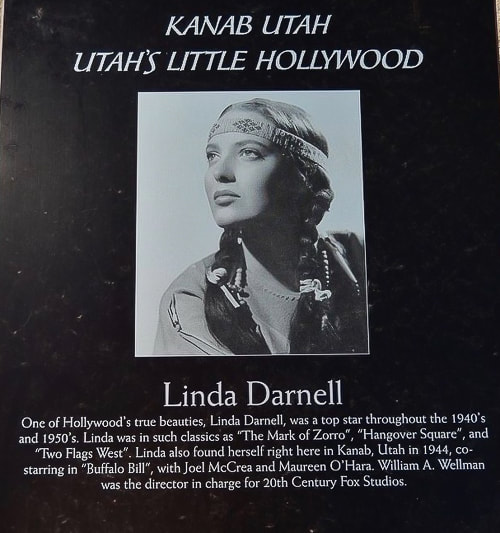
More than 100 movies and television shows, like Gunsmoke were filmed in Kanab and vicinity. It was the setting for The Lone Ranger, Billy the Kid, The Outlaw Josey Wales and even Planet of the Apes. A walking tour of "downtown" Kanab presents many nice-quality plaques that feature actors like John Wayne, Frank Sinatra, Dale Evans, Jack Nicholson, Clint Eastwood, Ronald Reagan, and many other stars who came to Kanab to film movies.
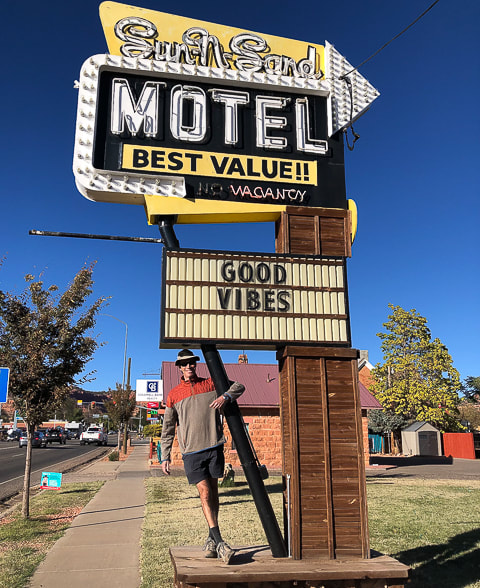

"Love Thy Neighbor as Thyself"......Jacob Hamblin, Buckskin Apostle.
References
|











| Related: Burger Peak, 10,320' - Pine Valley Mountains Gardner Peak, The Summit Less Traveled List of Utah Hikes | |
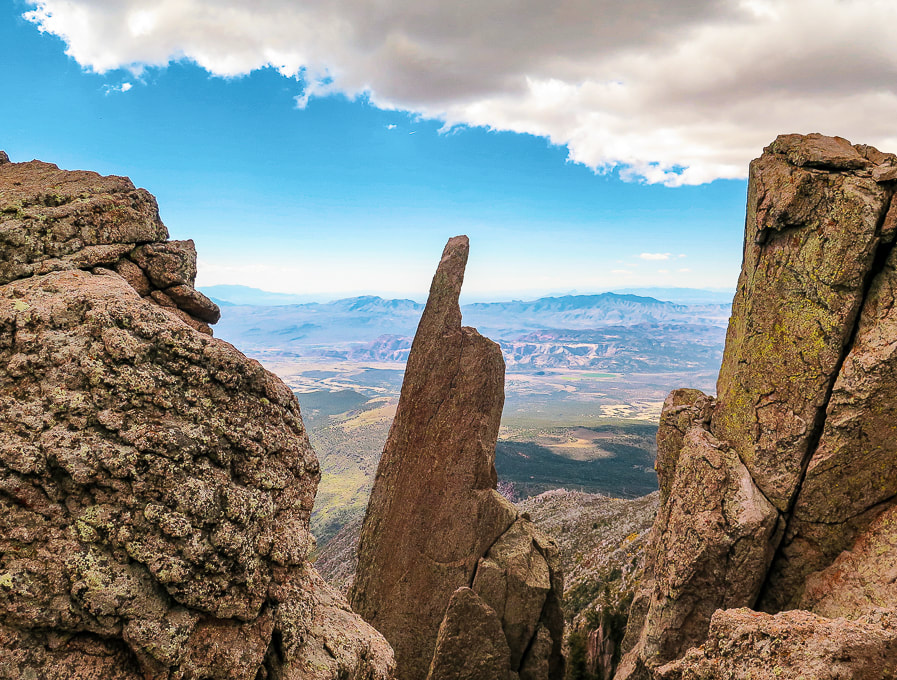
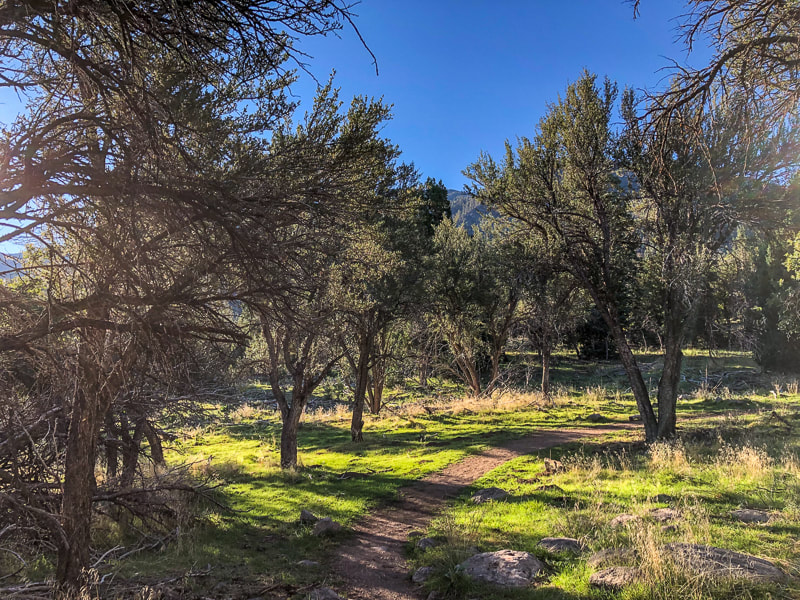
Overview: Hike to the high point of Utah's fourth largest wilderness that has the most diverse flora of any other Utah range (1,000 species). You can summit Burger Peak on the way to forested Signal Peak. Start in mountain mahogany, walk along Forsyth Creek through aspens and ponderosa pines to summit of firs and pines. A spectacular view of the Red Cliffs National Conservation Area and mountains in Arizona is seen as you climb out of the forest near the base of Burger Peak.
Location: Dixie National Forest, Pine Valley Mountain Wilderness, out of Pine Valley, north of St. George, Utah.
Distance/Elevation gain: 14 miles out and back/3,900' cumulative gain. Trailhead = 6,650', Summit = 10,369'.
Difficulty: Moderate - Strenuous on Class 1 to base of Signal Peak; Class 2 to summit (no trail).
Prominence: 4,485'.
Coordinates: Forsyth Trailhead = 37.38331 -113.50682. Signal Peak: 37.3197, -113.49162.
Trails: Forsyth Trail (#31012) to Summit Trail (#31021).
Maps and Apps: Trails Illustrated #715 - St. George-Pine Valley Mountains, Garmin GPS, Avenza (St. George/Springdale/Hurricane map).
Date Hiked: 10/7/22
History: Pine Valley was discovered by Mormon pioneers Gunlock Bill Hamblin, Jacob Hamblin, and Isaac Riddle when they were moving cattle north of Santa Clara for summer grazing. A sawmill to process lumber was erected in 1856. The tall white Pine Valley Chapel stands out as you drive through town. Built in 1868 according to Ebenezer Bryce's plan, it is the oldest meetinghouse in continuous use of the Church of Jesus Christ of Latter Day Saints. Bryce reportedly followed a lost cow later into a beautiful canyon - the now famous Bryce Canyon National Park. Bryce's experience in Scotland as a shipbuilder was the impetus for the well-constructed chapel.
Geology: The Pine Valley Mountain range is the largest laccolith in the U.S., and perhaps the world. Molten rock was injected into existing strata 20 million years ago; top layers eroded to reveal this large body of monzonite rock (similar to granite). This monzonite porphyry (coarse-grained) rock was deposited over the famous Claron formation, the rock that is seen in the form of hoodoos in Bryce Canyon.
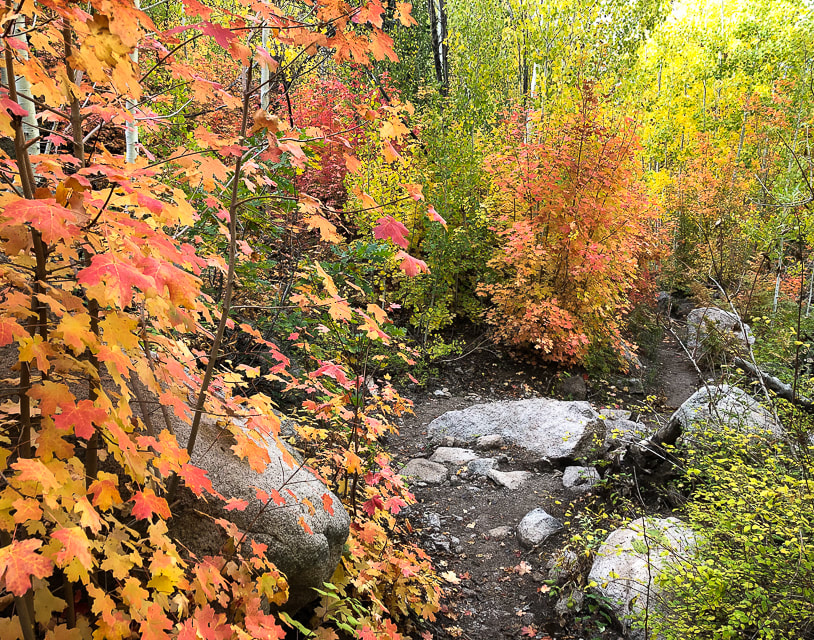
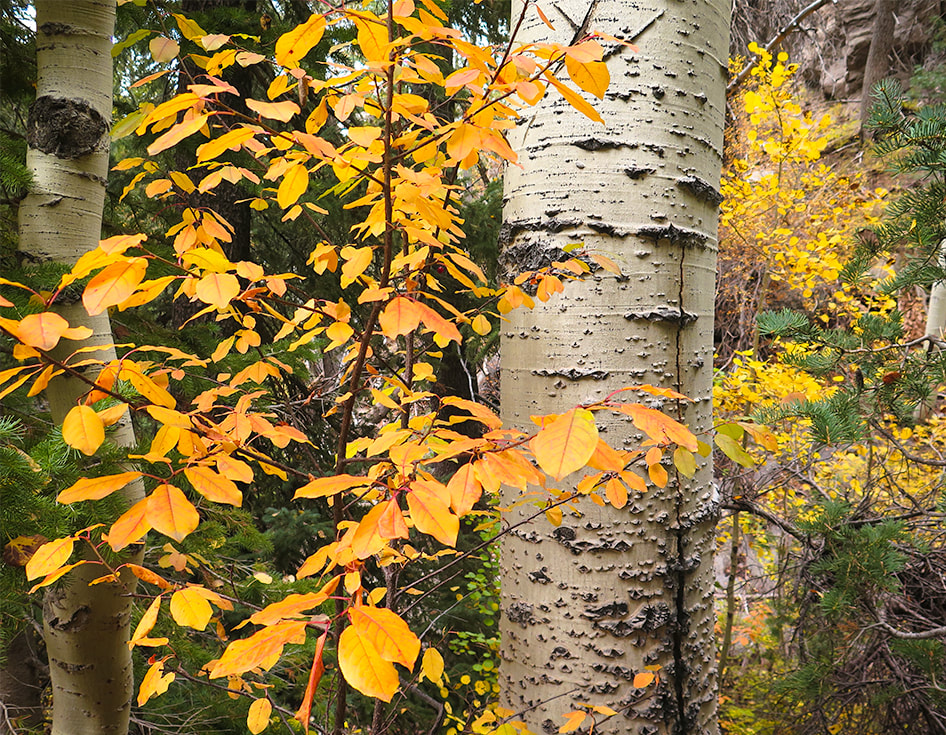
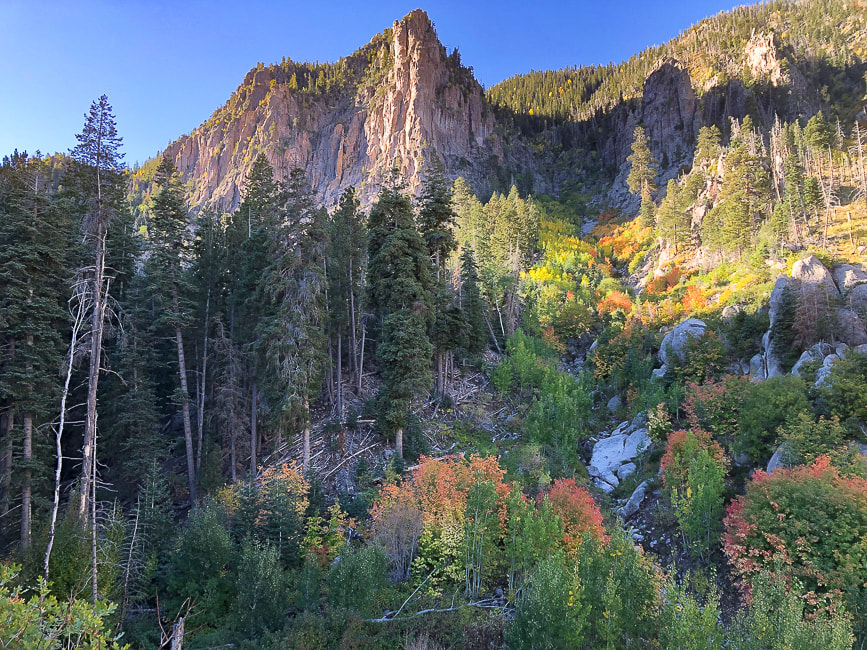
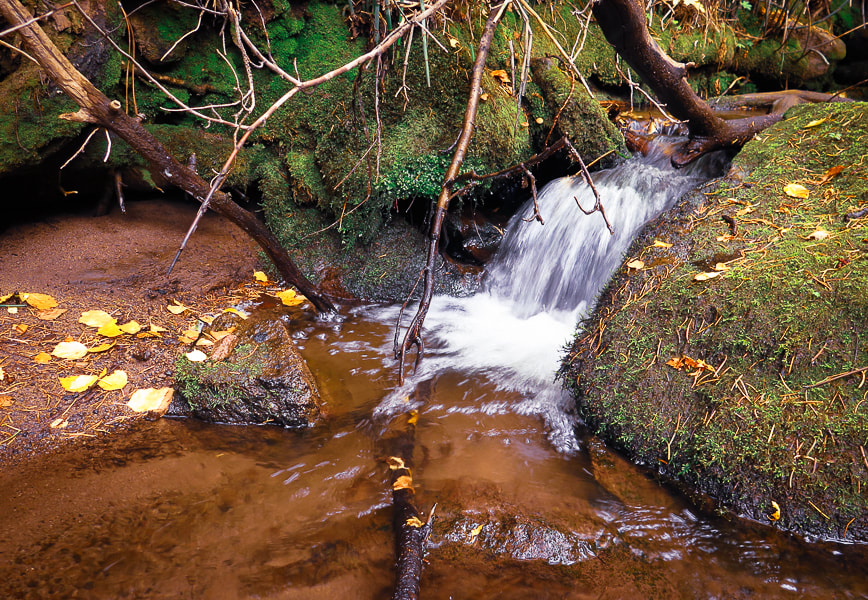
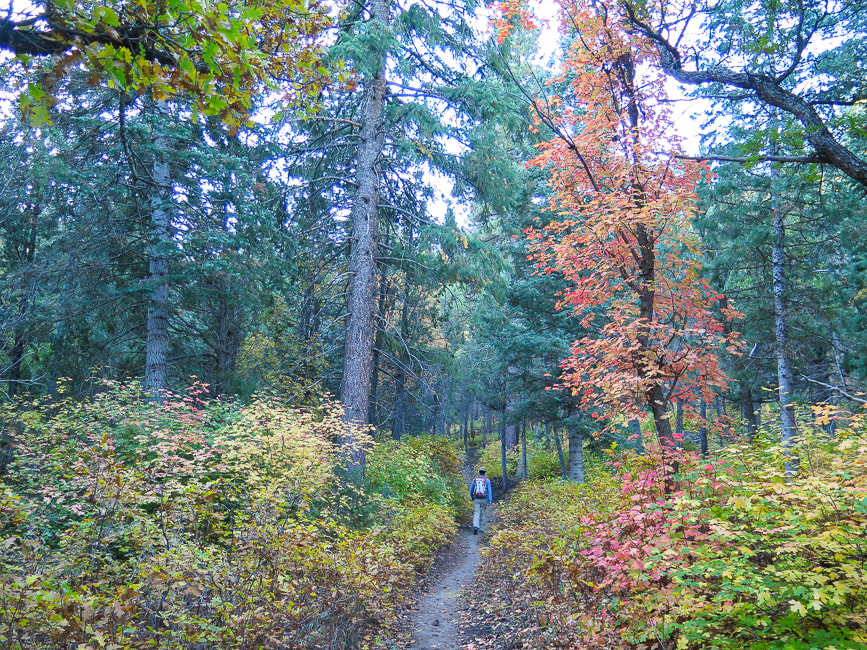
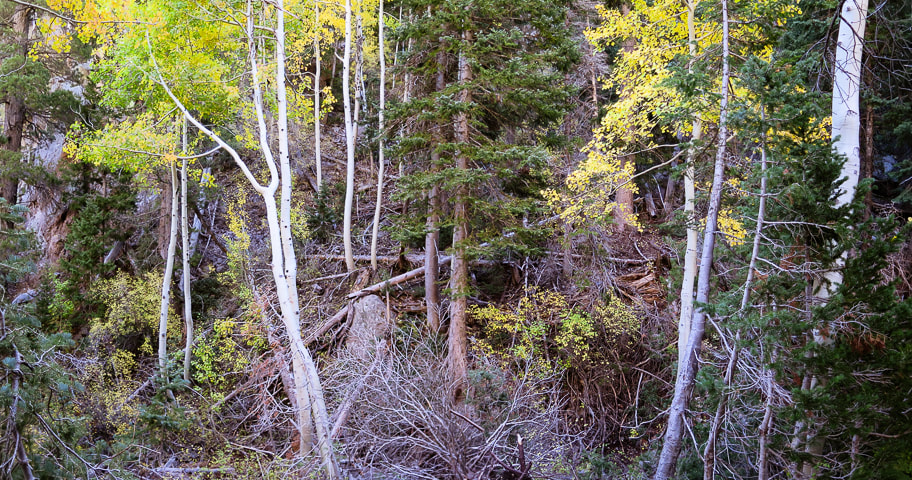
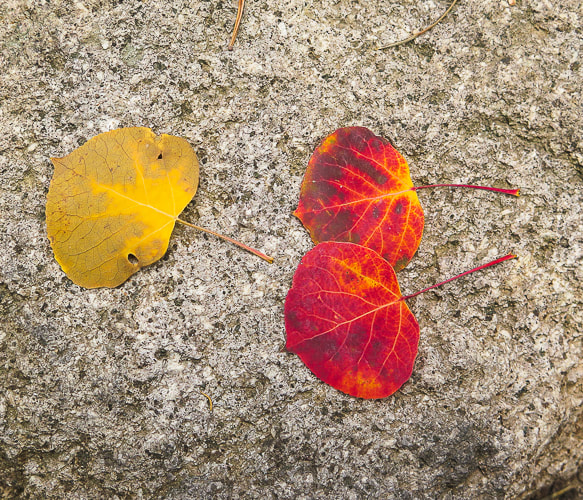
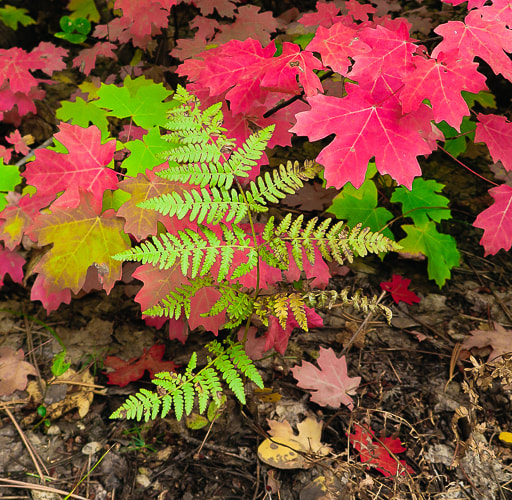
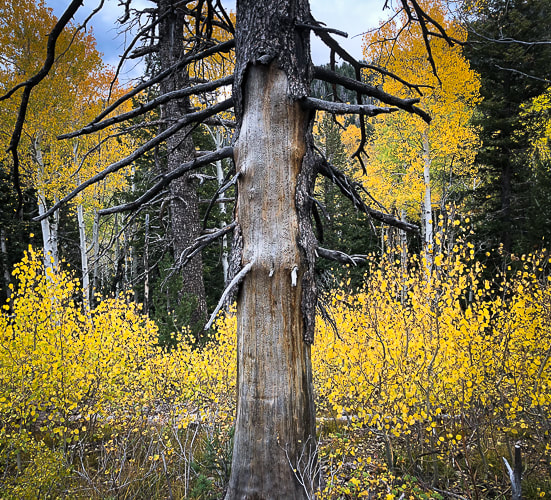
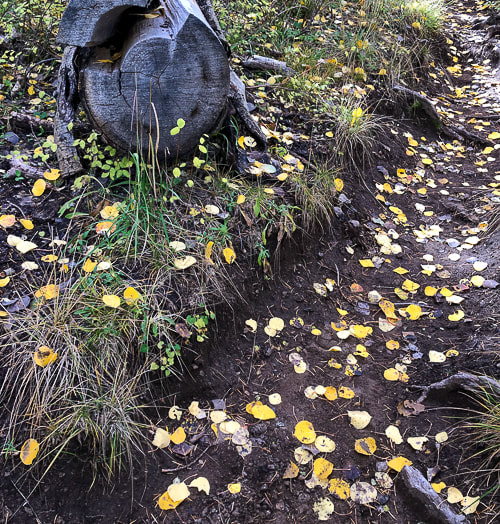
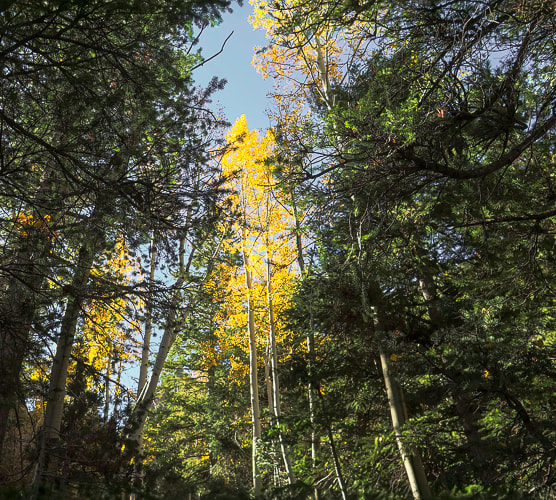
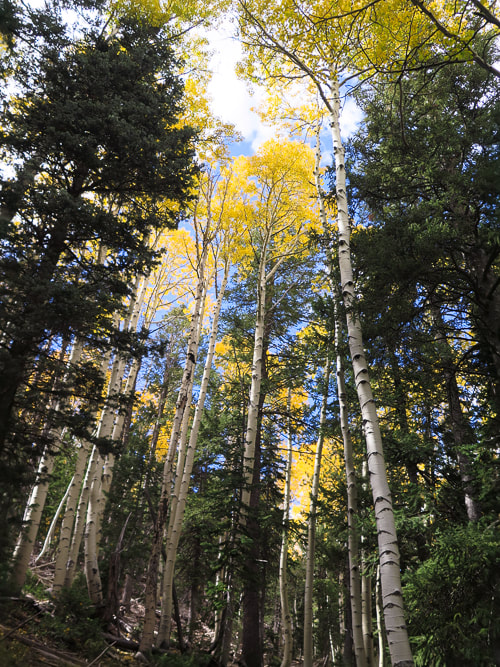
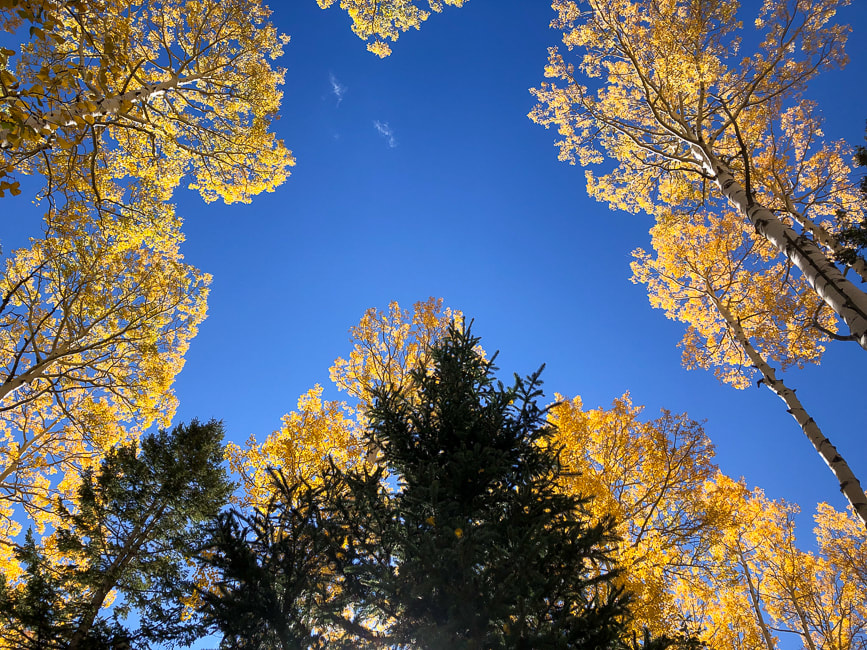
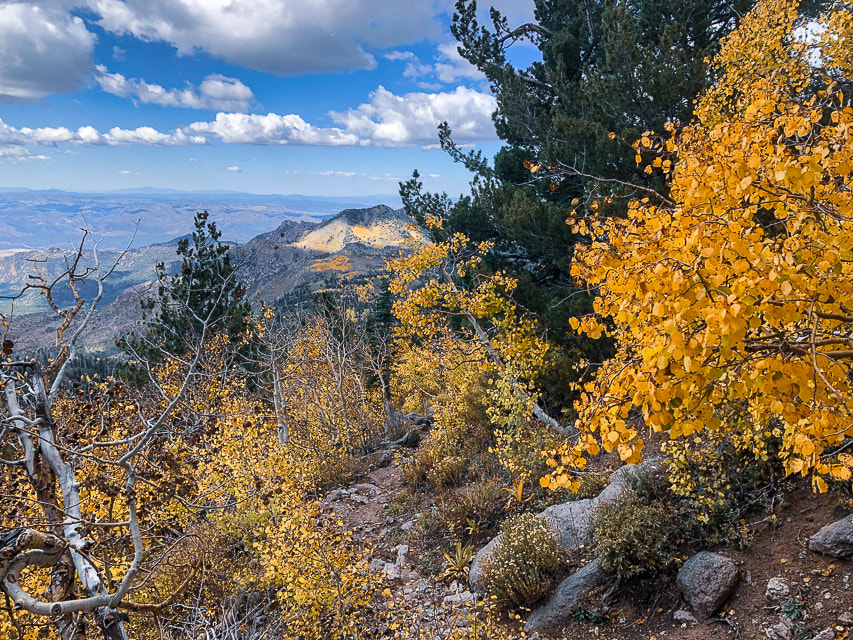
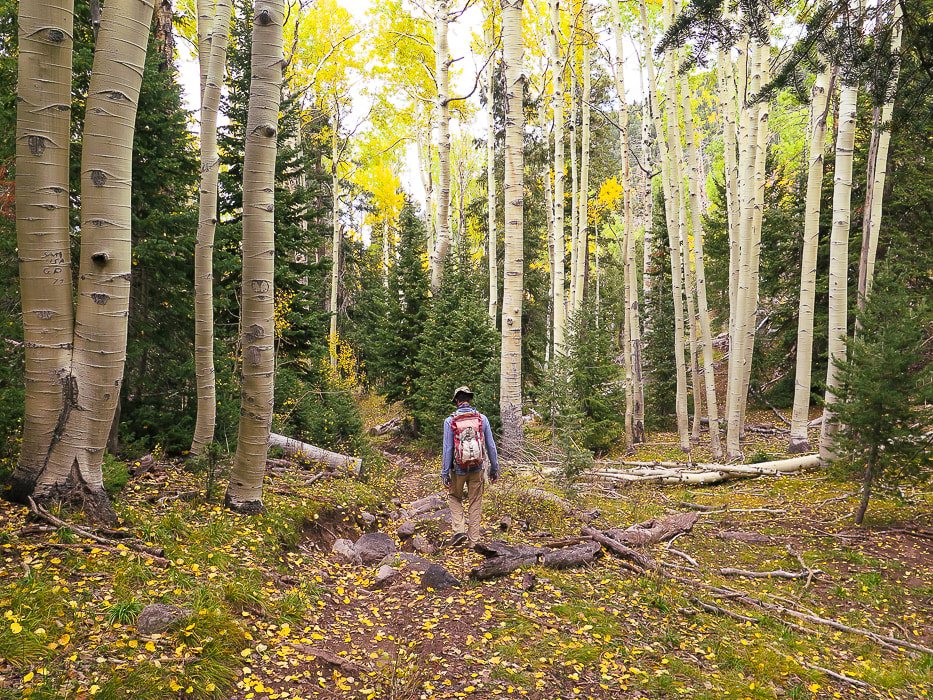
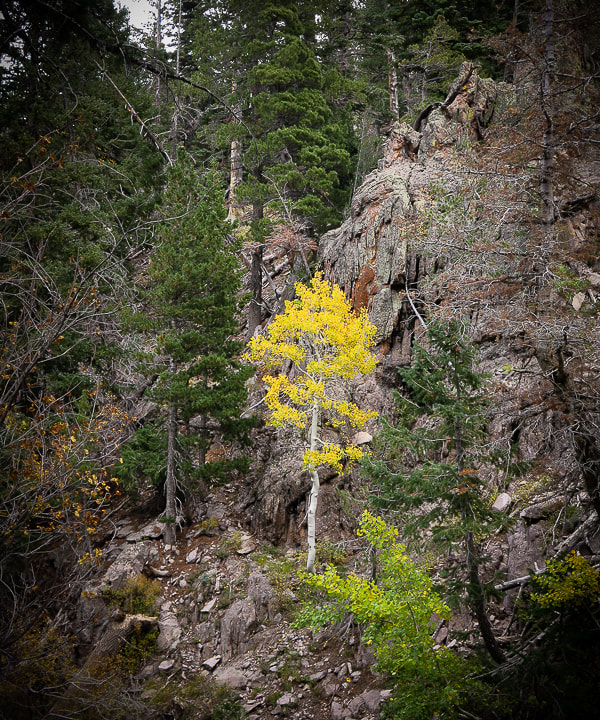
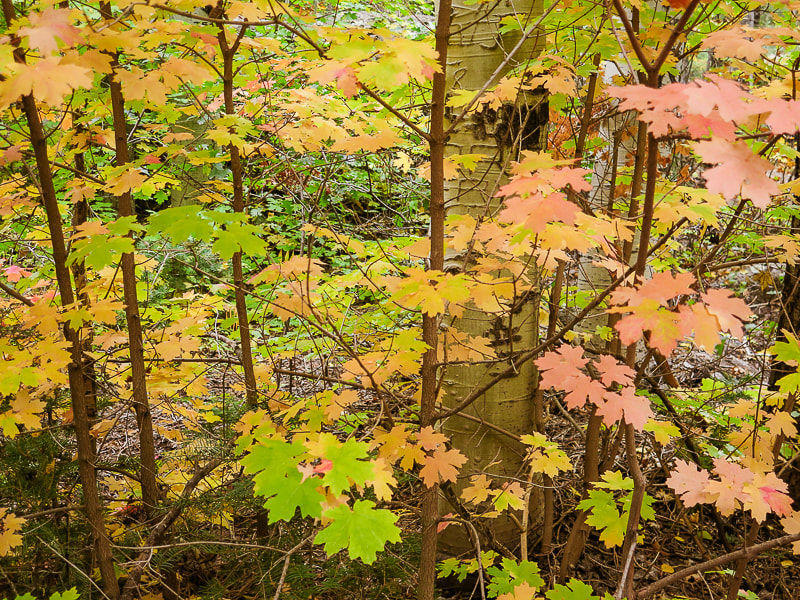
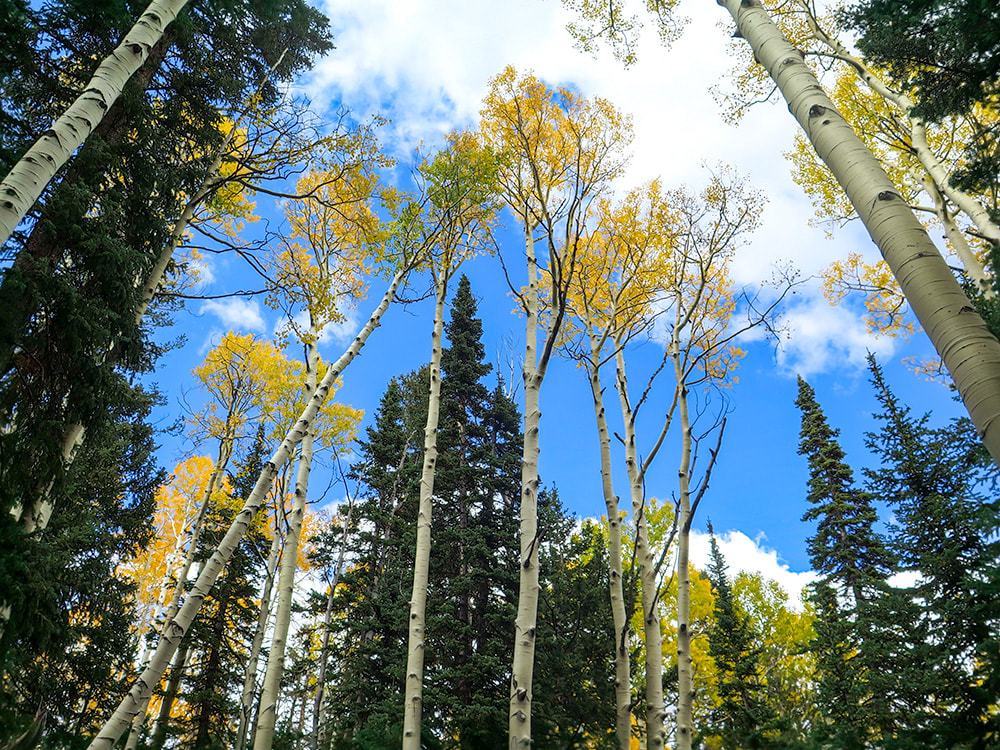
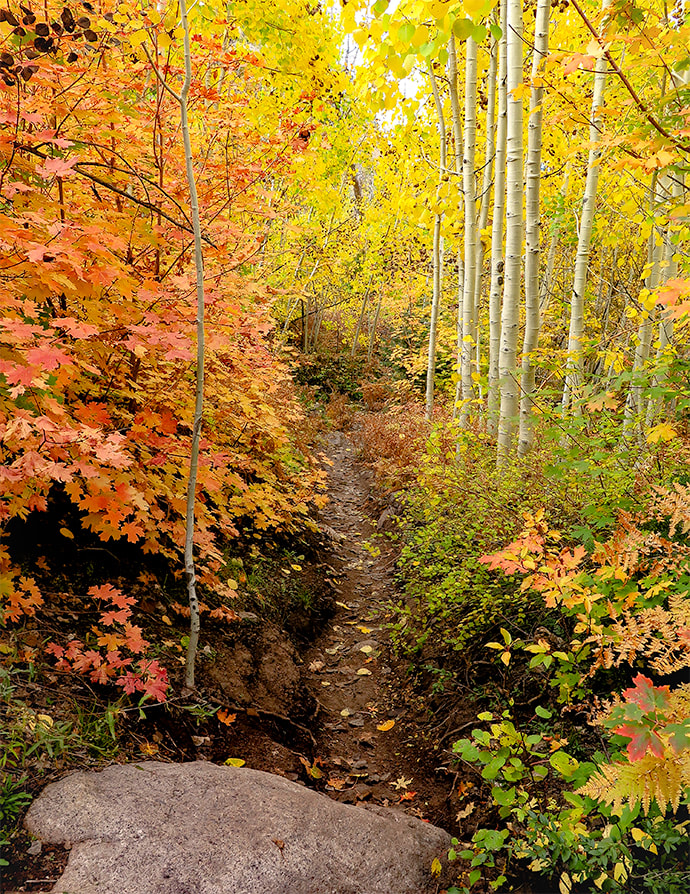
If you ever happen to be in southwestern Utah the first week of October, I highly recommend this hike. The onset of autumn makes an enchanting forest in the Pine Valley Mountains; it reminds me of the spectacular autumn foliage we saw when we lived in New Hampshire.
In my last post, I indicated that most people aren't aware of the hidden, magical world of southern Utah's Ashdown Gorge beneath the highway out of Cedar City. It's the same with the steep and rugged Pine Valley Mountain Wilderness just north of St. George. In this case, you can see this "sky island" rising like a hulk over red sandstone and black cinder cones, but it's not until you actually get into the heart of this wilderness that you realize its extraordinary beauty and find solitude.
We timed our hike to the highest point in the Pine Valley Mountains - Signal Peak - perfectly. The autumn colors were at their optimum, adding variety and depth to this dense forest. We had already summited Burger Peak, the second-highest in this beautiful, lightly-traveled mountain range, navigating deep snow banks in the spring. Lucky for me, afternoon clouds provided the best light that made these colors glow, so I spent a lot of time yelling ahead to Fred that I had stopped to photograph. We saw only three other hikers who were also enjoying the "zen" of this enchanting forest.
We are frequent visitors to this range that is remarkable for having the most botanical species than any other Utah mountain range - including three new species to Utah recently identified. We hiked Gardner Peak, a summit not often traveled a few months ago with friends.
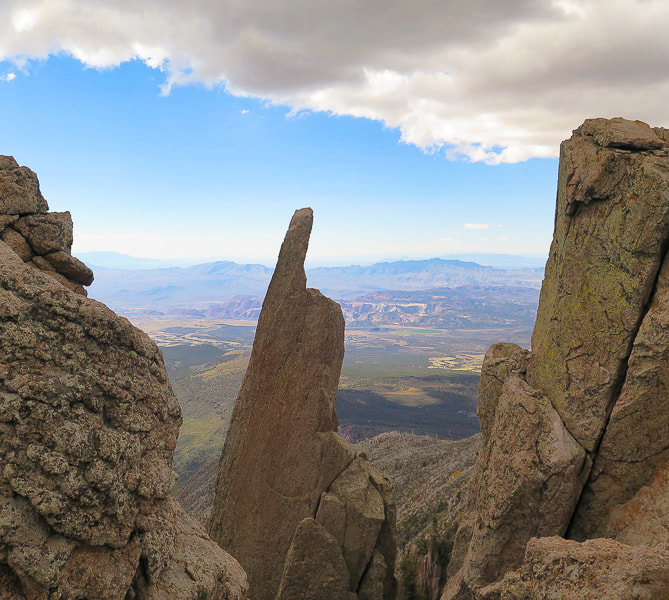
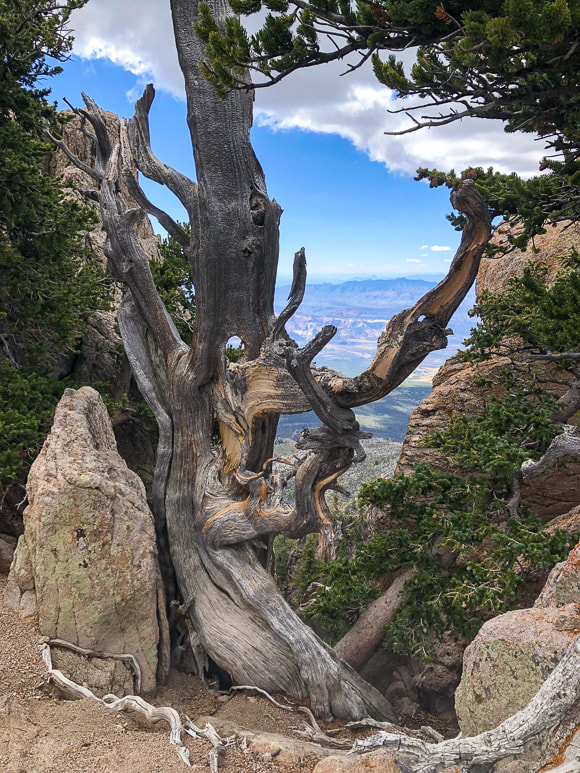
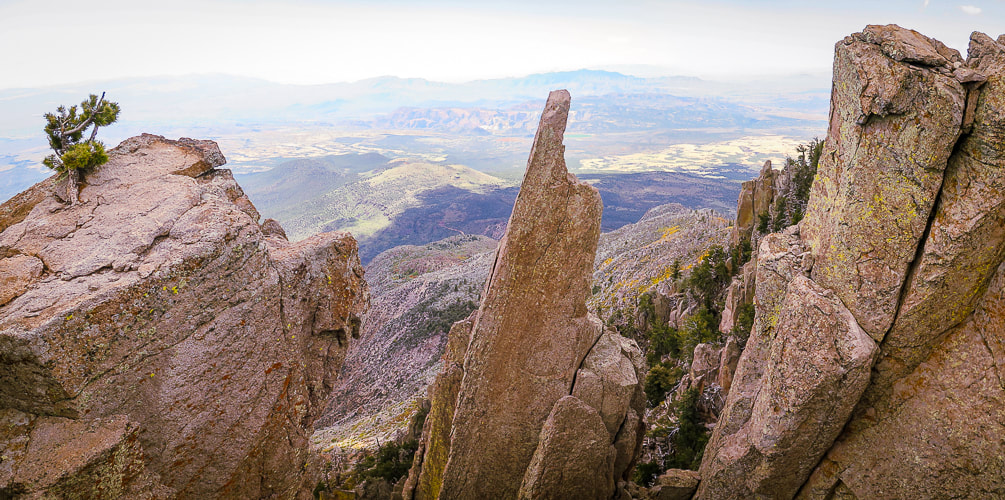
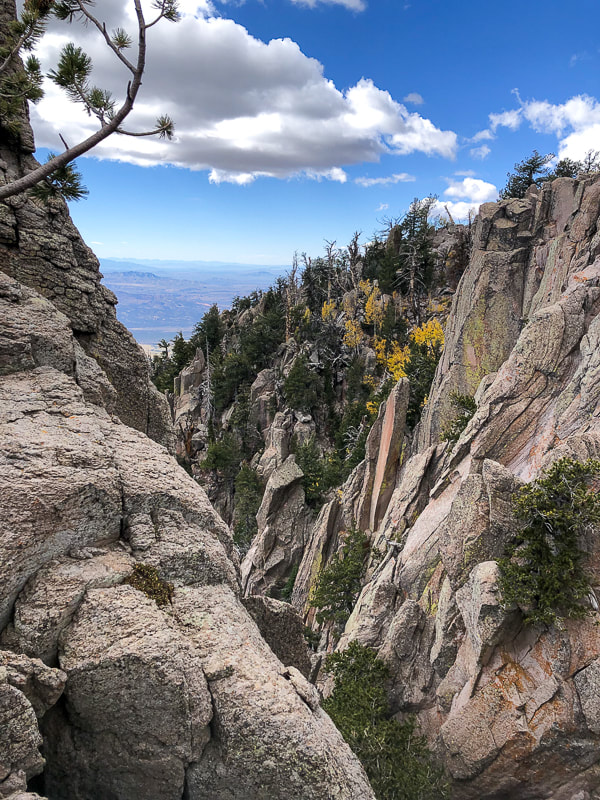
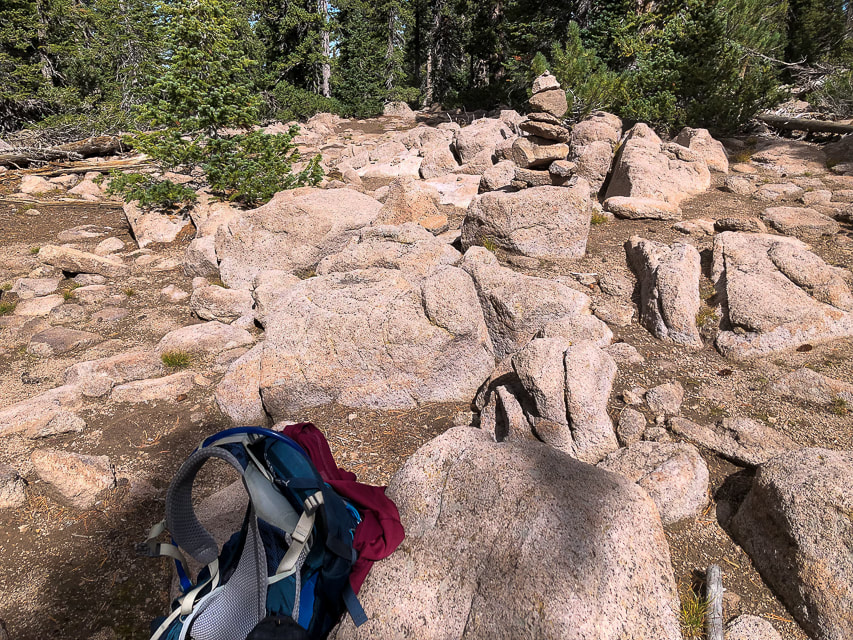
Striking rock formations growing gnarly old trees form steep cliffs with almost vertical valleys that drop toward the south when you finally emerge from the forest for a huge view of Southern Arizona and the red and yellow rocks near St. George at about 10,000 feet elevation. It's a brief view near the base of Burger Peak, and then it's back into the forest for the one-mile walk to Signal Peak summit. The spur trail to Burger Peak, ~ one mile before Signal Peak, is marked by an easy-to-miss two-rocked duck.
| Hike Summary
| 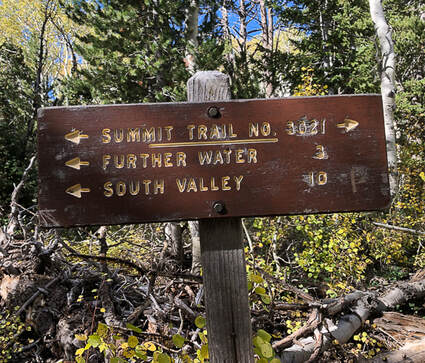 |
We found Summit Trail to be well-marked with cairns and tree blazes. I took a waypoint on my Garmin as we left the Summit Trail to make sure we would catch it again on the descent. There is no marked trail to the summit. If you pay attention on your descent from Signal, you will see Summit Trail, but it may not be obvious. I used Avenza app to find the summit. The peak is forested, so there's no great view.
| It had been awhile since Fred and I had hiked 14 miles with such a gain. Doubts about whether I could do this hike with the same pace I have in the past crossed my mind. Even though we are 61, we hiked as we had 20 years ago. Well, maybe I was a bit more tired than I would have been 20 years ago. Guess our legs are so used to it. I believe our bodies, in many instances, can be pushed more than we think. And there are usually rewards that come with challenges: a stronger and happier body and mind! Don't wait - just go! - Next post: Adventures in Kanab “There’s a constant tension in climbing, and really all exploration, between pushing yourself into the unknown but trying not to push too far. The best any of us can do is to tread that line carefully.” – Alex Honnold, the first person to free solo El Capitan in Yosemite National Park |  |

Peakaboo slot canyon
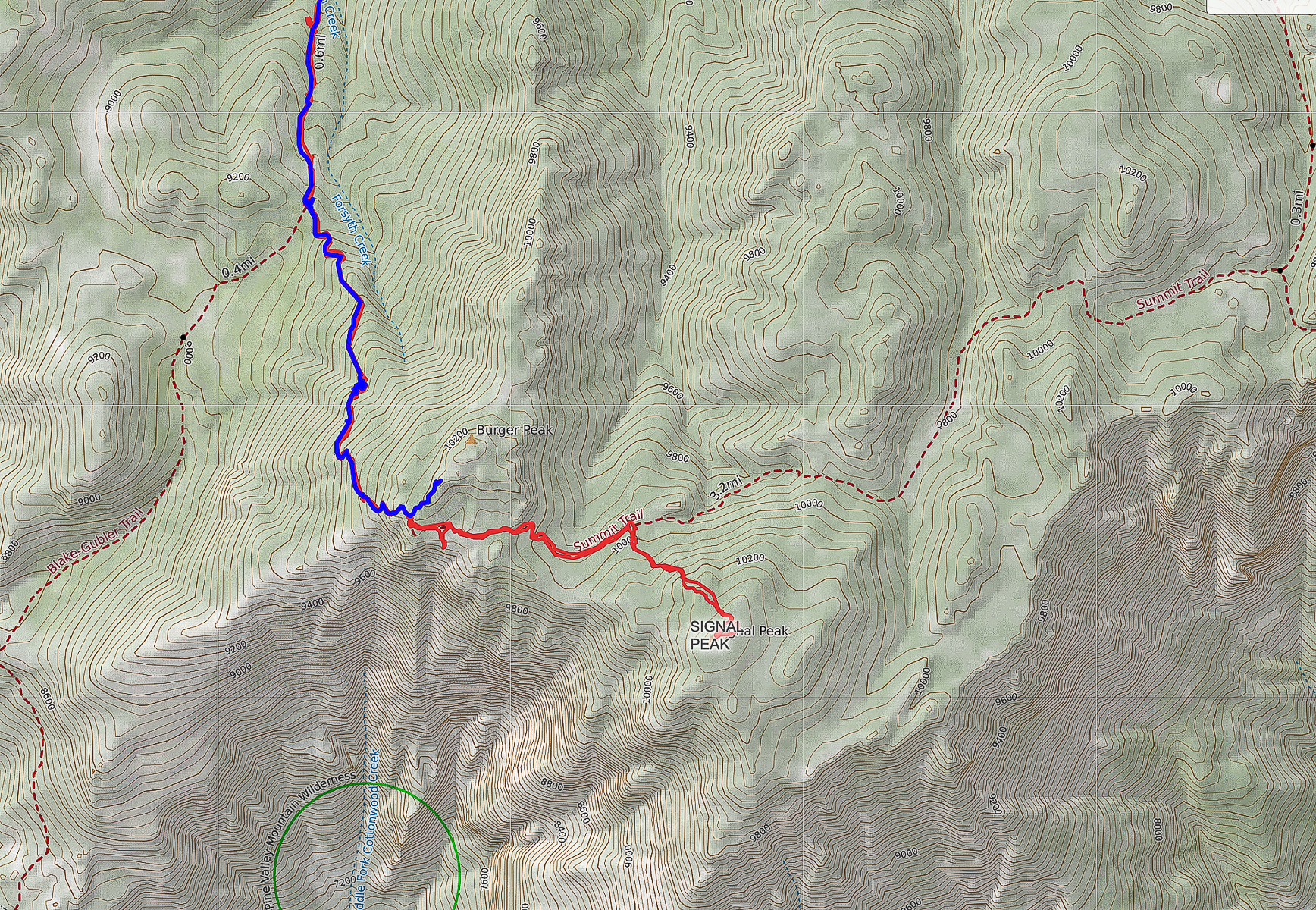
Click for larger image
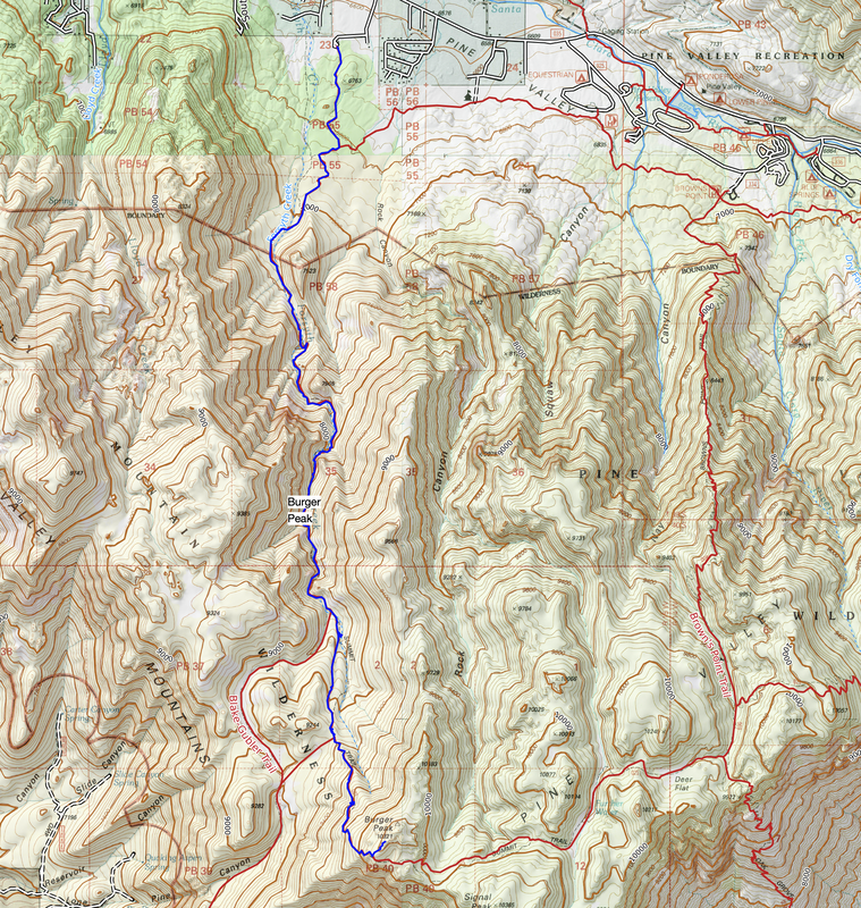
For Google Earth view of our tracks, click Burger Peak post.
Miller, Rick. Our Geological Wonderland: The Pine Valley Mountain Laccolith. The Independent.
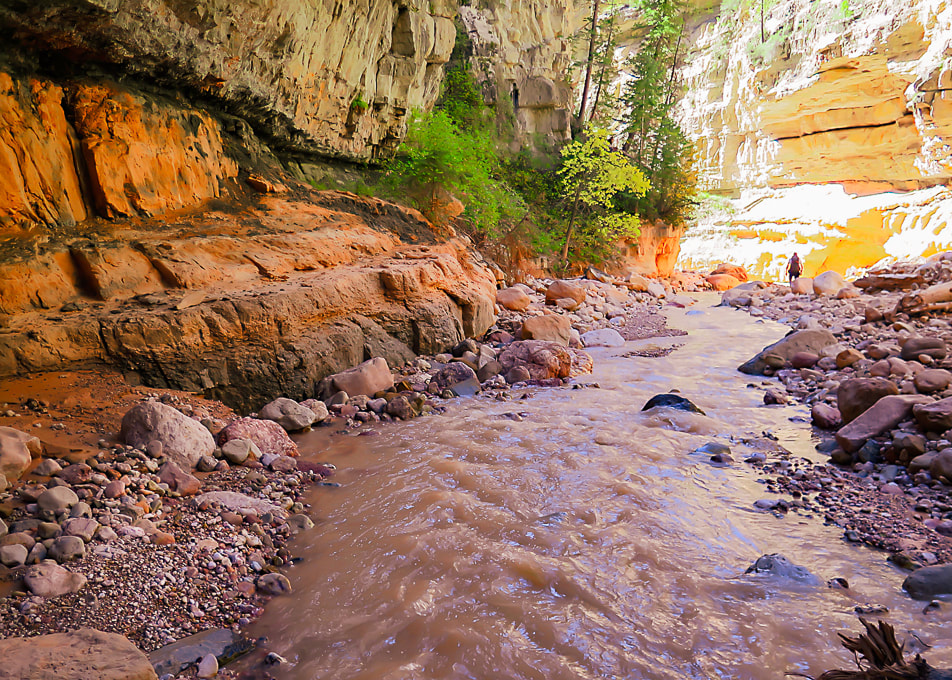
Highlights: Walk through a stream under spectacular sandstone walls to narrows and Lake Creek and Rattlesnake Creek waterfalls.
Location: Utah's Dixie National Forest - Cedar City Ranger District, Ashdown Gorge Wilderness.
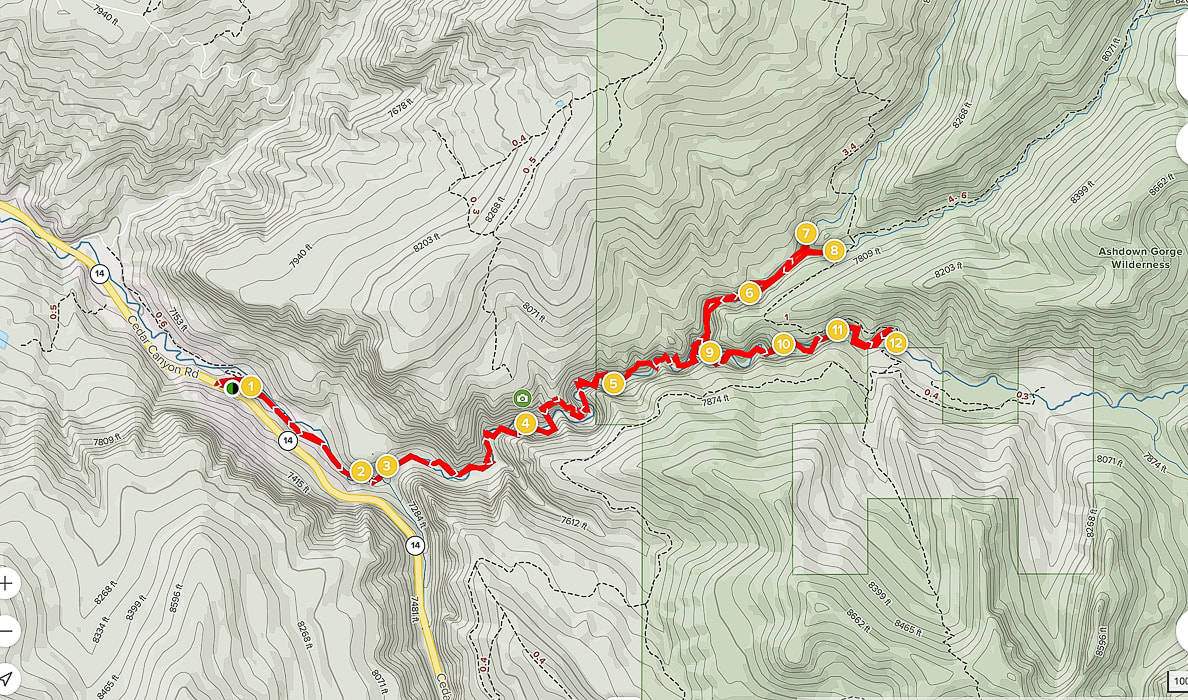
Distance: Up to 8.8 miles round trip if you hike up to the end of both streams at confluence/fork, ~ 6.5 miles if just hiking left fork to the waterfalls.
Difficulty: Easy effort walking on combination of rocks in stream and on stream banks. Walking more difficult with higher stream run-off.
Maps and Apps: AllTrails tracks, Trails Illustrated Cedar City Markagunt Plateau #702.
Coordinates: Trailhead on Utah Highway 14: 37.63463 -112.94357
Elevation: Trailhead = 7,000'. Rattlesnake Creek Falls and Lake Creek Falls = 7,672'
Trailhead location google maps
Considerations: Check weather forecast for nearby Cedar City and mountains above Ashdown to avoid possibility of being caught in flash floods in this canyon. I recommend old trail running shoes/closed-toed workout shoes with good tread and support.
Dates hiked: 9/2/22, 9/24/22, 9/6/23.
History: Named after George Ashdown who set up a sawmill there in 1898.
Most of those traveling Utah’s Highway 14 from Cedar City to the heights of the Markagunt plateau are unaware that a spectacular hidden world is tucked away in a canyon beneath their feet and that life millions of years ago is recorded in the rocks that the canyon’s waters, over the millennia, have worn through the plateau, pushing sand grains, scouring strata and revealing infinite colors to create beautiful Ashdown Gorge.
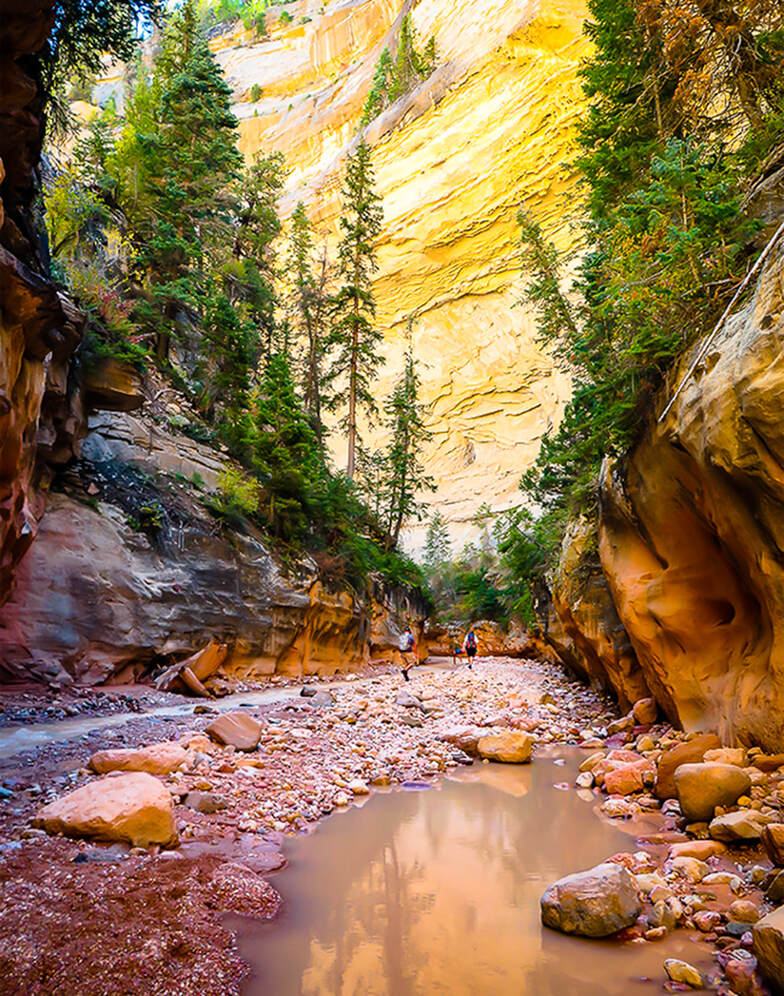
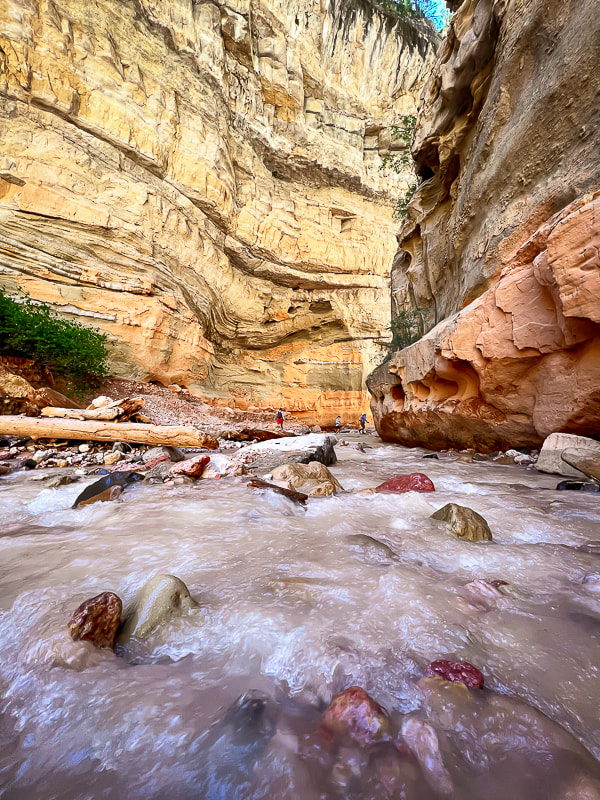
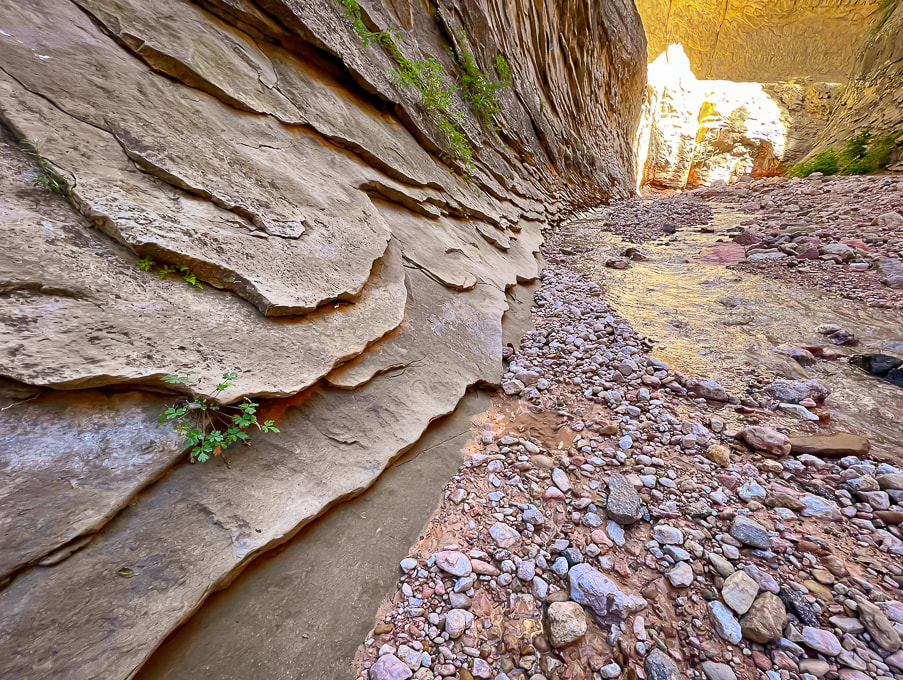
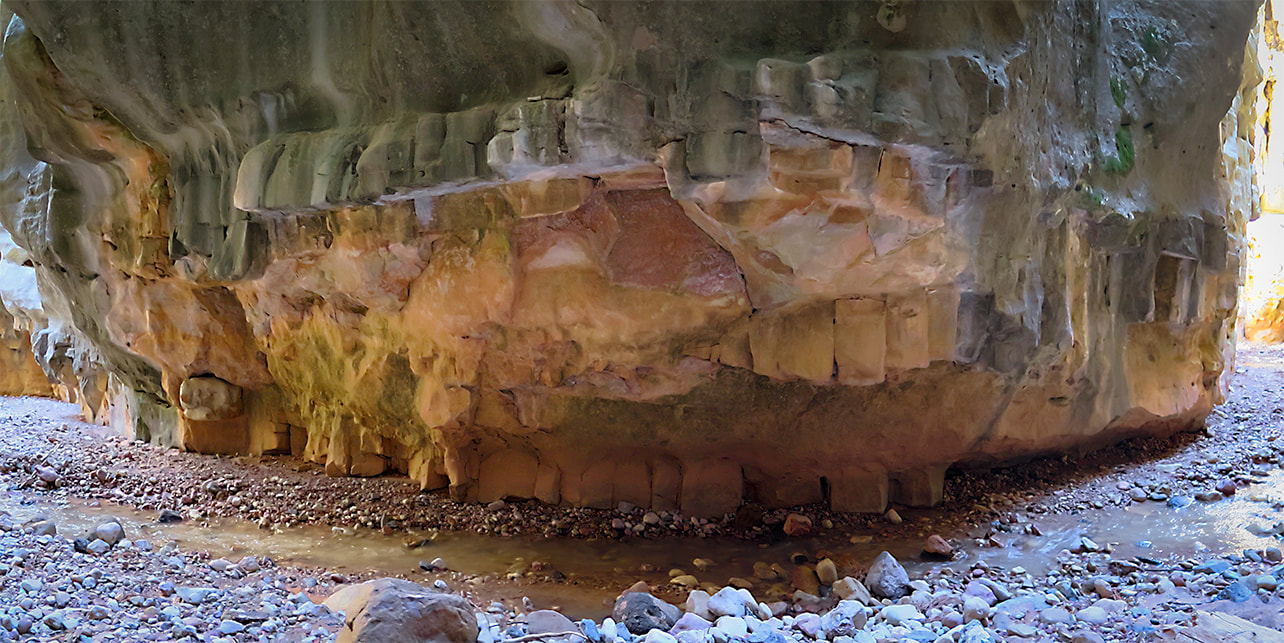
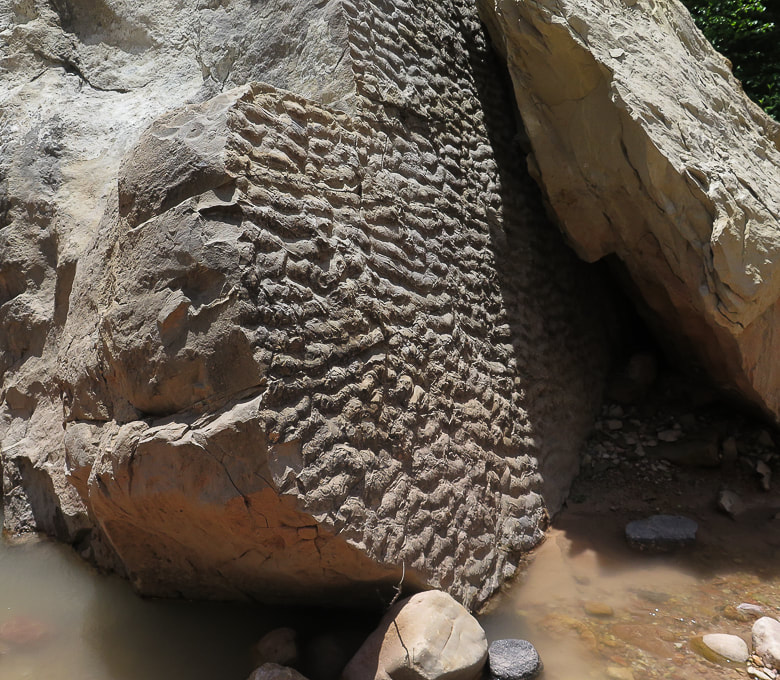
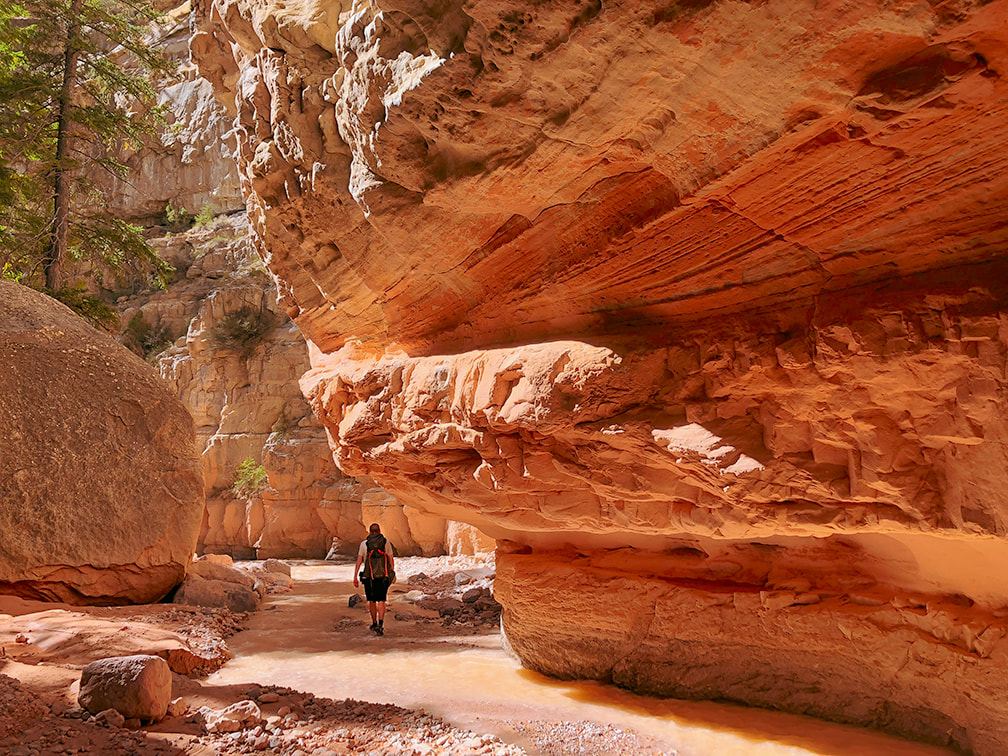
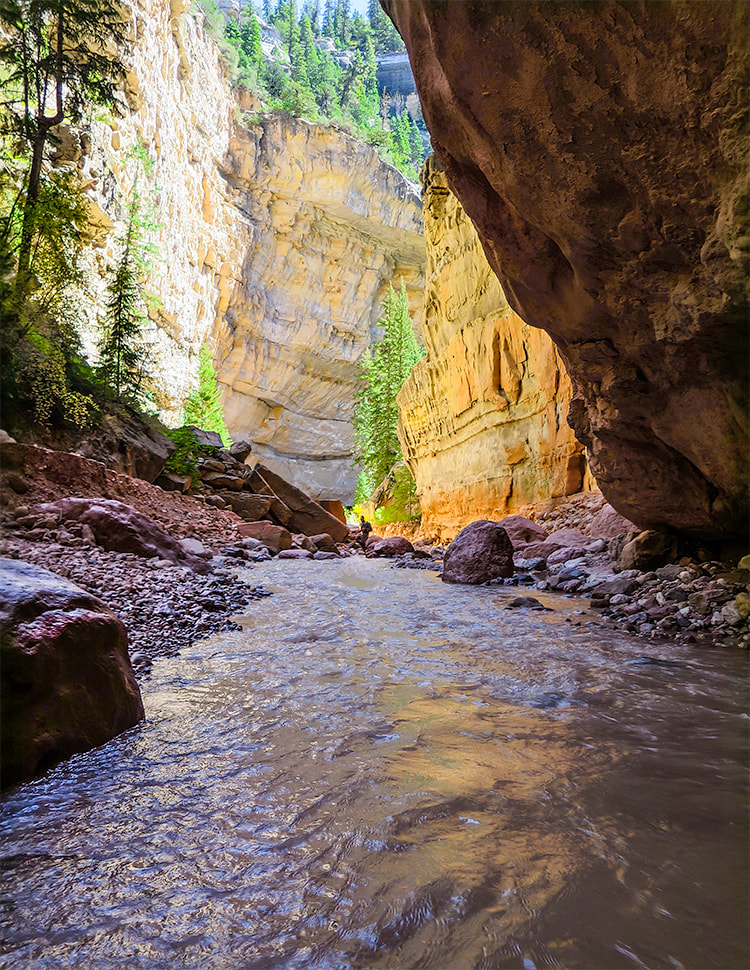
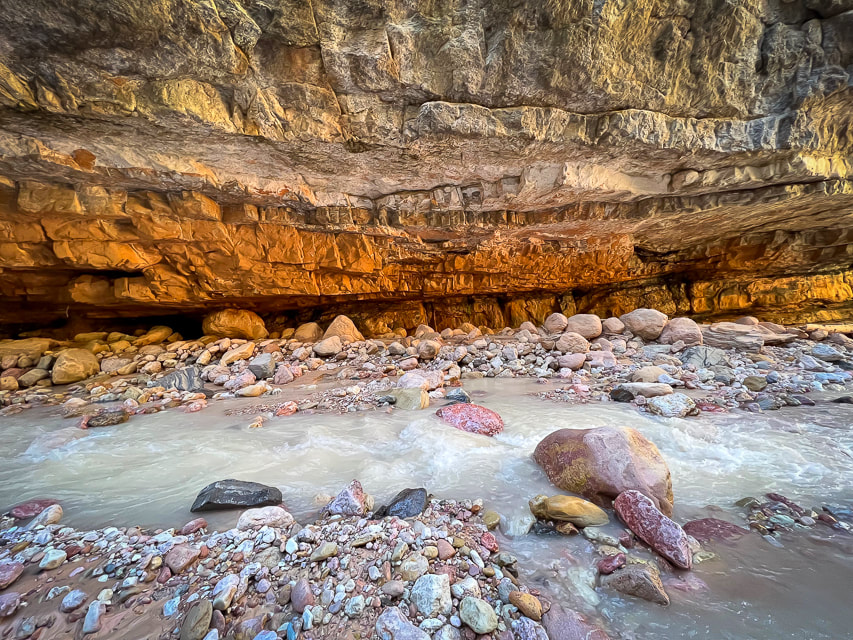
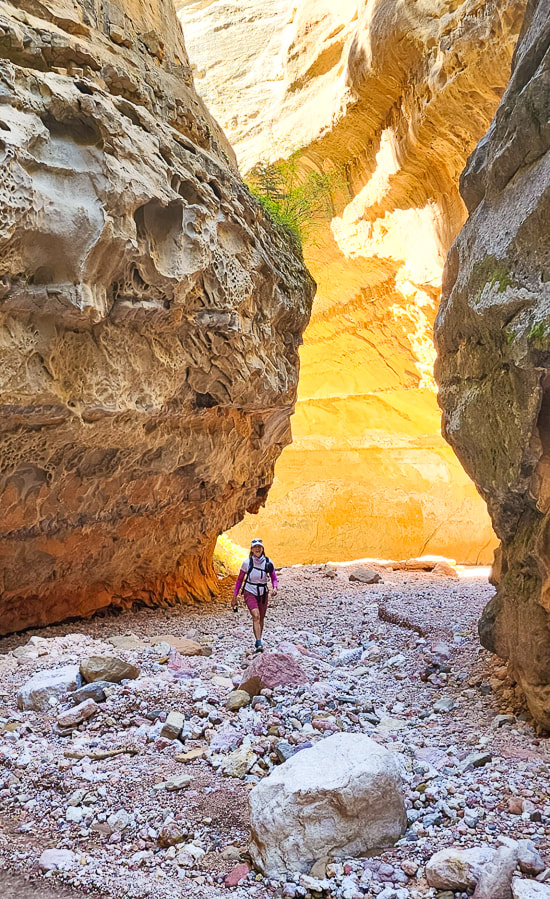
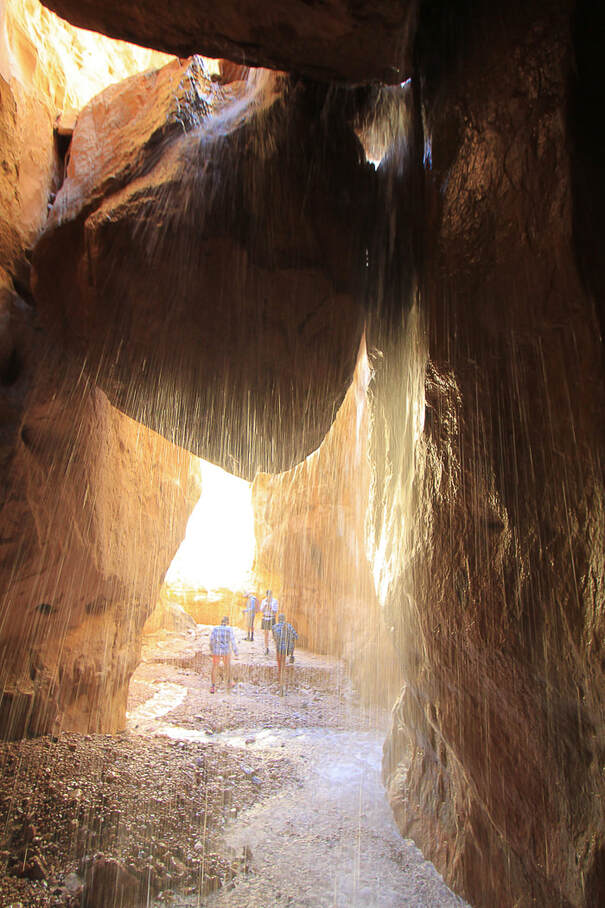
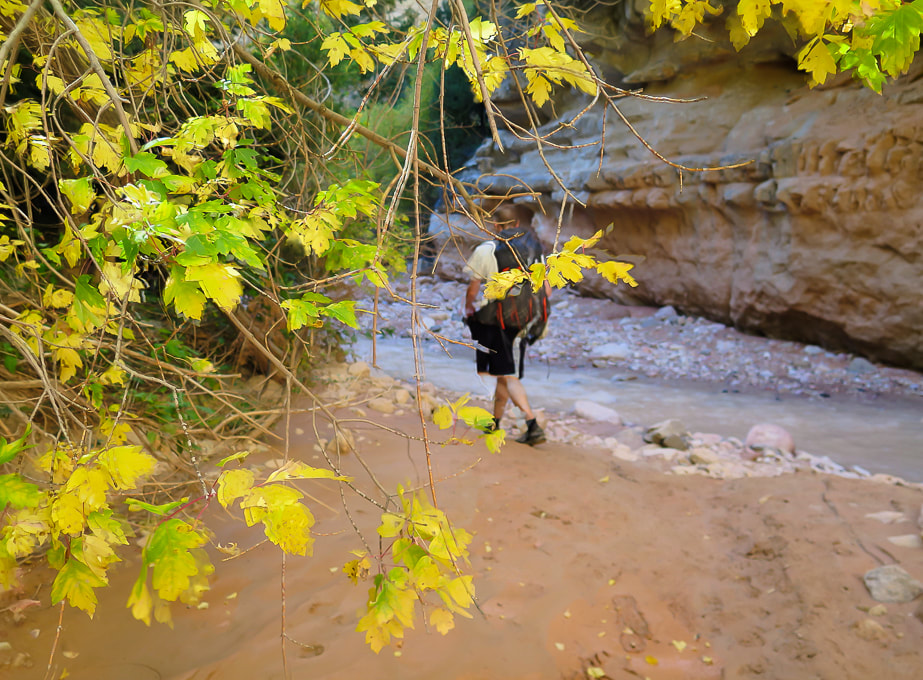
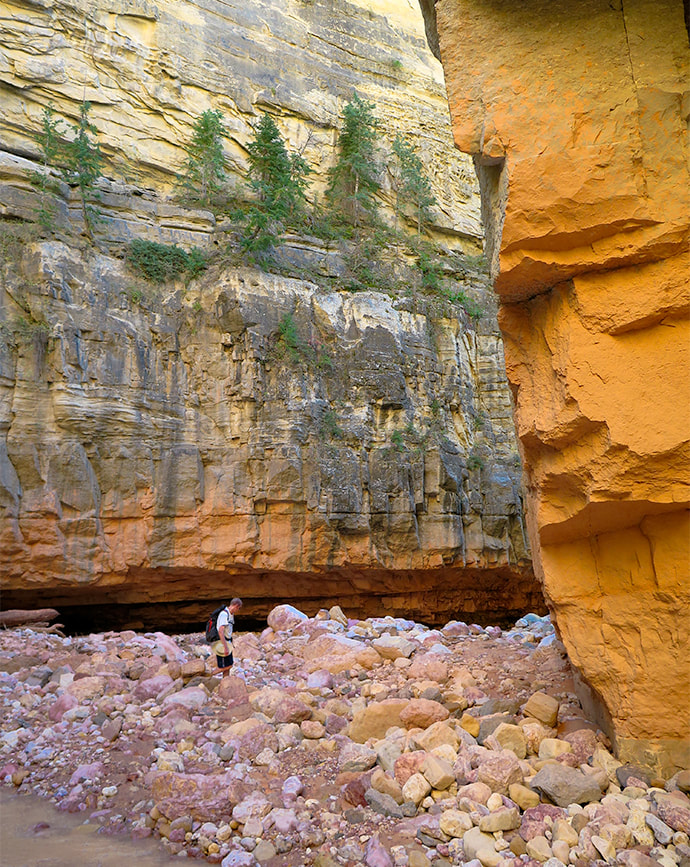
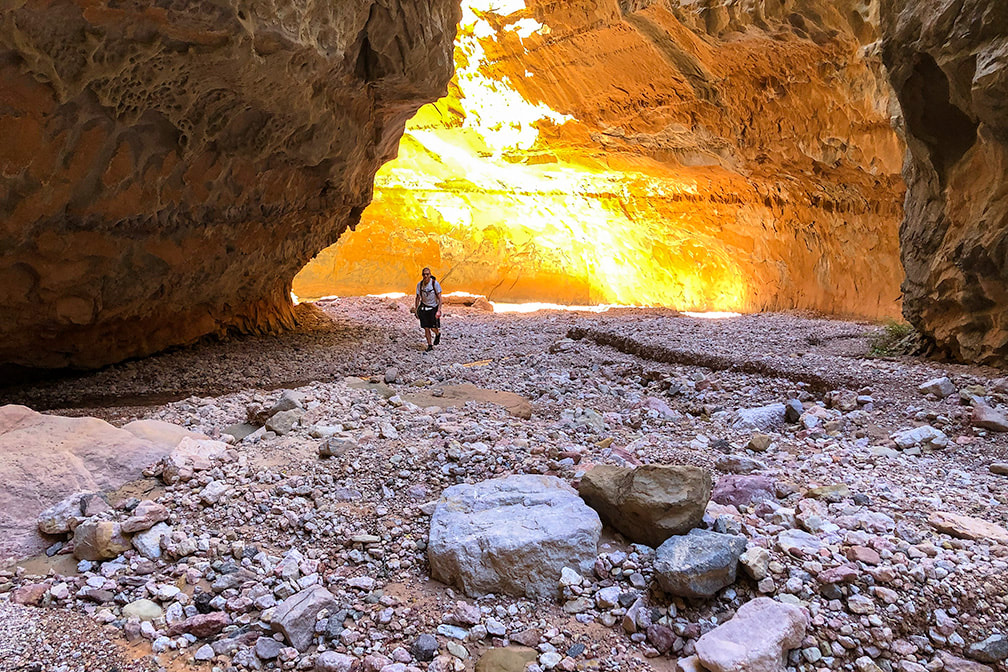
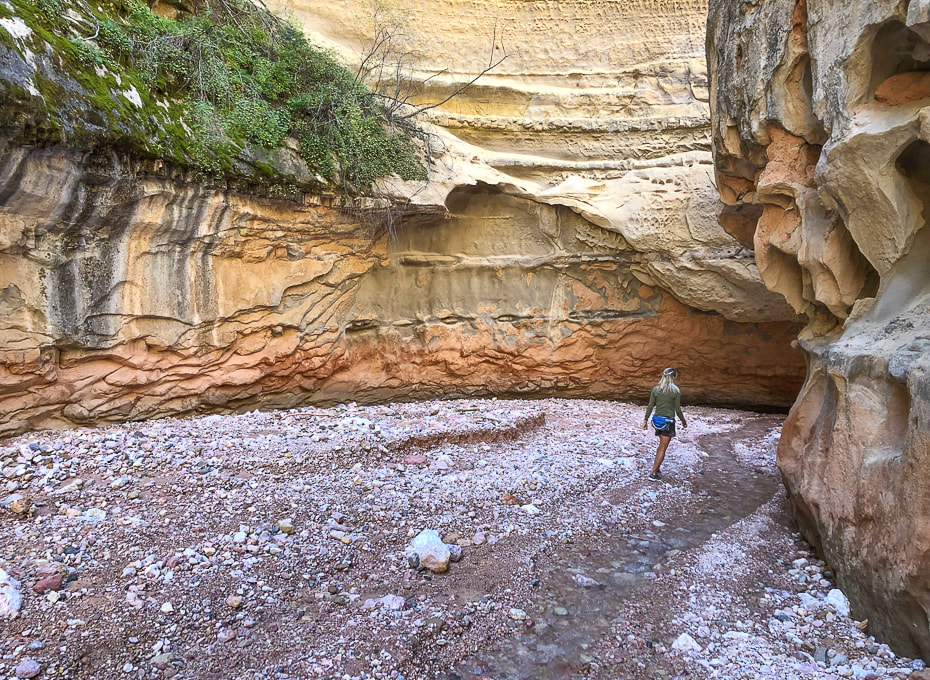
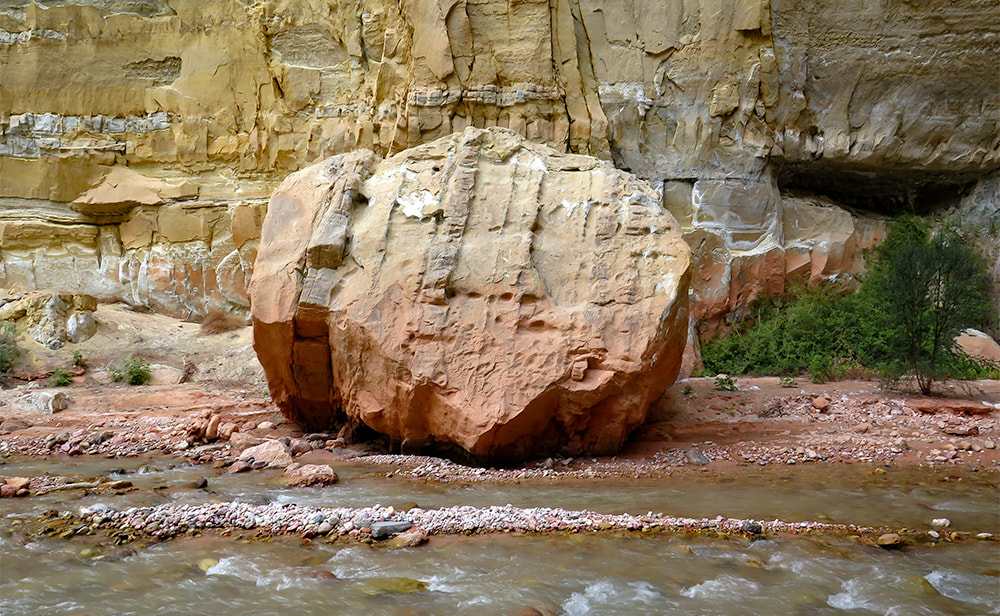
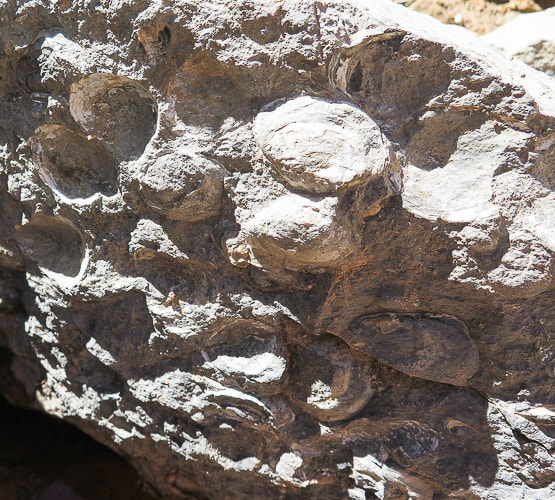
To venture through Ashdown Gorge is to experience so many exquisite elements that make up the quintessential Utah non-technical canyon hike. Soaring, overhanging walls change shape, color and texture around every stream bend. Walk by small car-sized boulders and stream-carved rocks of nearly all hues of the color spectrum. As the canyon narrows, bright green ferns grow on moist walls; hidden grottos and alcoves are cool, dark places in which to retreat and watch the water flow melodically. Conifers cling to near-vertical walls. Walk by the occasional ancient panels of preserved ripples and oyster bed fossils. Lots to take in - you could go on this hike many times and see something new.
The waters of Ashdown Gorge originate from an elevation of 10,000 feet in Cedar Breaks National Monument, coursing through the Ashdown Gorge Wilderness via Ashdown, Rattlesnake, and Lake Creeks, creating beautiful waterfalls at the end of the hike, after a walk through short narrows. Alternately, you can experience Ashdown after descending from Rattlesnake Trail, whose trailhead is just outside Cedar Breaks.
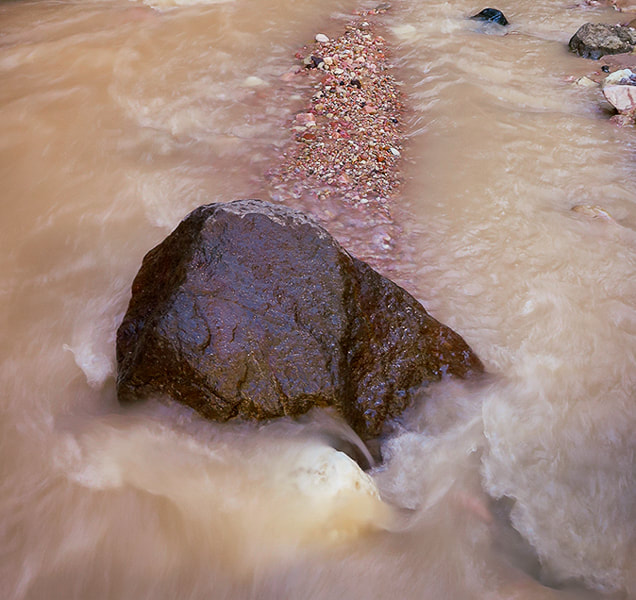
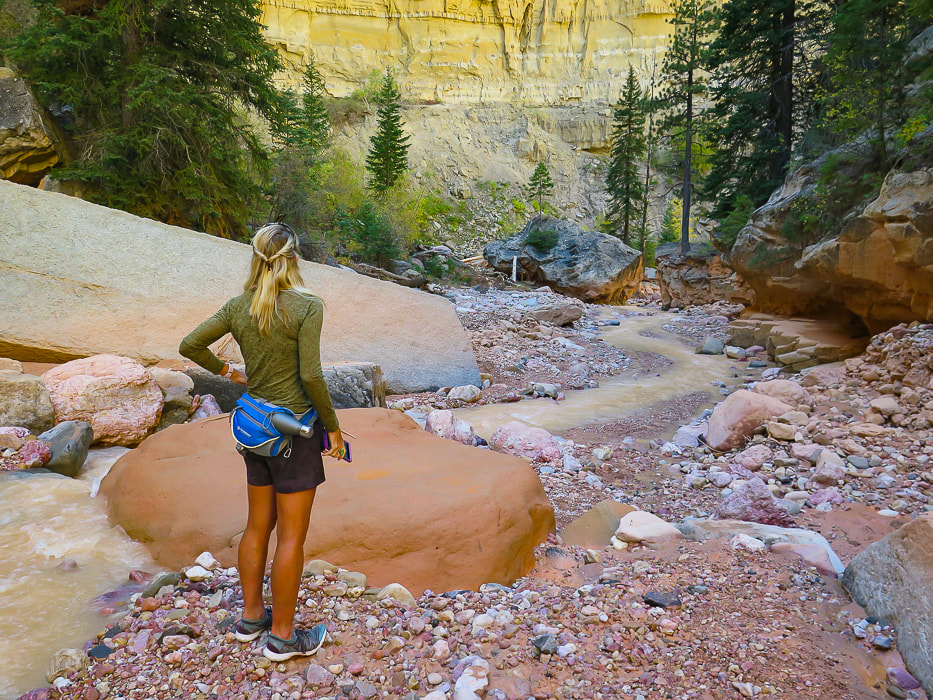
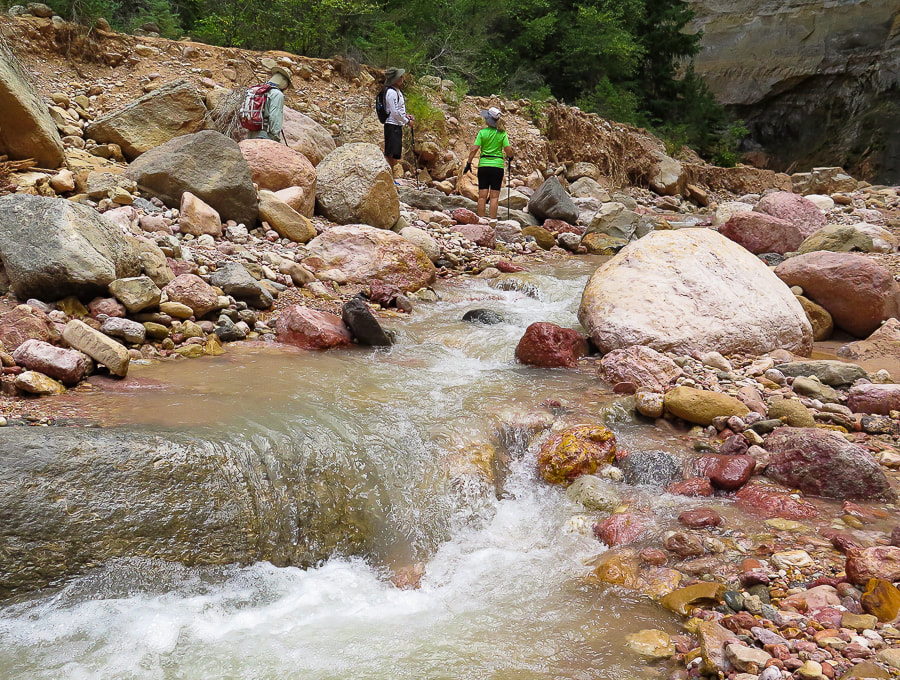
Each time I've hiked this gorge, water conditions have varied. This time, the stream was higher and clouded by salmon-colored silt; there must have been a storm that carried sand from Cedar Breaks higher up creating increased run-off.
A large parking area on the left of Highway 14 is the access to the lower Ashdown Gorge (see Google Maps link above in Trip Stats).
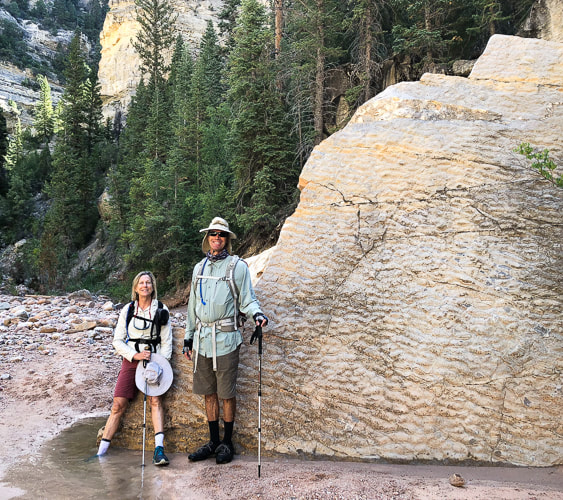
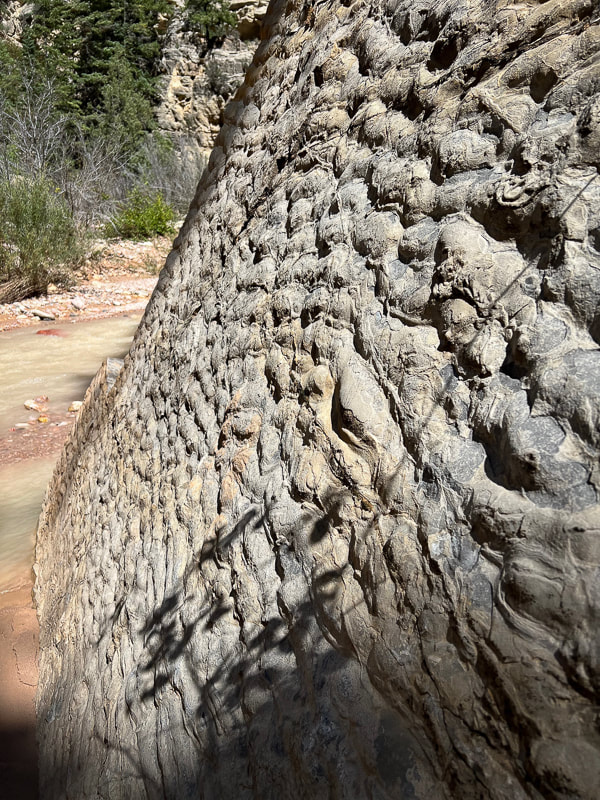
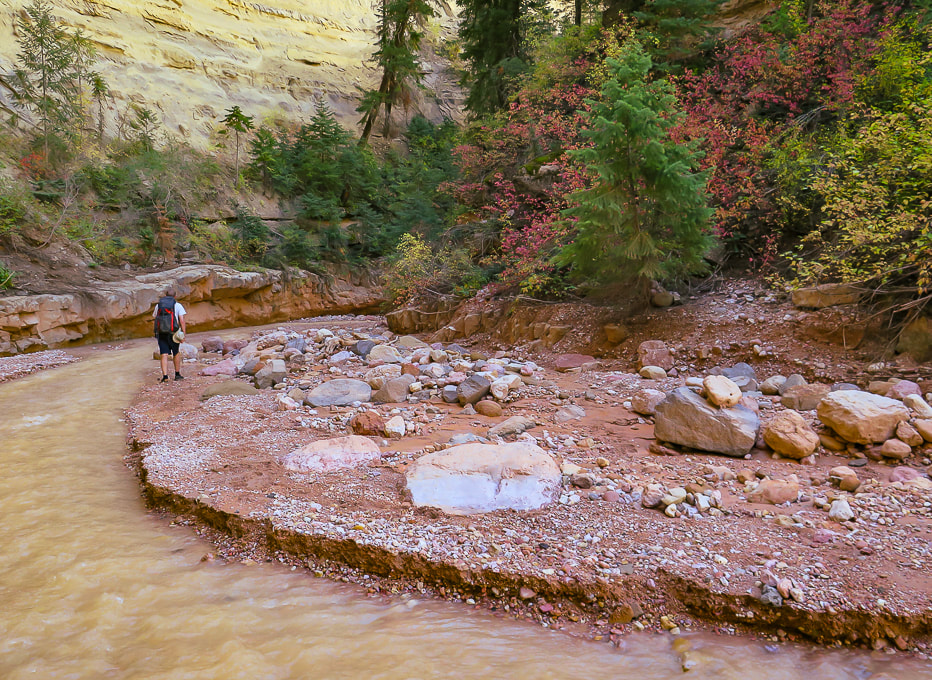
A spectacular chunk of preserved ancient shoreline ripples, tilted almost vertically, has been plunked down on the right side of the creek as you ascend. You weave in and out of the water, walking through gravel bars and around boulders, over fallen flood-deposited trees. It is a unique experience to feel so tiny with tall overhanging walls close by on each side, blocking out most of the sky.
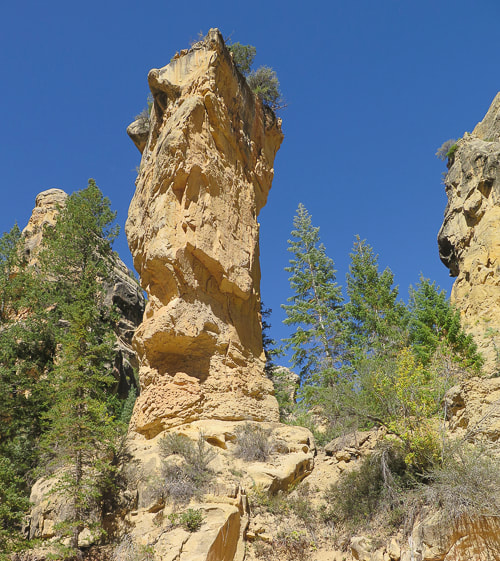
"Tom's Head", a noticeable 100-foot monolith greets you at the intersection between Ashdown Creek and Rattlesnake Creek. To see Rattlesnake Creek Falls, turn left at this confluence to follow Rattlesnake Creek. Shortly, another small confluence is seen; turn left and you hike a short distance to Lake Creek Falls. Turn right, hike through an ever-narrowing canyon, you hear Rattlesnake Falls before you see it - a long sheet of white water spilling into a multi-colored gravel pool.
If, instead you turn right at Tom's Head, you will be continuing walking up Ashdown Creek ultimately to Ashdown Gorge Trailhead and onto High Mountain Trail and ultimately an intersection with Rattlesnake Creek Trail, which originates just north of Cedar Breaks National Park.
Since moving to Utah, I have been amazed at how gorgeous and diverse the landscape is. This hike is just one example of how nature's elements fit together in harmony and draw us into a beautiful world. There's a lot to take in on this hike: textures, waterfalls, colors, something new around every bend. Interesting how a place can have so much to look at that it's almost overwhelming, but yet it is also so relaxing, and I can get to a state of "flow". I'll spend more time photographing and checking out the fossils and geology next time. For now, I will let the following images speak for themselves.
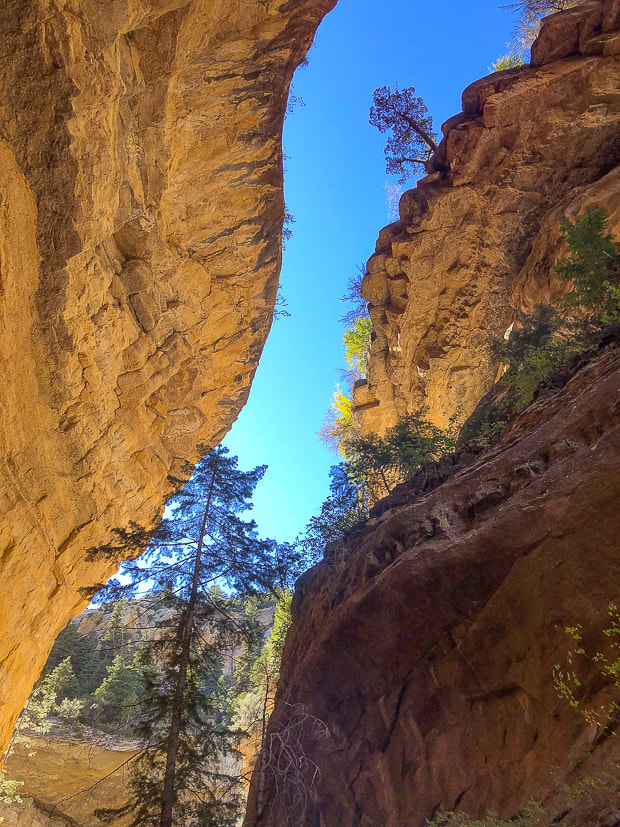
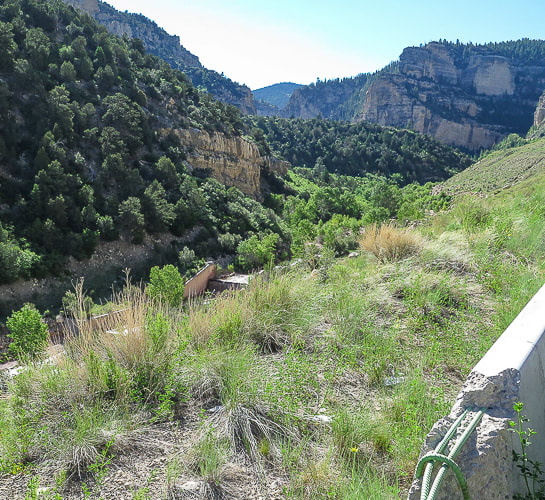


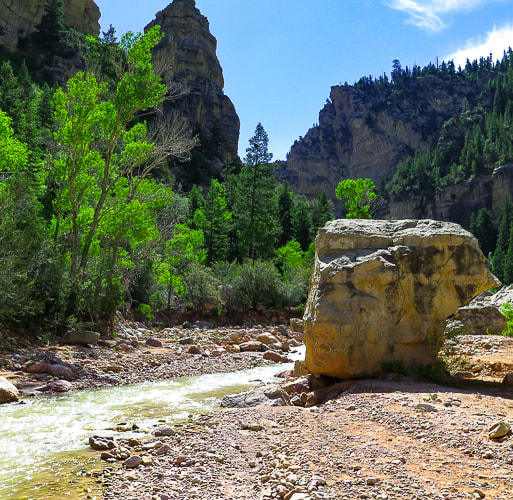
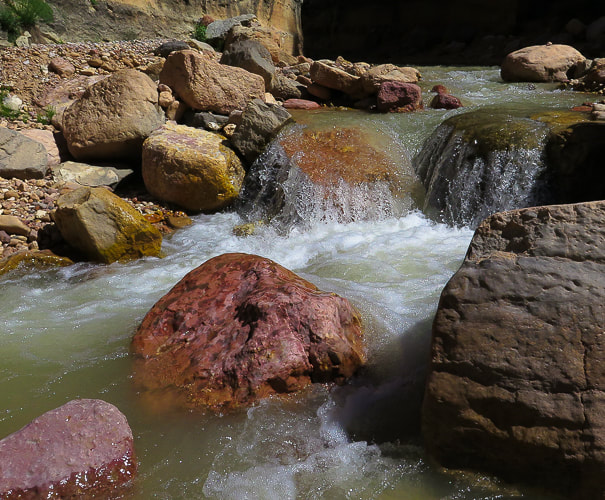
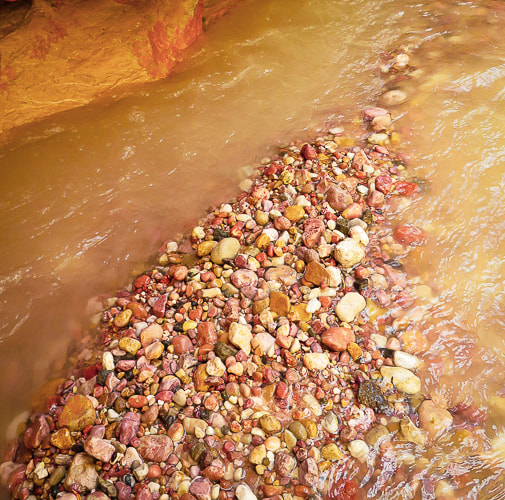

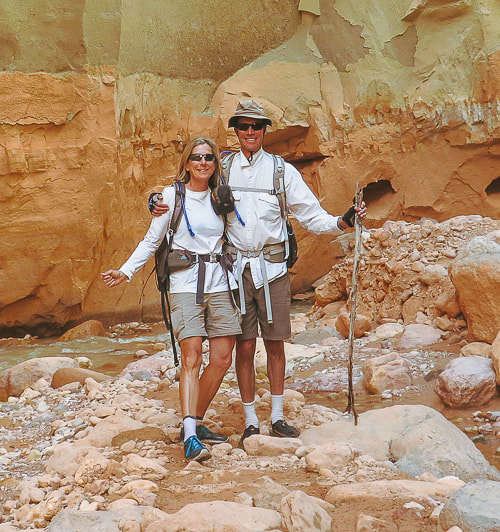
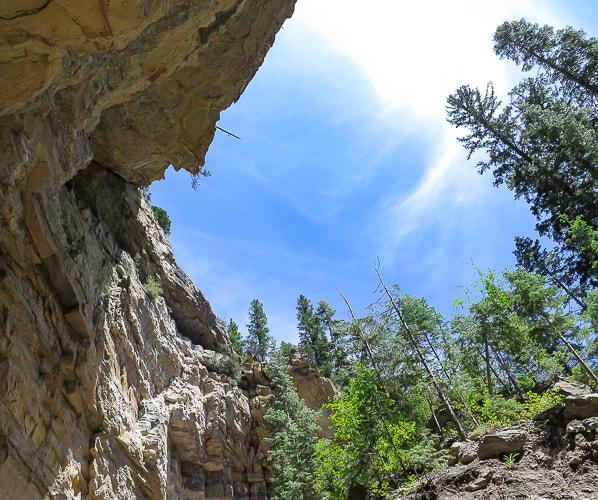
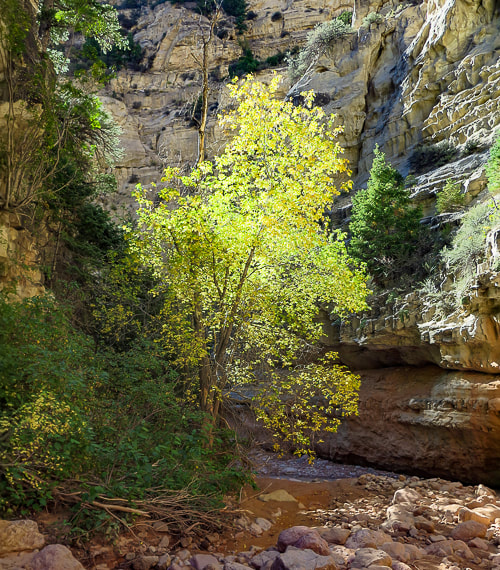


 | 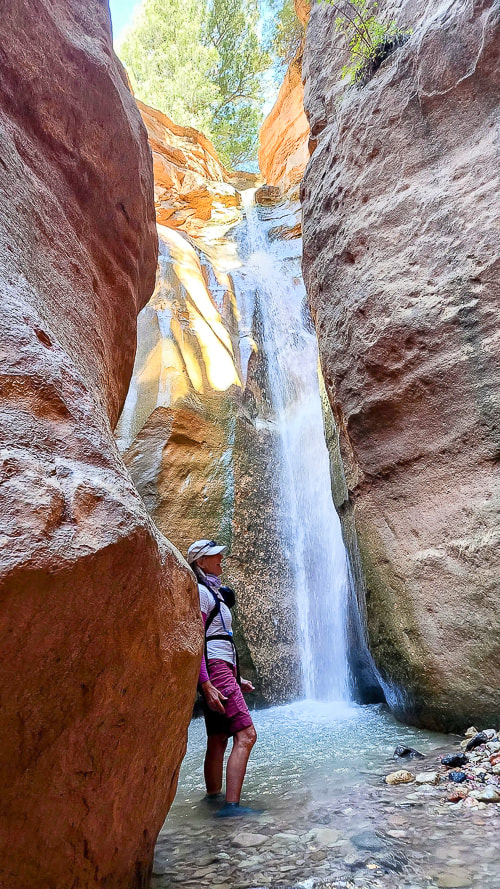 Rattlesnake Creek waterfall |
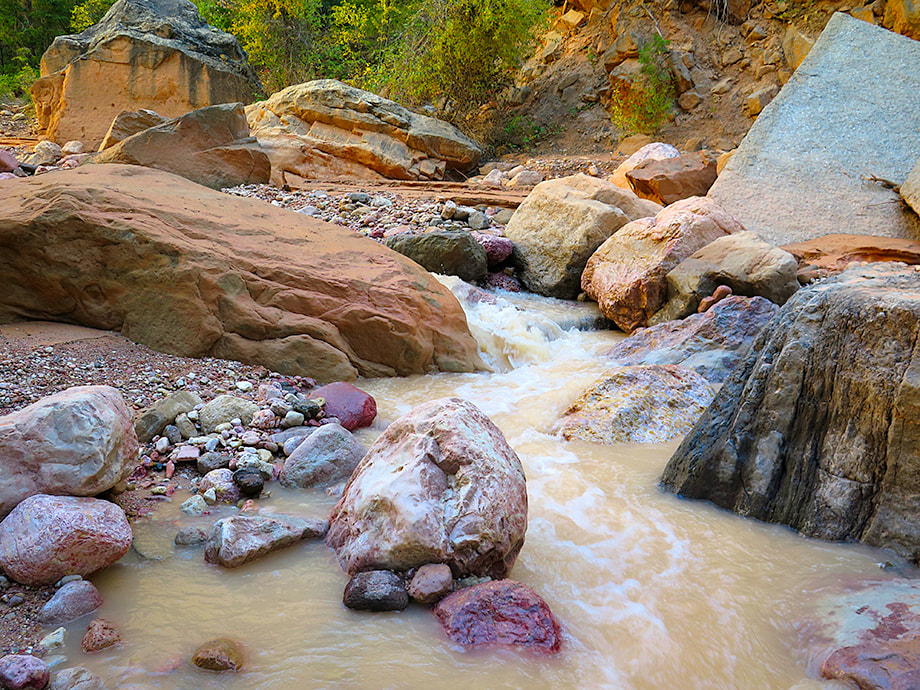
|
For the Geocurious: Rocks created in an interior sea
The walk through Ashdown Gorge is a journey through what was the Cretaceous Western Interior Seaway that transgressed (filled) and regressed (emptied), leaving behind evidence such as oyster and other mollusk fossils. Mountain building during this time created a basin that collected thousands of feet of sediment where this inland sea existed. According to the geologic map for this area, this hike begins in the Dakota Formation, a ledge-forming, yellowish-brown, fine- to medium-grained sandstone and siltstone and gray smectitic (clay) mudstone. As you walk further upstream, inside the narrower Ashdown Gorge, you enter into the Straight Cliffs Formation in which marine deposition stopped as the inland sea slowly withdrew in a beach and lagoon environment next to a coastal plain. You can't miss the bold, cliff-forming walls of this formation. At the top of these walls, the Smoky Hollow and John Henry members of the Straight Cliff Formation were deposited in a river and floodplain environment. |
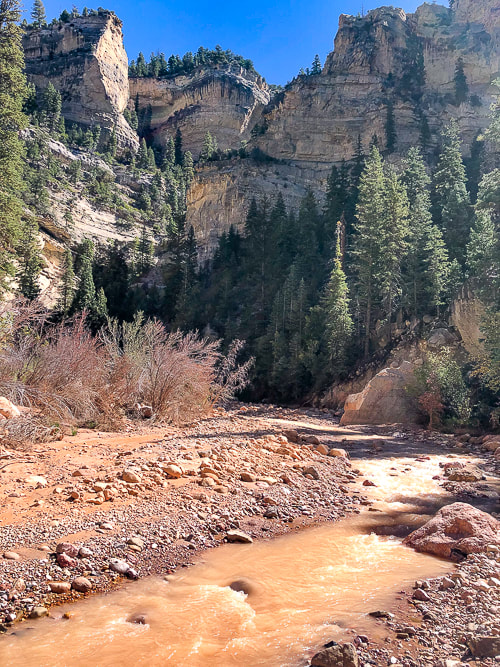
The cliffs of the Straight Cliffs Formation
|
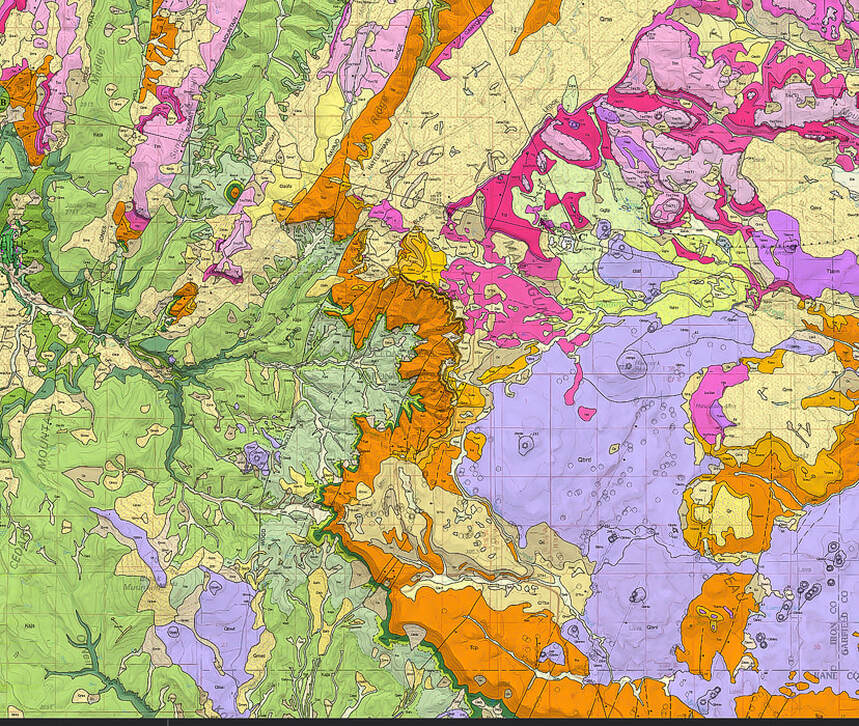
From Biek, R., et. al. 2015. Geologic Map of the Panguitch 30' x 60' Quadrangle, Garfield, Iron, and Kane Counties, Utah. Map 270DM, Utah Geological Society.
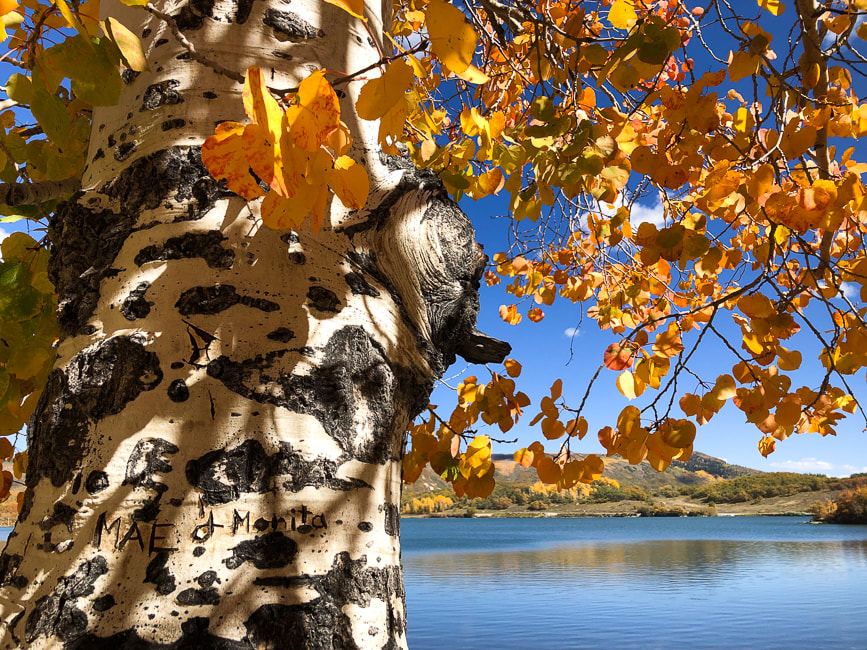
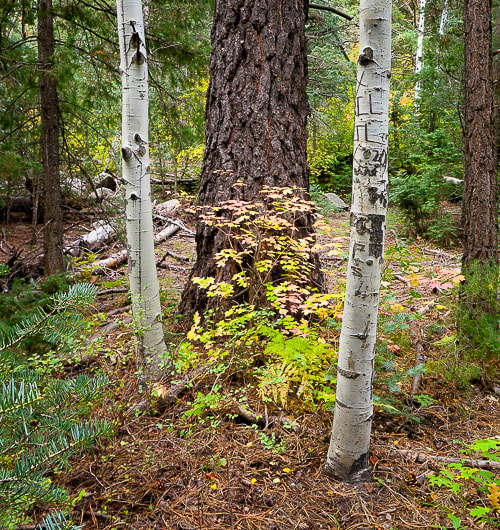
Notice the engraving in tree trunk, lower left.
Ashdown Gorge Wilderness - Wikipedia
Biek, R., et. al. 2015. Geologic Map of the Panguitch 30' x 60' Quadrangle, Garfield, Iron, and Kane Counties, Utah. Map 270DM, Utah Geological Society.
Cretaceous Atlas of Ancient Life: Geology of the Western Interior Seaway. National Science Foundation.
Location: Fishlake NF, Tushar Mountains, near Beaver, Utah. Fishlake National Forest - Beaver Ranger District.
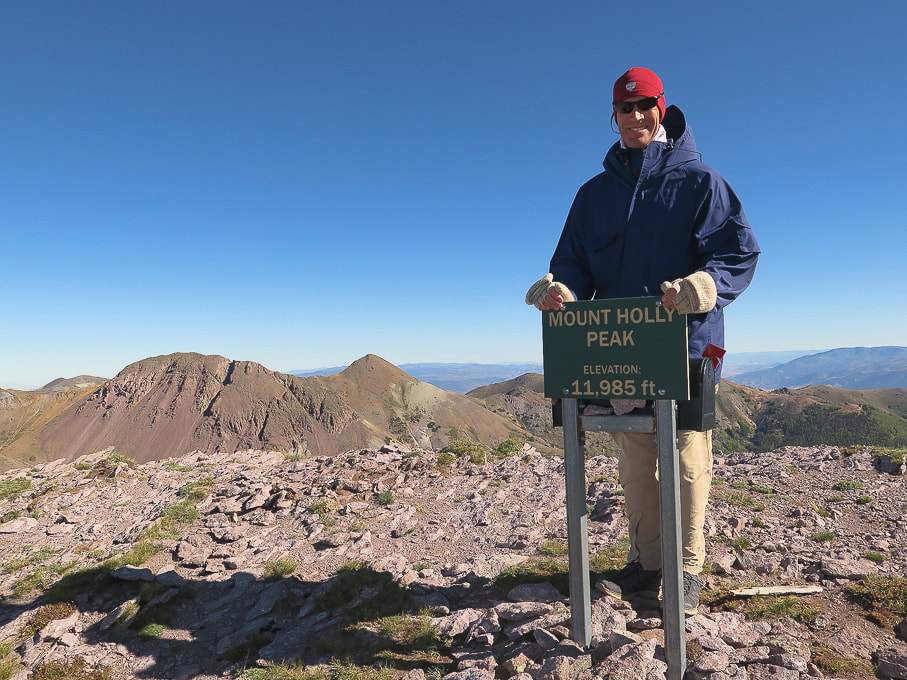
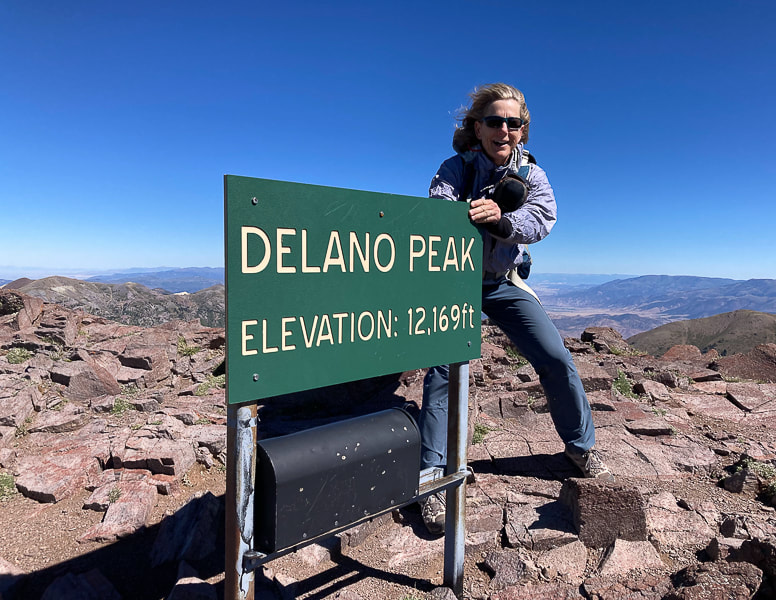
Distance/Elevation gain: 7.3 miles/2,500'. Trailhead = 10,400'. Delano Peak = 12,169'. Mt. Holly = 11,985'.
Coordinates: Trailhead = 38.35896 -112.39289.
Prominence: Delano Peak = 4,689'. Mt. Holly = 425'.
Difficulty: Mostly moderate effort, Class 1.
Trails: #225 (Skyline National Recreation Trail) for Holly approach, and #224 from Delano summit to road.
Maps and Apps: Fishlake National Forest-Beaver and Fillmore Ranger Districts Travel Map -USDA, AllTrails tracks for Mt. Holly, route map from Stavislost.com.
Date hiked: 9/19/22.
Geology: The Tushar Mountains are remnants of volcanos whose first eruption period was 22-35 million years ago (Bullion Canyon Volcanics) and second eruption 21 million years ago (Mt. Belknap Volcanics). Delano Peak resides in the Bullion Canyon Volcanics. It is the highest point on the edge of Big John's Caldera, a concealed structure on Delano's west side that subsided ~ 23 million years ago during ash flow eruptions. This caldera filled and eroded over time. The second eruption created the source rock for the mined uranium of the Marysvale mining district north and east of Delano Peak.
Native Peoples: Five native Paiute bands were present in Beaver County ~ 700 years ago: Tu-roon-quints band in the northeast corner of the county; the Qui-ump-uts band around Beaver and Adamsville; the Pa-moki-abs band in the vicinity of Minersville; the Toy-ehe-its band in the Milford area; and the Indian Peak band in the western part of the county and into Nevada. Evidence such as pottery, tools, weapons, and petroglyphs left by Paleo native Americans as far back as 12,000 years ago, at the end of the last ice age is present in Beaver County in which the Tushars are located.
(from A History of Beaver County, by Martha Sonntag Bradley).
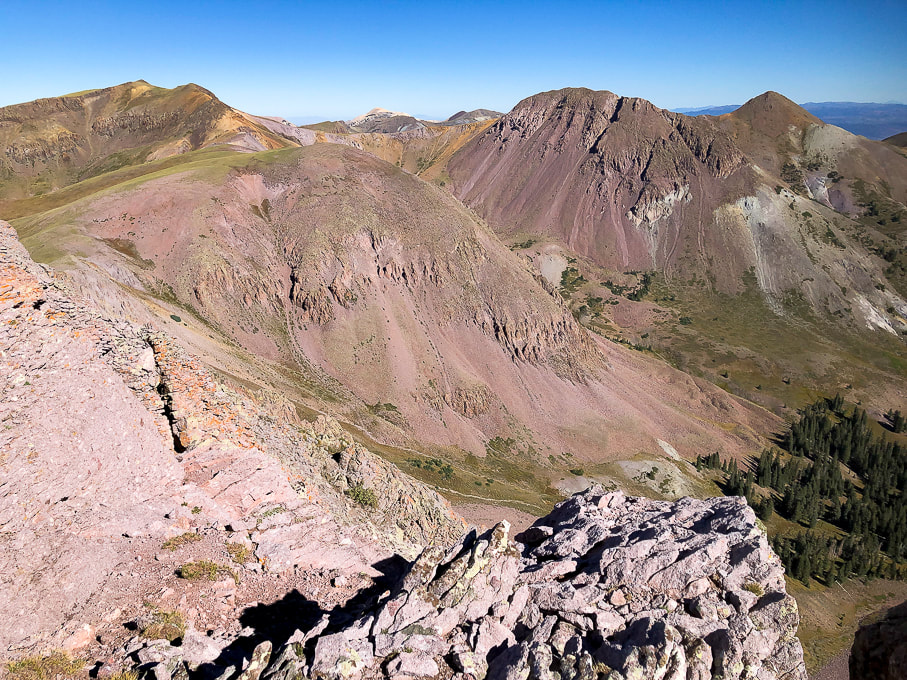
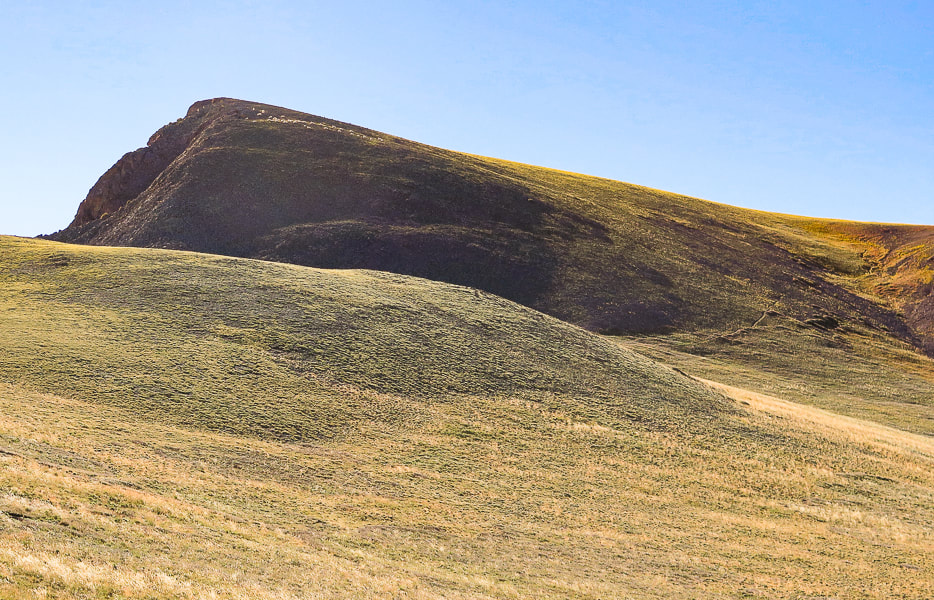
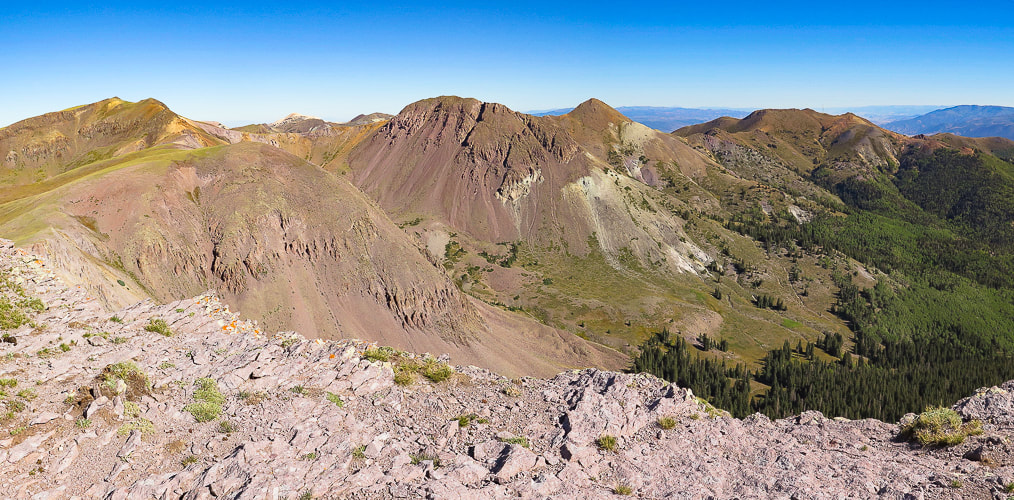
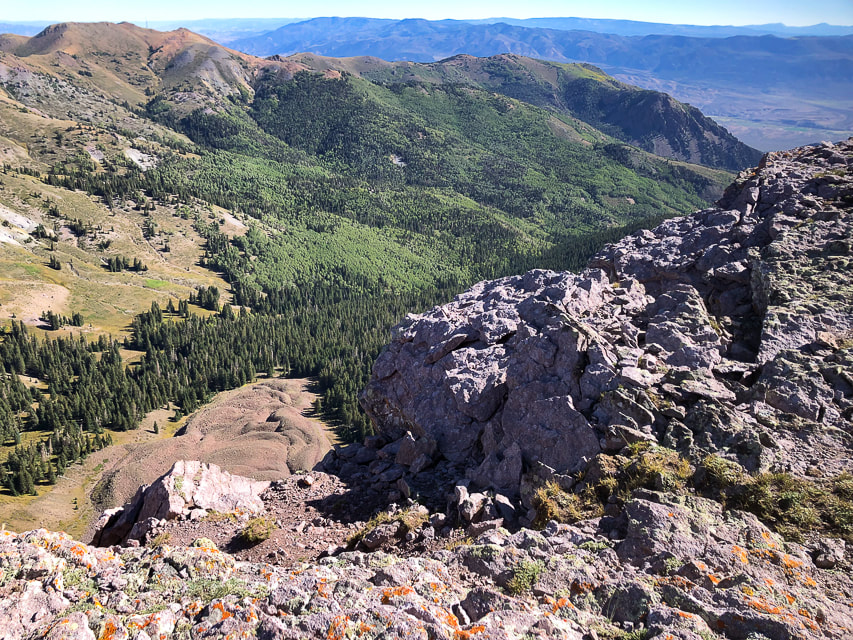
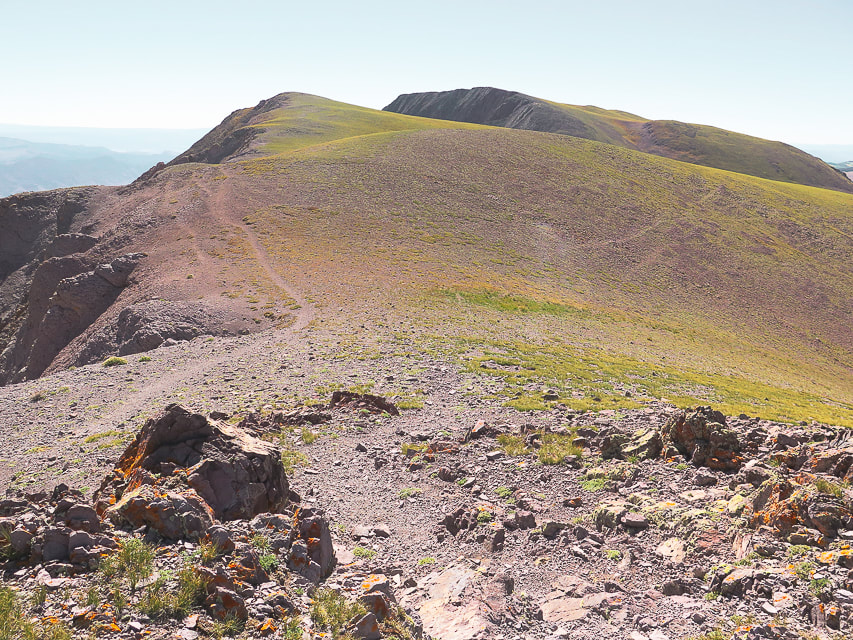
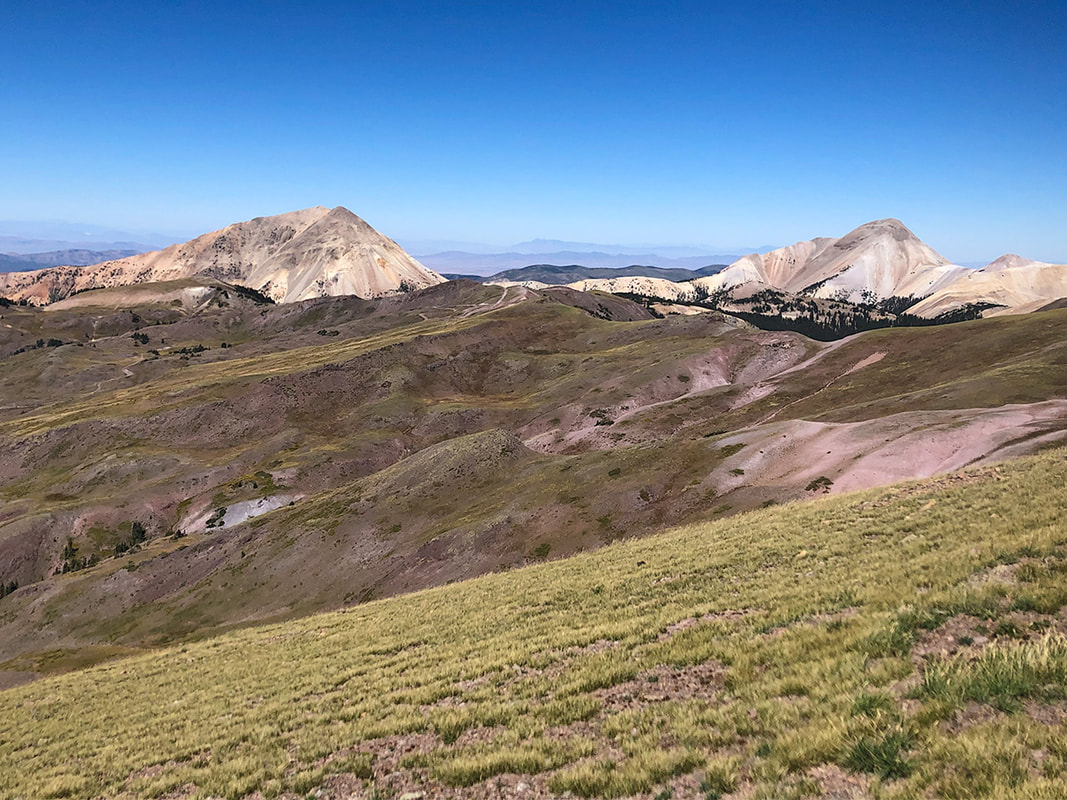
"The area possesses a very high degree of naturalness, palpable solitude, and nearly unlimited opportunities for primitive and unconfined recreation," says Wikipedia. A variety of great things are packed into this 7-mile hike: forest, sustained spectacular ridge views, goats, aspens and meadows below, and a fun steep climb between peaks.
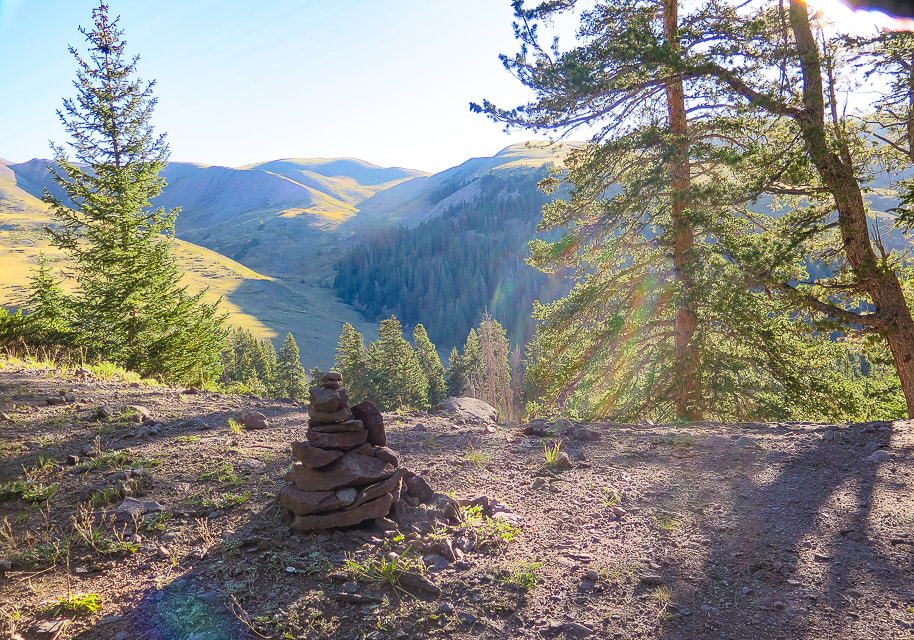
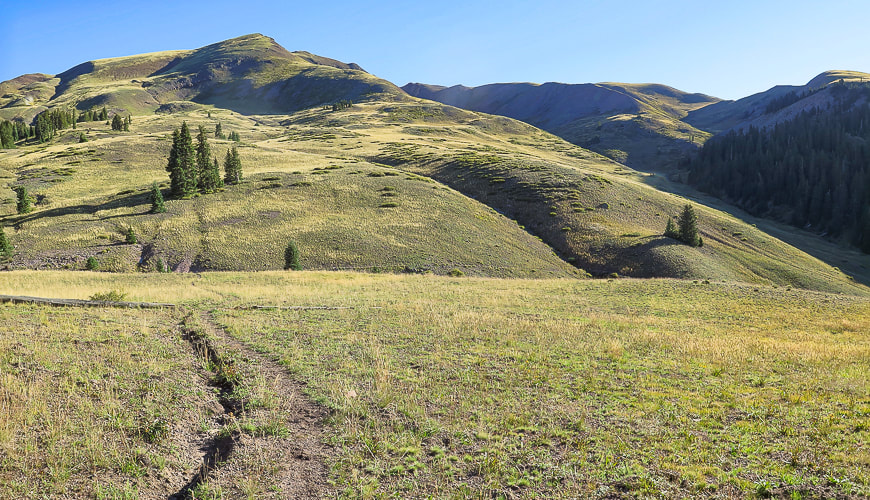
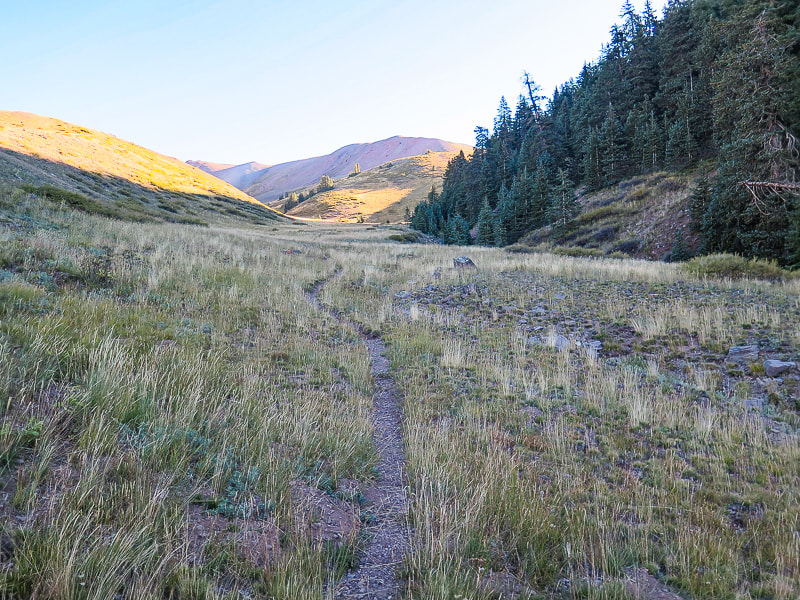
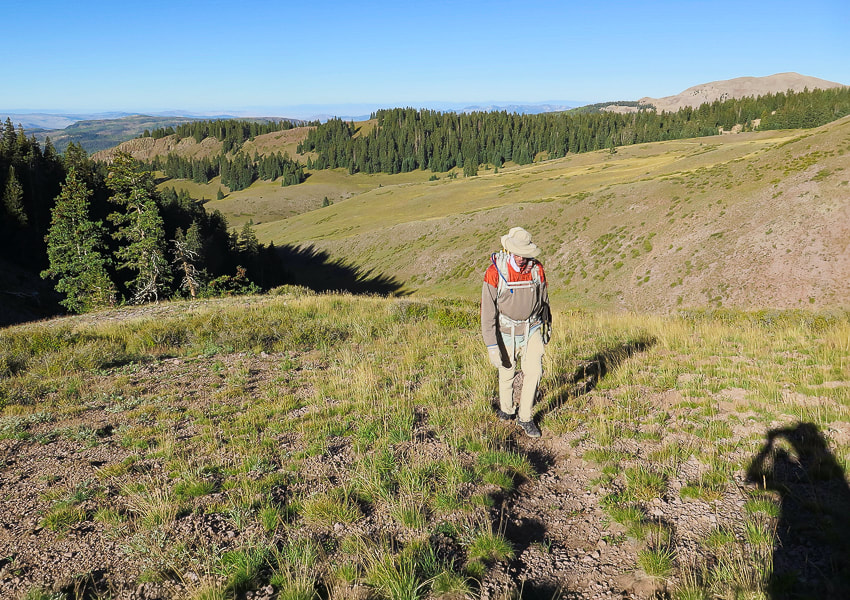
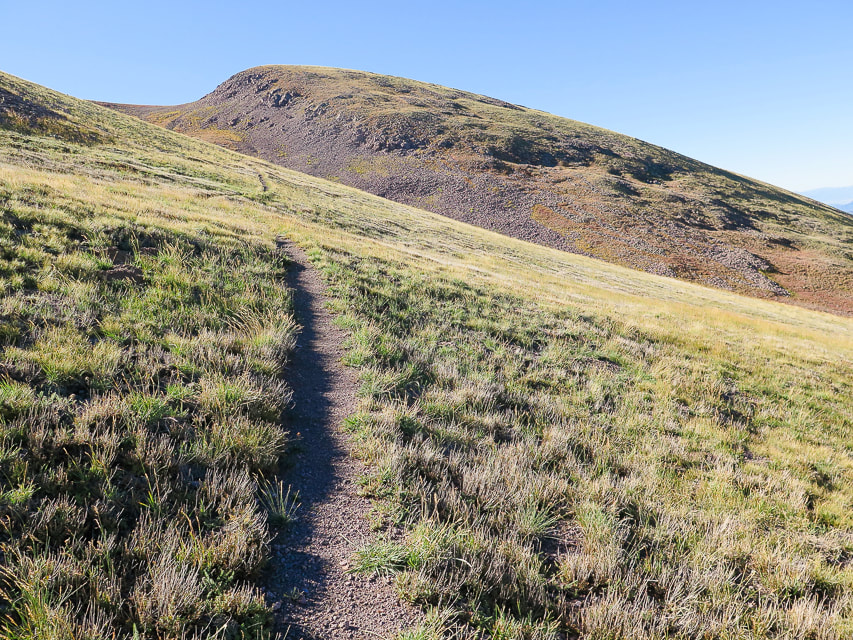
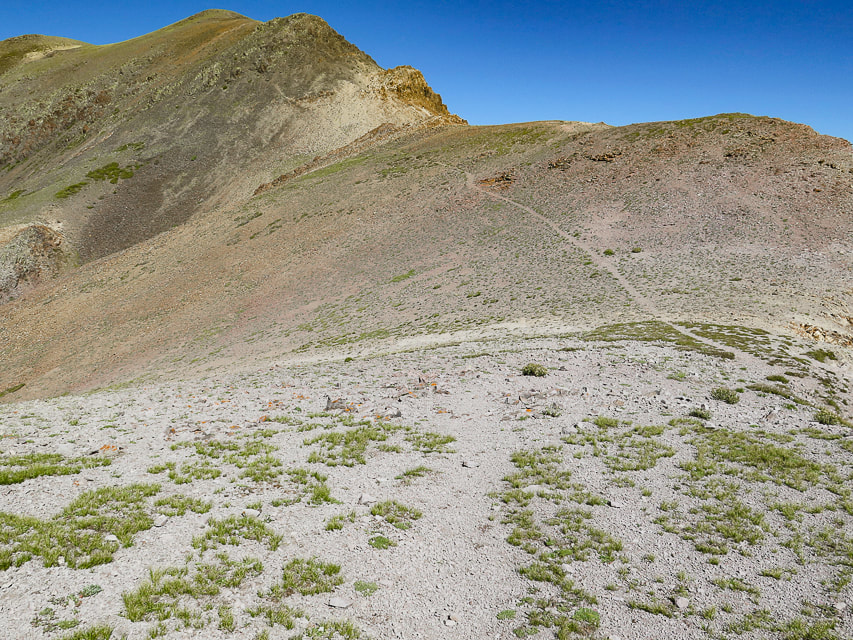
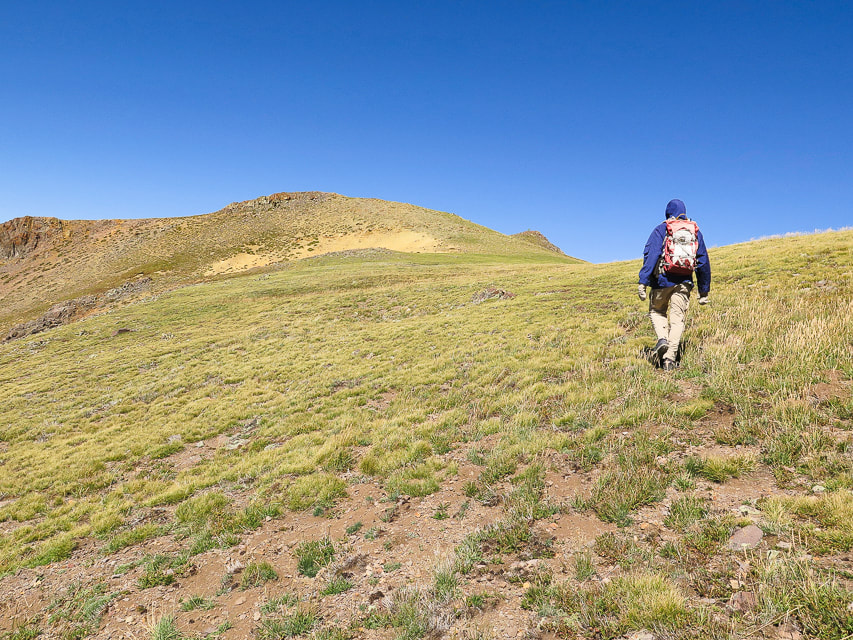
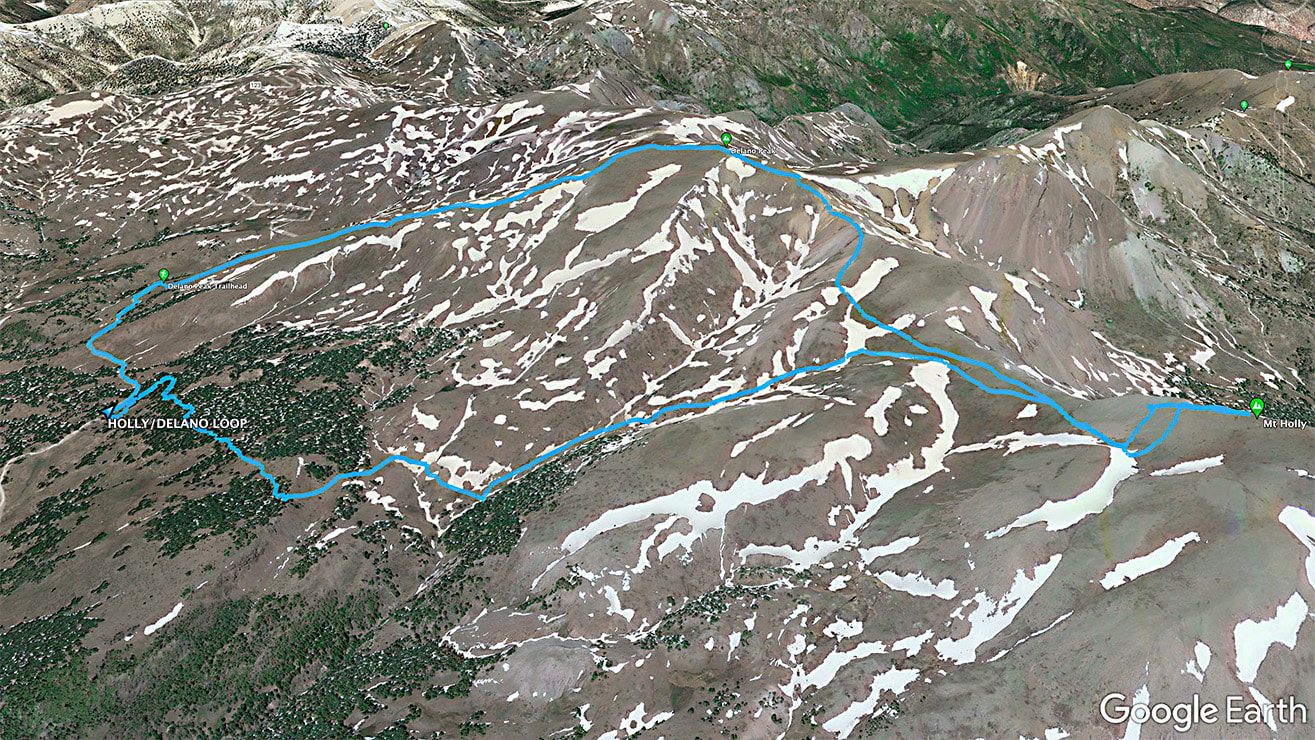
After a nice forest hike from the Skyline Trail trailhead off of graded gravel road and #123, we came to a saddle where we descended into a beautiful valley with Mt. Holly on the horizon. Our route left the Skyline Trail at Merchant Creek, walking toward Holly on the left side of a prominence covered with pines to the right. Shortly, a defined trail appears in the grasses. It becomes less-defined as you arrive on wide expanse of the tundra, just below Mt. Holly and then becomes more defined as it traverses Mt. Holly's southwest flank.
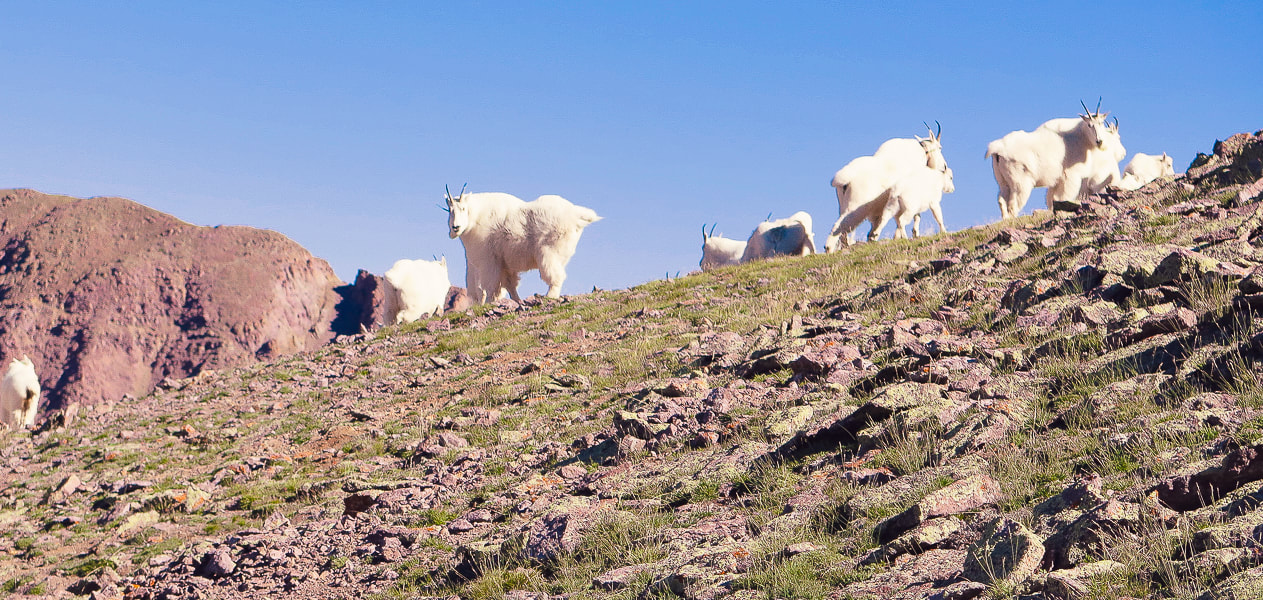
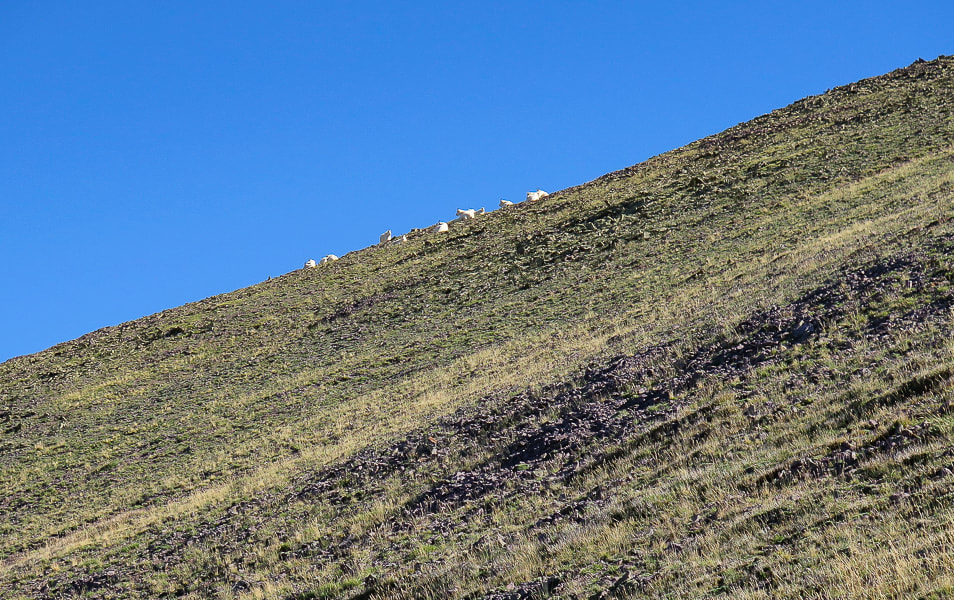
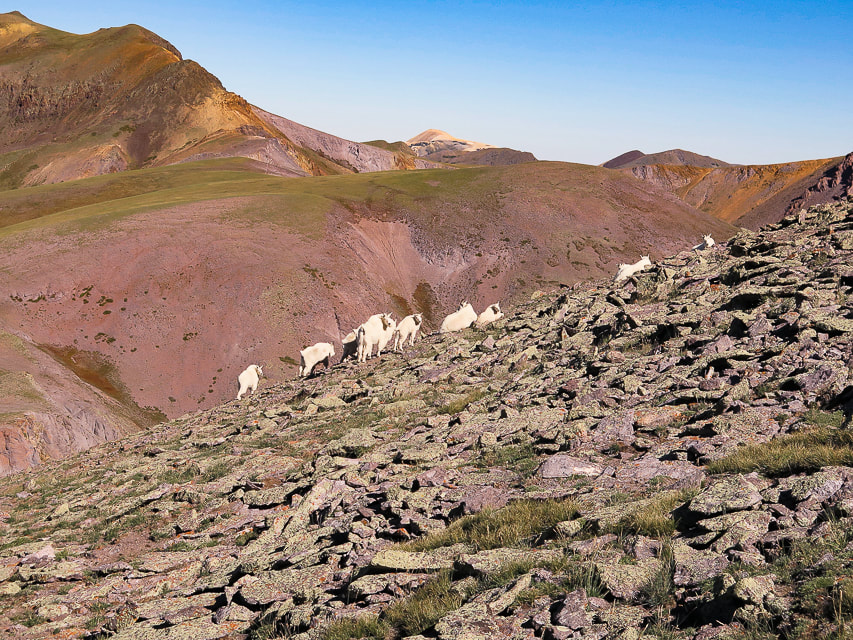
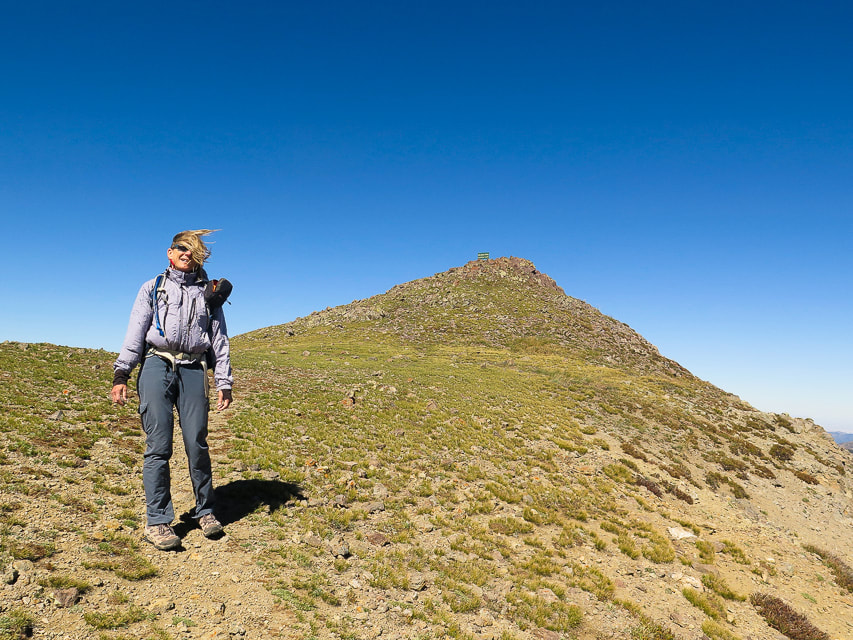
The mountain goats on Mt. Holly were hunkered down enduring the wind. They reluctantly got up as I got closer to them, and when we were on the ridge hiking toward Delano Peak, we saw that some of them had sought safer places on Holly's northwestern cliffs. We stayed on Mt. Holly long enough to sign the register, then descended back down out of the summit gusts to find a way to Delano Peak. We didn't see an obvious trail linking Mount Holly to the northwest ridge leading to Delano Peak; we probably could have gotten to the top of the ridge sooner than we did (see our route).
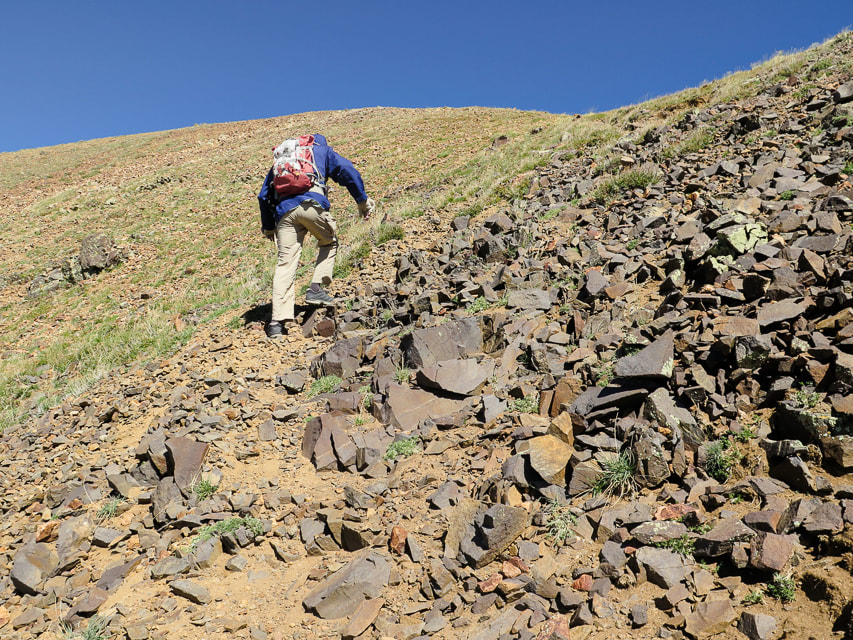
We gained the ridge at a saddle between Delano and Holly where we found the ridge trail. We took a windy break observing a spectacular view of steep Cottonwood Creek to the east. We battled the winds up a short and somewhat loose ascent to a gentler tundra ridge walk. The trail was easy to follow to Delano Peak. We didn't want to stand too long on this highest point in the Tushars for fear of being blown over the edge.
The walk down Trail # 224 is a quad burner, losing 1,700' of elevation in 1.8 miles. We then walked south on road #123, where the wind was less brisk, to our car at the trailhead, a short 0.6-mile distance.
The definition of "grit" is achieving goals through passion, perseverance and commitment. An important attribute for many aspects of life. An important trait to teach our kids. With some "grit" we reached the summits during the windstorm, although I have to admit, the thought of going back down after Mount Holly briefly crossed my mind. I plan on getting back to this hike with some friends. If I go in the next few weeks, the forest will be splashed with stands of yellow aspens in a sea of dark green.
|
As the crickets' soft autumn hum
Is to us So are we to the trees As are they To the rocks and the hills. -Gary Snyder |
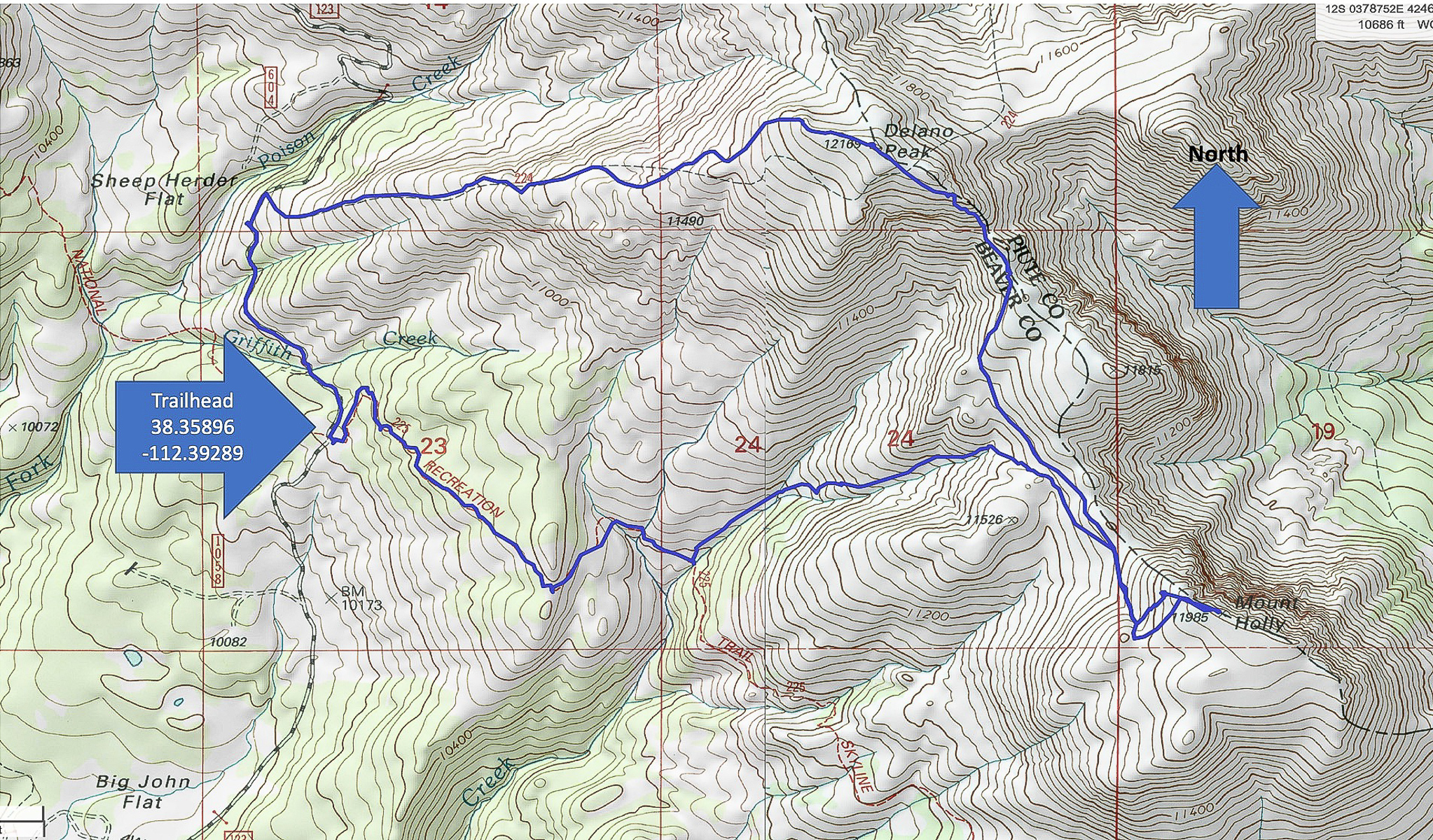
click on map for larger image

Sontag Bradley, M. A History of Beaver County. 1999. Utah State Historical Society Beaver County Commission.
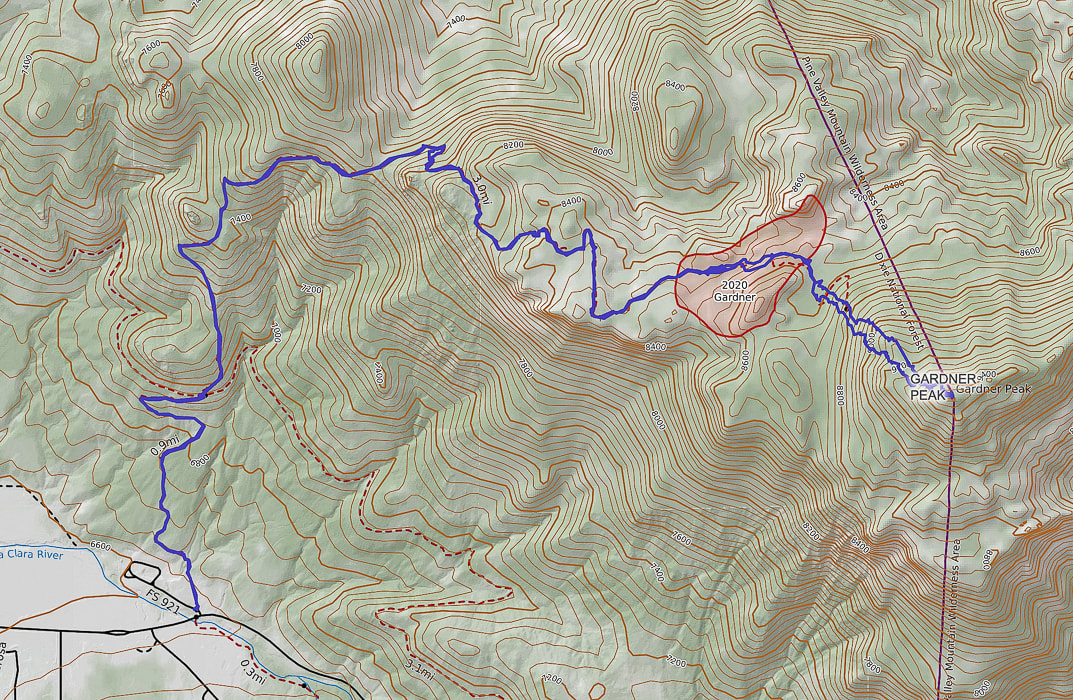
Location: Dixie National Forest, Pine Valley Ranger District. Trailhead in Pine Valley Recreation Area near town of Pine Valley, north of St. George, Utah.
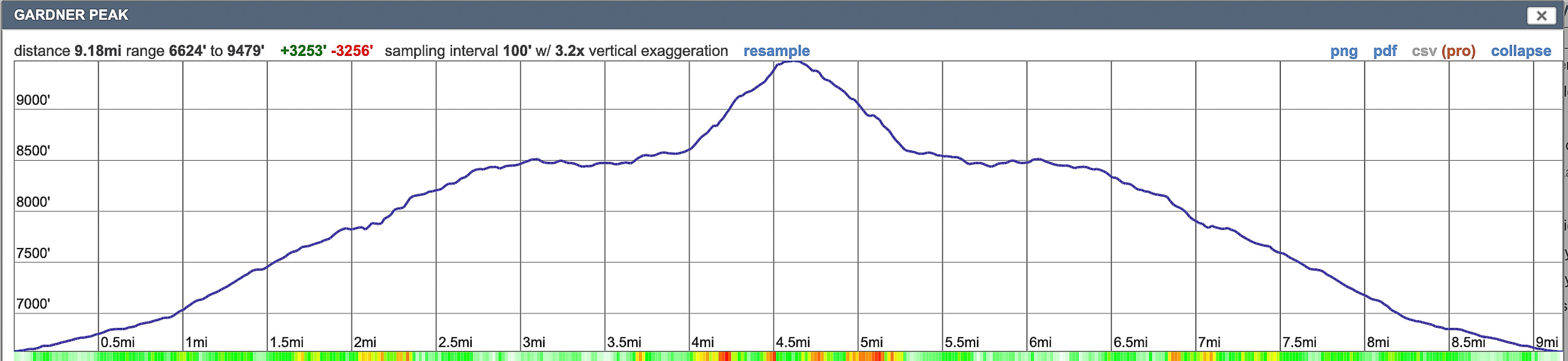
Distance and Elevation Gain: 9.2 miles round-trip; gain of 2,900' in 4.6 miles to summit. Trailhead elevation = 6,627'. Summit = 9,488'.
Difficulty: Moderate Class 1 on cairned trail, Class 2 off-trail from base of mountain and Class 3 climbing near summit with minimal exposure.
Coordinates: Summit = 37.39125, -113.45160. Trailhead = 37.38428, -113.48358.
Permit: Day hikers parking at trailhead inside Pine Valley Recreation Area do not have to pay a fee at entrance station.
Maps and Apps: Trails Illustrated Topo Map - St. George/Pine Valley Mountains #715, AllTrails app, Garmin GPS, USGS 7.5 minute topo - Grass Valley quad.
Dates Hiked: 9/3/2021, 8/28/2022.
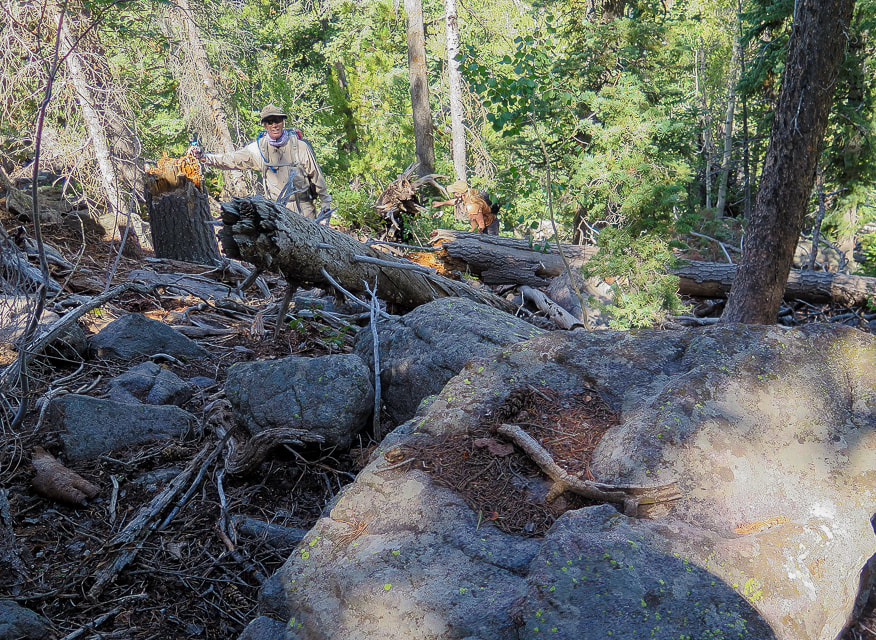
Considerations: Experience in navigating through forest necessary (no official trail). I suggest long pants to avoid shin scraping when crawling over deadfall and through rock walls.
Geology: Pine Valley Mountains are remnants of the Pine Valley Laccolith, one of the largest laccoliths in the U.S. (See "For the Geo-curious" below). Radiometric dates show the monzonite porphyry rock was formed 22 million years ago.
History: Robert Gardner, Jr. was one of the original settlers of Pine Valley who helped establish a lumber mill.
Driving Directions: Directions from St. George: Take Highway 18 north for about 24 miles, turn right at the Pine Valley junction (E. Pine Valley Road) and drive 8 miles until you reach a "T" in the road. Turn left and continue for about 1.5 miles. The trailhead is located on the left just after the Pine Valley Recreation Area entrance gate.
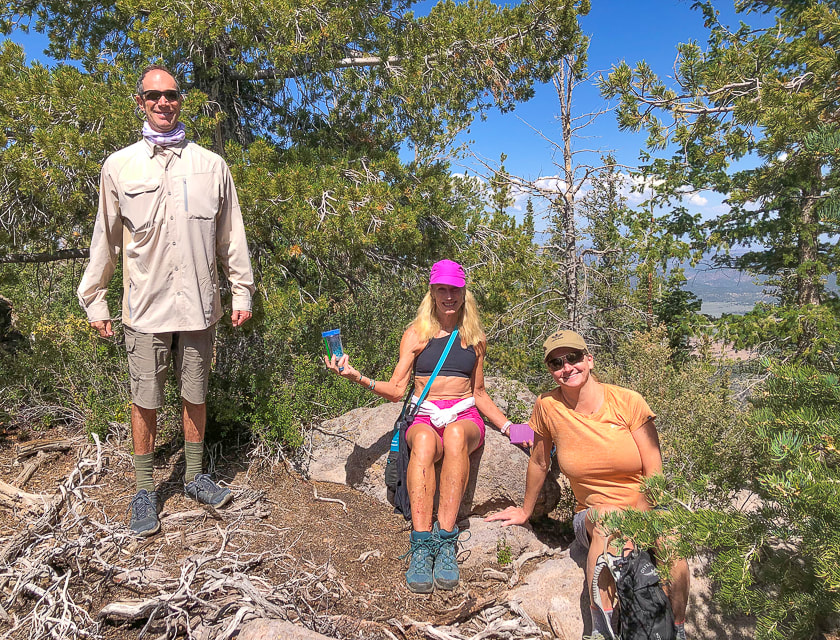
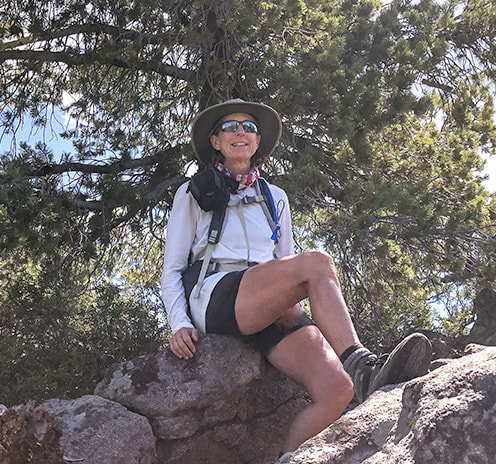
This time, on our second Gardner Peak hike, Fred and I got to share the trail with Lydia and Robin. Lydia, our lithe, exuberant and fit yoga teacher showed her love and refreshing awareness of nature and a beautiful tree pose atop a sculpted boulder. Robin, our fit fellow yogi, with a huge supply of bright optimism, has been training for her upcoming Grand Canyon rim to rim hike. Since we knew the way, Fred and I were able to get us up the steep and rocky deadfall-littered summit block. After a cairned trail to Gardner's base, there's few signs of a trail, except for a few "ducks" here and there. We followed my previous Gardner Peak GPS tracks, had a summit celebration, and found our entry from last year in the summit register. We discovered another register a few steps down on a slightly lower summit. Check out Lydia's excellent and fun adventure website - On the Loose Live for an account of this hike plus lots more interesting explorations and beautiful photography.
|
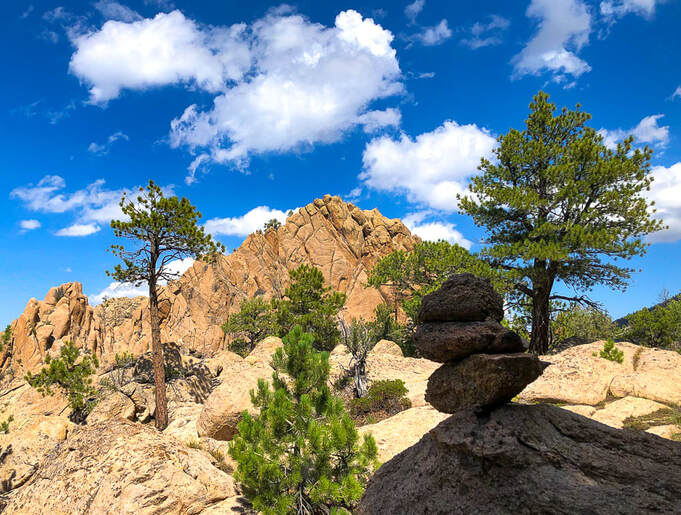
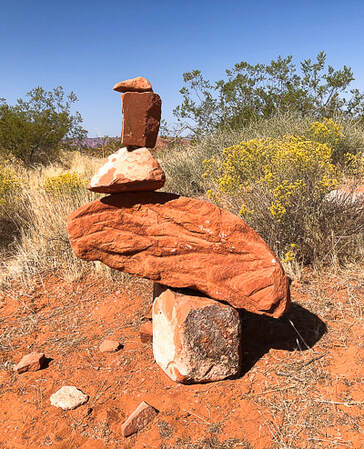
What's a "duck", you ask? Used to mark trails, ducks are small piles of rocks placed on top of each other, usually 3 or 4 rocks, but I have seen ducks made with 2 rocks. Cairns are large piles of rocks, many times used to mark a trail in the distance, like on top of a saddle or across a ridge. Ducks across long stretches of smooth sandstone are especially effective. I happened to run across a literal rock duck on a St. George trail, a beautifully balanced piece of rock art (left).
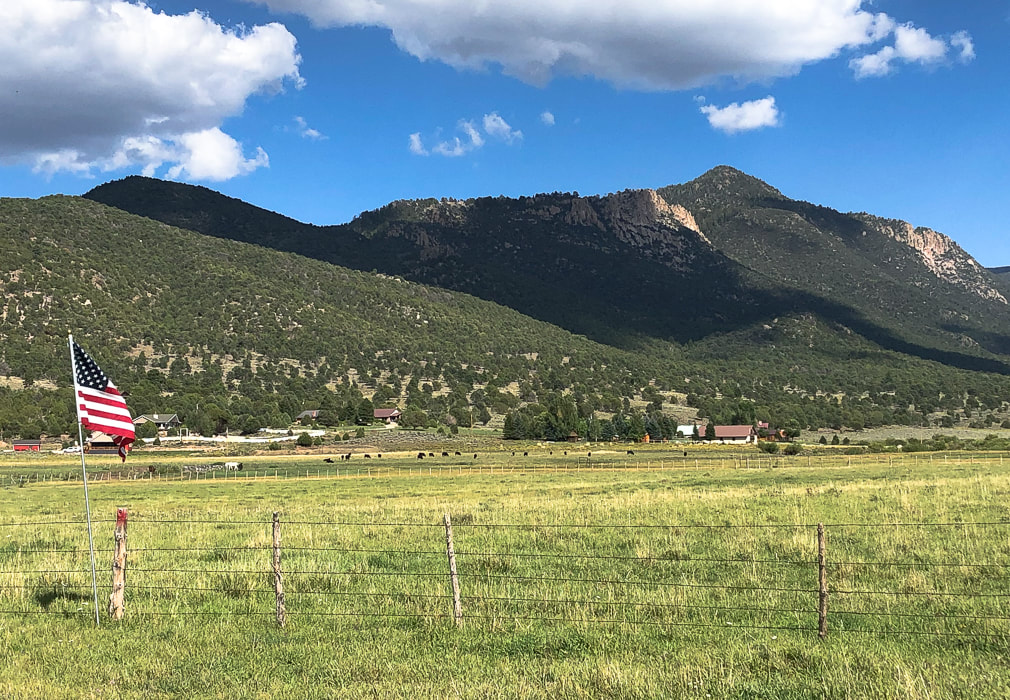
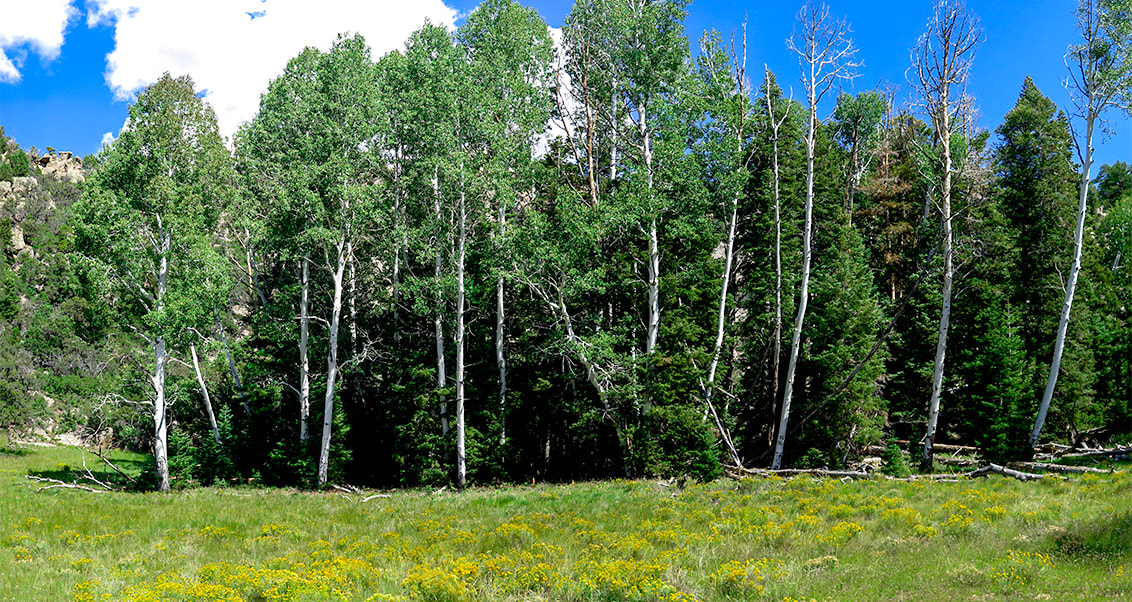
The Pine Valley Mountain Wilderness, a "sky island" rising above black basalt flows and red sandstone cliffs of southwestern Utah, is the antithesis to the internationally-known Zion National Park seen from its summits, a welcome respite for adventurers that have witnessed crowded Zion trails. It doesn't have Zion's spectacular sandstone towers, but it's beautiful forests offer solitude and a large variety of vegetation, including a large stand of virgin Engelmann spruce and many peaceful meadows. |
|
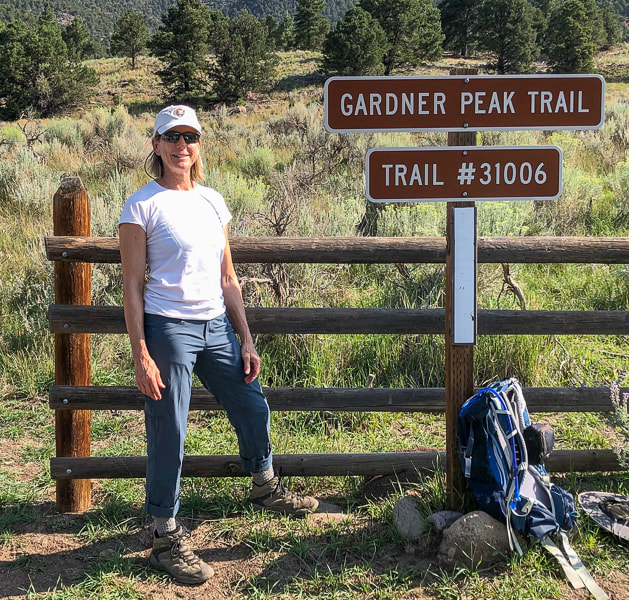
Marker at 0.9 miles indicates Gardner Peak Trail - take a right (north).
|
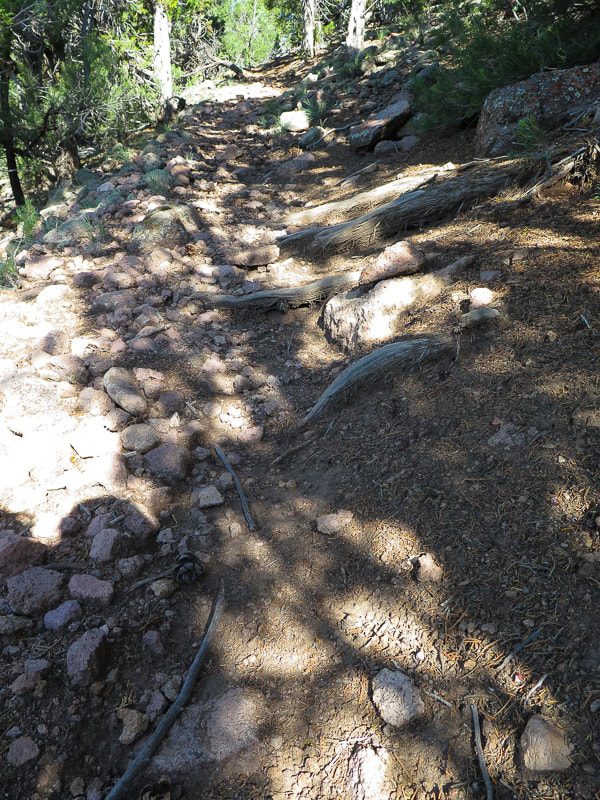
Steep, rocky trail first mile after intersection with Canal Trail.
|
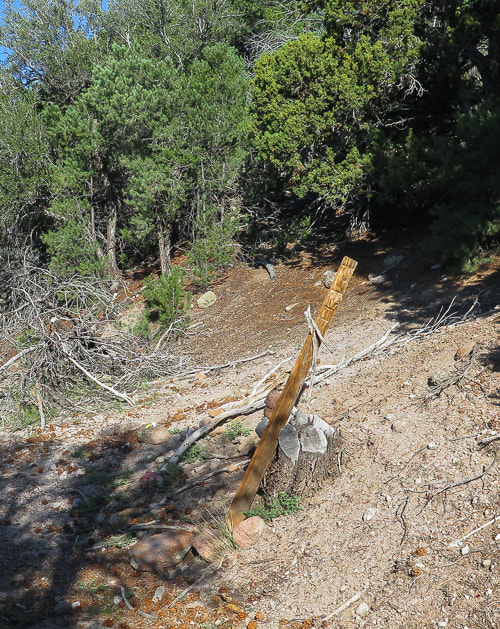
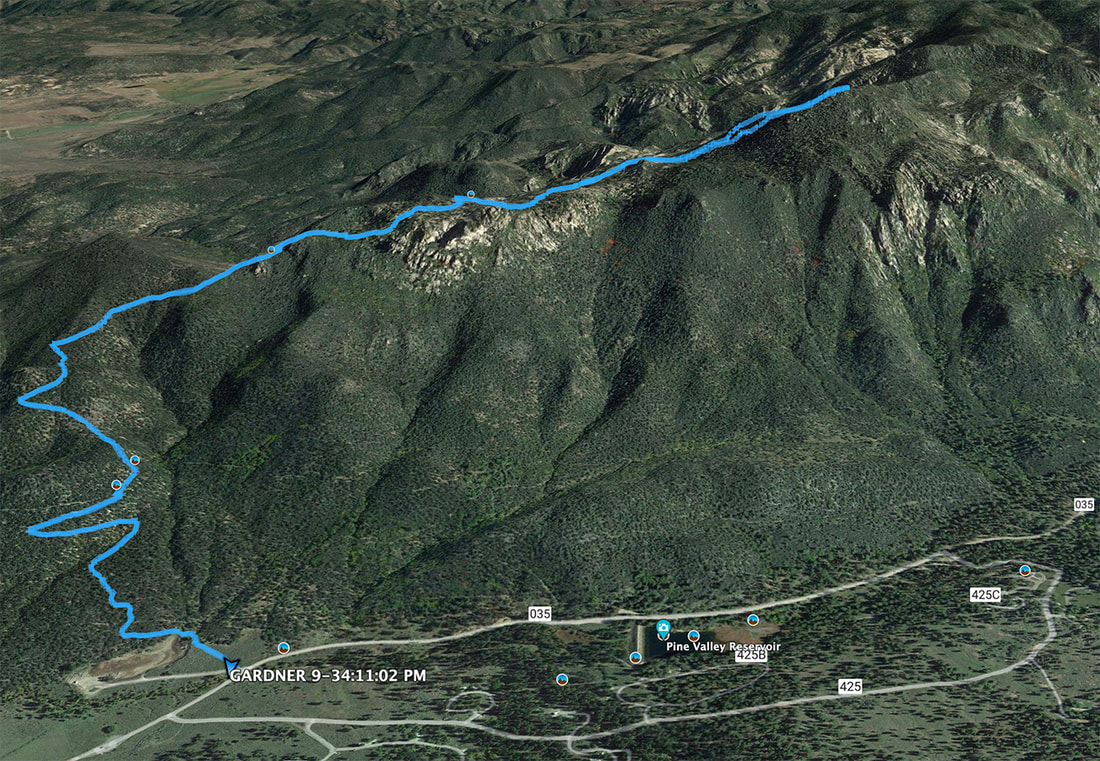
Driving past the Pine Valley Recreation Area entrance station, Gardner Peak trailhead is a short distance on the left. You may share the sagebrush-lined trail with cows for the first 1/2 mile. The trail quickly ascends into the forest, then at 0.9 miles intersects with the Canal Trail which traverses the base of the mountain. By walking a few yards to the left on the Canal Trail, painted rocks and an old signless post propped by a cut tree trunk mark the Gardner Peak trailhead. Continue north on a steep and rocky trail.
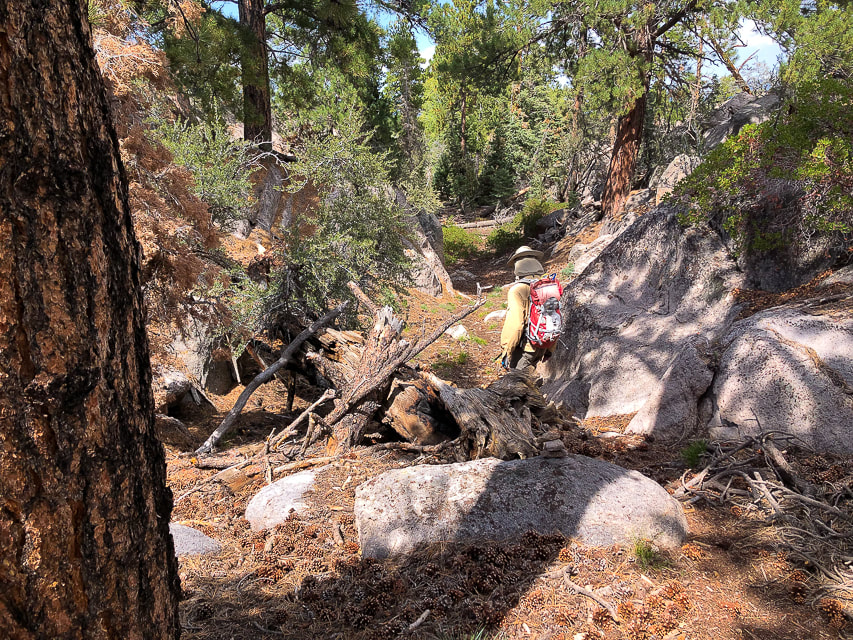
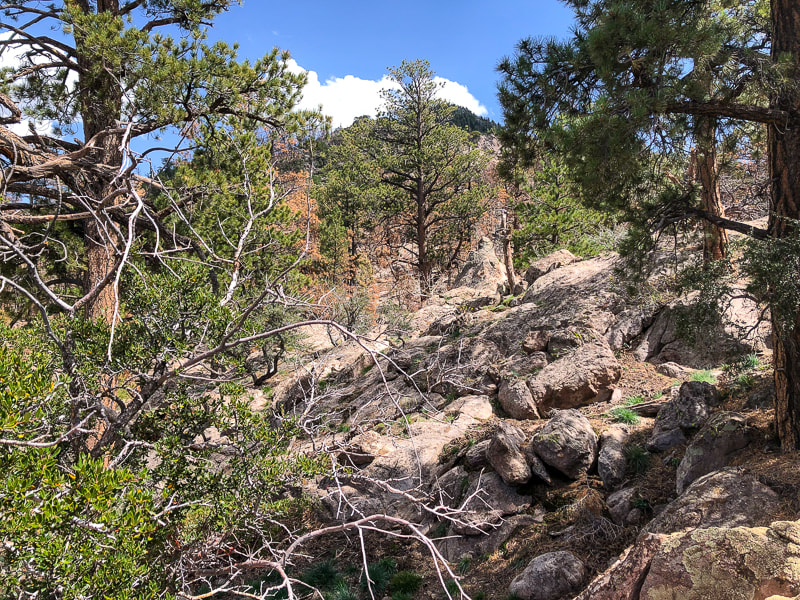
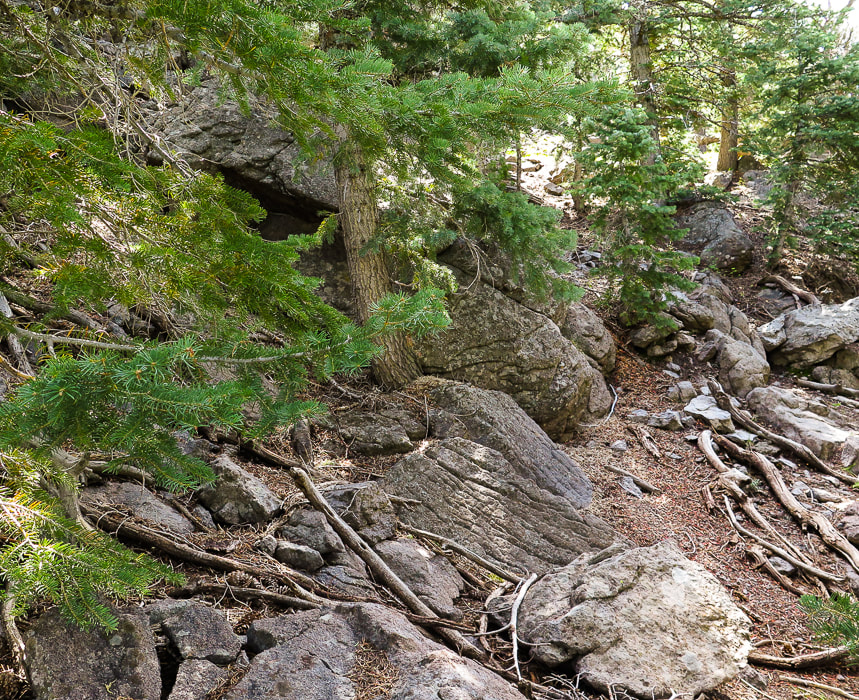
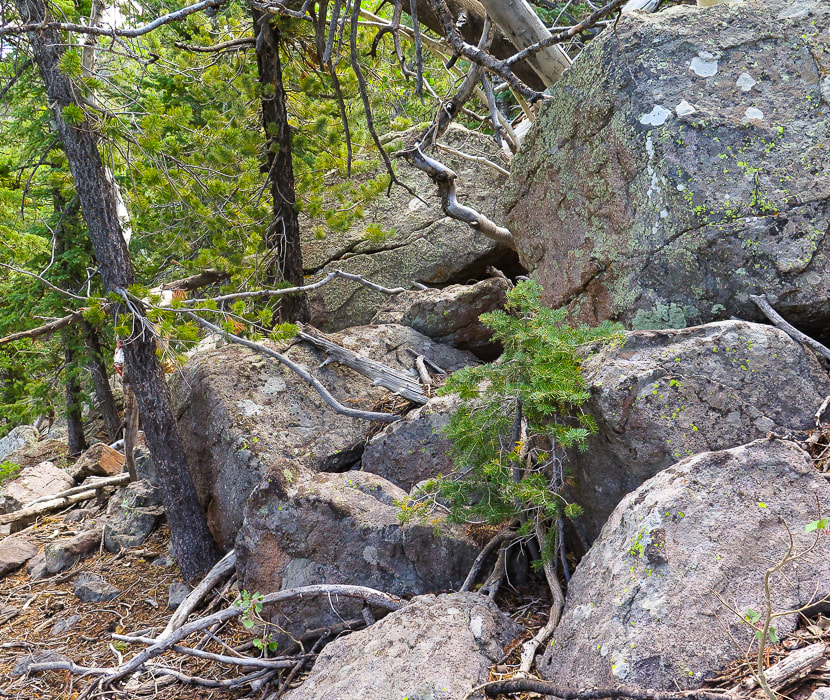
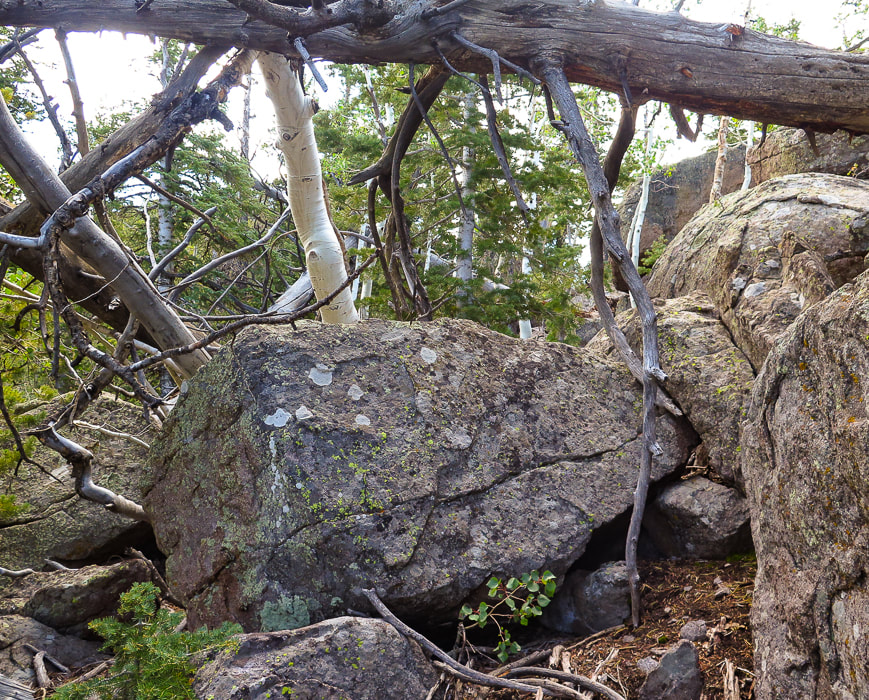
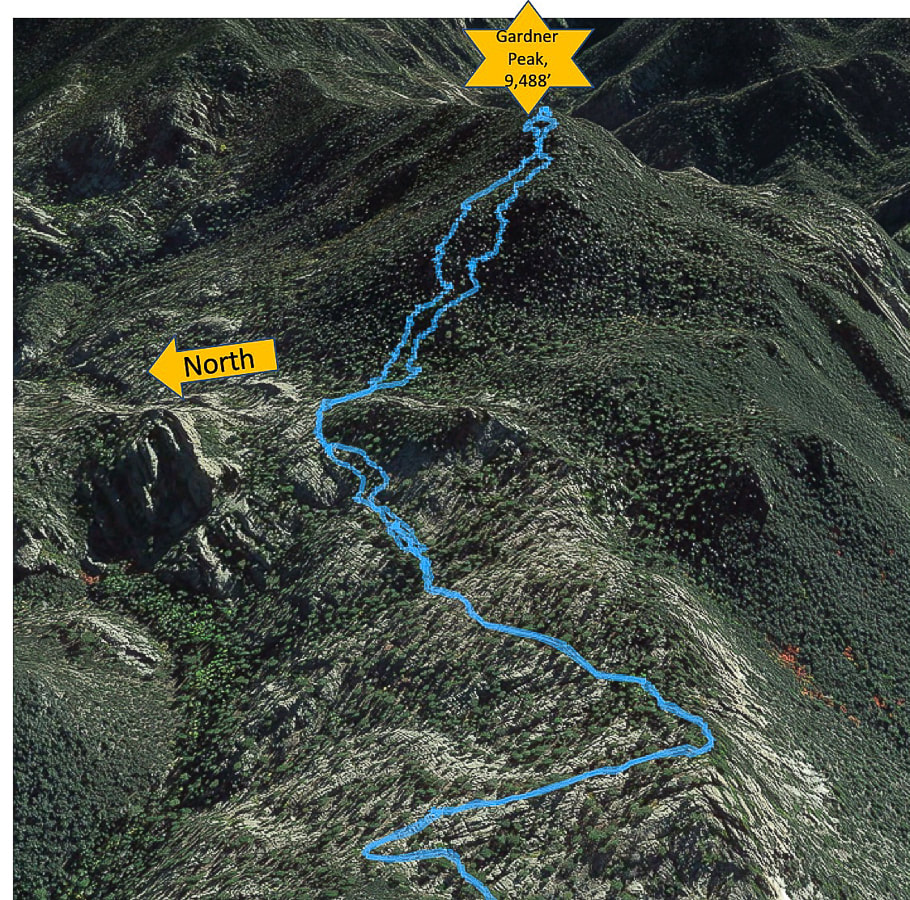
At 3.8 miles from the trailhead, after the short fire area, reach the small meadow, Jodes Flat, to see the thick forest on the west side of Gardner Peak. This is where the trail ends. We walked straight up this flank for a 900' gain, aiming toward the peak coordinates. There is a lot of deadfall to crawl over and Class 3 climbing through huge rock outcrops toward the top, as well as 2 false summits. The summit is small - basically a few huge boulders with a register with a few entries hidden under rocks.
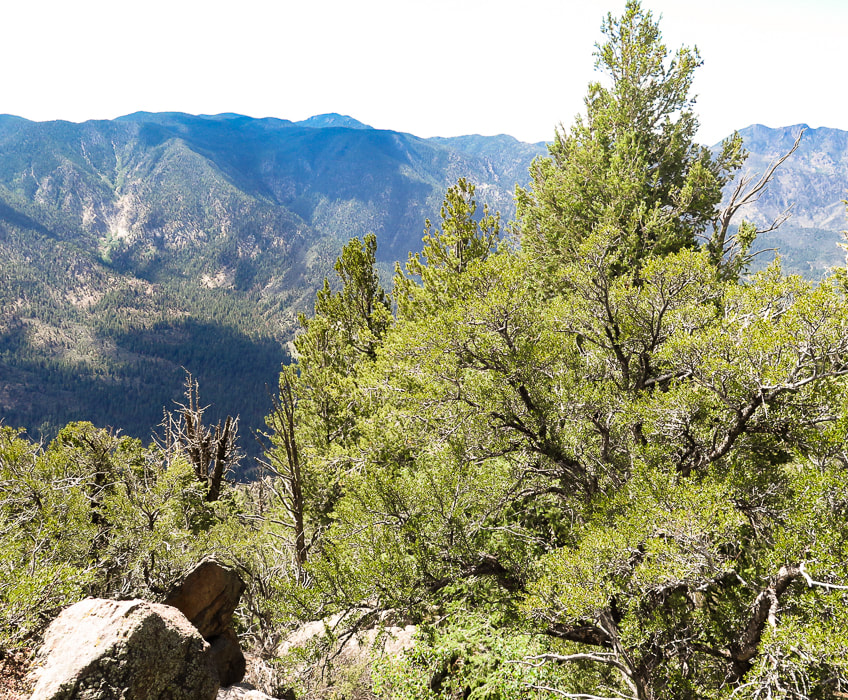
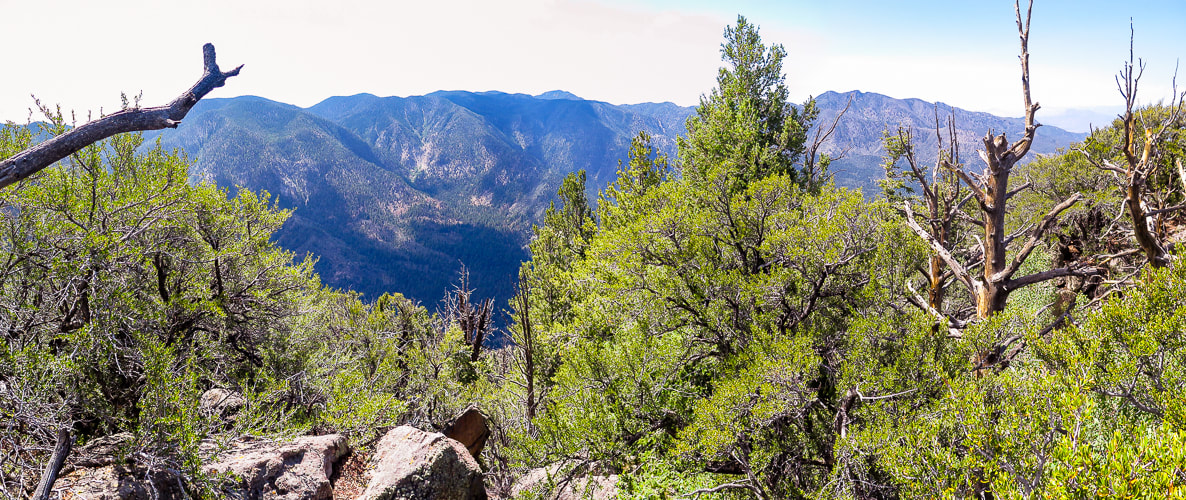
The summit is mostly forested, but a view to the east looks over a deep canyon. A forested summit is not as spectacular as a bare, above-treeline perch overlooking huge expanses of terrain, like Leatherman Peak, which we summited last July. But they are still great and each has its own characteristics that stand out in my memory of them. The reward of finding an unseen summit as you keep on seeing more sky as you climb is extraordinary.
Keeping the bare rock outcrop we had passed on the way up in view, and using my GPS trackback, we found our way back to Jodes Flat. It's easy to get disoriented; you basically want to head northwest.
Hiking with Robin and Lydia was a joyful excursion, reminding me that moving in nature is important for optimal health. And if you can do yoga balance poses on a steep boulder, all the better!
- John Muir
Keep On Exploring! Stay close to Nature!
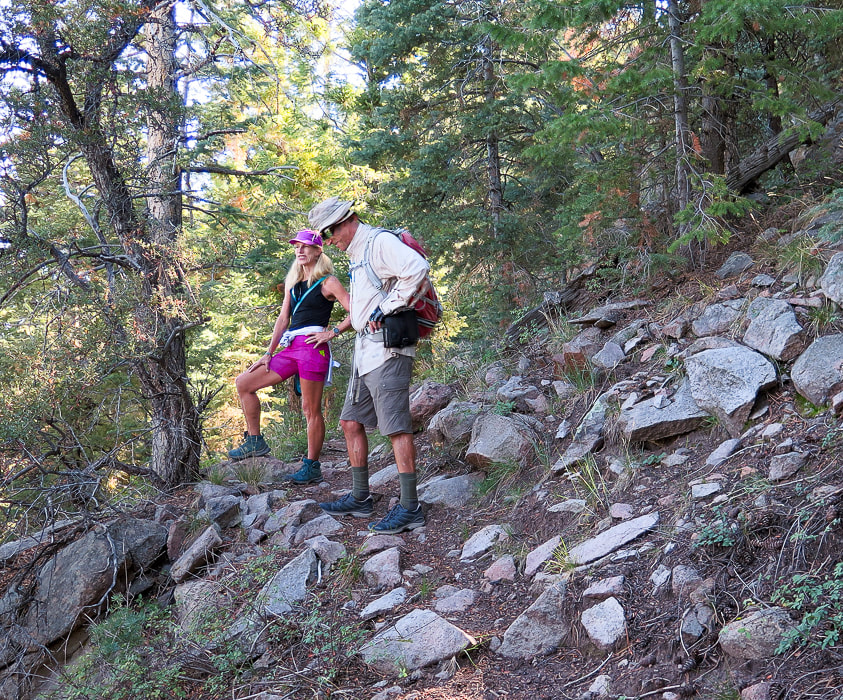
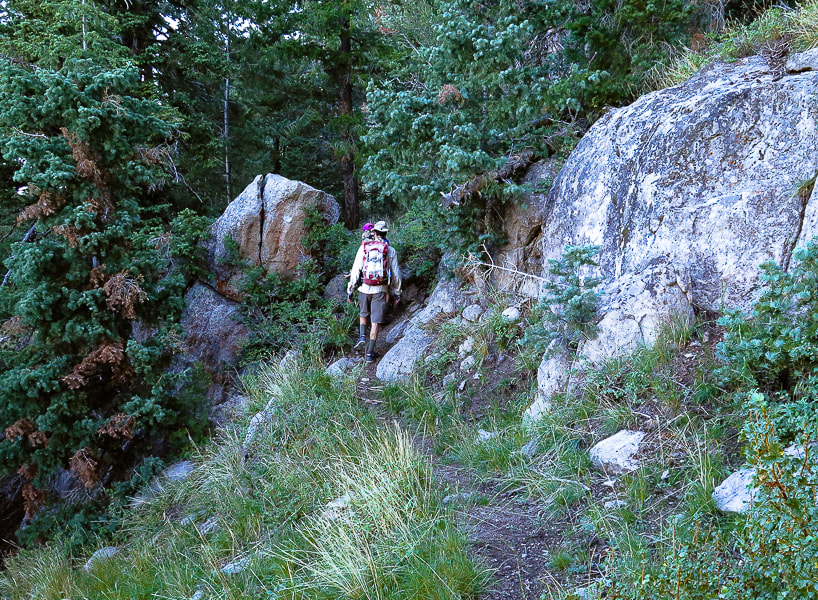
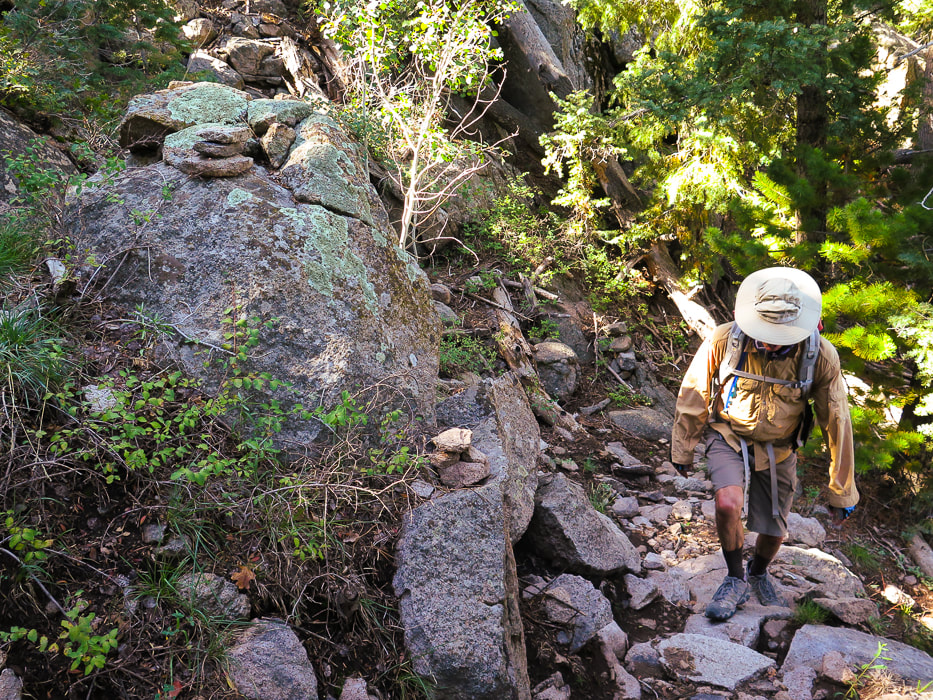
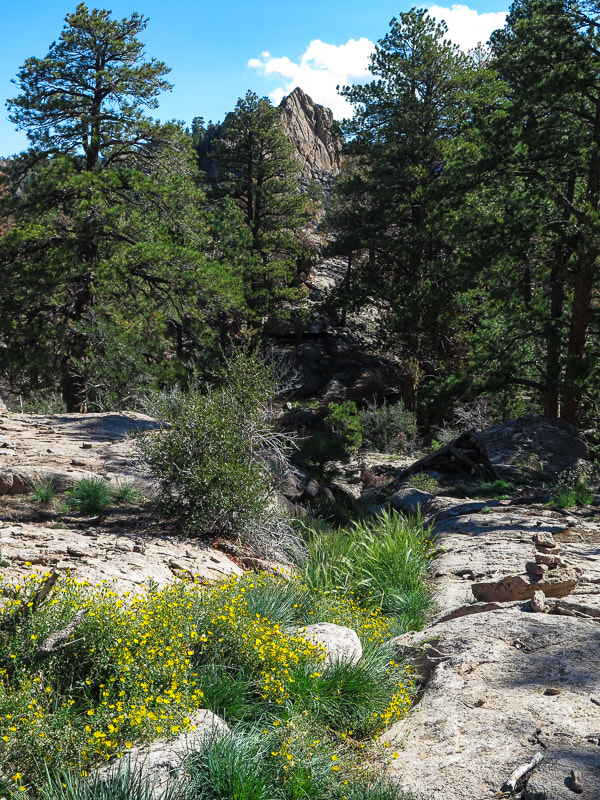
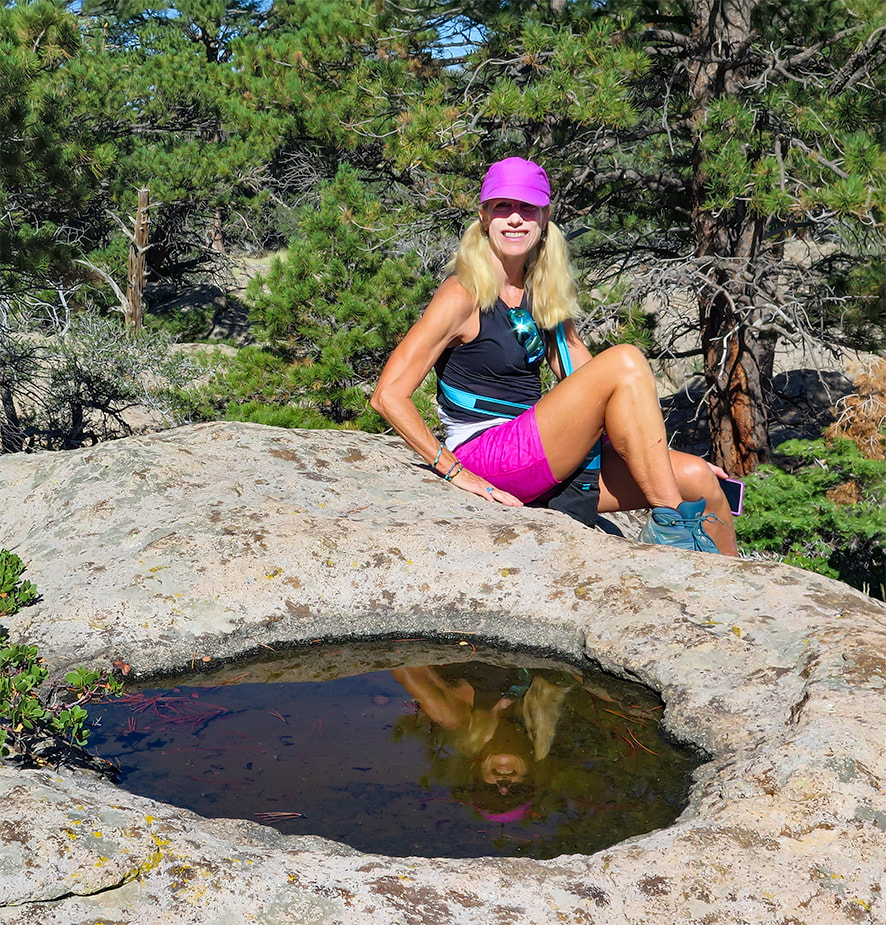
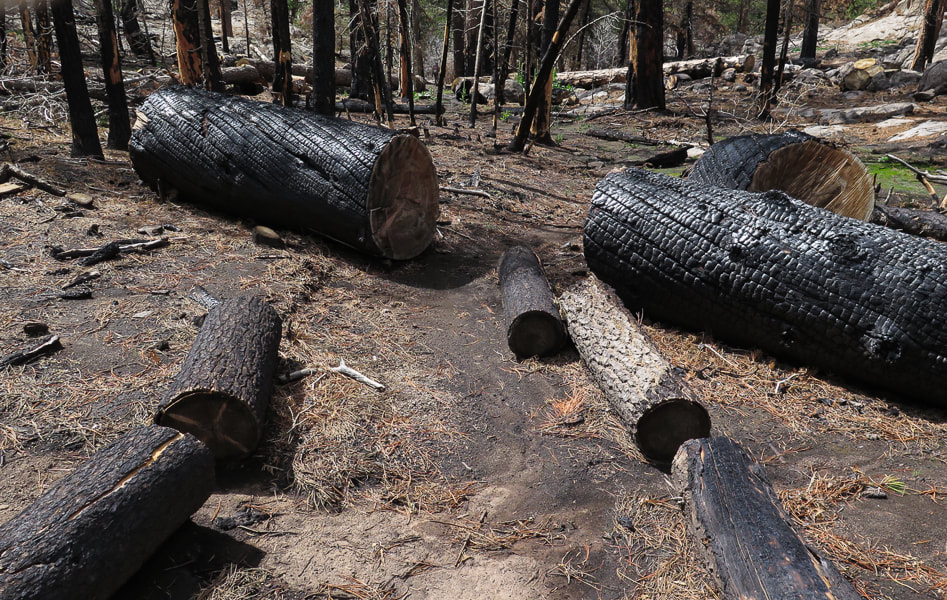
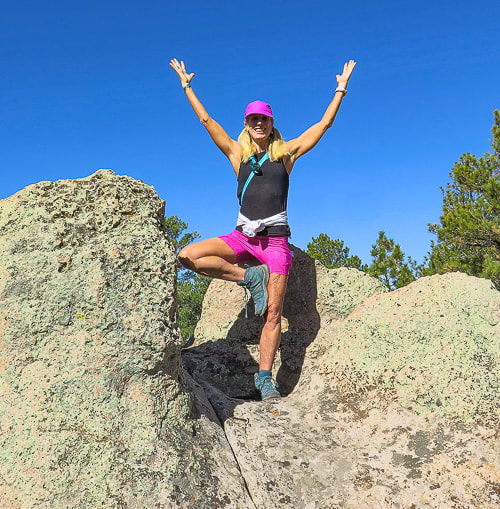
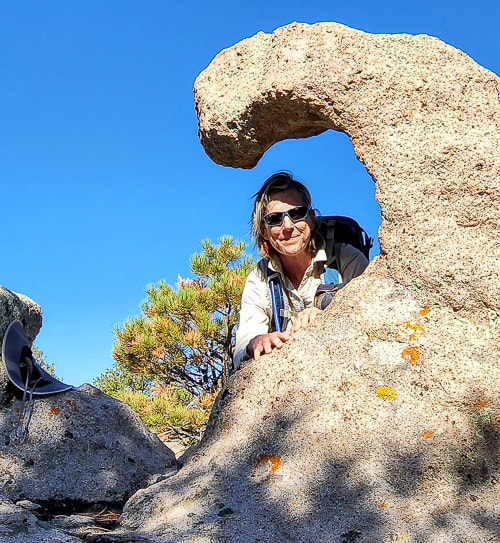
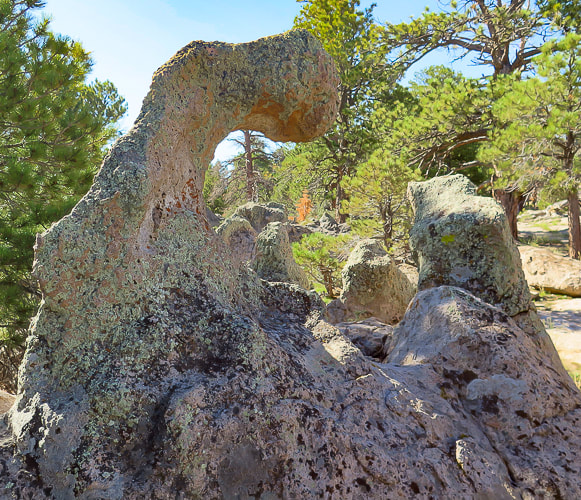
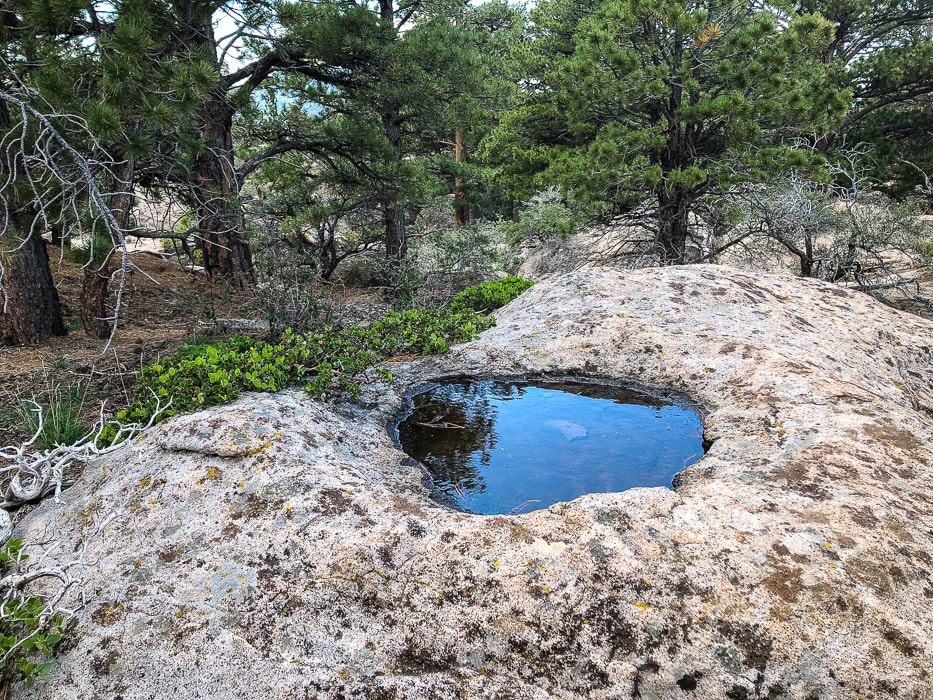
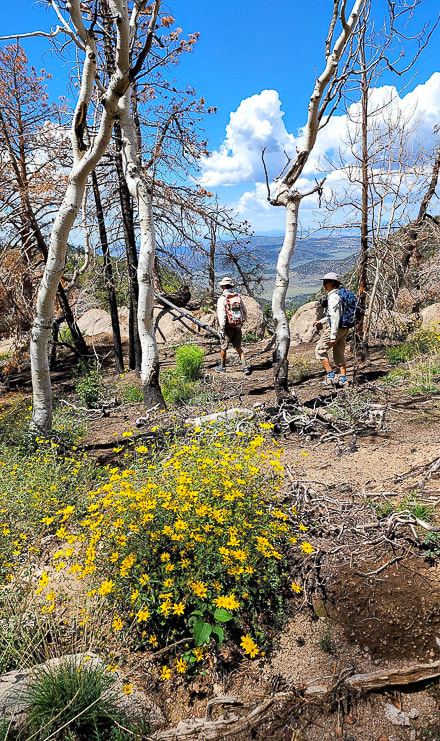
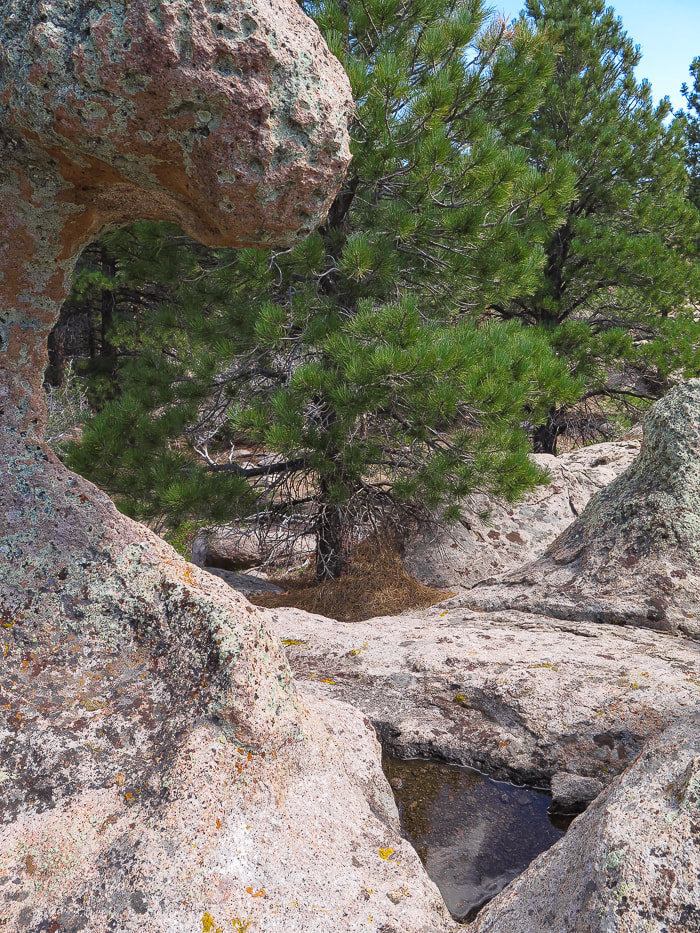
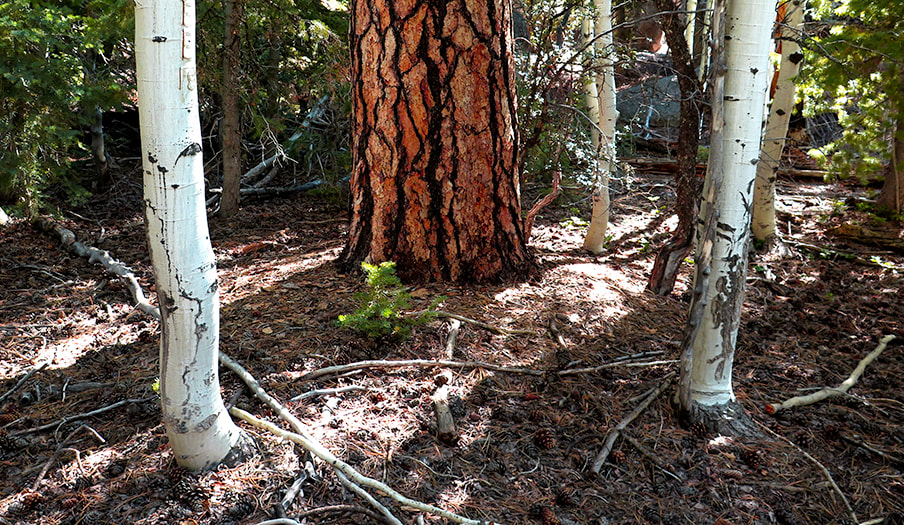

(900' elevation gain).


A laccolith is a large amount of magma that is injected between layers of rock, causing a dome-shaped mass. In this case, the Pine Valley Laccolith was a final surge of magma that occurred after the initial volcanic vents were shut off, causing the magma to be squeezed and move sideways between the layers of the Claron formation below it and the overlying magma layer. This injection, 22 million years ago, amounted to a 3,000-foot layer of monzonite porphyry, composed mainly of plagioclase and alkali feldspar. This is similar to granite, and when you look at a fresh surface of the rock, you can see the crystals, indicating the rock cooled slowly enough to form large crystals - allowing us to easily see them. The laccolith was uncovered when the volcanic layer above it eroded. The Claron Formation is made of limestone and mudstone; it is the rock that makes the spectacular hoodoos seen in Bryce Canyon National Park.
Miller, R. Our Geological Wonderland: The Pine Valley Mountain Laccolith. The Independent - A Voice for Southern Utah. Feb. 2018.
Pine Valley Day: The story of how 'the most beautiful sight' went from lumber supplier to summer retreat. By Reuben Wadsworth reporting in the St, George News.
Pine Valley Chapel 1868. Informational flyer about the history of Pine Valley and its chapel, available at the Pine Valley Chapel.
Categories
All
Arizona Hikes
California Desert Hiking
Idaho Summits
Nevada Hikes
Petroglyphs/Pictographs
Snowshoe Hikes
Southern Utah Hikes/Bikes
About this blog
To Subscribe to Explorumentary adventure blog and receive new posts by email:
About the Author
Sue Birnbaum
In 1992, Ray Wilson and I conceived the first Cactus to Clouds hike which climbs over 10,000 feet in one day to the summit of Mt. San Jacinto near Palm Springs, California.
Awkward Botany
amateur botany for the phytocurious
Bird and Hike
"Intended to encourage people to visit, learn about, and fall in love with the desert."
Draw and Shoot
Beautiful Photography
Daring Dayhikes
"Interesting places you can visit with a daypack." Terrific Tucson and other desert hikes and East Coast, too.
Earthline: The American West
Debra "writes to extol our beloved Earth." Detailed hike info, excellently written.
Geologypics.com
Geology and Geologic Time through Photographs
Glenn Suokko
Vermont artist's paintings "inspired by a place based on the land .... drawn to painting the representation and abstraction of nature."
In the Company of Plants and Rocks
A natural history blog about botany, plant ecology, and geology.
MishMoments: Joy of Photography
this website is "about capturing that special moment in life’s journey and making the most of the time we have."
Nature's Depths
Walking through nature with John Palka, a neuroscientist who loves plants and ponders big questions.
Rangewriter - What Comes Next?
Linda's excellent writing brings to life her interesting adventures, "curiosities and thoughts", post-retirement.
SeekingLost - Hiking and Backpacking Adventures.
Stav Is Lost- Unconventional, out-of-the way hikes in the American West.
Uprooted Magnolia
Leah Yetter's beautiful "photo journal on life, love, and the spirit of Wyoming."
Archives
April 2024
March 2024
January 2024
December 2023
November 2023
October 2023
September 2023
August 2023
July 2023
June 2023
May 2023
April 2023
February 2023
January 2023
December 2022
November 2022
October 2022
September 2022
August 2022
July 2022
June 2022
May 2022
April 2022
February 2022
January 2022
December 2021
November 2021
October 2021
August 2021
July 2021
May 2021
March 2021
February 2021
January 2021
November 2020
October 2020
August 2020
July 2020
June 2020
April 2020
March 2020
February 2020
January 2020
November 2019
October 2019
September 2019
August 2019
July 2019
June 2019
May 2019
April 2019
February 2019
December 2018
November 2018
October 2018
September 2018
July 2018
June 2018
May 2018
April 2018
March 2018
February 2018
January 2018
December 2017
November 2017
October 2017
September 2017
August 2017
July 2017
June 2017
April 2017
February 2017
November 2013
August 2013
July 2013